The Great Calibration: Tech-Driven Office Trends for the Three-Day Hybrid Era
This evolution matters because it addresses the “trough and peak” problem—where offices sit empty on Mondays and Fridays but struggle with overcapacity on Wednesdays. By leveraging AI-driven spatial analytics, IoT-integrated environments, and immersive telepresence, the modern office acts as a responsive organism. For the tech-savvy professional, these advancements represent a departure from static cubicles toward a dynamic, hyper-personalized ecosystem that prioritizes wellness, efficiency, and frictionless connectivity. In this new era, the office is a destination, not a requirement.
AI-Driven Spatial Intelligence and Predictive Occupancy
The foundation of the modern hybrid office is spatial intelligence—a suite of technologies that allows a building to “see” and “understand” how it is being used in real-time. Unlike the basic motion sensors of the past, today’s offices utilize high-resolution LiDAR (Light Detection and Ranging) and computer vision powered by edge computing. These systems anonymize data to protect privacy while providing granular insights into “dwell times,” movement patterns, and “dead zones” within the floor plan.
How it works is through a layer of predictive modeling. By analyzing historical data from the three-day-in-office cycles, AI platforms can predict occupancy levels up to two weeks in advance. If the system forecasts a 95% capacity on a Tuesday, it can automatically suggest shifting certain team meetings to a localized satellite hub or adjusting the HVAC schedule to pre-cool high-traffic areas. This “Dynamic Zoning” allows facility managers to “shrink” the office on low-occupancy days by closing off entire floors or wings, significantly reducing carbon footprints and operational costs. For the employee, this means never arriving to find a “ghost town” or, conversely, a space where no desks are available.
The Phygital Bridge: Immersive Collaboration Portals
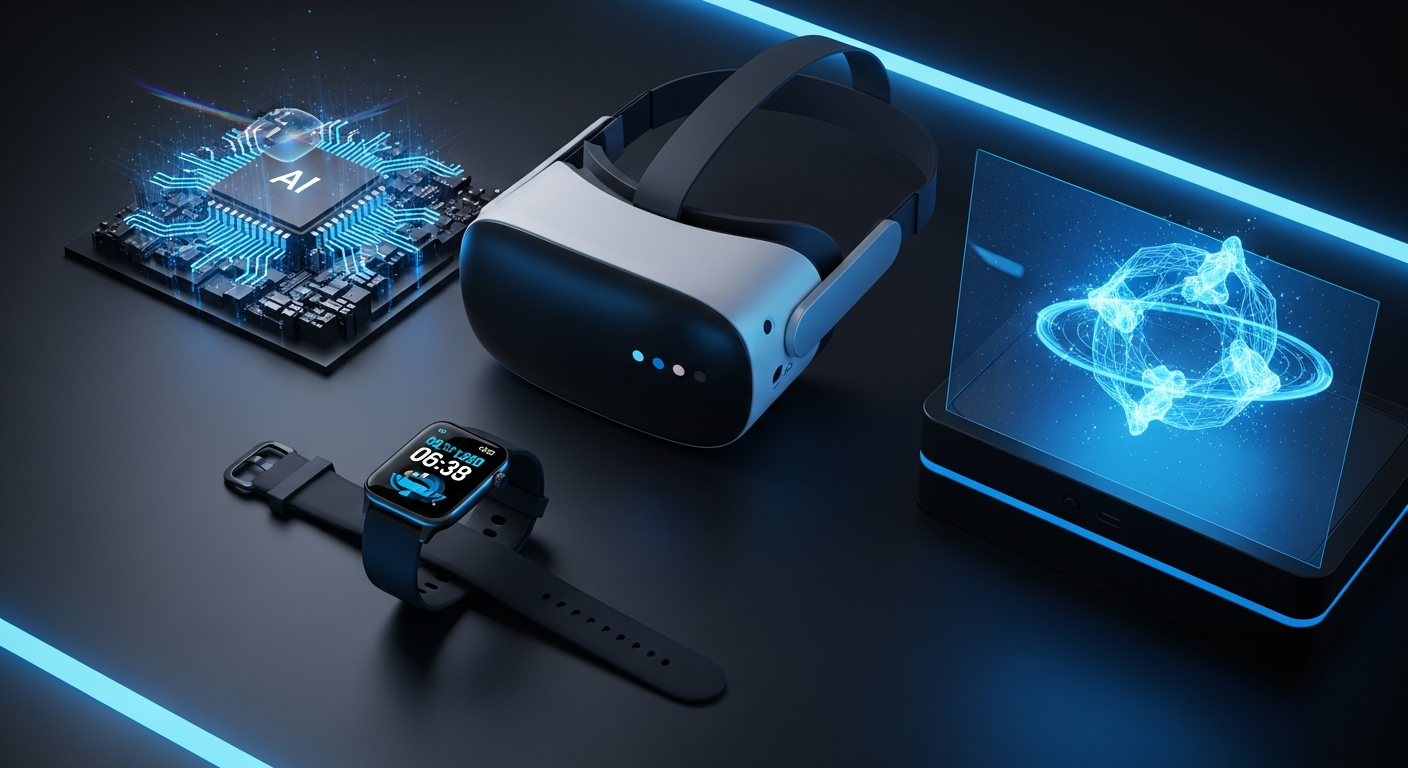
The most significant pain point of the three-day schedule is the “hybrid gap”—the disconnect felt when half the team is in a conference room and the other half is on a flat 2D screen. To solve this, office design now incorporates “Phygital Bridges.” These are dedicated collaborative zones equipped with ultra-low latency telepresence hardware, such as 8K holographic displays and spatial audio arrays.
In these environments, remote participants are no longer relegated to a small window on a wall. Instead, life-sized projections or high-fidelity “Digital Twins” of remote workers are positioned at the table, with spatial audio ensuring that their voice originates from their visual location. This technology relies on high-bandwidth Wi-Fi 7 and 6GHz spectrums to ensure that there is zero perceptible lag between a gesture made at home and its representation in the office. This level of immersion fosters “incidental collaboration”—the ability to read body language and subtle social cues that are often lost in standard video conferencing—making the three days spent in the office exponentially more productive.
Adaptive IoT Furniture and Hyper-Personalization
In the era of hot-desking and unassigned seating, the loss of a “permanent” desk has been a psychological hurdle for many. Technology is solving this through the “Internet of Furniture.” Modern workstations are now equipped with NFC (Near Field Communication) and cloud-synced actuators. When an employee taps their phone or smartwatch to a desk, the station instantly adapts to their predefined “Digital Profile.”
Within seconds, the motorized standing desk adjusts to their exact ergonomic height, the dual-monitor setup launches their specific cloud-based desktop environment, and even the local micro-climate (temperature and lighting) adjusts based on their preferences. Some advanced chairs now feature haptic feedback to remind users to adjust their posture or integrated cooling/heating elements to maintain individual thermal comfort. This level of hyper-personalization ensures that even though an employee doesn’t “own” a desk, every desk they use feels specifically engineered for them. This minimizes the “setup friction” that typically plagues hybrid workers, allowing them to reach a state of “flow” faster.
Atmospheric Autonomics: Circadian Lighting and Air Tech
The impact of the physical environment on cognitive performance is a primary focus of current office design. We are seeing the rise of “Atmospheric Autonomics”—systems that use a mesh network of sensors to monitor CO2 levels, VOCs (Volatile Organic Compounds), and humidity in real-time. In a high-density three-day-in-office scenario, CO2 levels can spike quickly in meeting rooms, leading to “brain fog” and fatigue. Smart HVAC systems now use AI to inject fresh oxygen and adjust filtration levels based on the specific number of people in a room, ensuring peak mental clarity.
Furthermore, lighting has evolved into “Circadian-Sync” arrays. These LED systems mimic the color temperature and intensity of the sun throughout the day, supporting the natural sleep-wake cycles of employees. In the morning, the lights emit a cooler, blue-heavy spectrum to boost cortisol and alertness; as the afternoon wanes, they shift to warmer, amber tones to reduce eye strain and prepare the body for the evening. This technology is a vital component of the “wellness-first” office, directly impacting daily life by reducing the headaches and lethargy associated with traditional fluorescent office environments.
The Frictionless Entry: Biometrics and Ultra-Wideband
The transition from home to office is often marred by the friction of security badges, parking gates, and elevator queues. The modern hybrid office utilizes Biometric Seamlessness and UWB (Ultra-Wideband) technology to create a “zero-touch” entry experience. As an employee approaches the building, UWB sensors in their mobile device communicate with the building’s perimeter. The gates open, the elevator is pre-called to their specific floor, and their arrival is logged in the team’s presence-awareness app—all without the phone ever leaving their pocket.
Beyond convenience, this tech stack serves a vital safety and health role. In the event of an emergency, real-time “Heat Maps” can show first responders exactly where people are located in the building. From a health perspective, these systems can integrate with thermal imaging to subtly screen for elevated body temperatures, helping to prevent the spread of seasonal illnesses in a high-density office. This creates a secure, “invisible” layer of infrastructure that allows employees to focus entirely on their work rather than the logistics of being in a building.
The Neighborhood Topology: Software-Defined Workspaces
Office layouts are no longer fixed by drywall and permanent partitions. Instead, we are seeing the rise of “Neighborhood Topology,” where software defines the function of the space. Modular walls, sound-absorbing “clouds” on tracks, and mobile power-towers allow teams to reconfigure their environment in minutes. If a team needs a “war room” for a two-day sprint, they can move modular partitions that are integrated with e-ink signage to designate their “Neighborhood.”
This flexibility is managed via a “Workspace OS”—a central dashboard where teams can book not just a desk, but a specific environmental configuration. If a group requires high-focus “Deep Work” zones, the system can activate directional sound-masking (white noise) in that specific area to cancel out the chatter from a nearby collaborative kitchen. This ability to manipulate the physical environment through software ensures that the office can adapt to the diverse tasks of a modern workforce, whether it’s high-energy brainstorming or silent, heads-down coding.