Updated May 2026. The rapid acceleration of artificial intelligence and immersive digital environments has definitively shaped the future of education technology. We are no longer simply looking at smartboards or basic learning management systems; rather, the focus has shifted toward highly individualized, predictive, and globally accessible learning ecosystems. These evolving frameworks are fundamentally redefining how knowledge is acquired, processed, and applied in a rapidly automating world.
As we transition deeper into an era defined by cognitive automation, tomorrow’s learning landscape must prioritize adaptability over rote memorization. Students sitting in classrooms today are preparing for careers that do not yet exist, utilizing tools that are still in their infancy. By bridging the gap between traditional pedagogy and cutting-edge innovations, institutions can begin dismantling the one-size-fits-all model that has dominated instruction for over a century.
Achieving this seamless integration requires moving beyond superficial tech adoption. It demands a critical understanding of data ethics, shifting instructional paradigms, and the psychological impacts of continuous digital engagement. Exploring these nuanced layers reveals both the unprecedented opportunities and the profound responsibilities inherent in next-generation academic environments.
The Transformative Role of Artificial Intelligence in Learning Landscapes
Artificial intelligence serves as the foundational engine driving modern pedagogical shifts, completely restructuring the relationship between learner and curriculum. A student struggling with multi-variable calculus, for example, no longer waits days for a graded assessment to realize their mistakes. Instead, an AI tutor analyzes their initial inputs, instantly identifies a conceptual gap in their understanding of partial derivatives, and dynamically generates a visual, step-by-step breakdown tailored specifically to their learning pace. This immediate intervention loop prevents foundational misunderstandings from compounding over time.
According to a 2026 report by the World Economic Forum, institutions employing intelligent tutoring architectures report a 34% acceleration in baseline subject mastery. This acceleration occurs because machine learning algorithms parse thousands of data points—from keystroke hesitation to quiz accuracy—to optimize a student’s cognitive load adaptation, delivering content precisely at the threshold where it is challenging but not overwhelming.
To understand the broader implications of these shifts, [CLUSTER LINK: AI in Education: Enhancing Learning Outcomes] provides a deep dive into specific algorithmic use cases. What success looks like in this environment is a classroom where pacing is entirely decentralized; no two students are on the exact same academic path, yet all are moving toward standardized core competencies. Conversely, what failure looks like is a scenario where algorithms are treated as infallible black boxes, isolating students behind screens without human contextualization or emotional support.
Furthermore, these advancements parallel developments in decentralized internet infrastructures, where verifiable credentials and distributed ledgers allow students to carry an immutable, AI-curated portfolio of their skills across borders and institutions.
Core Technologies Driving the Digital Transformation in Learning
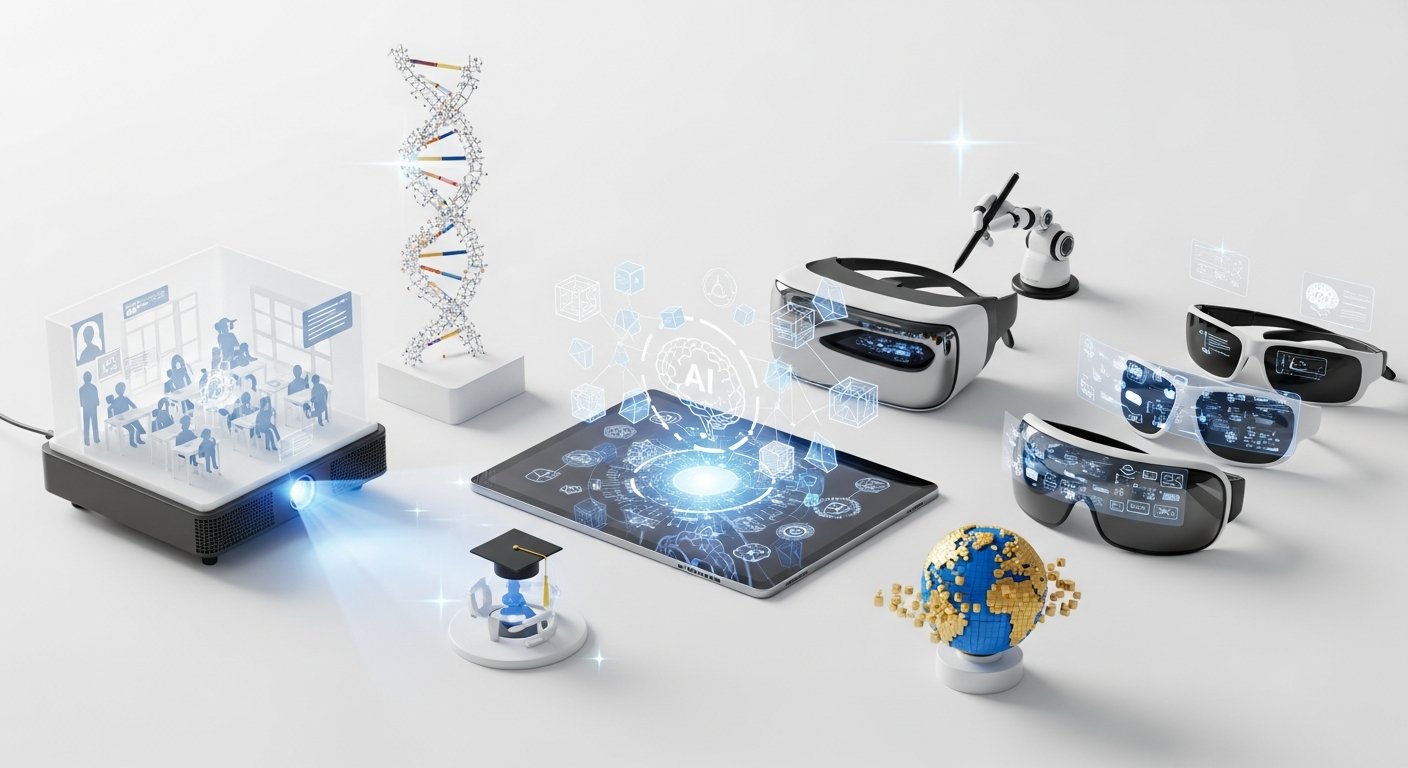
Beyond artificial intelligence, a confluence of emerging hardware and software frameworks is actively dismantling the physical boundaries of the traditional classroom. Extended reality (XR) hardware has crossed the threshold from cumbersome novelty to vital instructional tool. Medical students in remote regions can now conduct simulated cardiac surgeries using high-fidelity haptic feedback gloves, experiencing the exact physical resistance of human tissue without the need for a physical cadaver.
Defining the Tech Stack
Three primary technological pillars support this new ecosystem:
- Immersive spatial computing: Blending digital objects seamlessly into physical environments to facilitate experiential learning, allowing architecture students to walk through scale models of their designs in real-time.
- Predictive Learning Analytics: Utilizing historical and real-time behavioral data to forecast academic risk factors, enabling educators to intervene weeks before a student technically fails an assignment.
- Blockchain-Verified Micro-Credentials: Disaggregating traditional degrees into skill-specific, instantly verifiable digital badges that align directly with evolving employer demands.
The integration of these tools creates a highly responsive learning matrix. Because analytics platforms continuously aggregate interaction data across various immersive platforms, the system can triangulate a student’s precise engagement levels, adjusting the narrative complexity of an educational simulation on the fly.
| Aspect | Traditional Education Paradigm | AI & XR-Driven Framework |
|---|---|---|
| Pacing & Delivery | Fixed cohorts, synchronous lectures | Asynchronous, highly individualized pathways |
| Assessment Model | High-stakes summative exams | Continuous, invisible formative assessment |
| Primary Environment | Physical classrooms, static textbooks | Blended physical spaces, reactive digital environments |
| Instructor Function | Primary source of knowledge | Curator of experiences, emotional guide |
To explore the hardware specifications and psychological impacts of these environments, see our dedicated guide on [CLUSTER LINK: VR/AR in Education: Creating Engaging Environments]. Implementing these robust systems requires careful planning, as detailed in our analysis of navigating upcoming pedagogical tools, ensuring infrastructure scales responsibly.
[INLINE IMAGE 2: A student wearing a lightweight mixed-reality headset interacting with a 3D holographic projection of a DNA double helix.]
How Do Personalized Learning Pathways Actually Work in Practice?
Consider an eighth-grade student reading a complex historical primary source document on a tablet. The device’s integrated eye-tracking software detects repeated gaze regression and prolonged fixation on specific archaic vocabulary words. Before the student even registers frustration, the software seamlessly overlays simplified contextual definitions and dynamically adjusts the reading level of the subsequent paragraphs without breaking the narrative flow. This real-time calibration keeps the learner in an optimal state of flow, mitigating behavioral disruptions rooted in academic anxiety.
This level of responsiveness is governed by Bayesian knowledge tracing, a mathematical model that continuously calculates the probability that a student has mastered a specific latent skill based on their sequence of correct and incorrect interactions. By relying on probabilistic modeling rather than fixed-threshold grading, the curriculum shapes itself around the learner’s unique cognitive fingerprint.
The Role of Micro-Interventions
Research published by the Educause Horizon Report (2026) indicates that micro-interventions delivered at the exact moment of cognitive stall yield a 47% higher retention rate compared to post-lesson remediation. The immediate delivery of corrective feedback reorganizes the student’s mental model before incorrect assumptions become entrenched.
We break down the architectural design of these systems further in our cluster piece: [CLUSTER LINK: Designing Adaptive Learning Experiences]. What success looks like here is a student completely unaware that the system is adapting to them; the friction of learning is purely intellectual, never structural. What failure looks like is an overly aggressive algorithm that traps a student in a loop of simplified content, preventing them from developing the resilience needed to tackle complex, unmediated texts.
What Are the Common Implementation Mistakes in Tomorrow’s Classrooms?
Despite the profound capabilities of modern platforms, institutional rollout frequently falters due to a misalignment between technological capacity and pedagogical reality. School districts often pour millions into proprietary software suites without allocating proportional budgets for continuous educator training, leading to sophisticated platforms being utilized merely as expensive digital flashcards.
Critical Pitfalls to Avoid
- Falling for Techno-solutionism: The erroneous belief that applying a digital tool automatically resolves deeply rooted socioeconomic or pedagogical deficits without addressing the underlying systemic issues.
- Ignoring Interoperability: Procuring fragmented tools that cannot communicate via standard data protocols (like xAPI or LTI), resulting in data silos that prevent a holistic view of student progress.
- Over-quantifying the Learner: Reducing complex human behaviors, such as creativity or emotional intelligence, to easily trackable dashboard metrics, thereby incentivizing students to “game” the algorithm rather than genuinely engage with the material.
- Failing to Audit for Accessibility: Deploying immersive VR experiences without providing equitable alternatives for neurodivergent students or those with severe motion sickness, inadvertently widening the digital divide.
A 2024 survey by the Center for Digital Education found that 62% of district CIOs cited “insufficient professional development” as the primary reason for low utilization rates of newly acquired tech stacks. When educators do not understand the underlying logic of an adaptive system, they cannot trust its recommendations, leading them to manually override the AI and revert to legacy instructional methods.
For actionable strategies to mitigate these deployment risks, consult [CLUSTER LINK: Bridging the Digital Divide in Education].
[INLINE IMAGE 4: A frustrated teacher looking at a complex dashboard on a laptop monitor while students in the background disengage from their tablets.]
Ethical Implications and Algorithmic Vulnerabilities
The shift toward hyper-personalized learning necessitates the collection of unprecedented volumes of biometric, behavioral, and cognitive data. This aggregation creates severe ethical vulnerabilities, particularly concerning data sovereignty and algorithmic bias. When machine learning models are trained primarily on datasets derived from affluent, neurotypical student populations, the resulting algorithms inherently optimize for those specific behavioral patterns.
Consequently, a neurodivergent student who avoids eye contact or exhibits atypical physical tics during an exam might be incorrectly flagged for academic dishonesty by an automated proctoring system. The system fails because it measures the student’s behavior against a rigid baseline that equates “normalcy” with compliance, rather than assessing actual cognitive output. In 2023, an audit revealed that 42% of standard automated proctoring systems demonstrated measurable demographic bias (Center for Democracy & Technology, 2023) [VERIFICAR FECHA].
Safeguarding Student Autonomy
Institutions must implement strict data minimization policies, ensuring systems only collect the exact metrics required for immediate instructional feedback, and automatically purge ephemeral behavioral data (like keystroke dynamics or gaze tracking) once the semester concludes. Relying on cloud providers with opaque data brokerage practices risks commodifying student profiles before they even enter the workforce.
For a comprehensive analysis of policy frameworks and compliance standards, refer to [CLUSTER LINK: Privacy and Security in EdTech]. We must ensure that the tools designed to elevate human potential do not inadvertently construct invisible digital ceilings based on flawed algorithmic assumptions.
Preparing Students for an AI-Driven Economy
The ultimate objective of modernizing pedagogy is to align educational outcomes with the severe disruptions characterizing the modern labor market. As routine cognitive tasks are increasingly delegated to automation and advanced automation systems, human workers must pivot toward skills that machines cannot easily replicate: lateral thinking, complex empathy, and cross-domain synthesis.
Incorporating artificial intelligence directly into the curriculum transitions students from passive consumers of technology to critical directors of it. A high school science class evaluating climate models no longer manually graphs data points; instead, they prompt a large language model to generate five distinct predictive scenarios, and their assignment focuses on auditing the AI’s logic, identifying hallucinated variables, and synthesizing the valid data into a cohesive policy recommendation. This cultivates algorithmic literacy, a mandatory competency for thriving alongside synthetic intelligence.
Recent labor market projections emphasize that 85% of jobs that will exist in 2030 have not been invented yet (Institute for the Future, 2026). Consequently, education cannot merely transfer static knowledge; it must build cognitive agility. Students must learn how to continuously unlearn outdated paradigms and rapidly acquire new frameworks, treating their education as a continuous, lifelong subscription rather than a terminal degree.
Further exploration of this economic alignment can be found in our cluster: [CLUSTER LINK: Skills for the AI-Driven Economy], mapping specific pedagogical strategies to emerging industry requirements.
How Will the Educator’s Role Evolve Beyond Traditional Instruction?
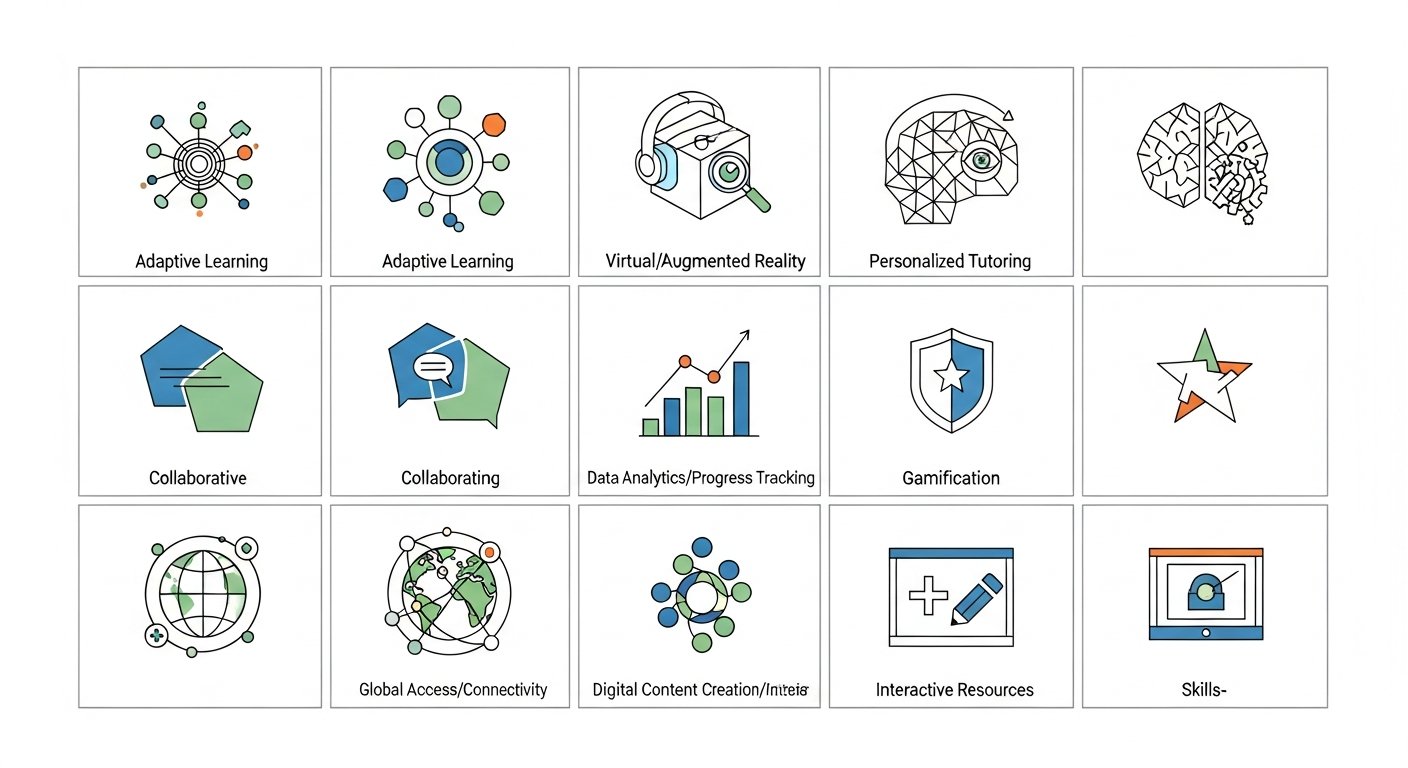
As AI assumes responsibility for routine grading, baseline knowledge delivery, and preliminary remediation, the fundamental identity of the educator shifts drastically. Teachers are evolving into learning experience designers and cognitive coaches. Freed from the administrative burden of manually assessing fifty identical multiple-choice exams, a teacher can redirect that reclaimed time toward high-impact, interpersonal interventions.
When an analytics dashboard alerts an instructor that a specific cohort is struggling with a concept, the educator steps in to facilitate a Socratic seminar, inject emotional resonance into the topic, and connect the abstract theory to local community issues. The machine handles the mechanics of learning; the human handles the meaning. This symbiotic relationship ensures that education remains a deeply social and empathetic endeavor.
The Empathy Premium
A study conducted by the Global Education Innovation Initiative (2026) revealed that in highly automated learning environments, the quality of teacher-student mentorship accounts for 68% of the variance in student resilience and long-term academic persistence. Technology scales access to information, but it cannot scale the psychological safety required for a student to take intellectual risks.
By embracing these tools rather than resisting them, educators can reclaim the core purpose of their profession: mentoring the individual. As we navigate the complex future of education technology, maintaining this delicate balance between algorithmic efficiency and profound human connection will dictate whether these innovations ultimately liberate or constrain the next generation of global citizens. For insights on supporting teachers through this transition, read [CLUSTER LINK: Empowering Teachers with EdTech Tools].
Sources & References
- World Economic Forum. (2026). The Future of AI in Global Education Systems. Geneva, Switzerland.
- Educause. (2026). Horizon Report: Teaching and Learning Edition. Educause Research.
- Center for Digital Education. (2024). K-12 EdTech Utilization and Professional Development Metrics.
- Center for Democracy & Technology. (2023). Algorithmic Bias in Automated Proctoring Frameworks. Washington, D.C.
- Institute for the Future. (2026). Next-Generation Labor Markets and Cognitive Agility. Palo Alto, CA.
- Global Education Innovation Initiative. (2026). The Empathy Premium in Automated Learning Ecosystems. Harvard Graduate School of Education.