What is NLP? Decoding Natural Language Processing in the Age of AI (2026)
Affiliate disclosure: This article may contain affiliate links. Recommendations are independent and editorially driven.
In the rapidly evolving landscape of artificial intelligence, one domain consistently stands out for its profound impact on how humans interact with technology: Natural Language Processing, commonly known as NLP. As we navigate 2026, NLP is no longer a niche academic pursuit but a foundational pillar of countless digital experiences, from the intelligent assistants in our pockets to the sophisticated algorithms powering global businesses. But for many, the fundamental question remains: what is NLP, really?
At its core, NLP is a specialized branch of artificial intelligence and computational linguistics that empowers computers to understand, interpret, and generate human language in a way that is both meaningful and useful. Imagine a world where machines not only process data but also comprehend the nuances of human communication, recognize sentiment, translate languages seamlessly, and even engage in coherent conversation. This is the promise and the increasingly tangible reality of NLP.
This comprehensive guide from futureinsights will demystify NLP, exploring its foundational principles, the sophisticated techniques that make it possible, its vast array of real-world applications across various industries, and the challenges it still faces. We will delve into the exciting trends shaping its future, especially in 2026 and beyond, and provide practical insights into its implementation. Whether you’re a technologist, a business leader, or simply curious about the AI revolution, understanding NLP is crucial to grasping the trajectory of modern innovation and the future of human-computer interaction.
The Foundational Pillars: Defining Natural Language Processing
To truly grasp what is NLP, we must first dissect its core components and objectives. It sits at the intersection of computer science, artificial intelligence, and linguistics, bridging the gap between the structured, logical world of machines and the unstructured, often ambiguous realm of human language.
What Exactly is NLP? The Human-Computer Bridge
Natural Language Processing (NLP) can be precisely defined as a subfield of AI focused on enabling computers to process and analyze large amounts of natural language data. The ultimate goal is to allow machines to “understand” text and spoken words in much the same way human beings do. This understanding encompasses a wide spectrum of capabilities:
- Reading and Comprehension: Machines can extract information, identify key entities, and summarize documents.
- Interpretation: Computers can discern the meaning behind words, sentences, and even entire texts, accounting for context and subtle cues.
- Generation: Systems can produce human-like text, whether for responses in a chatbot, content creation, or translation.
- Interaction: NLP facilitates natural human-computer dialogue through voice assistants and conversational AI.
The challenge is immense because human language is extraordinarily complex. It’s filled with idioms, sarcasm, varying tones, grammatical exceptions, and context-dependent meanings. Unlike programming languages, which are rigid and unambiguous, natural languages are fluid and constantly evolving. NLP algorithms are designed to tackle this inherent complexity.
A Brief History and Evolution of NLP
The quest to teach computers language is not new. Early attempts at machine translation emerged in the 1950s, primarily through rule-based systems that meticulously mapped words and grammatical structures between languages. These systems were often brittle, struggling with ambiguity and the sheer scale of linguistic rules.
The 1980s and 1990s saw a shift towards statistical methods. Instead of explicit rules, researchers began using probabilistic models that learned patterns from vast datasets of text. This paradigm was more robust and adaptable, leading to significant advancements in tasks like spam detection and part-of-speech tagging. The rise of the internet provided an unprecedented amount of text data, fueling this statistical revolution.
The most transformative period for NLP began in the 2010s with the advent of machine learning and, more profoundly, deep learning. Neural networks, particularly recurrent neural networks (RNNs) and later transformer architectures (like BERT and GPT), revolutionized the field. These models can learn highly complex, hierarchical representations of language, capturing context and semantic relationships in ways previously unimaginable. This deep learning era has propelled NLP into mainstream applications, driving the sophisticated AI experiences we see today.
Why NLP Matters More Than Ever in 2026
In 2026, NLP is not just an academic curiosity; it’s a critical technology driving innovation across virtually every sector. Its importance stems from several key factors:
- Explosion of Unstructured Data: The vast majority of digital information generated daily—emails, social media posts, customer reviews, reports, voice recordings—is unstructured text or speech. NLP is the primary tool for extracting value and insights from this deluge of data.
- Democratization of AI: NLP powers user-friendly AI interfaces, making advanced technology accessible to everyone, regardless of technical skill. Conversational AI has become a standard feature in everything from smartphones to smart homes.
- Business Intelligence and Automation: Companies leverage NLP for sentiment analysis to understand customer feedback, automate customer service with chatbots, streamline legal document review, and extract critical information from financial reports, leading to unprecedented efficiencies and insights.
- Global Communication: Advanced machine translation breaks down language barriers, fostering global collaboration and commerce.
- Personalized Experiences: From content recommendations to personalized learning platforms, NLP helps tailor digital experiences to individual users based on their linguistic interactions and preferences.
As AI continues to mature, NLP remains at the forefront, constantly pushing the boundaries of what’s possible in human-computer interaction and information processing. Its role will only grow as our reliance on digital communication intensifies.
The Anatomy of Language: How NLP Processes Human Speech and Text

Understanding what is NLP requires a look under the hood at how it breaks down and interprets human language. This process is complex and multi-layered, moving from basic word recognition to deep contextual understanding.
Language Dissection: From Words to Meaning
For a computer to “understand” language, it must first convert the raw input (text or speech) into a structured format it can process. This involves several fundamental steps:
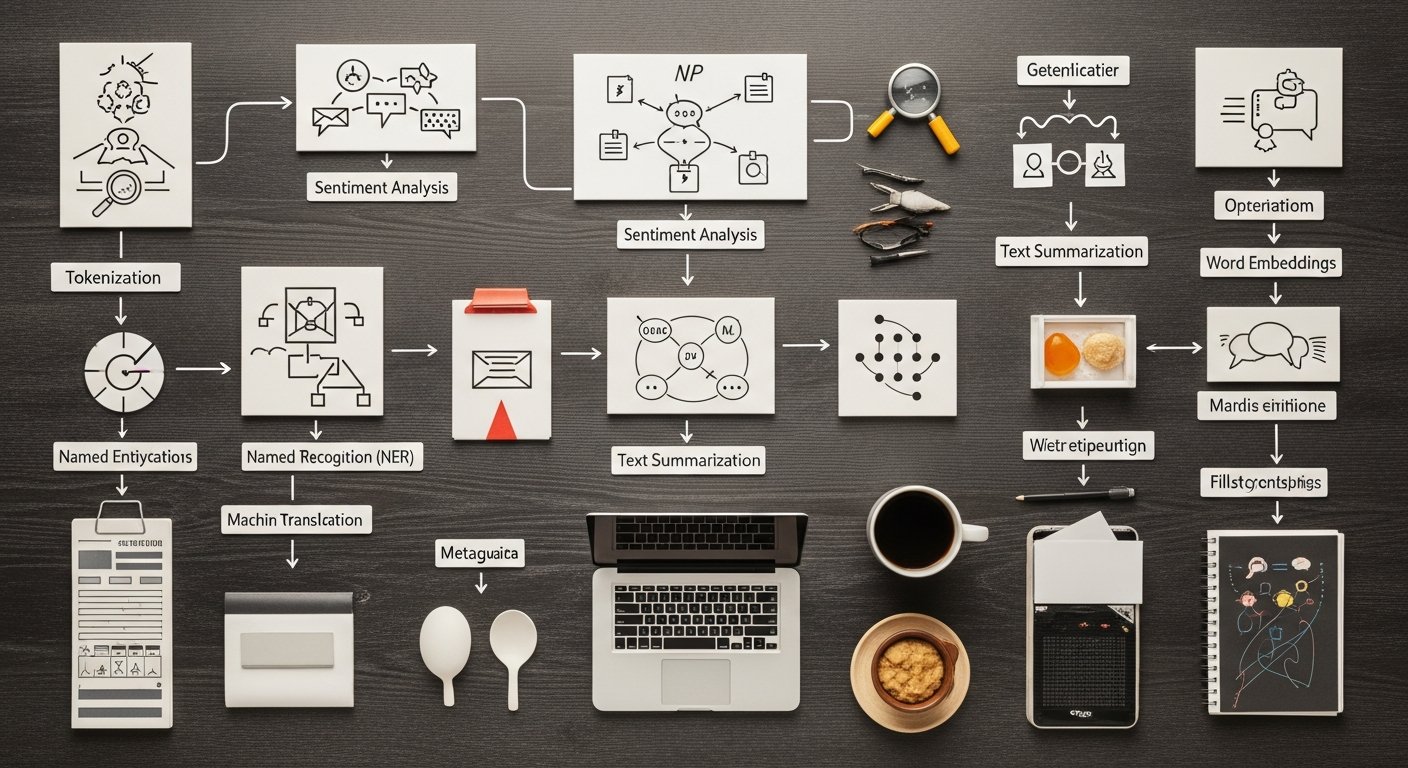
- Tokenization: This is the initial step, where a stream of text is broken down into smaller units called tokens. Tokens are typically words, punctuation marks, or even subword units. For example, “What is NLP?” might be tokenized into [“What”, “is”, “NLP”, “?”].
-
Stemming and Lemmatization: These techniques reduce words to their base or root form.
- Stemming is a crude heuristic process that chops off the ends of words to reduce them to a common root, often without linguistic accuracy (e.g., “running,” “runs,” “ran” -> “run”).
- Lemmatization is a more sophisticated process that uses vocabulary and morphological analysis to return the base or dictionary form of a word (the lemma). It ensures the resulting word is a valid word (e.g., “better” -> “good,” “ran” -> “run”).
- Part-of-Speech (POS) Tagging: This process assigns a grammatical category (e.g., noun, verb, adjective, adverb) to each word in a sentence. Knowing the POS helps disambiguate words that can function as different parts of speech (e.g., “bank” as a financial institution vs. “bank” as the side of a river).
- Named Entity Recognition (NER): NER identifies and classifies named entities in text into predefined categories such as person names, organizations, locations, dates, monetary values, and more. This is crucial for information extraction and understanding who, what, when, and where.
Syntactic Analysis: Understanding Structure
Once individual words are processed, NLP moves to understanding how they relate to each other within a sentence. Syntactic analysis (parsing) focuses on the grammatical structure of sentences.
-
Parsing: This involves analyzing a sentence to determine its grammatical structure according to a set of rules (grammar). It often produces a “parse tree” or a dependency graph that illustrates the relationships between words.
- Constituency Parsing: Breaks a sentence into sub-phrases (constituents) that belong together, like noun phrases and verb phrases.
- Dependency Parsing: Identifies grammatical relationships between words, showing which words modify or are dependent on others (e.g., subject-verb, verb-object).
- Syntactic Ambiguity: Human language is riddled with syntactic ambiguity. For example, “I saw the man with the telescope.” Was the man holding the telescope, or was I using a telescope to see the man? NLP models must learn to resolve such ambiguities, often relying on statistical probabilities derived from vast datasets.
Semantic Analysis: Grasping Meaning
While syntactic analysis tells us *how* words are arranged, semantic analysis aims to understand the *meaning* of the words and sentences. This is arguably the most challenging aspect of NLP, as meaning is highly contextual and often goes beyond literal definitions.
- Word Sense Disambiguation (WSD): Many words have multiple meanings (polysemy), and WSD aims to determine the correct meaning of a word in its specific context (e.g., “bank” as a financial institution vs. a river bank).
- Relationship Extraction: This task identifies semantic relationships between entities in text, such as “CEO of X company,” “located in Y city,” or “founded by Z person.”
- Coreference Resolution: This involves identifying all expressions that refer to the same entity in a text. For example, in “John went to the store. He bought milk,” coreference resolution would link “John” and “He” to the same person.
- Sentiment Analysis: Determines the emotional tone behind a piece of text—positive, negative, neutral, or even specific emotions like joy, anger, or sadness. This requires understanding not just words but also their emotional charge and how they combine to form overall sentiment.
- Embeddings and Contextual Understanding: Modern NLP heavily relies on word embeddings (like Word2Vec, GloVe) and contextualized embeddings (like BERT, GPT). These techniques represent words and even sentences as numerical vectors in high-dimensional spaces. Words with similar meanings or that appear in similar contexts are positioned closer together in this space, allowing models to grasp semantic relationships and context more effectively.
The combination of these techniques allows NLP systems to move beyond simple keyword matching to a deeper, more nuanced understanding of human language, paving the way for truly intelligent applications.
[INLINE IMAGE 1: place after second H2 | alt=”what is nlp concept illustration”]
Key Techniques and Algorithms Powering NLP
The journey of NLP has been marked by a continuous evolution of techniques, moving from simple rule sets to complex neural network architectures. Understanding these methods is key to appreciating what is NLP in its modern form.
Traditional Approaches: Rules and Statistics
Early NLP systems primarily relied on two main paradigms:
-
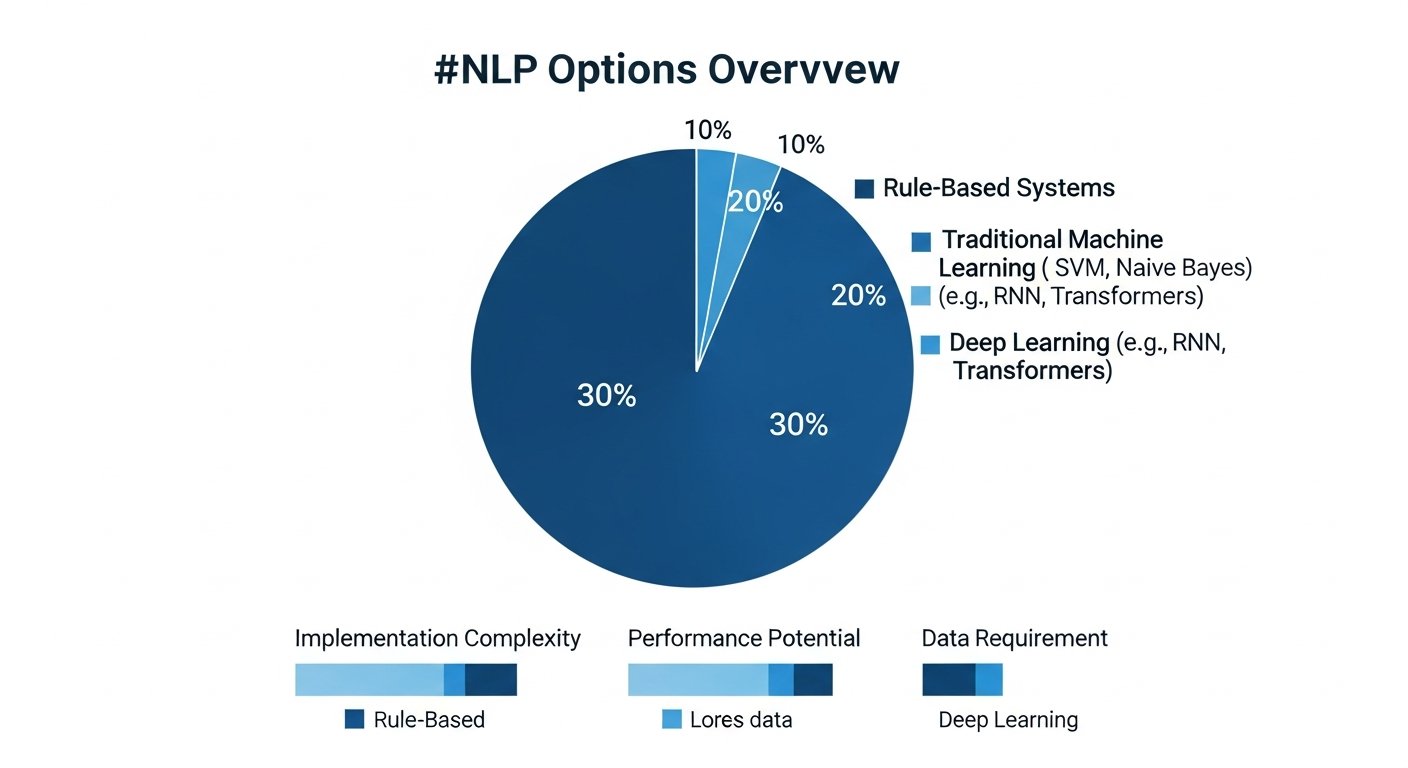
Rule-Based Systems: These systems operate on handcrafted grammatical rules and lexicons. Linguists and domain experts would painstakingly define patterns to identify parts of speech, extract entities, or translate sentences.
- Pros: High precision in well-defined domains, explainable decisions.
- Cons: Extremely labor-intensive to build and maintain, brittle in the face of linguistic variations and exceptions, poor scalability, struggles with ambiguity.
-
Statistical NLP: This marked a significant shift, moving away from explicit rules to probabilistic models learned from data. Instead of saying “X is always Y,” statistical models calculate the probability of X being Y given certain contexts.
- N-gram Models: These are simple probabilistic models that predict the next word in a sequence based on the preceding ‘n’ words. Widely used for tasks like language modeling and speech recognition.
- Hidden Markov Models (HMMs) and Conditional Random Fields (CRFs): These are sequential models particularly effective for tasks like Part-of-Speech tagging and Named Entity Recognition. They consider the sequence of observations (words) and infer the most likely sequence of hidden states (tags).
- Pros: More robust to variations, less human effort than rule-based systems, better scalability with more data.
- Cons: Limited ability to capture long-range dependencies, often require extensive feature engineering, struggle with complex semantic understanding beyond surface-level patterns.
The Rise of Machine Learning in NLP
The integration of general-purpose machine learning algorithms further enhanced NLP’s capabilities. These models allowed for more sophisticated pattern recognition from data, reducing the need for explicit rule definitions.
- Support Vector Machines (SVMs): Powerful classification algorithms used for tasks like text classification (e.g., spam detection, sentiment analysis), where they learn to separate different categories of text data.
- Naive Bayes Classifiers: Simple yet effective probabilistic classifiers, often used for text classification, especially when datasets are large. They assume independence between features (words), which is “naive” but often works surprisingly well.
- Decision Trees and Random Forests: These algorithms build a tree-like model of decisions based on features derived from text. They are interpretable and can handle various types of data.
- Clustering Algorithms: Used for unsupervised learning tasks, like grouping similar documents or discovering topics within a collection of texts (e.g., K-Means, LDA – Latent Dirichlet Allocation).
While these machine learning models offered significant improvements, they often relied heavily on human-engineered features (e.g., counting specific words, checking for capitalization patterns). The next wave of innovation would eliminate much of this manual effort.
Deep Learning Revolution: Transformers and Beyond
Deep learning, a subfield of machine learning using neural networks with many layers, has utterly transformed NLP in recent years. Its ability to automatically learn complex, hierarchical features from raw data has led to unprecedented performance.
- Recurrent Neural Networks (RNNs) and LSTMs/GRUs: Early deep learning models for NLP, RNNs were designed to process sequential data, making them suitable for language. Long Short-Term Memory (LSTM) and Gated Recurrent Unit (GRU) networks addressed the “vanishing gradient” problem of vanilla RNNs, allowing them to capture longer-range dependencies in text, crucial for understanding context. They were effective for tasks like machine translation, speech recognition, and text generation.
- Word Embeddings (Word2Vec, GloVe, FastText): These techniques represent words as dense numerical vectors, where words with similar meanings are located closer in the vector space. This allows models to capture semantic relationships between words, providing a powerful input representation for neural networks.
-
Transformer Models (BERT, GPT, T5, Llama, Gemini): This architecture, introduced in 2017, has revolutionized NLP. Transformers eschew recurrence in favor of a “self-attention” mechanism, which allows the model to weigh the importance of different words in a sentence when processing each word. This enables them to capture long-range dependencies much more efficiently and effectively than RNNs.
- BERT (Bidirectional Encoder Representations from Transformers): Pre-trained by Google, BERT can understand context from both left and right of a word, making it highly effective for tasks like question answering, sentiment analysis, and named entity recognition.
- GPT (Generative Pre-trained Transformer) Series: Developed by OpenAI, these models are exceptional at text generation, completing sentences, writing articles, summarizing, and engaging in conversational AI. They are “generative” in nature.
- Large Language Models (LLMs): The latest generation of transformer models, like GPT-4, Llama 2, and Gemini, are characterized by their enormous size (billions to trillions of parameters) and are pre-trained on vast quantities of text data. They exhibit emergent capabilities, including advanced reasoning, code generation, and complex conversational skills, blurring the lines between narrow AI and more general intelligence. This has truly redefined what is NLP capable of.
The deep learning revolution, especially with transformers and LLMs, has significantly advanced NLP, moving it from basic text processing to sophisticated language understanding and generation, making human-like language interaction with machines an increasingly common reality.
Core Applications of NLP Across Industries

The practical implications of what is NLP are vast and continue to expand, touching nearly every facet of our digital lives and transforming industries. Here are some of the most impactful applications:
Enhancing Customer Experience
NLP is a cornerstone of modern customer service and experience management.
- Chatbots and Virtual Assistants: These systems use NLP to understand user queries, provide relevant information, and even perform tasks. From booking flights to providing technical support, conversational AI significantly improves response times and availability. Companies like Amazon (Alexa), Apple (Siri), and Google (Assistant) rely heavily on sophisticated NLP for their virtual agents.
- Sentiment Analysis: Businesses use NLP to analyze customer reviews, social media posts, and survey responses to gauge public opinion about their products, services, and brand. This helps in understanding customer satisfaction, identifying pain points, and making data-driven decisions for product development and marketing strategies.
- Customer Support Ticket Routing and Summarization: NLP can automatically categorize incoming support requests, routing them to the appropriate department. It can also summarize long email threads or chat transcripts, providing agents with quick context and reducing resolution times.
Automating Information Extraction and Management
One of NLP’s most powerful capabilities is its ability to process and extract meaningful information from large volumes of unstructured text.
- Information Extraction (IE): This involves automatically extracting structured information from unstructured and semi-structured documents. This includes Named Entity Recognition (NER), relationship extraction (e.g., identifying “person X works for organization Y”), and event extraction (e.g., identifying “company Z announced product W”). This is invaluable for research, intelligence gathering, and data analysis.
- Text Summarization: NLP models can generate concise summaries of longer texts, saving users time and highlighting key information. This is critical for digesting news articles, research papers, legal documents, and corporate reports. Both extractive (pulling important sentences) and abstractive (generating new sentences) summarization techniques are employed.
- Document Classification and Categorization: Automatically assigning documents to predefined categories. Examples include classifying emails as spam or not spam, categorizing news articles by topic (sports, politics, technology), or organizing legal documents by type. This helps in efficient information retrieval and organization.
- Fraud Detection and Risk Assessment: In finance and insurance, NLP can analyze text from claims, reports, or communications to identify suspicious patterns, anomalies, or keywords that might indicate fraudulent activity or assess potential risks.
Stay informed on the latest developments in AI industry news through our dedicated coverage.
Bridging Language Barriers
NLP has fundamentally transformed global communication.
- Machine Translation: Services like Google Translate, DeepL, and Microsoft Translator leverage advanced NLP, particularly deep learning models like transformers, to translate text and speech between languages with remarkable accuracy and fluency. This facilitates international business, travel, and cross-cultural communication.
- Cross-lingual Information Retrieval: Allows users to search for information in one language and retrieve relevant documents written in another language.
Driving Business Intelligence and Content Creation
NLP is increasingly used to gain strategic insights and automate content processes.
- Market Research and Competitive Analysis: By analyzing social media, news, and forums, NLP can identify market trends, public opinion on competitors, and emerging opportunities, providing valuable business intelligence.
- Content Generation: With the rise of advanced Large Language Models (LLMs), NLP is now capable of generating human-quality text for various purposes, including marketing copy, news articles, creative writing, and internal reports. This significantly boosts productivity for content teams.
- Healthcare and Life Sciences: NLP helps in analyzing vast amounts of clinical notes, patient records, and biomedical literature to extract insights, support diagnostic processes, identify drug interactions, and accelerate research.
- Legal Tech: Automating the review of contracts, legal briefs, and discovery documents, identifying relevant clauses, and summarizing complex cases, drastically reducing the time and cost associated with legal processes.
These diverse applications underscore the versatility and transformative power of NLP, making it an indispensable technology for innovation and efficiency in 2026 and beyond.
[INLINE IMAGE 2: place after fourth H2 | alt=”what is nlp comparison illustration”]
Challenges and Limitations of NLP
Despite its remarkable progress, what is NLP’s full potential is still tempered by significant challenges that reflect the inherent complexity and fluidity of human language.
The Nuances of Human Language
Human language is not a perfect, logical system; it’s a living, evolving entity fraught with ambiguity and implicit meanings that are difficult for machines to grasp.
-
Ambiguity: This is perhaps the biggest hurdle.
- Lexical Ambiguity (Polysemy/Homonymy): A single word can have multiple meanings (e.g., “bank” as a financial institution or river bank). NLP models must resolve which meaning is intended based on context, which can be difficult, especially with limited surrounding text.
- Syntactic Ambiguity: Sentences can be parsed in multiple grammatically correct ways, leading to different interpretations (e.g., “I saw the man with the telescope”).
- Semantic Ambiguity: The overall meaning of a sentence can be unclear even if individual words and syntax are understood (e.g., sarcasm, irony, metaphors).
- Contextual Understanding: True understanding requires not just the words themselves but the entire context of the conversation, the speaker’s background, cultural references, and even real-world knowledge. NLP models, while improving, still struggle with deep, common-sense reasoning that humans take for granted.
- Idioms, Slang, and Sarcasm: These linguistic phenomena defy literal interpretation. An idiom (“kick the bucket”) means something entirely different from the literal sum of its words. Slang is constantly evolving, and sarcasm relies on tone and shared understanding, making it incredibly hard for machines to detect and interpret accurately.
- Long-Range Dependencies: Understanding how a pronoun refers to a noun mentioned several paragraphs earlier (coreference resolution) or how the beginning of a long sentence affects its end meaning remains a complex task, although transformer models have significantly improved performance here.
Data Dependency and Bias
Modern NLP models, especially deep learning models, are highly data-hungry. This reliance introduces several limitations:
- Need for Massive Datasets: Training high-performing NLP models, particularly Large Language Models (LLMs), requires colossal amounts of text data. Acquiring, cleaning, and labeling this data is expensive, time-consuming, and resource-intensive.
- Data Bias: NLP models learn from the data they are trained on. If this data reflects societal biases (e.g., gender stereotypes, racial prejudice, historical discrimination), the models will inadvertently learn and perpetuate these biases. This can lead to unfair or discriminatory outcomes in applications like hiring tools, loan approvals, or even content generation. Addressing and mitigating bias in training data and model outputs is a critical ethical challenge.
- Lack of Explainability (Black Box Problem): Deep learning models, while powerful, are often “black boxes.” It’s challenging to understand *why* they make a particular prediction or generate a specific piece of text. This lack of transparency can be problematic in high-stakes applications like healthcare or legal tech, where explainability and accountability are paramount.
- Low-Resource Languages: The majority of NLP research and resources are concentrated on high-resource languages (primarily English). Many of the world’s thousands of languages lack the vast text corpora needed to train effective deep learning models, creating a significant disparity in NLP capabilities globally.
Ethical Implications and Responsible AI
Beyond technical limitations, NLP presents significant ethical challenges that require careful consideration:
- Misinformation and Disinformation: The ability of LLMs to generate highly convincing, fluent text makes them powerful tools for creating and spreading misinformation or propaganda, raising concerns about their responsible use.
- Privacy Concerns: Processing large amounts of personal data through NLP systems raises privacy issues, especially concerning sensitive information in contexts like healthcare or customer service.
- Job Displacement and Workforce Transformation: As NLP automates tasks like content creation, customer service, and data analysis, it will undoubtedly transform job markets, necessitating discussions around reskilling and the future of work. Explore our insights on the future-of-work and how automation is reshaping industries.
- Over-reliance and Hallucination: While impressive, LLMs can “hallucinate” or generate factually incorrect yet confidently presented information. Over-reliance on such systems without critical human oversight can lead to significant errors.
Addressing these challenges requires not only continued technological innovation but also a strong emphasis on interdisciplinary collaboration, ethical guidelines, robust data governance, and thoughtful policy-making to ensure NLP’s development and deployment benefits society as a whole.
The Future of NLP: Trends and Emerging Technologies (2026 and Beyond)
The landscape of Natural Language Processing is dynamic, with innovations continuously pushing the boundaries of what is NLP capable of. As we look towards 2026 and beyond, several key trends and emerging technologies are set to shape its trajectory.
Towards More Human-like Understanding and Interaction
The ultimate goal of NLP is to achieve human-level understanding and generation of language. Future advancements will focus on bridging the remaining gaps:
- Multimodal NLP: Current NLP primarily deals with text and speech. The future lies in combining language with other modalities like images, video, and sensory data. Multimodal NLP will allow AI systems to understand context more holistically—for example, interpreting a textual description in conjunction with an image or understanding a verbal command while observing a user’s environment. This is crucial for truly intelligent robots, AR/VR experiences, and sophisticated content understanding.
- Common Sense Reasoning and World Knowledge Integration: While LLMs have vast knowledge, they often lack true common sense reasoning. Future NLP will integrate more explicit or learned common-sense knowledge bases, enabling models to make more logical inferences, understand implications, and avoid absurd responses.
- Empathy and Emotional Intelligence in AI: Moving beyond simple sentiment analysis, future NLP aims to enable AI to detect and respond to subtle emotional cues, tone, and intent with greater empathy. This will be vital for more natural and supportive human-AI interactions in mental health support, customer service, and education.
- Personalized and Adaptive NLP: Systems will become even more adept at adapting to individual user language styles, preferences, and knowledge bases, offering highly personalized interactions and content tailored to specific users.
Ethical NLP and Transparency
As NLP becomes more powerful and pervasive, ethical considerations will move to the forefront, driving research and development:
- Explainable AI (XAI) for NLP: Demand for transparency will increase. Researchers are developing techniques to make NLP models, especially LLMs, less opaque. XAI aims to provide insights into *why* a model made a particular decision or generated specific text, which is critical for trust, debugging, and regulatory compliance.
- Bias Detection and Mitigation: Continued focus on developing robust methods to detect, quantify, and mitigate biases in NLP models and their training data. This includes creating more diverse datasets, developing fairness metrics, and implementing bias-aware training and fine-tuning techniques.
- Responsible AI Development and Governance: Frameworks for ethical AI development, responsible deployment, and regulatory policies will become more mature and widespread, guiding the creation of NLP systems that are fair, accountable, and safe.
- Security and Robustness Against Adversarial Attacks: As NLP models become critical infrastructure, ensuring their security against adversarial attacks (malicious inputs designed to fool the model) will be a significant area of research.
Specialized and Accessible NLP
Beyond generalized models, NLP will see increasing specialization and accessibility:
- Domain-Specific LLMs: While general-purpose LLMs are powerful, the future will see more domain-specific or enterprise-specific LLMs fine-tuned on specialized datasets (e.g., legal LLMs, medical LLMs, financial LLMs) to achieve higher accuracy and relevance within particular fields.
- Low-Resource Language NLP: Significant efforts will be directed towards developing NLP capabilities for languages with limited digital text resources, leveraging techniques like transfer learning, multilingual models, and synthetic data generation to ensure equitable access to AI technologies globally.
- Efficient and Edge NLP: Current LLMs are computationally intensive. Future research will focus on developing more efficient models that can run on smaller devices (edge devices) with less power, making NLP more accessible and enabling new applications in areas like wearables and IoT devices. Techniques like model distillation, quantization, and pruning will become more prevalent.
- Self-Supervised Learning Advancements: Further innovations in self-supervised learning will allow models to learn from even more unlabeled data, reducing the reliance on costly human annotation and making model training more scalable.
The convergence of these trends suggests a future where NLP systems are not only more intelligent and context-aware but also more ethical, transparent, and accessible, deeply integrating into our lives in ways that enhance communication, productivity, and understanding.
Implementing NLP: Tools, Platforms, and Best Practices
For organizations and developers looking to leverage what is NLP, the ecosystem of tools and platforms has grown incredibly rich and sophisticated. Choosing the right approach depends on the project’s scale, required expertise, and specific goals.
Open-Source Powerhouses for NLP Development
The open-source community provides a robust foundation for NLP, offering flexibility and extensive resources:
- NLTK (Natural Language Toolkit): A foundational library for NLP in Python. It’s excellent for academic research, teaching, and getting started with basic NLP tasks. NLTK provides a wide range of algorithms for tokenization, stemming, tagging, parsing, and semantic reasoning, along with access to many corpora and lexical resources. Its strength lies in its comprehensive theoretical coverage and educational value.
- spaCy: Designed for production use, spaCy is known for its speed, efficiency, and ease of use. It offers pre-trained statistical models and word vectors for various languages, making common NLP tasks like tokenization, POS tagging, NER, and dependency parsing highly performant right out of the box. spaCy is particularly favored for building real-world applications where speed and scalability are crucial.
- Hugging Face Transformers: This library has become indispensable for working with state-of-the-art transformer models (like BERT, GPT, T5, Llama, Falcon, etc.). Hugging Face provides thousands of pre-trained models, making it easy to fine-tune them for specific tasks (e.g., text classification, question answering, summarization) or use them for inference. It abstracts away much of the complexity of deep learning frameworks like TensorFlow and PyTorch, democratizing access to powerful LLMs.
- Gensim: A Python library for topic modeling, document similarity, and word embedding. It’s highly optimized for handling large text collections and is useful for tasks like Latent Semantic Analysis (LSA), Latent Dirichlet Allocation (LDA), and Word2Vec.
Cloud-Based NLP Solutions
For businesses seeking scalable, managed, and often more user-friendly NLP capabilities without deep in-house AI expertise, cloud providers offer powerful APIs:
- Google Cloud Natural Language AI: Provides pre-trained models for sentiment analysis, entity analysis (NER), syntax analysis, content classification, and more. It also offers AutoML Natural Language for custom model training with minimal code.
- Amazon Comprehend: A natural language processing (NLP) service that uses machine learning to find insights and relationships in text. It identifies entities, key phrases, language, sentiment, and other common elements in text. Amazon also offers Comprehend Medical for specialized healthcare text analysis.
- Microsoft Azure Cognitive Services for Language: Offers a suite of NLP services including language detection, sentiment analysis, key phrase extraction, named entity recognition, text summarization, and custom text classification. It also provides advanced capabilities like conversational language understanding.
- OpenAI API: Provides access to cutting-edge LLMs like the GPT series (e.g., GPT-3.5, GPT-4) for a wide range of tasks from content generation and summarization to complex reasoning and chatbots. Its flexibility and power make it a popular choice for advanced applications.
Comparison of Popular NLP Tools and Platforms (2026)
Here’s a comparison to help guide your choice:
| Feature/Platform | NLTK | spaCy | Hugging Face Transformers | Google Cloud Natural Language AI |
|---|---|---|---|---|
| Primary Use Case | Research, education, foundational NLP tasks | Production-ready NLP applications, fast processing | State-of-the-art LLM integration, fine-tuning | Managed NLP services, custom models with AutoML |
| Ease of Use (Setup/Basic Tasks) | Moderate (requires manual data/corpus download) | High (easy installation, pre-trained models) | Moderate (API for models, framework integration) | Very High (API calls, minimal setup) |
| Performance & Speed | Lower (primarily for research) | High (optimized CPython implementations) | High (depends on model size & hardware) | High (managed Google infrastructure) |
| Pre-trained Models/LLMs | Basic statistical models, corpora | Excellent pre-trained models for many languages | Thousands of SOTA transformer models | Powerful pre-trained models for common tasks |
| Customization & Flexibility | High (build from scratch) | High (custom components, rule-based matching) | Very High (fine-tuning, custom architectures) | Moderate (AutoML for custom classification/NER) |
| Cost Model | Free (open source) | Free (open source) | Free (open source), but cloud compute costs for training/inference | Pay-per-use API calls, tiered pricing |
| Community & Support | Large academic community | Active developer community | Very active, rapidly growing community | Google Cloud support, extensive documentation |
| Ideal For | Students, researchers, initial explorations | Developers building efficient NLP pipelines | AI engineers, researchers working with LLMs | Businesses needing fast, scalable, managed solutions |
Our emerging tech analysis provides deeper dives into specific AI tools and their market impact.
{
“@context”: “https://schema.org”,
“@graph”: [
{
“@type”: “WebPage”,
“@id”: “https://www.futureinsights.com/what-is-nlp/”,
“url”: “https://www.futureinsights.com/what-is-nlp/”,
“name”: “What Is Nlp”,
“description”: “Article about what is nlp”,
“datePublished”: “2026-06-02”,
“dateModified”: “2026-06-02”,
“inLanguage”: “en-US”,
“isPartOf”: {
“@id”: “https://www.futureinsights.com/#website”
}
},
{
“@type”: “Article”,
“@id”: “https://www.futureinsights.com/what-is-nlp/#article”,
“headline”: “What Is Nlp”,
“name”: “What Is Nlp”,
“description”: “Article about what is nlp”,
“url”: “https://www.futureinsights.com/what-is-nlp/”,
“datePublished”: “2026-06-02”,
“dateModified”: “2026-06-02”,
“author”: {
“@type”: “Person”,
“@id”: “https://www.futureinsights.com/#author”,
“name”: “Editorial Team”
},
“publisher”: {
“@type”: “Organization”,
“@id”: “https://www.futureinsights.com/#organization”,
“name”: “Futureinsights”,
“url”: “https://www.futureinsights.com”
},
“mainEntityOfPage”: {
“@id”: “https://www.futureinsights.com/what-is-nlp/”
},
“keywords”: [
“what is nlp”
],
“articleSection”: “What Is Nlp”
},
{
“@type”: “BreadcrumbList”,
“@id”: “https://www.futureinsights.com/what-is-nlp/#breadcrumb”,
“itemListElement”: [
{
“@type”: “ListItem”,
“position”: 1,
“name”: “Home”,
“item”: “https://www.futureinsights.com”
},
{
“@type”: “ListItem”,
“position”: 2,
“name”: “What Is Nlp”,
“item”: “https://www.futureinsights.com/what-is-nlp/”
}
]
},
{
“@type”: “Organization”,
“@id”: “https://www.futureinsights.com/#organization”,
“name”: “Futureinsights”,
“url”: “https://www.futureinsights.com”
},
{
“@type”: “Person”,
“@id”: “https://www.futureinsights.com/#author”,
“name”: “Editorial Team”
}
]
}
What is NLP? Decoding Natural Language Processing in the Age of AI (2026)
Affiliate disclosure: This article may contain affiliate links. Recommendations are independent and editorially driven.
In the rapidly evolving landscape of artificial intelligence, one domain consistently stands out for its profound impact on how humans interact with technology: Natural Language Processing, commonly known as NLP. As we navigate 2026, NLP is no longer a niche academic pursuit but a foundational pillar of countless digital experiences, from the intelligent assistants in our pockets to the sophisticated algorithms powering global businesses. But for many, the fundamental question remains: what is NLP, really?
At its core, NLP is a specialized branch of artificial intelligence and computational linguistics that empowers computers to understand, interpret, and generate human language in a way that is both meaningful and useful. Imagine a world where machines not only process data but also comprehend the nuances of human communication, recognize sentiment, translate languages seamlessly, and even engage in coherent conversation. This is the promise and the increasingly tangible reality of NLP.
This comprehensive guide from futureinsights will demystify NLP, exploring its foundational principles, the sophisticated techniques that make it possible, its vast array of real-world applications across various industries, and the challenges it still faces. We will delve into the exciting trends shaping its future, especially in 2026 and beyond, and provide practical insights into its implementation. Whether you’re a technologist, a business leader, or simply curious about the AI revolution, understanding NLP is crucial to grasping the trajectory of modern innovation and the future of human-computer interaction.
The Foundational Pillars: Defining Natural Language Processing
To truly grasp what is NLP, we must first dissect its core components and objectives. It sits at the intersection of computer science, artificial intelligence, and linguistics, bridging the gap between the structured, logical world of machines and the unstructured, often ambiguous realm of human language.
What Exactly is NLP? The Human-Computer Bridge
Natural Language Processing (NLP) can be precisely defined as a subfield of AI focused on enabling computers to process and analyze large amounts of natural language data. The ultimate goal is to allow machines to “understand” text and spoken words in much the same way human beings do. This understanding encompasses a wide spectrum of capabilities:
- Reading and Comprehension: Machines can extract information, identify key entities, and summarize documents.
- Interpretation: Computers can discern the meaning behind words, sentences, and even entire texts, accounting for context and subtle cues.
- Generation: Systems can produce human-like text, whether for responses in a chatbot, content creation, or translation.
- Interaction: NLP facilitates natural human-computer dialogue through voice assistants and conversational AI.
The challenge is immense because human language is extraordinarily complex. It’s filled with idioms, sarcasm, varying tones, grammatical exceptions, and context-dependent meanings. Unlike programming languages, which are rigid and unambiguous, natural languages are fluid and constantly evolving. NLP algorithms are designed to tackle this inherent complexity.
A Brief History and Evolution of NLP
The quest to teach computers language is not new. Early attempts at machine translation emerged in the 1950s, primarily through rule-based systems that meticulously mapped words and grammatical structures between languages. These systems were often brittle, struggling with ambiguity and the sheer scale of linguistic rules.
The 1980s and 1990s saw a shift towards statistical methods. Instead of explicit rules, researchers began using probabilistic models that learned patterns from vast datasets of text. This paradigm was more robust and adaptable, leading to significant advancements in tasks like spam detection and part-of-speech tagging. The rise of the internet provided an unprecedented amount of text data, fueling this statistical revolution.
The most transformative period for NLP began in the 2010s with the advent of machine learning and, more profoundly, deep learning. Neural networks, particularly recurrent neural networks (RNNs) and later transformer architectures (like BERT and GPT), revolutionized the field. These models can learn highly complex, hierarchical representations of language, capturing context and semantic relationships in ways previously unimaginable. This deep learning era has propelled NLP into mainstream applications, driving the sophisticated AI experiences we see today.
Why NLP Matters More Than Ever in 2026
In 2026, NLP is not just an academic curiosity; it’s a critical technology driving innovation across virtually every sector. Its importance stems from several key factors:
- Explosion of Unstructured Data: The vast majority of digital information generated daily—emails, social media posts, customer reviews, reports, voice recordings—is unstructured text or speech. NLP is the primary tool for extracting value and insights from this deluge of data.
- Democratization of AI: NLP powers user-friendly AI interfaces, making advanced technology accessible to everyone, regardless of technical skill. Conversational AI has become a standard feature in everything from smartphones to smart homes.
- Business Intelligence and Automation: Companies leverage NLP for sentiment analysis to understand customer feedback, automate customer service with chatbots, streamline legal document review, and extract critical information from financial reports, leading to unprecedented efficiencies and insights.
- Global Communication: Advanced machine translation breaks down language barriers, fostering global collaboration and commerce.
- Personalized Experiences: From content recommendations to personalized learning platforms, NLP helps tailor digital experiences to individual users based on their linguistic interactions and preferences.
As AI continues to mature, NLP remains at the forefront, constantly pushing the boundaries of what’s possible in human-computer interaction and information processing. Its role will only grow as our reliance on digital communication intensifies.
The Anatomy of Language: How NLP Processes Human Speech and Text
Understanding what is NLP requires a look under the hood at how it breaks down and interprets human language. This process is complex and multi-layered, moving from basic word recognition to deep contextual understanding.
Language Dissection: From Words to Meaning
For a computer to “understand” language, it must first convert the raw input (text or speech) into a structured format it can process. This involves several fundamental steps:
- Tokenization: This is the initial step, where a stream of text is broken down into smaller units called tokens. Tokens are typically words, punctuation marks, or even subword units. For example, “What is NLP?” might be tokenized into [“What”, “is”, “NLP”, “?”].
-
Stemming and Lemmatization: These techniques reduce words to their base or root form.
- Stemming is a crude heuristic process that chops off the ends of words to reduce them to a common root, often without linguistic accuracy (e.g., “running,” “runs,” “ran” -> “run”).
- Lemmatization is a more sophisticated process that uses vocabulary and morphological analysis to return the base or dictionary form of a word (the lemma). It ensures the resulting word is a valid word (e.g., “better” -> “good,” “ran” -> “run”).
- Part-of-Speech (POS) Tagging: This process assigns a grammatical category (e.g., noun, verb, adjective, adverb) to each word in a sentence. Knowing the POS helps disambiguate words that can function as different parts of speech (e.g., “bank” as a financial institution vs. “bank” as the side of a river).
- Named Entity Recognition (NER): NER identifies and classifies named entities in text into predefined categories such as person names, organizations, locations, dates, monetary values, and more. This is crucial for information extraction and understanding who, what, when, and where.
Syntactic Analysis: Understanding Structure
Once individual words are processed, NLP moves to understanding how they relate to each other within a sentence. Syntactic analysis (parsing) focuses on the grammatical structure of sentences.
-
Parsing: This involves analyzing a sentence to determine its grammatical structure according to a set of rules (grammar). It often produces a “parse tree” or a dependency graph that illustrates the relationships between words.
- Constituency Parsing: Breaks a sentence into sub-phrases (constituents) that belong together, like noun phrases and verb phrases.
- Dependency Parsing: Identifies grammatical relationships between words, showing which words modify or are dependent on others (e.g., subject-verb, verb-object).
- Syntactic Ambiguity: Human language is riddled with syntactic ambiguity. For example, “I saw the man with the telescope.” Was the man holding the telescope, or was I using a telescope to see the man? NLP models must learn to resolve such ambiguities, often relying on statistical probabilities derived from vast datasets.
Semantic Analysis: Grasping Meaning
While syntactic analysis tells us *how* words are arranged, semantic analysis aims to understand the *meaning* of the words and sentences. This is arguably the most challenging aspect of NLP, as meaning is highly contextual and often goes beyond literal definitions.
- Word Sense Disambiguation (WSD): Many words have multiple meanings (polysemy), and WSD aims to determine the correct meaning of a word in its specific context (e.g., “bank” as a financial institution vs. a river bank).
- Relationship Extraction: This task identifies semantic relationships between entities in text, such as “CEO of X company,” “located in Y city,” or “founded by Z person.”
- Coreference Resolution: This involves identifying all expressions that refer to the same entity in a text. For example, in “John went to the store. He bought milk,” coreference resolution would link “John” and “He” to the same person.
- Sentiment Analysis: Determines the emotional tone behind a piece of text—positive, negative, neutral, or even specific emotions like joy, anger, or sadness. This requires understanding not just words but also their emotional charge and how they combine to form overall sentiment.
- Embeddings and Contextual Understanding: Modern NLP heavily relies on word embeddings (like Word2Vec, GloVe) and contextualized embeddings (like BERT, GPT). These techniques represent words and even sentences as numerical vectors in high-dimensional spaces. Words with similar meanings or that appear in similar contexts are positioned closer together in this space, allowing models to grasp semantic relationships and context more effectively.
The combination of these techniques allows NLP systems to move beyond simple keyword matching to a deeper, more nuanced understanding of human language, paving the way for truly intelligent applications.
[INLINE IMAGE 1: place after second H2 | alt=”what is nlp concept illustration”]
Key Techniques and Algorithms Powering NLP
The journey of NLP has been marked by a continuous evolution of techniques, moving from simple rule sets to complex neural network architectures. Understanding these methods is key to appreciating what is NLP in its modern form.
Traditional Approaches: Rules and Statistics
Early NLP systems primarily relied on two main paradigms:
-
Rule-Based Systems: These systems operate on handcrafted grammatical rules and lexicons. Linguists and domain experts would painstakingly define patterns to identify parts of speech, extract entities, or translate sentences.
- Pros: High precision in well-defined domains, explainable decisions.
- Cons: Extremely labor-intensive to build and maintain, brittle in the face of linguistic variations and exceptions, poor scalability, struggles with ambiguity.
-
Statistical NLP: This marked a significant shift, moving away from explicit rules to probabilistic models learned from data. Instead of saying “X is always Y,” statistical models calculate the probability of X being Y given certain contexts.
- N-gram Models: These are simple probabilistic models that predict the next word in a sequence based on the preceding ‘n’ words. Widely used for tasks like language modeling and speech recognition.
- Hidden Markov Models (HMMs) and Conditional Random Fields (CRFs): These are sequential models particularly effective for tasks like Part-of-Speech tagging and Named Entity Recognition. They consider the sequence of observations (words) and infer the most likely sequence of hidden states (tags).
- Pros: More robust to variations, less human effort than rule-based systems, better scalability with more data.
- Cons: Limited ability to capture long-range dependencies, often require extensive feature engineering, struggle with complex semantic understanding beyond surface-level patterns.
The Rise of Machine Learning in NLP
The integration of general-purpose machine learning algorithms further enhanced NLP’s capabilities. These models allowed for more sophisticated pattern recognition from data, reducing the need for explicit rule definitions.
- Support Vector Machines (SVMs): Powerful classification algorithms used for tasks like text classification (e.g., spam detection, sentiment analysis), where they learn to separate different categories of text data.
- Naive Bayes Classifiers: Simple yet effective probabilistic classifiers, often used for text classification, especially when datasets are large. They assume independence between features (words), which is “naive” but often works surprisingly well.
- Decision Trees and Random Forests: These algorithms build a tree-like model of decisions based on features derived from text. They are interpretable and can handle various types of data.
- Clustering Algorithms: Used for unsupervised learning tasks, like grouping similar documents or discovering topics within a collection of texts (e.g., K-Means, LDA – Latent Dirichlet Allocation).
While these machine learning models offered significant improvements, they often relied heavily on human-engineered features (e.g., counting specific words, checking for capitalization patterns). The next wave of innovation would eliminate much of this manual effort.
Deep Learning Revolution: Transformers and Beyond
Deep learning, a subfield of machine learning using neural networks with many layers, has utterly transformed NLP in recent years. Its ability to automatically learn complex, hierarchical features from raw data has led to unprecedented performance.
- Recurrent Neural Networks (RNNs) and LSTMs/GRUs: Early deep learning models for NLP, RNNs were designed to process sequential data, making them suitable for language. Long Short-Term Memory (LSTM) and Gated Recurrent Unit (GRU) networks addressed the “vanishing gradient” problem of vanilla RNNs, allowing them to capture longer-range dependencies in text, crucial for understanding context. They were effective for tasks like machine translation, speech recognition, and text generation.
- Word Embeddings (Word2Vec, GloVe, FastText): These techniques represent words as dense numerical vectors, where words with similar meanings are located closer in the vector space. This allows models to capture semantic relationships between words, providing a powerful input representation for neural networks.
-
Transformer Models (BERT, GPT, T5, Llama, Gemini): This architecture, introduced in 2017, has revolutionized NLP. Transformers eschew recurrence in favor of a “self-attention” mechanism, which allows the model to weigh the importance of different words in a sentence when processing each word. This enables them to capture long-range dependencies much more efficiently and effectively than RNNs.
- BERT (Bidirectional Encoder Representations from Transformers): Pre-trained by Google, BERT can understand context from both left and right of a word, making it highly effective for tasks like question answering, sentiment analysis, and named entity recognition.
- GPT (Generative Pre-trained Transformer) Series: Developed by OpenAI, these models are exceptional at text generation, completing sentences, writing articles, summarizing, and engaging in conversational AI. They are “generative” in nature.
- Large Language Models (LLMs): The latest generation of transformer models, like GPT-4, Llama 2, and Gemini, are characterized by their enormous size (billions to trillions of parameters) and are pre-trained on vast quantities of text data. They exhibit emergent capabilities, including advanced reasoning, code generation, and complex conversational skills, blurring the lines between narrow AI and more general intelligence. This has truly redefined what is NLP capable of.
The deep learning revolution, especially with transformers and LLMs, has significantly advanced NLP, moving it from basic text processing to sophisticated language understanding and generation, making human-like language interaction with machines an increasingly common reality.
Core Applications of NLP Across Industries
The practical implications of what is NLP are vast and continue to expand, touching nearly every facet of our digital lives and transforming industries. Here are some of the most impactful applications:
Enhancing Customer Experience
NLP is a cornerstone of modern customer service and experience management.
- Chatbots and Virtual Assistants: These systems use NLP to understand user queries, provide relevant information, and even perform tasks. From booking flights to providing technical support, conversational AI significantly improves response times and availability. Companies like Amazon (Alexa), Apple (Siri), and Google (Assistant) rely heavily on sophisticated NLP for their virtual agents.
- Sentiment Analysis: Businesses use NLP to analyze customer reviews, social media posts, and survey responses to gauge public opinion about their products, services, and brand. This helps in understanding customer satisfaction, identifying pain points, and making data-driven decisions for product development and marketing strategies.
- Customer Support Ticket Routing and Summarization: NLP can automatically categorize incoming support requests, routing them to the appropriate department. It can also summarize long email threads or chat transcripts, providing agents with quick context and reducing resolution times.
Automating Information Extraction and Management
One of NLP’s most powerful capabilities is its ability to process and extract meaningful information from large volumes of unstructured text.
- Information Extraction (IE): This involves automatically extracting structured information from unstructured and semi-structured documents. This includes Named Entity Recognition (NER), relationship extraction (e.g., identifying “person X works for organization Y”), and event extraction (e.g., identifying “company Z announced product W”). This is invaluable for research, intelligence gathering, and data analysis.
- Text Summarization: NLP models can generate concise summaries of longer texts, saving users time and highlighting key information. This is critical for digesting news articles, research papers, legal documents, and corporate reports. Both extractive (pulling important sentences) and abstractive (generating new sentences) summarization techniques are employed.
- Document Classification and Categorization: Automatically assigning documents to predefined categories. Examples include classifying emails as spam or not spam, categorizing news articles by topic (sports, politics, technology), or organizing legal documents by type. This helps in efficient information retrieval and organization.
- Fraud Detection and Risk Assessment: In finance and insurance, NLP can analyze text from claims, reports, or communications to identify suspicious patterns, anomalies, or keywords that might indicate fraudulent activity or assess potential risks.
Stay informed on the latest developments in AI industry news through our dedicated coverage.
Bridging Language Barriers
NLP has fundamentally transformed global communication.
- Machine Translation: Services like Google Translate, DeepL, and Microsoft Translator leverage advanced NLP, particularly deep learning models like transformers, to translate text and speech between languages with remarkable accuracy and fluency. This facilitates international business, travel, and cross-cultural communication.
- Cross-lingual Information Retrieval: Allows users to search for information in one language and retrieve relevant documents written in another language.
Driving Business Intelligence and Content Creation
NLP is increasingly used to gain strategic insights and automate content processes.
- Market Research and Competitive Analysis: By analyzing social media, news, and forums, NLP can identify market trends, public opinion on competitors, and emerging opportunities, providing valuable business intelligence.
- Content Generation: With the rise of advanced Large Language Models (LLMs), NLP is now capable of generating human-quality text for various purposes, including marketing copy, news articles, creative writing, and internal reports. This significantly boosts productivity for content teams.
- Healthcare and Life Sciences: NLP helps in analyzing vast amounts of clinical notes, patient records, and biomedical literature to extract insights, support diagnostic processes, identify drug interactions, and accelerate research.
- Legal Tech: Automating the review of contracts, legal briefs, and discovery documents, identifying relevant clauses, and summarizing complex cases, drastically reducing the time and cost associated with legal processes.
These diverse applications underscore the versatility and transformative power of NLP, making it an indispensable technology for innovation and efficiency in 2026 and beyond.
[INLINE IMAGE 2: place after fourth H2 | alt=”what is nlp comparison illustration”]
Challenges and Limitations of NLP
Despite its remarkable progress, what is NLP’s full potential is still tempered by significant challenges that reflect the inherent complexity and fluidity of human language.
The Nuances of Human Language
Human language is not a perfect, logical system; it’s a living, evolving entity fraught with ambiguity and implicit meanings that are difficult for machines to grasp.
-
Ambiguity: This is perhaps the biggest hurdle.
- Lexical Ambiguity (Polysemy/Homonymy): A single word can have multiple meanings (e.g., “bank” as a financial institution or river bank). NLP models must resolve which meaning is intended based on context, which can be difficult, especially with limited surrounding text.
- Syntactic Ambiguity: Sentences can be parsed in multiple grammatically correct ways, leading to different interpretations (e.g., “I saw the man with the telescope”).
- Semantic Ambiguity: The overall meaning of a sentence can be unclear even if individual words and syntax are understood (e.g., sarcasm, irony, metaphors).
- Contextual Understanding: True understanding requires not just the words themselves but the entire context of the conversation, the speaker’s background, cultural references, and even real-world knowledge. NLP models, while improving, still struggle with deep, common-sense reasoning that humans take for granted.
- Idioms, Slang, and Sarcasm: These linguistic phenomena defy literal interpretation. An idiom (“kick the bucket”) means something entirely different from the literal sum of its words. Slang is constantly evolving, and sarcasm relies on tone and shared understanding, making it incredibly hard for machines to detect and interpret accurately.
- Long-Range Dependencies: Understanding how a pronoun refers to a noun mentioned several paragraphs earlier (coreference resolution) or how the beginning of a long sentence affects its end meaning remains a complex task, although transformer models have significantly improved performance here.
Data Dependency and Bias
Modern NLP models, especially deep learning models, are highly data-hungry. This reliance introduces several limitations:
- Need for Massive Datasets: Training high-performing NLP models, particularly Large Language Models (LLMs), requires colossal amounts of text data. Acquiring, cleaning, and labeling this data is expensive, time-consuming, and resource-intensive.
- Data Bias: NLP models learn from the data they are trained on. If this data reflects societal biases (e.g., gender stereotypes, racial prejudice, historical discrimination), the models will inadvertently learn and perpetuate these biases. This can lead to unfair or discriminatory outcomes in applications like hiring tools, loan approvals, or even content generation. Addressing and mitigating bias in training data and model outputs is a critical ethical challenge.
- Lack of Explainability (Black Box Problem): Deep learning models, while powerful, are often “black boxes.” It’s challenging to understand *why* they make a particular prediction or generate a specific piece of text. This lack of transparency can be problematic in high-stakes applications like healthcare or legal tech, where explainability and accountability are paramount.
- Low-Resource Languages: The majority of NLP research and resources are concentrated on high-resource languages (primarily English). Many of the world’s thousands of languages lack the vast text corpora needed to train effective deep learning models, creating a significant disparity in NLP capabilities globally.
Ethical Implications and Responsible AI
Beyond technical limitations, NLP presents significant ethical challenges that require careful consideration:
- Misinformation and Disinformation: The ability of LLMs to generate highly convincing, fluent text makes them powerful tools for creating and spreading misinformation or propaganda, raising concerns about their responsible use.
- Privacy Concerns: Processing large amounts of personal data through NLP systems raises privacy issues, especially concerning sensitive information in contexts like healthcare or customer service.
- Job Displacement and Workforce Transformation: As NLP automates tasks like content creation, customer service, and data analysis, it will undoubtedly transform job markets, necessitating discussions around reskilling and the future of work. Explore our insights on the future-of-work and how automation is reshaping industries.
- Over-reliance and Hallucination: While impressive, LLMs can “hallucinate” or generate factually incorrect yet confidently presented information. Over-reliance on such systems without critical human oversight can lead to significant errors.
Addressing these challenges requires not only continued technological innovation but also a strong emphasis on interdisciplinary collaboration, ethical guidelines, robust data governance, and thoughtful policy-making to ensure NLP’s development and deployment benefits society as a whole.
The Future of NLP: Trends and Emerging Technologies (2026 and Beyond)
The landscape of Natural Language Processing is dynamic, with innovations continuously pushing the boundaries of what is NLP capable of. As we look towards 2026 and beyond, several key trends and emerging technologies are set to shape its trajectory.
Towards More Human-like Understanding and Interaction
The ultimate goal of NLP is to achieve human-level understanding and generation of language. Future advancements will focus on bridging the remaining gaps:
- Multimodal NLP: Current NLP primarily deals with text and speech. The future lies in combining language with other modalities like images, video, and sensory data. Multimodal NLP will allow AI systems to understand context more holistically—for example, interpreting a textual description in conjunction with an image or understanding a verbal command while observing a user’s environment. This is crucial for truly intelligent robots, AR/VR experiences, and sophisticated content understanding.
- Common Sense Reasoning and World Knowledge Integration: While LLMs have vast knowledge, they often lack true common sense reasoning. Future NLP will integrate more explicit or learned common-sense knowledge bases, enabling models to make more logical inferences, understand implications, and avoid absurd responses.
- Empathy and Emotional Intelligence in AI: Moving beyond simple sentiment analysis, future NLP aims to enable AI to detect and respond to subtle emotional cues, tone, and intent with greater empathy. This will be vital for more natural and supportive human-AI interactions in mental health support, customer service, and education.
- Personalized and Adaptive NLP: Systems will become even more adept at adapting to individual user language styles, preferences, and knowledge bases, offering highly personalized interactions and content tailored to specific users.
Ethical NLP and Transparency
As NLP becomes more powerful and pervasive, ethical considerations will move to the forefront, driving research and development:
- Explainable AI (XAI) for NLP: Demand for transparency will increase. Researchers are developing techniques to make NLP models, especially LLMs, less opaque. XAI aims to provide insights into *why* a model made a particular decision or generated specific text, which is critical for trust, debugging, and regulatory compliance.
- Bias Detection and Mitigation: Continued focus on developing robust methods to detect, quantify, and mitigate biases in NLP models and their training data. This includes creating more diverse datasets, developing fairness metrics, and implementing bias-aware training and fine-tuning techniques.
- Responsible AI Development and Governance: Frameworks for ethical AI development, responsible deployment, and regulatory policies will become more mature and widespread, guiding the creation of NLP systems that are fair, accountable, and safe.
- Security and Robustness Against Adversarial Attacks: As NLP models become critical infrastructure, ensuring their security against adversarial attacks (malicious inputs designed to fool the model) will be a significant area of research.
Specialized and Accessible NLP
Beyond generalized models, NLP will see increasing specialization and accessibility:
- Domain-Specific LLMs: While general-purpose LLMs are powerful, the future will see more domain-specific or enterprise-specific LLMs fine-tuned on specialized datasets (e.g., legal LLMs, medical LLMs, financial LLMs) to achieve higher accuracy and relevance within particular fields.
- Low-Resource Language NLP: Significant efforts will be directed towards developing NLP capabilities for languages with limited digital text resources, leveraging techniques like transfer learning, multilingual models, and synthetic data generation to ensure equitable access to AI technologies globally.
- Efficient and Edge NLP: Current LLMs are computationally intensive. Future research will focus on developing more efficient models that can run on smaller devices (edge devices) with less power, making NLP more accessible and enabling new applications in areas like wearables and IoT devices. Techniques like model distillation, quantization, and pruning will become more prevalent.
- Self-Supervised Learning Advancements: Further innovations in self-supervised learning will allow models to learn from even more unlabeled data, reducing the reliance on costly human annotation and making model training more scalable.
The convergence of these trends suggests a future where NLP systems are not only more intelligent and context-aware but also more ethical, transparent, and accessible, deeply integrating into our lives in ways that enhance communication, productivity, and understanding.
Implementing NLP: Tools, Platforms, and Best Practices
For organizations and developers looking to leverage what is NLP, the ecosystem of tools and platforms has grown incredibly rich and sophisticated. Choosing the right approach depends on the project’s scale, required expertise, and specific goals.
Open-Source Powerhouses for NLP Development
The open-source community provides a robust foundation for NLP, offering flexibility and extensive resources:
- NLTK (Natural Language Toolkit): A foundational library for NLP in Python. It’s excellent for academic research, teaching, and getting started with basic NLP tasks. NLTK provides a wide range of algorithms for tokenization, stemming, tagging, parsing, and semantic reasoning, along with access to many corpora and lexical resources. Its strength lies in its comprehensive theoretical coverage and educational value.
- spaCy: Designed for production use, spaCy is known for its speed, efficiency, and ease of use. It offers pre-trained statistical models and word vectors for various languages, making common NLP tasks like tokenization, POS tagging, NER, and dependency parsing highly performant right out of the box. spaCy is particularly favored for building real-world applications where speed and scalability are crucial.
- Hugging Face Transformers: This library has become indispensable for working with state-of-the-art transformer models (like BERT, GPT, T5, Llama, Falcon, etc.). Hugging Face provides thousands of pre-trained models, making it easy to fine-tune them for specific tasks (e.g., text classification, question answering, summarization) or use them for inference. It abstracts away much of the complexity of deep learning frameworks like TensorFlow and PyTorch, democratizing access to powerful LLMs.
- Gensim: A Python library for topic modeling, document similarity, and word embedding. It’s highly optimized for handling large text collections and is useful for tasks like Latent Semantic Analysis (LSA), Latent Dirichlet Allocation (LDA), and Word2Vec.
Cloud-Based NLP Solutions
For businesses seeking scalable, managed, and often more user-friendly NLP capabilities without deep in-house AI expertise, cloud providers offer powerful APIs:
- Google Cloud Natural Language AI: Provides pre-trained models for sentiment analysis, entity analysis (NER), syntax analysis, content classification, and more. It also offers AutoML Natural Language for custom model training with minimal code.
- Amazon Comprehend: A natural language processing (NLP) service that uses machine learning to find insights and relationships in text. It identifies entities, key phrases, language, sentiment, and other common elements in text. Amazon also offers Comprehend Medical for specialized healthcare text analysis.
- Microsoft Azure Cognitive Services for Language: Offers a suite of NLP services including language detection, sentiment analysis, key phrase extraction, named entity recognition, text summarization, and custom text classification. It also provides advanced capabilities like conversational language understanding.
- OpenAI API: Provides access to cutting-edge LLMs like the GPT series (e.g., GPT-3.5, GPT-4) for a wide range of tasks from content generation and summarization to complex reasoning and chatbots. Its flexibility and power make it a popular choice for advanced applications.
Comparison of Popular NLP Tools and Platforms (2026)
Here’s a comparison to help guide your choice:
| Feature/Platform | NLTK | spaCy | Hugging Face Transformers | Google Cloud Natural Language AI |
|---|---|---|---|---|
| Primary Use Case | Research, education, foundational NLP tasks | Production-ready NLP applications, fast processing | State-of-the-art LLM integration, fine-tuning | Managed NLP services, custom models with AutoML |
| Ease of Use (Setup/Basic Tasks) | Moderate (requires manual data/corpus download) | High (easy installation, pre-trained models) | Moderate (API for models, framework integration) | Very High (API calls, minimal setup) |
| Performance & Speed | Lower (primarily for research) | High (optimized CPython implementations) | High (depends on model size & hardware) | High (managed Google infrastructure) |
| Pre-trained Models/LLMs | Basic statistical models, corpora | Excellent pre-trained models for many languages | Thousands of SOTA transformer models | Powerful pre-trained models for common tasks |
| Customization & Flexibility | High (build from scratch) | High (custom components, rule-based matching) | Very High (fine-tuning, custom architectures) | Moderate (AutoML for custom classification/NER) |
| Cost Model | Free (open source) | Free (open source) | Free (open source), but cloud compute costs for training/inference | Pay-per-use API calls, tiered pricing |
| Community & Support | Large academic community | Active developer community | Very active, rapidly growing community | Google Cloud support, extensive documentation |
| Ideal For | Students, researchers, initial explorations | Developers building efficient NLP pipelines | AI engineers, researchers working with LLMs | Businesses needing fast, scalable, managed solutions |
Our emerging tech analysis provides deeper dives into specific AI tools and their market impact.