
How Does Generative AI Work? Unveiling the Mechanisms Behind AI’s Creative Revolution
Affiliate disclosure: This article may contain affiliate links. Recommendations are independent and editorially driven.
In 2026, generative artificial intelligence has become an undeniable force, reshaping industries, inspiring creativity, and challenging our very definitions of originality. From crafting realistic images and compelling prose to designing novel proteins and composing unique musical scores, generative AI stands at the forefront of technological innovation. But beyond the impressive outputs and viral trends, a fundamental question persists: how does generative AI work? What are the underlying principles, the intricate algorithms, and the vast computational processes that allow machines to produce something entirely new?
This deep dive by futureinsights aims to demystify the complex world of generative AI. We will journey from the foundational concepts of neural networks and deep learning to the cutting-edge architectures like GANs, VAEs, Transformers, and Diffusion Models that power today’s most sophisticated systems. Understanding how does generative AI work is not merely an academic exercise; it’s essential for anyone navigating the future of technology, creativity, and work. As these models become increasingly integrated into our daily lives, a comprehensive grasp of their mechanics empowers us to better leverage their potential, mitigate their risks, and contribute to their responsible development.
Understanding Generative AI: More Than Just Prediction
To truly grasp how does generative AI work, we must first distinguish it from its older sibling: discriminative AI. While discriminative models excel at classification and prediction—like telling a cat from a dog, or predicting stock prices—generative models embark on a far more ambitious task: creation. They don’t just recognize patterns; they learn to produce new data that mirrors the characteristics of their training data, yet is distinct and novel.
Discriminative vs. Generative AI: A Fundamental Difference
Imagine you have a vast collection of photographs. A discriminative AI might learn to categorize these photos by subject, identifying all pictures of “cats” or “landscapes.” Its goal is to draw a boundary between different classes of data. Its output is typically a label or a probability. Conversely, a generative AI, trained on the same dataset, wouldn’t just label images; it would learn the inherent distribution and features of those images to create entirely new, plausible cat pictures or landscapes that never existed before. Its output is new data.
The Promise of Creativity and Novel Content
The ability of generative AI to synthesize new content unlocks unprecedented possibilities across numerous domains. In the creative arts, it can assist artists, musicians, and writers by generating drafts, variations, or entirely new compositions. In science, it accelerates drug discovery by proposing novel molecular structures or material designs. For businesses, it can revolutionize product design, marketing content creation, and even customer experience by generating personalized interactions. This capacity for innovation is why understanding how does generative AI work is so crucial for anyone looking to stay ahead in the technological landscape of 2026.
Brief History and Evolution of Generative Models
While the current wave of generative AI feels revolutionary, its roots trace back decades. Early attempts involved statistical models like Markov chains for text generation. The advent of deep learning in the 2010s, with its capacity to process vast amounts of data through multi-layered neural networks, truly propelled generative AI into the spotlight. Key milestones included the introduction of Variational Autoencoders (VAEs) in 2013, Generative Adversarial Networks (GANs) in 2014, and the transformative power of Transformers for sequence data starting in 2017. More recently, Diffusion Models have pushed the boundaries of image and audio synthesis, showcasing rapid evolution and continuous innovation in the field.
The Foundational Pillars: Neural Networks and Deep Learning
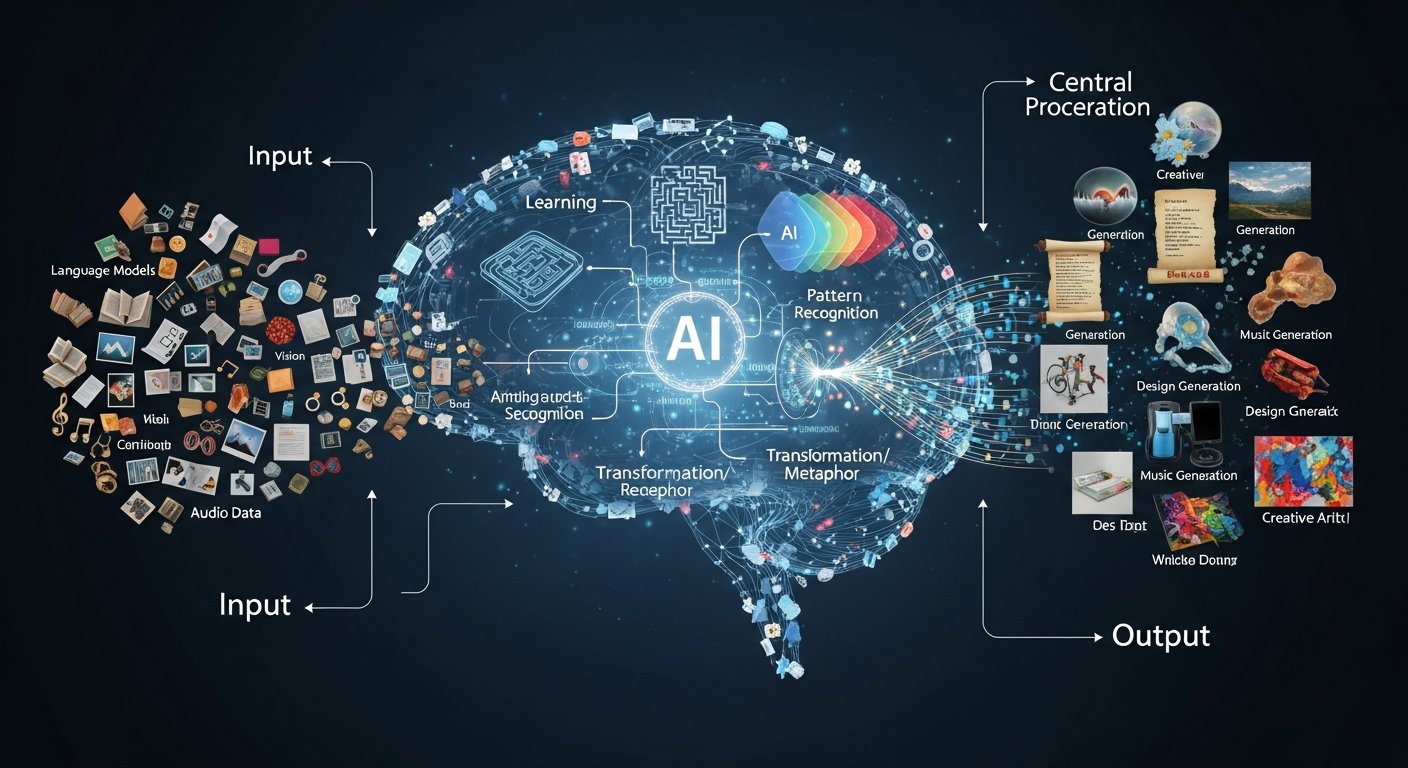
At the heart of virtually every sophisticated generative AI model lies the architecture of neural networks, specifically deep neural networks, which give rise to the field of deep learning. To understand how does generative AI work, one must first grasp these fundamental building blocks.
Artificial Neurons and Layers: Mimicking the Brain
An artificial neural network is a computational model inspired by the structure and function of biological neural networks in the human brain. It consists of interconnected “neurons” organized into layers. Each neuron takes a set of inputs, performs a simple computation (a weighted sum of inputs plus a bias), and then applies an activation function to produce an output. This output then serves as an input to neurons in the subsequent layer.
- Input Layer: Receives the raw data (e.g., pixel values of an image, words in a sentence).
- Hidden Layers: One or more layers between the input and output layers, where the primary computation and feature extraction occur. The “depth” of a network (many hidden layers) is what gives rise to “deep learning.”
- Output Layer: Produces the final result of the network (e.g., a generated image, a sequence of text).
Weights, Biases, and Activation Functions
The “knowledge” or “learning” within a neural network is encoded in its weights and biases. Weights determine the strength of the connection between neurons, while biases adjust the activation threshold. During training, these parameters are continuously adjusted. Activation functions introduce non-linearity into the network, allowing it to learn complex, non-linear relationships in the data. Without them, a neural network would simply be a linear regression model, regardless of its depth.
Backpropagation and Gradient Descent: The Learning Process
The magic of deep learning, and central to how does generative AI work, is its ability to learn from data. This learning largely relies on two key algorithms:
- Forward Pass: Input data is fed through the network, layer by layer, until an output is produced.
- Loss Function: A loss function quantifies the difference between the network’s output and the desired output (or in generative AI, a measure of how “good” the generated output is). The goal is to minimize this loss.
- Backpropagation: The calculated loss is then propagated backward through the network. This algorithm efficiently calculates the gradient of the loss function with respect to each weight and bias in the network, essentially telling us how much each parameter contributed to the error.
- Gradient Descent: Armed with these gradients, an optimization algorithm (like stochastic gradient descent, Adam, etc.) adjusts the weights and biases in the direction that reduces the loss. This iterative process of forward pass, loss calculation, backpropagation, and parameter update is repeated over millions or billions of data points (epochs) until the network learns to perform its task effectively.
For generative models, the “desired output” isn’t a simple label but rather a complex distribution of the training data. The loss function often measures how well the generated data resembles the real data or adheres to certain structural properties learned during training. This iterative refinement is what allows generative models to learn the intricate patterns and structures necessary to create novel, coherent outputs.
[INLINE IMAGE 1: place after second H2 | alt=”how does generative ai work concept illustration”]
Core Architectures Driving Generative AI
While neural networks form the foundation, different specialized architectures enable generative AI to tackle various tasks, from text to images to audio. Understanding these distinct approaches is key to appreciating the versatility of how does generative AI work.
Generative Adversarial Networks (GANs)
Introduced by Ian Goodfellow and colleagues in 2014, GANs are one of the most innovative and powerful architectures for generating realistic data, particularly images. The core idea is a game-theoretic approach involving two competing neural networks:
- Generator (G): This network takes a random noise vector (often called a “latent vector”) as input and transforms it into a synthetic data sample (e.g., an image). Its goal is to produce outputs so realistic that they can fool the Discriminator.
- Discriminator (D): This network acts as a binary classifier. It takes both real data samples from the training set and synthetic samples from the Generator. Its goal is to accurately distinguish between real and fake data.
These two networks are trained simultaneously in a “minimax game.” The Generator tries to minimize the Discriminator’s ability to distinguish real from fake, while the Discriminator tries to maximize its accuracy. This adversarial process drives both networks to improve, with the Generator continuously refining its output to become more convincing, and the Discriminator becoming better at detecting subtle flaws. Eventually, if trained successfully, the Generator learns to produce highly realistic data that the Discriminator can no longer reliably differentiate from real data. This competitive dance is a fundamental aspect of how does generative AI work in the GAN framework.
Variational Autoencoders (VAEs)
VAEs, introduced in 2013, represent a probabilistic approach to generative modeling. Unlike GANs, which pit two networks against each other, VAEs aim to learn a compressed, continuous representation of the input data, known as the “latent space.” A VAE consists of two main parts:
- Encoder: This network takes an input data sample (e.g., an image) and maps it to a statistical distribution (mean and variance) in the latent space, rather than a single point. This probabilistic encoding allows for smoother transitions and interpolation in the latent space.
- Decoder: This network takes a sample from the latent space (drawn from the distribution learned by the encoder) and reconstructs the original data sample.
The VAE is trained to minimize two loss components: a reconstruction loss (how well the decoder reconstructs the input) and a regularization loss (which ensures the latent space is well-behaved, typically by encouraging the latent distributions to be close to a standard normal distribution). Once trained, the Decoder can be used as a generative model by simply sampling new points from the latent space and feeding them through the Decoder. VAEs are known for generating diverse outputs and allowing for meaningful interpolation between samples in the latent space, though their outputs can sometimes be blurrier than GANs.
Transformers (Decoder-Only for Generative Tasks)
The Transformer architecture, first introduced in 2017, revolutionized natural language processing (NLP) and is now central to Large Language Models (LLMs) and many other sequence-to-sequence tasks. While full Transformers have an encoder-decoder structure, generative AI primarily leverages the decoder-only variant, exemplified by models like GPT (Generative Pre-trained Transformer).
- Self-Attention Mechanism: The core innovation of Transformers is the self-attention mechanism. Instead of processing sequences word by word (like RNNs), self-attention allows the model to weigh the importance of all other words in the input sequence when processing a single word. This enables it to capture long-range dependencies efficiently. For generative tasks, this means the model can consider the entire context of what it has generated so far to predict the next token.
- Positional Encoding: Since self-attention processes words in parallel without inherent order, positional encodings are added to input embeddings to inject information about the relative or absolute position of tokens in the sequence.
- Stacked Layers: Decoder-only Transformers consist of multiple identical layers, each containing multi-head self-attention and feed-forward neural networks.
When used for generation, these models predict the next token (word, subword, character, or even pixel) in a sequence, given all the preceding tokens. This autoregressive nature, combined with their ability to process vast contexts, allows them to generate highly coherent, contextually relevant, and grammatically correct text, and increasingly, other forms of sequential data. This mechanism fundamentally explains how does generative AI work for large language models.
Diffusion Models
Diffusion Models are the latest breakthrough in generative AI, especially for high-quality image and audio synthesis, rapidly surpassing GANs in many aspects. Their operation is inspired by thermodynamics and involves a two-phase process:
- Forward Diffusion (Noising) Process: This phase gradually adds Gaussian noise to an image (or other data) over a series of timesteps until the image is completely transformed into pure noise. This process is fixed and requires no learning.
- Reverse Diffusion (Denoising) Process: This is the learning phase. A neural network (often a U-Net architecture) is trained to predict and reverse the noise at each timestep, effectively learning to denoise a noisy image back to a cleaner version. This network learns to slowly and iteratively remove the noise, guided by a given condition (e.g., a text prompt).
To generate a new image, the model starts with pure random noise and iteratively applies the learned denoising steps, gradually transforming the noise into a coherent, high-fidelity image. Diffusion models are lauded for their exceptional image quality, diversity of generation, and stability during training compared to GANs. They represent a significant advancement in how does generative AI work for producing highly complex and realistic sensory data.
To summarize these core architectures and their primary strengths:
| Architecture | Primary Mechanism | Key Strength(s) | Typical Outputs | Training Stability |
|---|---|---|---|---|
| Generative Adversarial Networks (GANs) | Adversarial game between Generator & Discriminator | High visual realism, sharp outputs | Images, video frames, audio | Can be unstable, mode collapse risk |
| Variational Autoencoders (VAEs) | Probabilistic encoding/decoding via latent space | Diverse outputs, smooth latent space interpolation | Images, text, molecular structures | Relatively stable, outputs often blurry |
| Transformers (Decoder-only) | Self-attention for sequence generation (autoregressive) | Long-range coherence, contextual understanding | Text (LLMs), code, sequences, multimodal | Stable for large models, data-hungry |
| Diffusion Models | Iterative denoising of a noisy signal | Exceptional quality, diverse and detailed outputs | Images, audio, video, 3D data | Highly stable, computationally intensive |
Training Generative AI: From Raw Data to Creative Intelligence
The sophistication of generative AI models isn’t just about their architecture; it’s profoundly influenced by the data they consume and the training methodologies employed. This section delves into the intricate process that transforms vast datasets into models capable of creative intelligence, shedding light on how does generative AI work from a learning perspective.
Data Collection and Preprocessing: The Fuel of AI
The adage “garbage in, garbage out” holds especially true for generative AI. The quality, quantity, and diversity of the training data are paramount. Models designed to generate text are trained on massive corpora of books, articles, websites, and conversations. Image generators learn from billions of images and their corresponding descriptive captions. This data needs meticulous collection, cleaning, and preprocessing:
- Scale: Modern generative models often require terabytes or even petabytes of data to learn sufficiently rich representations.
- Quality: Data must be accurate, relevant, and free from significant noise or errors. For example, text data needs to be grammatically correct and coherent.
- Diversity: The dataset must cover a broad range of styles, subjects, and contexts to prevent the model from becoming biased or limited in its creative scope.
- Ethical Sourcing: Increasingly, attention is paid to how data is collected, ensuring consent, avoiding sensitive personal information, and addressing potential biases.
Preprocessing involves tasks like tokenization for text (breaking sentences into words or subword units), normalization for images (rescaling pixel values), and augmentation (creating variations of existing data to increase dataset size and model robustness).
Unsupervised and Self-supervised Learning: Learning Without Explicit Labels
A key aspect of how does generative AI work is its reliance on learning paradigms that don’t require meticulously hand-labeled data. This is crucial given the sheer volume of data needed for training:
- Unsupervised Learning: In its purest form, unsupervised learning involves finding patterns and structures in unlabeled data. VAEs, for instance, learn a latent representation by trying to reconstruct their input, essentially learning features without explicit guidance.
- Self-supervised Learning: This is a powerful variant where the model creates its own supervisory signals from the data. For example, in NLP, a model might be tasked with predicting a masked word in a sentence (like “The cat sat on the ___”) or predicting the next word in a sequence. The “label” is inherently present in the data itself. This allows models to learn powerful representations of language or other data types without human annotation. Many large language models are initially trained using self-supervised objectives.
Pre-training: Building Foundation Models
The concept of “foundation models” is central to modern generative AI. These are very large models trained on vast and diverse datasets, typically using self-supervised learning, to perform a wide range of general-purpose tasks. The pre-training phase is incredibly resource-intensive, often taking months on thousands of GPUs. During pre-training, the model learns a deep understanding of the underlying data distribution, grammar, semantics, styles, and common sense knowledge prevalent in the dataset. This foundational knowledge is crucial to understanding how does generative AI work at its largest scales.
Fine-tuning and Transfer Learning: Adapting for Specific Tasks
Once a foundation model is pre-trained, it possesses a general capability that can be adapted to specific, narrower tasks. This process is called fine-tuning:
- Transfer Learning: The pre-trained model’s learned features are highly valuable. Instead of training a new model from scratch, we “transfer” the knowledge by using the pre-trained model as a starting point.
- Fine-tuning: A smaller, task-specific dataset is then used to further train (fine-tune) some or all of the pre-trained model’s parameters. This allows the model to specialize in a particular domain or style (e.g., generating legal text, creating images in a specific artistic style). Fine-tuning often requires significantly less data and computational power than pre-training.
Reinforcement Learning from Human Feedback (RLHF)
A critical innovation in aligning generative AI, particularly LLMs, with human values and intentions is Reinforcement Learning from Human Feedback (RLHF). While pre-training provides general knowledge, it doesn’t inherently guarantee that the model’s outputs are helpful, harmless, or honest. RLHF bridges this gap:
- Human Preference Data: Humans rate or rank different outputs generated by the AI for a given prompt, indicating which are preferred (e.g., more helpful, less offensive, factually correct).
- Reward Model Training: A separate “reward model” is trained to predict human preferences based on this feedback data.
- Reinforcement Learning: The generative AI model is then fine-tuned using reinforcement learning, where the reward model provides a “reward” signal. The AI learns to generate responses that maximize this reward, thereby aligning its behavior with desired human preferences.
RLHF has been instrumental in making models like ChatGPT more conversational, safe, and useful, fundamentally altering how does generative AI work in practical, user-facing applications.
[INLINE IMAGE 2: place after fourth H2 | alt=”how does generative ai work comparison illustration”]
The Generative Process: Bringing Ideas to Life
With a trained model and a deep understanding of how does generative AI work, the next step is the actual generation. This involves transforming abstract ideas or latent representations into tangible outputs, often guided by human input.
Latent Space Exploration: The “Imagination” of AI
Many generative models, especially VAEs and GANs, operate with a “latent space.” This is a lower-dimensional, abstract representation of the data. Imagine it as a compressed, meaningful code. Each point in this latent space corresponds to a unique potential output. When you prompt a generative AI, you’re essentially providing instructions that guide the model to a specific region or point within this latent space.
- Continuous Representation: A well-designed latent space is continuous, meaning that small changes in the latent vector result in small, meaningful changes in the generated output. This allows for smooth interpolation between different concepts.
- Semantic Meaning: Often, different directions or dimensions within the latent space correspond to semantically meaningful features. For example, moving along one axis in an image latent space might smoothly transition a generated face from young to old, or from smiling to frowning.
The AI’s “imagination” stems from its ability to explore this latent space and synthesize novel combinations of features it has learned from its training data. By sampling from different points in this space, it can create an infinite variety of outputs.
Sampling and Decoding: Turning Latent Representations into Tangible Outputs
Once a latent vector or a starting point of noise is chosen (either randomly or guided by a prompt), the generative model performs its core task: transforming this abstract representation into a concrete output.
- For VAEs: The decoder network takes the sampled latent vector and progressively upsamples and transforms it through its layers to reconstruct a full-fledged data sample, such as an image.
- For GANs: The generator network takes the random noise vector (which can be thought of as a latent representation) and maps it through its layers, generating an image or other data type designed to fool the discriminator.
- For Diffusion Models: The process begins with pure noise, and the denoising network iteratively refines this noise over hundreds or thousands of steps, gradually removing the noise and adding meaningful structure until a clear image emerges.
- For LLMs (Transformers): Given a prompt, the model predicts the most probable next token based on its learned language patterns. This predicted token is then added to the sequence, and the process repeats, generating token by token until a complete response is formed or a stop condition is met. This autoregressive sampling is fundamental to how does generative AI work for text.
Conditional Generation: Guiding AI with Prompts
While generative AI can produce random outputs, its true power often comes from conditional generation – the ability to generate content based on specific instructions or conditions. This is where user prompts come into play.
- Text-to-Image: A text prompt like “a photorealistic image of an astronaut riding a horse on the moon in a whimsical style” provides rich conditions for a Diffusion Model to generate a corresponding image.
- Text-to-Text: A prompt for an LLM like “Write a short story about a detective solving a mystery in a futuristic city” guides the AI’s language generation process, influencing plot, setting, and style.
- Other Modalities: Similarly, prompts can guide audio generation (e.g., “upbeat jazz music with a trumpet solo”), code generation (e.g., “Python function to sort a list”), or 3D model generation.
The prompt essentially steers the model through its latent space or influences the initial noise, pushing it towards generating outputs that align with the user’s intent. The effectiveness of this guidance depends on the quality of the prompt and the model’s understanding of the semantics embedded within it.
The Art of Prompt Engineering: Maximizing Generative AI Output
Diverse Applications: Where Generative AI Shines
The theoretical understanding of how does generative AI work translates into a myriad of practical applications that are transforming industries in 2026. Its ability to create novel, contextually relevant content makes it an invaluable tool across various domains.
Text Generation: LLMs, Chatbots, and Content Creation
Large Language Models (LLMs) are perhaps the most publicly visible manifestation of generative AI. They excel at understanding and generating human-like text:
- Content Creation: Generating articles, marketing copy, social media posts, email drafts, and summaries. This assists writers, marketers, and researchers in accelerating their workflows.
- Conversational AI (Chatbots): Powering more sophisticated and natural-sounding chatbots and virtual assistants that can answer complex queries, hold coherent conversations, and even provide emotional support.
- Code Generation: Transforming natural language instructions into functional code snippets, assisting developers with prototyping, debugging, and auto-completion.
- Translation & Localization: Advanced translation services that capture nuance and context more effectively than older statistical methods.
Image & Video Synthesis: Art, Design, and Virtual Worlds
Generative AI’s impact on visual media is profound, creating everything from photorealistic images to fantastical artwork:
- Digital Art and Design: Assisting artists in generating concept art, creating textures, iterating on designs, and producing unique visual styles. Text-to-image models are widely used for rapid prototyping.
- Virtual Photography and Product Mockups: Generating high-quality images of products in various settings without the need for physical photo shoots.
- Gaming and Virtual Reality: Automatically generating vast open-world environments, character variations, and assets, significantly reducing development time and cost.
- Deepfakes and Synthetic Media: While posing ethical challenges, the ability to synthesize realistic video and audio is also used in legitimate applications like film post-production, historical re-enactments, and personalized content delivery.
Audio & Music Creation: Soundscapes, Compositions, and Voice Synthesis
Generative AI is also transforming the auditory landscape:
- Music Composition: Generating original musical pieces, background scores for films, or variations on existing melodies. AI can compose in various genres and styles.
- Sound Design: Creating realistic sound effects for games, movies, and virtual environments, from ambient noise to specific actions.
- Voice Synthesis (Text-to-Speech): Producing highly natural and expressive synthetic voices for audiobooks, virtual assistants, narration, and even dubbing in multiple languages.
- Speech-to-Speech Translation: Translating spoken language while retaining the original speaker’s voice and intonation.
Code Generation & Software Development: AI as a Co-pilot
Generative AI is increasingly becoming an indispensable tool for software developers:
- Automated Code Generation: Writing boilerplate code, generating functions from natural language descriptions, and even translating code between programming languages.
- Debugging and Refactoring: Identifying potential errors in code and suggesting optimizations or alternative implementations.
- Test Case Generation: Automatically creating test cases to ensure software quality and robustness.
- Intelligent Autocompletion: Going beyond simple word completion to suggest entire lines or blocks of code based on context and best practices.
Drug Discovery & Material Science: Accelerating R&D
Beyond creative industries, generative AI is making profound impacts in scientific research:
- Novel Molecule Design: Generating candidates for new drugs, vaccines, or materials with desired properties, significantly accelerating the early stages of research and development.
- Protein Folding Prediction: While not strictly generative in the same way as image synthesis, models like AlphaFold generate protein structures, which can be seen as “creating” a spatial configuration from an amino acid sequence.
- Optimizing Chemical Reactions: Suggesting new reaction pathways or conditions to synthesize specific compounds more efficiently.
In all these applications, the core principle of how does generative AI work—learning from existing data to create novel, plausible outputs—is consistently applied, albeit with specialized architectures and training data tailored to each domain.
Challenges and Limitations in Generative AI
Despite its remarkable capabilities, generative AI is not without its significant challenges and limitations. Acknowledging these is crucial for responsible development and for understanding the nuances of how does generative AI work in the real world.
Computational Cost: Training and Inference
One of the most immediate challenges is the sheer computational expense associated with generative AI, particularly for large-scale models:
- Training: Training state-of-the-art foundation models requires enormous amounts of processing power, often involving thousands of high-end GPUs running for months. This translates to substantial energy consumption and significant financial costs, limiting who can develop these cutting-edge models.
- Inference: Even running a trained model (inference) can be computationally demanding, especially for real-time applications or generating high-resolution outputs. This impacts deployment costs and accessibility.
- Environmental Impact: The energy consumption associated with training and running these models contributes to their carbon footprint, raising environmental sustainability concerns.
Data Bias and Fairness: Reflecting Societal Biases
Generative AI models learn from the data they are trained on. If this data reflects societal biases (e.g., gender stereotypes, racial discrimination, underrepresentation of certain groups), the model will learn and perpetuate these biases in its generated outputs. This can lead to:
- Stereotypical Outputs: Generating images of only one gender for certain professions, or text that reinforces harmful stereotypes.
- Exclusion: Failing to generate diverse outputs or struggling with prompts related to underrepresented groups.
- Harmful Content: In some cases, generating overtly biased, discriminatory, or offensive content if such patterns exist in the training data, even implicitly.
Mitigating data bias is a continuous effort, involving careful data curation, bias detection algorithms, and fine-tuning with diverse, debiased datasets, but it remains a significant hurdle in understanding how does generative AI work responsibly.
“Hallucinations” and Factual Accuracy: Especially in LLMs
A prevalent issue, particularly with Large Language Models, is the phenomenon of “hallucinations”—where the model generates plausible-sounding but factually incorrect or nonsensical information. Because LLMs are trained to predict the most probable next word rather than to retrieve facts from a database, they can confidently assert falsehoods. This can manifest as:
- Incorrect Information: Fabricating statistics, historical events, or biographical details.
- Non-existent References: Citing sources or papers that do not exist.
- Logical Inconsistencies: Generating text that contradicts itself within the same output.
While advancements like Retrieval-Augmented Generation (RAG) help by grounding models in external knowledge bases, entirely eliminating hallucinations remains an open research problem.
Controllability and Predictability: Difficult to Steer Perfectly
Despite prompt engineering, fully controlling the output of a generative AI model can be challenging. Small changes in a prompt can sometimes lead to drastically different results, and achieving a very specific desired output often requires iterative refinement and trial-and-error. This unpredictability arises from:
- High-Dimensional Latent Spaces: The sheer complexity and vastness of the internal representations make precise control difficult.
- Stochasticity: Many generative processes involve random sampling, which introduces inherent variability.
- Alignment Issues: Even with RLHF, aligning the model’s complex internal reasoning with precise human intent is not always straightforward.
Scalability Issues for Deployment
Beyond the initial training, deploying and scaling generative AI models for widespread use presents its own set of challenges. The large memory footprint and computational requirements can make it difficult to run these models on edge devices or even standard cloud infrastructure efficiently. Techniques like model quantization, distillation, and pruning are employed to create smaller, faster versions, but these often come with trade-offs in performance or quality. These practical deployment challenges temper the immediate widespread adoption of some generative AI capabilities.
Optimizing AI Performance: Strategies for Model Efficiency
Ethical Implications and Responsible Development
The profound capabilities of generative AI come with equally profound ethical considerations. As these technologies become more powerful and pervasive in 2026, understanding and addressing these implications is paramount for responsible development and deployment. The question of how does generative AI work extends beyond technical mechanics to its societal impact.
Misinformation and Deepfakes: The Challenge of Synthetic Media
The ability of generative AI to create highly realistic images, audio, and video (deepfakes) presents a significant challenge to truth and trust. This technology can be misused to:
- Spread Misinformation: Fabricating evidence, creating fake news stories, or generating propaganda that is indistinguishable from real content.
- Defamation and Harassment: Creating non-consensual intimate imagery or fabricating damaging statements attributed to individuals.
- Election Interference: Generating synthetic media to influence public opinion or impersonate political figures.
The development of robust detection mechanisms and public education about synthetic media literacy are critical countermeasures.
Copyright and Ownership: Who Owns AI-Generated Content?
The legal and ethical landscape around copyright for AI-generated content is complex and rapidly evolving. Key questions include:
- Ownership: Does the AI own the content? The user who prompted it? The developers of the AI? Current legal frameworks are struggling to keep pace.
- Training Data Licensing: Are models “fairly using” copyrighted works when trained on vast datasets that include such material? This is a contentious issue
How Does Generative AI Work? Unveiling the Mechanisms Behind AI’s Creative Revolution
Affiliate disclosure: This article may contain affiliate links. Recommendations are independent and editorially driven.
In 2026, generative artificial intelligence has become an undeniable force, reshaping industries, inspiring creativity, and challenging our very definitions of originality. From crafting realistic images and compelling prose to designing novel proteins and composing unique musical scores, generative AI stands at the forefront of technological innovation. But beyond the impressive outputs and viral trends, a fundamental question persists: how does generative AI work? What are the underlying principles, the intricate algorithms, and the vast computational processes that allow machines to produce something entirely new?
This deep dive by futureinsights aims to demystify the complex world of generative AI. We will journey from the foundational concepts of neural networks and deep learning to the cutting-edge architectures like GANs, VAEs, Transformers, and Diffusion Models that power today’s most sophisticated systems. Understanding how does generative AI work is not merely an academic exercise; it’s essential for anyone navigating the future of technology, creativity, and work. As these models become increasingly integrated into our daily lives, a comprehensive grasp of their mechanics empowers us to better leverage their potential, mitigate their risks, and contribute to their responsible development.
Understanding Generative AI: More Than Just Prediction
To truly grasp how does generative AI work, we must first distinguish it from its older sibling: discriminative AI. While discriminative models excel at classification and prediction—like telling a cat from a dog, or predicting stock prices—generative models embark on a far more ambitious task: creation. They don’t just recognize patterns; they learn to produce new data that mirrors the characteristics of their training data, yet is distinct and novel.
Discriminative vs. Generative AI: A Fundamental Difference
Imagine you have a vast collection of photographs. A discriminative AI might learn to categorize these photos by subject, identifying all pictures of “cats” or “landscapes.” Its goal is to draw a boundary between different classes of data. Its output is typically a label or a probability. Conversely, a generative AI, trained on the same dataset, wouldn’t just label images; it would learn the inherent distribution and features of those images to create entirely new, plausible cat pictures or landscapes that never existed before. Its output is new data.
The Promise of Creativity and Novel Content
The ability of generative AI to synthesize new content unlocks unprecedented possibilities across numerous domains. In the creative arts, it can assist artists, musicians, and writers by generating drafts, variations, or entirely new compositions. In science, it accelerates drug discovery by proposing novel molecular structures or material designs. For businesses, it can revolutionize product design, marketing content creation, and even customer experience by generating personalized interactions. This capacity for innovation is why understanding how does generative AI work is so crucial for anyone looking to stay ahead in the technological landscape of 2026.
Brief History and Evolution of Generative Models
While the current wave of generative AI feels revolutionary, its roots trace back decades. Early attempts involved statistical models like Markov chains for text generation. The advent of deep learning in the 2010s, with its capacity to process vast amounts of data through multi-layered neural networks, truly propelled generative AI into the spotlight. Key milestones included the introduction of Variational Autoencoders (VAEs) in 2013, Generative Adversarial Networks (GANs) in 2014, and the transformative power of Transformers for sequence data starting in 2017. More recently, Diffusion Models have pushed the boundaries of image and audio synthesis, showcasing rapid evolution and continuous innovation in the field.
The Foundational Pillars: Neural Networks and Deep Learning
At the heart of virtually every sophisticated generative AI model lies the architecture of neural networks, specifically deep neural networks, which give rise to the field of deep learning. To understand how does generative AI work, one must first grasp these fundamental building blocks.
Artificial Neurons and Layers: Mimicking the Brain
An artificial neural network is a computational model inspired by the structure and function of biological neural networks in the human brain. It consists of interconnected “neurons” organized into layers. Each neuron takes a set of inputs, performs a simple computation (a weighted sum of inputs plus a bias), and then applies an activation function to produce an output. This output then serves as an input to neurons in the subsequent layer.
- Input Layer: Receives the raw data (e.g., pixel values of an image, words in a sentence).
- Hidden Layers: One or more layers between the input and output layers, where the primary computation and feature extraction occur. The “depth” of a network (many hidden layers) is what gives rise to “deep learning.”
- Output Layer: Produces the final result of the network (e.g., a generated image, a sequence of text).
Weights, Biases, and Activation Functions
The “knowledge” or “learning” within a neural network is encoded in its weights and biases. Weights determine the strength of the connection between neurons, while biases adjust the activation threshold. During training, these parameters are continuously adjusted. Activation functions introduce non-linearity into the network, allowing it to learn complex, non-linear relationships in the data. Without them, a neural network would simply be a linear regression model, regardless of its depth.
Backpropagation and Gradient Descent: The Learning Process
The magic of deep learning, and central to how does generative AI work, is its ability to learn from data. This learning largely relies on two key algorithms:
- Forward Pass: Input data is fed through the network, layer by layer, until an output is produced.
- Loss Function: A loss function quantifies the difference between the network’s output and the desired output (or in generative AI, a measure of how “good” the generated output is). The goal is to minimize this loss.
- Backpropagation: The calculated loss is then propagated backward through the network. This algorithm efficiently calculates the gradient of the loss function with respect to each weight and bias in the network, essentially telling us how much each parameter contributed to the error.
- Gradient Descent: Armed with these gradients, an optimization algorithm (like stochastic gradient descent, Adam, etc.) adjusts the weights and biases in the direction that reduces the loss. This iterative process of forward pass, loss calculation, backpropagation, and parameter update is repeated over millions or billions of data points (epochs) until the network learns to perform its task effectively.
For generative models, the “desired output” isn’t a simple label but rather a complex distribution of the training data. The loss function often measures how well the generated data resembles the real data or adheres to certain structural properties learned during training. This iterative refinement is what allows generative models to learn the intricate patterns and structures necessary to create novel, coherent outputs.
[INLINE IMAGE 1: place after second H2 | alt=”how does generative ai work concept illustration”]
Core Architectures Driving Generative AI
While neural networks form the foundation, different specialized architectures enable generative AI to tackle various tasks, from text to images to audio. Understanding these distinct approaches is key to appreciating the versatility of how does generative AI work.
Generative Adversarial Networks (GANs)
Introduced by Ian Goodfellow and colleagues in 2014, GANs are one of the most innovative and powerful architectures for generating realistic data, particularly images. The core idea is a game-theoretic approach involving two competing neural networks:
- Generator (G): This network takes a random noise vector (often called a “latent vector”) as input and transforms it into a synthetic data sample (e.g., an image). Its goal is to produce outputs so realistic that they can fool the Discriminator.
- Discriminator (D): This network acts as a binary classifier. It takes both real data samples from the training set and synthetic samples from the Generator. Its goal is to accurately distinguish between real and fake data.
These two networks are trained simultaneously in a “minimax game.” The Generator tries to minimize the Discriminator’s ability to distinguish real from fake, while the Discriminator tries to maximize its accuracy. This adversarial process drives both networks to improve, with the Generator continuously refining its output to become more convincing, and the Discriminator becoming better at detecting subtle flaws. Eventually, if trained successfully, the Generator learns to produce highly realistic data that the Discriminator can no longer reliably differentiate from real data. This competitive dance is a fundamental aspect of how does generative AI work in the GAN framework.
Variational Autoencoders (VAEs)
VAEs, introduced in 2013, represent a probabilistic approach to generative modeling. Unlike GANs, which pit two networks against each other, VAEs aim to learn a compressed, continuous representation of the input data, known as the “latent space.” A VAE consists of two main parts:
- Encoder: This network takes an input data sample (e.g., an image) and maps it to a statistical distribution (mean and variance) in the latent space, rather than a single point. This probabilistic encoding allows for smoother transitions and interpolation in the latent space.
- Decoder: This network takes a sample from the latent space (drawn from the distribution learned by the encoder) and reconstructs the original data sample.
The VAE is trained to minimize two loss components: a reconstruction loss (how well the decoder reconstructs the input) and a regularization loss (which ensures the latent space is well-behaved, typically by encouraging the latent distributions to be close to a standard normal distribution). Once trained, the Decoder can be used as a generative model by simply sampling new points from the latent space and feeding them through the Decoder. VAEs are known for generating diverse outputs and allowing for meaningful interpolation between samples in the latent space, though their outputs can sometimes be blurrier than GANs.
Transformers (Decoder-Only for Generative Tasks)
The Transformer architecture, first introduced in 2017, revolutionized natural language processing (NLP) and is now central to Large Language Models (LLMs) and many other sequence-to-sequence tasks. While full Transformers have an encoder-decoder structure, generative AI primarily leverages the decoder-only variant, exemplified by models like GPT (Generative Pre-trained Transformer).
- Self-Attention Mechanism: The core innovation of Transformers is the self-attention mechanism. Instead of processing sequences word by word (like RNNs), self-attention allows the model to weigh the importance of all other words in the input sequence when processing a single word. This enables it to capture long-range dependencies efficiently. For generative tasks, this means the model can consider the entire context of what it has generated so far to predict the next token.
- Positional Encoding: Since self-attention processes words in parallel without inherent order, positional encodings are added to input embeddings to inject information about the relative or absolute position of tokens in the sequence.
- Stacked Layers: Decoder-only Transformers consist of multiple identical layers, each containing multi-head self-attention and feed-forward neural networks.
When used for generation, these models predict the next token (word, subword, character, or even pixel) in a sequence, given all the preceding tokens. This autoregressive nature, combined with their ability to process vast contexts, allows them to generate highly coherent, contextually relevant, and grammatically correct text, and increasingly, other forms of sequential data. This mechanism fundamentally explains how does generative AI work for large language models.
Diffusion Models
Diffusion Models are the latest breakthrough in generative AI, especially for high-quality image and audio synthesis, rapidly surpassing GANs in many aspects. Their operation is inspired by thermodynamics and involves a two-phase process:
- Forward Diffusion (Noising) Process: This phase gradually adds Gaussian noise to an image (or other data) over a series of timesteps until the image is completely transformed into pure noise. This process is fixed and requires no learning.
- Reverse Diffusion (Denoising) Process: This is the learning phase. A neural network (often a U-Net architecture) is trained to predict and reverse the noise at each timestep, effectively learning to denoise a noisy image back to a cleaner version. This network learns to slowly and iteratively remove the noise, guided by a given condition (e.g., a text prompt).
To generate a new image, the model starts with pure random noise and iteratively applies the learned denoising steps, gradually transforming the noise into a coherent, high-fidelity image. Diffusion models are lauded for their exceptional image quality, diversity of generation, and stability during training compared to GANs. They represent a significant advancement in how does generative AI work for producing highly complex and realistic sensory data.
To summarize these core architectures and their primary strengths:
Architecture Primary Mechanism Key Strength(s) Typical Outputs Training Stability Generative Adversarial Networks (GANs) Adversarial game between Generator & Discriminator High visual realism, sharp outputs Images, video frames, audio Can be unstable, mode collapse risk Variational Autoencoders (VAEs) Probabilistic encoding/decoding via latent space Diverse outputs, smooth latent space interpolation Images, text, molecular structures Relatively stable, outputs often blurry Transformers (Decoder-only) Self-attention for sequence generation (autoregressive) Long-range coherence, contextual understanding Text (LLMs), code, sequences, multimodal Stable for large models, data-hungry Diffusion Models Iterative denoising of a noisy signal Exceptional quality, diverse and detailed outputs Images, audio, video, 3D data Highly stable, computationally intensive Training Generative AI: From Raw Data to Creative Intelligence
The sophistication of generative AI models isn’t just about their architecture; it’s profoundly influenced by the data they consume and the training methodologies employed. This section delves into the intricate process that transforms vast datasets into models capable of creative intelligence, shedding light on how does generative AI work from a learning perspective.
Data Collection and Preprocessing: The Fuel of AI
The adage “garbage in, garbage out” holds especially true for generative AI. The quality, quantity, and diversity of the training data are paramount. Models designed to generate text are trained on massive corpora of books, articles, websites, and conversations. Image generators learn from billions of images and their corresponding descriptive captions. This data needs meticulous collection, cleaning, and preprocessing:
- Scale: Modern generative models often require terabytes or even petabytes of data to learn sufficiently rich representations.
- Quality: Data must be accurate, relevant, and free from significant noise or errors. For example, text data needs to be grammatically correct and coherent.
- Diversity: The dataset must cover a broad range of styles, subjects, and contexts to prevent the model from becoming biased or limited in its creative scope.
- Ethical Sourcing: Increasingly, attention is paid to how data is collected, ensuring consent, avoiding sensitive personal information, and addressing potential biases.
Preprocessing involves tasks like tokenization for text (breaking sentences into words or subword units), normalization for images (rescaling pixel values), and augmentation (creating variations of existing data to increase dataset size and model robustness).
Unsupervised and Self-supervised Learning: Learning Without Explicit Labels
A key aspect of how does generative AI work is its reliance on learning paradigms that don’t require meticulously hand-labeled data. This is crucial given the sheer volume of data needed for training:
- Unsupervised Learning: In its purest form, unsupervised learning involves finding patterns and structures in unlabeled data. VAEs, for instance, learn a latent representation by trying to reconstruct their input, essentially learning features without explicit guidance.
- Self-supervised Learning: This is a powerful variant where the model creates its own supervisory signals from the data. For example, in NLP, a model might be tasked with predicting a masked word in a sentence (like “The cat sat on the ___”) or predicting the next word in a sequence. The “label” is inherently present in the data itself. This allows models to learn powerful representations of language or other data types without human annotation. Many large language models are initially trained using self-supervised objectives.
Pre-training: Building Foundation Models
The concept of “foundation models” is central to modern generative AI. These are very large models trained on vast and diverse datasets, typically using self-supervised learning, to perform a wide range of general-purpose tasks. The pre-training phase is incredibly resource-intensive, often taking months on thousands of GPUs. During pre-training, the model learns a deep understanding of the underlying data distribution, grammar, semantics, styles, and common sense knowledge prevalent in the dataset. This foundational knowledge is crucial to understanding how does generative AI work at its largest scales.
Fine-tuning and Transfer Learning: Adapting for Specific Tasks
Once a foundation model is pre-trained, it possesses a general capability that can be adapted to specific, narrower tasks. This process is called fine-tuning:
- Transfer Learning: The pre-trained model’s learned features are highly valuable. Instead of training a new model from scratch, we “transfer” the knowledge by using the pre-trained model as a starting point.
- Fine-tuning: A smaller, task-specific dataset is then used to further train (fine-tune) some or all of the pre-trained model’s parameters. This allows the model to specialize in a particular domain or style (e.g., generating legal text, creating images in a specific artistic style). Fine-tuning often requires significantly less data and computational power than pre-training.
Reinforcement Learning from Human Feedback (RLHF)
A critical innovation in aligning generative AI, particularly LLMs, with human values and intentions is Reinforcement Learning from Human Feedback (RLHF). While pre-training provides general knowledge, it doesn’t inherently guarantee that the model’s outputs are helpful, harmless, or honest. RLHF bridges this gap:
- Human Preference Data: Humans rate or rank different outputs generated by the AI for a given prompt, indicating which are preferred (e.g., more helpful, less offensive, factually correct).
- Reward Model Training: A separate “reward model” is trained to predict human preferences based on this feedback data.
- Reinforcement Learning: The generative AI model is then fine-tuned using reinforcement learning, where the reward model provides a “reward” signal. The AI learns to generate responses that maximize this reward, thereby aligning its behavior with desired human preferences.
RLHF has been instrumental in making models like ChatGPT more conversational, safe, and useful, fundamentally altering how does generative AI work in practical, user-facing applications.
[INLINE IMAGE 2: place after fourth H2 | alt=”how does generative ai work comparison illustration”]
The Generative Process: Bringing Ideas to Life
With a trained model and a deep understanding of how does generative AI work, the next step is the actual generation. This involves transforming abstract ideas or latent representations into tangible outputs, often guided by human input.
Latent Space Exploration: The “Imagination” of AI
Many generative models, especially VAEs and GANs, operate with a “latent space.” This is a lower-dimensional, abstract representation of the data. Imagine it as a compressed, meaningful code. Each point in this latent space corresponds to a unique potential output. When you prompt a generative AI, you’re essentially providing instructions that guide the model to a specific region or point within this latent space.
- Continuous Representation: A well-designed latent space is continuous, meaning that small changes in the latent vector result in small, meaningful changes in the generated output. This allows for smooth interpolation between different concepts.
- Semantic Meaning: Often, different directions or dimensions within the latent space correspond to semantically meaningful features. For example, moving along one axis in an image latent space might smoothly transition a generated face from young to old, or from smiling to frowning.
The AI’s “imagination” stems from its ability to explore this latent space and synthesize novel combinations of features it has learned from its training data. By sampling from different points in this space, it can create an infinite variety of outputs.
Sampling and Decoding: Turning Latent Representations into Tangible Outputs
Once a latent vector or a starting point of noise is chosen (either randomly or guided by a prompt), the generative model performs its core task: transforming this abstract representation into a concrete output.
- For VAEs: The decoder network takes the sampled latent vector and progressively upsamples and transforms it through its layers to reconstruct a full-fledged data sample, such as an image.
- For GANs: The generator network takes the random noise vector (which can be thought of as a latent representation) and maps it through its layers, generating an image or other data type designed to fool the discriminator.
- For Diffusion Models: The process begins with pure noise, and the denoising network iteratively refines this noise over hundreds or thousands of steps, gradually removing the noise and adding meaningful structure until a clear image emerges.
- For LLMs (Transformers): Given a prompt, the model predicts the most probable next token based on its learned language patterns. This predicted token is then added to the sequence, and the process repeats, generating token by token until a complete response is formed or a stop condition is met. This autoregressive sampling is fundamental to how does generative AI work for text.
Conditional Generation: Guiding AI with Prompts
While generative AI can produce random outputs, its true power often comes from conditional generation – the ability to generate content based on specific instructions or conditions. This is where user prompts come into play.
- Text-to-Image: A text prompt like “a photorealistic image of an astronaut riding a horse on the moon in a whimsical style” provides rich conditions for a Diffusion Model to generate a corresponding image.
- Text-to-Text: A prompt for an LLM like “Write a short story about a detective solving a mystery in a futuristic city” guides the AI’s language generation process, influencing plot, setting, and style.
- Other Modalities: Similarly, prompts can guide audio generation (e.g., “upbeat jazz music with a trumpet solo”), code generation (e.g., “Python function to sort a list”), or 3D model generation.
The prompt essentially steers the model through its latent space or influences the initial noise, pushing it towards generating outputs that align with the user’s intent. The effectiveness of this guidance depends on the quality of the prompt and the model’s understanding of the semantics embedded within it.
The Art of Prompt Engineering: Maximizing Generative AI Output
Diverse Applications: Where Generative AI Shines
The theoretical understanding of how does generative AI work translates into a myriad of practical applications that are transforming industries in 2026. Its ability to create novel, contextually relevant content makes it an invaluable tool across various domains.
Text Generation: LLMs, Chatbots, and Content Creation
Large Language Models (LLMs) are perhaps the most publicly visible manifestation of generative AI. They excel at understanding and generating human-like text:
- Content Creation: Generating articles, marketing copy, social media posts, email drafts, and summaries. This assists writers, marketers, and researchers in accelerating their workflows.
- Conversational AI (Chatbots): Powering more sophisticated and natural-sounding chatbots and virtual assistants that can answer complex queries, hold coherent conversations, and even provide emotional support.
- Code Generation: Transforming natural language instructions into functional code snippets, assisting developers with prototyping, debugging, and auto-completion.
- Translation & Localization: Advanced translation services that capture nuance and context more effectively than older statistical methods.
Image & Video Synthesis: Art, Design, and Virtual Worlds
Generative AI’s impact on visual media is profound, creating everything from photorealistic images to fantastical artwork:
- Digital Art and Design: Assisting artists in generating concept art, creating textures, iterating on designs, and producing unique visual styles. Text-to-image models are widely used for rapid prototyping.
- Virtual Photography and Product Mockups: Generating high-quality images of products in various settings without the need for physical photo shoots.
- Gaming and Virtual Reality: Automatically generating vast open-world environments, character variations, and assets, significantly reducing development time and cost.
- Deepfakes and Synthetic Media: While posing ethical challenges, the ability to synthesize realistic video and audio is also used in legitimate applications like film post-production, historical re-enactments, and personalized content delivery.
Audio & Music Creation: Soundscapes, Compositions, and Voice Synthesis
Generative AI is also transforming the auditory landscape:
- Music Composition: Generating original musical pieces, background scores for films, or variations on existing melodies. AI can compose in various genres and styles.
- Sound Design: Creating realistic sound effects for games, movies, and virtual environments, from ambient noise to specific actions.
- Voice Synthesis (Text-to-Speech): Producing highly natural and expressive synthetic voices for audiobooks, virtual assistants, narration, and even dubbing in multiple languages.
- Speech-to-Speech Translation: Translating spoken language while retaining the original speaker’s voice and intonation.
Code Generation & Software Development: AI as a Co-pilot
Generative AI is increasingly becoming an indispensable tool for software developers:
- Automated Code Generation: Writing boilerplate code, generating functions from natural language descriptions, and even translating code between programming languages.
- Debugging and Refactoring: Identifying potential errors in code and suggesting optimizations or alternative implementations.
- Test Case Generation: Automatically creating test cases to ensure software quality and robustness.
- Intelligent Autocompletion: Going beyond simple word completion to suggest entire lines or blocks of code based on context and best practices.
Drug Discovery & Material Science: Accelerating R&D
Beyond creative industries, generative AI is making profound impacts in scientific research:
- Novel Molecule Design: Generating candidates for new drugs, vaccines, or materials with desired properties, significantly accelerating the early stages of research and development.
- Protein Folding Prediction: While not strictly generative in the same way as image synthesis, models like AlphaFold generate protein structures, which can be seen as “creating” a spatial configuration from an amino acid sequence.
- Optimizing Chemical Reactions: Suggesting new reaction pathways or conditions to synthesize specific compounds more efficiently.
In all these applications, the core principle of how does generative AI work—learning from existing data to create novel, plausible outputs—is consistently applied, albeit with specialized architectures and training data tailored to each domain.
Challenges and Limitations in Generative AI
Despite its remarkable capabilities, generative AI is not without its significant challenges and limitations. Acknowledging these is crucial for responsible development and for understanding the nuances of how does generative AI work in the real world.
Computational Cost: Training and Inference
One of the most immediate challenges is the sheer computational expense associated with generative AI, particularly for large-scale models:
- Training: Training state-of-the-art foundation models requires enormous amounts of processing power, often involving thousands of high-end GPUs running for months. This translates to substantial energy consumption and significant financial costs, limiting who can develop these cutting-edge models.
- Inference: Even running a trained model (inference) can be computationally demanding, especially for real-time applications or generating high-resolution outputs. This impacts deployment costs and accessibility.
- Environmental Impact: The energy consumption associated with training and running these models contributes to their carbon footprint, raising environmental sustainability concerns.
Data Bias and Fairness: Reflecting Societal Biases
Generative AI models learn from the data they are trained on. If this data reflects societal biases (e.g., gender stereotypes, racial discrimination, underrepresentation of certain groups), the model will learn and perpetuate these biases in its generated outputs. This can lead to:
- Stereotypical Outputs: Generating images of only one gender for certain professions, or text that reinforces harmful stereotypes.
- Exclusion: Failing to generate diverse outputs or struggling with prompts related to underrepresented groups.
- Harmful Content: In some cases, generating overtly biased, discriminatory, or offensive content if such patterns exist in the training data, even implicitly.
Mitigating data bias is a continuous effort, involving careful data curation, bias detection algorithms, and fine-tuning with diverse, debiased datasets, but it remains a significant hurdle in understanding how does generative AI work responsibly.
“Hallucinations” and Factual Accuracy: Especially in LLMs
A prevalent issue, particularly with Large Language Models, is the phenomenon of “hallucinations”—where the model generates plausible-sounding but factually incorrect or nonsensical information. Because LLMs are trained to predict the most probable next word rather than to retrieve facts from a database, they can confidently assert falsehoods. This can manifest as:
- Incorrect Information: Fabricating statistics, historical events, or biographical details.
- Non-existent References: Citing sources or papers that do not exist.
- Logical Inconsistencies: Generating text that contradicts itself within the same output.
While advancements like Retrieval-Augmented Generation (RAG) help by grounding models in external knowledge bases, entirely eliminating hallucinations remains an open research problem.
Controllability and Predictability: Difficult to Steer Perfectly
Despite prompt engineering, fully controlling the output of a generative AI model can be challenging. Small changes in a prompt can sometimes lead to drastically different results, and achieving a very specific desired output often requires iterative refinement and trial-and-error. This unpredictability arises from:
- High-Dimensional Latent Spaces: The sheer complexity and vastness of the internal representations make precise control difficult.
- Stochasticity: Many generative processes involve random sampling, which introduces inherent variability.
- Alignment Issues: Even with RLHF, aligning the model’s complex internal reasoning with precise human intent is not always straightforward.
Scalability Issues for Deployment
Beyond the initial training, deploying and scaling generative AI models for widespread use presents its own set of challenges. The large memory footprint and computational requirements can make it difficult to run these models on edge devices or even standard cloud infrastructure efficiently. Techniques like model quantization, distillation, and pruning are employed to create smaller, faster versions, but these often come with trade-offs in performance or quality. These practical deployment challenges temper the immediate widespread adoption of some generative AI capabilities.
Optimizing AI Performance: Strategies for Model Efficiency
Ethical Implications and Responsible Development
The profound capabilities of generative AI come with equally profound ethical considerations. As these technologies become more powerful and pervasive in 2026, understanding and addressing these implications is paramount for responsible development and deployment. The question of how does generative AI work extends beyond technical mechanics to its societal impact.
Misinformation and Deepfakes: The Challenge of Synthetic Media
The ability of generative AI to create highly realistic images, audio, and video (deepfakes) presents a significant challenge to truth and trust. This technology can be misused to:
- Spread Misinformation: Fabricating evidence, creating fake news stories, or generating propaganda that is indistinguishable from real content.
- Defamation and Harassment: Creating non-consensual intimate imagery or fabricating damaging statements attributed to individuals.
- Election Interference: Generating synthetic media to influence public opinion or impersonate political figures.
The development of robust detection mechanisms and public education about synthetic media literacy are critical countermeasures.
Copyright and Ownership: Who Owns AI-Generated Content?
The legal and ethical landscape around copyright for AI-generated content is complex and rapidly evolving. Key questions include:
- Ownership: Does the AI own the content? The user who prompted it? The developers of the AI? Current legal frameworks are struggling to keep pace.
- Training Data Licensing: Are models “fairly using” copyrighted works when trained on vast datasets that include such material? This is a contentious issue