AI Automation vs Augmentation: Charting the Future of Human-AI Collaboration and Efficiency in 2026
Affiliate disclosure: This article may contain affiliate links. Recommendations are independent and editorially driven.
TL;DR: In the rapidly evolving landscape of artificial intelligence, understanding the distinction between AI automation and augmentation is crucial for strategic deployment. While AI automation aims to fully replace human tasks for efficiency, AI augmentation empowers human workers by enhancing their capabilities. The most effective strategies for 2026 and beyond will likely involve hybrid models, leveraging automation for routine tasks and augmentation for complex, creativity-driven, or emotionally intelligent work.
The dawn of the AI era has brought with it profound shifts in how businesses operate and how individuals interact with technology. At the heart of this transformation lies a critical dichotomy: the choice between AI automation and augmentation. While often used interchangeably, these two approaches represent fundamentally different philosophies regarding the role of AI in the workplace and society. This comprehensive guide from futureinsights aims to dissect the core differences between AI automation vs augmentation, explore their unique applications, evaluate their respective benefits and challenges, and provide a strategic framework for organizations looking to harness the full potential of intelligent systems in 2026.
As organizations strive for greater efficiency, innovation, and competitive advantage, the decision to automate or augment with AI holds significant implications for productivity, workforce development, and ethical responsibility. This article delves deep into each paradigm, offering insights into how to build resilient, human-centric, and highly effective operational models for the future.
Table of Contents
- What is AI Automation?
- What is AI Augmentation?
- Key Differences and Nuances: Automation vs. Augmentation
- Practical Use Cases for AI Automation
- Practical Use Cases for AI Augmentation
- Hybrid Models: The Power of Human-AI Collaboration
- Risks, Challenges, and Ethical Considerations
- Strategic Implementation: When to Automate, When to Augment
- Future Outlook: The Evolving Landscape
- Conclusion: Navigating the AI Frontier
- Frequently Asked Questions
What is AI Automation?
AI automation refers to the use of artificial intelligence systems to perform tasks or processes with minimal to no human intervention. Its primary objective is to replace human labor in repetitive, rule-based, and predictable tasks, thereby increasing efficiency, reducing operational costs, and minimizing human error. Automation powered by AI goes beyond traditional robotic process automation (RPA) by incorporating machine learning, natural language processing, and computer vision to handle more complex and adaptable scenarios.
The Evolution of Automation
Historically, automation focused on mechanizing physical labor. With the advent of computers, information technology automation began to streamline digital tasks. AI takes this a step further, enabling systems to ‘learn’ from data, adapt to new information, and make decisions within defined parameters. This capability transforms simple task execution into intelligent, autonomous operations.
Core Characteristics of AI Automation
- Task Replacement: AI systems are designed to completely take over specific tasks or entire workflows.
- Efficiency-Driven: The main goal is to optimize processes, accelerate task completion, and reduce the resources (time, money, human effort) required.
- Rule-Based or Pattern-Based: Automated AI systems excel at tasks that follow clear rules, algorithms, or identifiable data patterns.
- Scalability: Automated processes can be scaled up or down rapidly to meet changing demands without proportionate increases in human staffing.
- Consistency: AI automation ensures consistent execution of tasks, reducing variability and human-induced errors.
Types of AI Automation
While often generalized, AI automation encompasses several distinct forms:
- Robotic Process Automation (RPA): Software bots mimic human actions to interact with digital systems and software, automating structured, repetitive tasks.
- Intelligent Process Automation (IPA): Combines RPA with AI technologies like machine learning and natural language processing to handle semi-structured and unstructured data, enabling more complex decision-making within automated workflows.
- Cognitive Automation: Utilizes AI to automate tasks requiring cognitive abilities, such as interpreting data, understanding natural language, and making predictions.
- Hyperautomation: A Gartner-coined term referring to an organization’s ability to rapidly identify, vet, and automate as many business and IT processes as possible using a combination of technologies, including AI, RPA, machine learning, and process mining.
For a deeper dive into intelligent automation strategies, explore our guide to Intelligent Process Automation (IPA).
[INLINE IMAGE 1: place after second H2 | alt=”ai automation vs augmentation concept illustration”]
What is AI Augmentation?
In stark contrast to automation, AI augmentation focuses on enhancing human capabilities rather than replacing them. It positions AI as a powerful co-pilot, a tool designed to extend human intellect, creativity, and productivity. The goal is to create a symbiotic relationship where humans and AI work together, leveraging the strengths of each to achieve superior outcomes than either could alone.
The Philosophy of Augmentation
The concept of augmentation can be traced back to Douglas Engelbart’s vision of “augmenting human intellect.” In the context of AI, it means designing systems that assist, advise, and empower human decision-makers. AI augments human abilities by processing vast amounts of data, identifying patterns, generating insights, and performing computational tasks that would be tedious or impossible for humans to do quickly.
Core Characteristics of AI Augmentation
- Task Enhancement: AI systems provide tools and insights that enable humans to perform tasks better, faster, or with greater accuracy.
- Human-Centric: Design prioritizes the human user, aiming to reduce cognitive load, free up time for higher-value activities, and foster creativity.
- Decision Support: AI acts as an advisor, offering data-driven recommendations, predictions, and scenario analyses, but the final decision rests with the human.
- Creativity and Innovation: Augmentation can spark new ideas, explore possibilities, and assist in creative processes that are inherently human.
- Adaptability and Learning: Augmented systems often learn from human feedback and interactions, becoming more personalized and effective over time.
Examples of AI Augmentation
AI augmentation is already prevalent in many aspects of modern work and life:
- Medical Diagnostics: AI assists doctors in identifying anomalies in scans (e.g., X-rays, MRIs), providing a second opinion that significantly improves diagnostic accuracy and speed.
- Financial Analysis: AI tools help analysts sift through market data, detect trends, and predict potential risks or opportunities, allowing human experts to make more informed investment decisions.
- Content Creation: AI-powered writing assistants help authors with grammar, style, and even generating initial drafts, while the human writer maintains creative control and narrative direction.
- Customer Service: Chatbots handle initial inquiries and direct customers, but complex or emotionally charged issues are seamlessly escalated to human agents who are augmented by AI tools providing customer history and relevant information.
- Design and Engineering: Generative design AI helps engineers explore thousands of design variations for optimal performance, which human designers then refine and select.
The goal is not to remove humans but to make them superpowers, allowing them to focus on tasks that require uniquely human attributes like empathy, judgment, and creativity. Learn more about empowering your workforce with AI co-pilot solutions.
Key Differences and Nuances: Automation vs. Augmentation
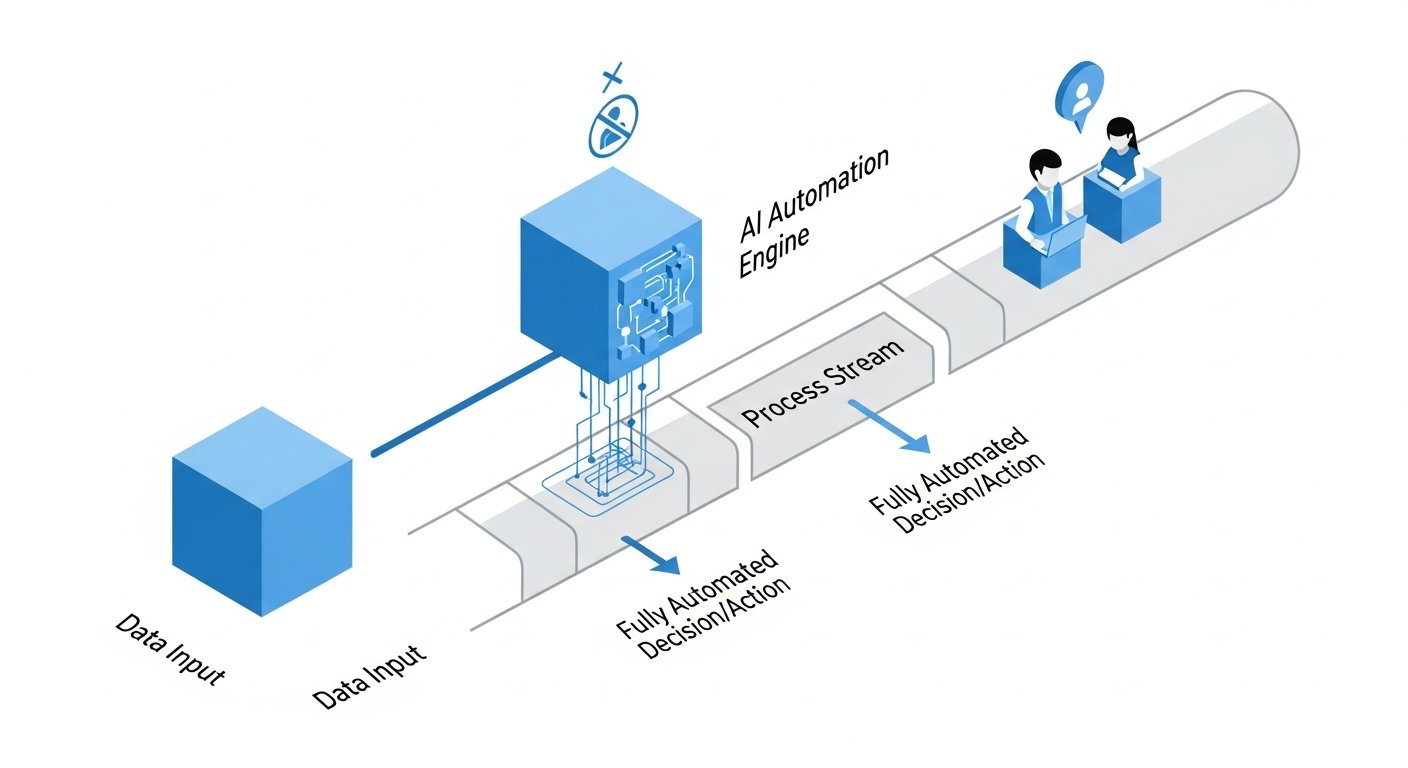
While both AI automation and augmentation leverage advanced algorithms and data processing, their fundamental aims, operational models, and impact on human roles diverge significantly. Understanding these differences is paramount for strategic AI deployment.
Intent and Outcome
- Automation: The intent is typically to optimize an existing process by removing the human element, leading to cost reduction, increased speed, and improved accuracy for specific, defined tasks. The outcome is often a streamlined, hands-off operation.
- Augmentation: The intent is to enhance human capabilities, making individuals more productive, insightful, and effective. The outcome is improved human performance and decision-making, often in complex or ambiguous situations.
Role of the Human
- Automation: Humans are largely removed from the automated process, shifting their roles to oversight, maintenance of the AI system, or focusing on tasks that cannot be automated. There is often a direct impact on job functions, potentially leading to displacement if not managed carefully through reskilling.
- Augmentation: Humans remain central to the process. AI serves as an assistant, providing information, analyses, and recommendations, but the human retains ultimate control and responsibility for decision-making and action. This often leads to job enrichment rather than displacement.
Value Proposition
- Automation: Value is derived from efficiency, cost savings, scalability, and consistency. It addresses the “how to do things faster and cheaper.”
- Augmentation: Value is derived from improved quality of work, better decision-making, enhanced creativity, innovation, and increased human satisfaction. It addresses the “how to do things better and smarter.”
Complexity and Adaptability
- Automation: Best suited for tasks with high predictability, clear rules, and structured data. While advanced AI automation can handle some variability, it generally struggles with highly ambiguous, novel, or emotionally nuanced situations.
- Augmentation: Thrives in environments requiring human judgment, creativity, emotional intelligence, and adaptation to unstructured problems. AI provides the data and processing power, but the human provides the context and nuanced understanding.
Here’s a detailed comparison table summarizing the core distinctions:
| Feature | AI Automation | AI Augmentation |
|---|---|---|
| Primary Goal | Replace human tasks; Increase efficiency & cost savings | Enhance human capabilities; Improve decision-making & creativity |
| Human Role | Oversight, maintenance, exception handling (largely removed) | Central decision-maker, co-pilot (enabled & empowered) |
| Task Type Fit | Repetitive, rule-based, high-volume, predictable | Complex, analytical, creative, judgment-intensive, empathetic |
| Value Driver | Efficiency, consistency, scalability, cost reduction | Quality, innovation, insight, speed of decision, job enrichment |
| Typical Output | Completed tasks, processed data, automated workflows | Enhanced insights, better decisions, creative outputs, improved human performance |
| Impact on Jobs | Potential for job displacement; necessitates reskilling | Job enrichment, creation of new roles; necessitates upskilling |
| Autonomy Level | High (AI performs tasks autonomously) | Low (AI supports human; human retains ultimate control) |
[INLINE IMAGE 2: place after fourth H2 | alt=”ai automation vs augmentation comparison illustration”]
Practical Use Cases for AI Automation
AI automation excels in scenarios where efficiency, precision, and scalability are paramount. It’s about taking the mundane, the repetitive, and the high-volume tasks off human plates, allowing for reallocation of resources.
Manufacturing and Logistics
- Automated Quality Control: AI-powered computer vision systems inspect products on assembly lines for defects with greater speed and accuracy than human eyes, identifying flaws in real-time.
- Predictive Maintenance: AI analyzes sensor data from machinery to predict equipment failures before they occur, scheduling maintenance automatically and preventing costly downtime.
- Warehouse Robotics: Autonomous robots sort, pick, and pack items in warehouses, optimizing inventory management and fulfillment processes.
Finance and Accounting
- Invoice Processing and Reconciliation: AI bots can extract data from invoices, match them to purchase orders, and automate payment processing, reducing manual errors and speeding up financial close cycles.
- Fraud Detection: AI algorithms analyze vast transaction data to identify anomalous patterns indicative of fraudulent activity, flagging suspicious transactions for review.
- Compliance Monitoring: AI can monitor financial transactions and communications to ensure adherence to regulatory requirements, automating audit trails and reporting.
Customer Service and Support
- Tier 1 Support Bots: AI chatbots handle common customer inquiries, provide instant answers to FAQs, and guide users through troubleshooting steps, freeing human agents for complex issues.
- Data Entry and CRM Updates: Automated systems capture customer interactions and update CRM records without manual input, ensuring data consistency and completeness.
IT Operations
- Network Monitoring and Incident Response: AI continuously monitors network health, detects anomalies, and can automatically trigger alerts or even initiate remediation actions for known issues.
- Software Testing: AI-powered tools automate the execution of test cases and generate reports, significantly accelerating the software development lifecycle.
Human Resources
- Resume Screening: AI algorithms can sift through thousands of resumes, identifying candidates whose skills and experience best match job requirements, automating the initial screening phase.
- Onboarding Process Automation: Automating the distribution and completion of onboarding paperwork, system access requests, and initial training modules.
Implementing effective AI automation requires careful planning and integration with existing systems. Explore our comprehensive guide to AI adoption strategies to ensure a smooth transition.
Practical Use Cases for AI Augmentation
AI augmentation is about empowering individuals and teams, making them more effective, intelligent, and creative. It shines in roles requiring human judgment, complex problem-solving, and interpersonal skills.
Healthcare
- Clinical Decision Support: AI systems analyze patient data, medical literature, and diagnostic images to provide doctors with evidence-based recommendations for treatment plans or diagnoses, enhancing their clinical judgment.
- Drug Discovery: AI accelerates the identification of potential drug candidates by analyzing vast biological datasets, enabling researchers to focus on the most promising compounds.
- Surgical Assistance: AI-powered robotics can assist surgeons with precision during delicate procedures, offering real-time data and enhancing accuracy while the human surgeon maintains control.
Creative Industries
- Content Generation and Editing: AI writing tools assist journalists, marketers, and authors by generating outlines, suggesting phrasing, checking grammar, and even drafting initial content, allowing human creators to focus on narrative, voice, and complex ideas.
- Graphic Design: AI tools can generate design variations, suggest color palettes, or optimize layouts based on user preferences, augmenting the designer’s creative process.
- Music Composition: AI can assist musicians by generating melodies, harmonies, or rhythmic patterns, serving as a creative partner in the composition process.
Education
- Personalized Learning Paths: AI analyzes student performance and learning styles to recommend customized educational content and pace, augmenting teachers’ ability to cater to individual needs.
- Intelligent Tutoring Systems: AI provides personalized feedback and guidance to students, helping them grasp complex concepts and improving their learning outcomes, while educators focus on holistic development.
Business Strategy and Analytics
- Market Trend Analysis: AI processes massive datasets from social media, news, and economic indicators to identify emerging market trends and consumer behaviors, augmenting strategists’ ability to foresee shifts.
- Financial Forecasting: AI models analyze historical data and external factors to generate more accurate financial forecasts, providing critical insights for human executives making strategic investment decisions.
- Legal Research: AI can rapidly sift through legal documents, precedents, and case law, providing lawyers with relevant information and reducing research time, enabling them to build stronger cases.
Human Resources and Recruitment
- Candidate Matching: Beyond basic screening, AI can identify “best fit” candidates by analyzing soft skills, cultural fit, and future potential based on a wider range of data, augmenting human recruiters’ ability to make nuanced hiring decisions.
- Employee Performance Insights: AI tools can analyze performance data to identify skill gaps, predict attrition risks, and suggest personalized development plans, empowering HR professionals to support their workforce more effectively.
To truly leverage AI augmentation, professionals need to master new skills. Consider our prompt engineering course to optimize your interaction with AI co-pilots.
Hybrid Models: The Power of Human-AI Collaboration
In many, if not most, real-world scenarios, the dichotomy between AI automation and augmentation is a false one. The most effective and sustainable strategies for 2026 and beyond will likely involve hybrid models that strategically combine both approaches. This synergy allows organizations to leverage the efficiency of automation while retaining the critical judgment, creativity, and adaptability of human intelligence.
Designing for Synergy
A hybrid model operates on the principle that AI and humans each have distinct strengths that, when combined, create a whole greater than the sum of its parts. AI excels at processing large datasets, identifying patterns, and performing repetitive tasks with speed and precision. Humans, on the other hand, bring empathy, intuition, complex problem-solving, ethical reasoning, and creativity to the table.
Examples of Hybrid Models in Action:
- Customer Service: AI chatbots handle initial inquiries, answer FAQs, and resolve simple issues (automation). When a query becomes complex, emotional, or requires nuanced understanding, the AI seamlessly transfers the customer to a human agent, who is augmented by the AI providing the full conversation history and relevant customer data.
- Healthcare Diagnostics: AI algorithms analyze medical images (X-rays, MRIs) to flag potential anomalies or suspicious areas (augmentation). This significantly reduces the workload for radiologists, allowing them to focus their expert attention on the AI-highlighted areas, combining AI’s computational speed with human diagnostic experience.
- Fraud Detection: AI systems automatically detect and block transactions that clearly fit known fraud patterns (automation). For suspicious transactions that fall into a grey area, the AI flags them for human review, providing analysts with a rich set of data and insights (augmentation) to make a final judgment.
- Content Moderation: AI automatically filters out egregious content violations (e.g., hate speech, graphic violence) from social media platforms (automation). Human moderators then review borderline cases, applying nuanced understanding of context, cultural sensitivity, and intent, augmented by AI tools that summarize the violation and user history.
- Legal Discovery: AI quickly sifts through millions of documents to identify potentially relevant evidence (automation). Legal professionals then review the prioritized documents, using their legal expertise to interpret context and strategic value (augmentation).
Benefits of Hybrid Approaches
- Maximized Efficiency & Effectiveness: Routine tasks are handled swiftly by AI, freeing human talent for high-value activities that require uniquely human skills.
- Improved Accuracy & Reliability: AI’s precision for data processing combined with human oversight and ethical judgment leads to more robust outcomes.
- Enhanced Employee Satisfaction: Workers are liberated from monotonous tasks and empowered to engage in more stimulating, challenging, and rewarding work.
- Greater Resilience & Adaptability: Hybrid systems can better adapt to unforeseen circumstances, as humans can step in where AI capabilities fall short, and vice-versa.
- Fostered Innovation: By offloading routine work, humans have more time and mental space for creative problem-solving and innovation, often using AI as a brainstorming partner.
The successful implementation of hybrid models requires a thoughtful approach to change management, clear communication, and continuous investment in both AI technology and human skill development. It’s not just about integrating technology; it’s about integrating intelligence.
Risks, Challenges, and Ethical Considerations
While the promise of AI automation and augmentation is immense, their deployment is not without significant risks, challenges, and profound ethical considerations. Addressing these proactively is crucial for responsible and sustainable AI adoption.
Job Displacement vs. Job Transformation
- Automation Risk: The most frequently cited concern with AI automation is large-scale job displacement. While some jobs may be eliminated, history suggests that technology also creates new jobs. The challenge lies in managing this transition, requiring significant investment in reskilling and upskilling programs for the workforce.
- Augmentation Challenge: While augmentation is generally seen as job-enriching, it still requires workers to adapt. The risk here is creating a “digital divide” within the workforce, where those who can effectively leverage AI tools thrive, while others are left behind.
Algorithmic Bias and Fairness
- Data Dependency: Both automation and augmentation systems are trained on data. If this data reflects historical human biases (e.g., in hiring, lending, or criminal justice), the AI will perpetuate and even amplify these biases, leading to unfair or discriminatory outcomes.
- Accountability: When an AI system makes a biased decision, who is accountable? Establishing clear lines of responsibility for AI-driven outcomes is a significant legal and ethical challenge.
For more on ensuring fairness in AI, refer to the EU’s Ethics Guidelines for Trustworthy AI (European Commission, 2019).
Data Privacy and Security
- Increased Data Consumption: AI systems, especially those for augmentation, often require access to vast amounts of personal and proprietary data to be effective. This raises concerns about how data is collected, stored, processed, and protected.
- Vulnerability: Automated systems can become targets for cyberattacks, and a breach could compromise sensitive information or lead to system manipulation.
Over-Reliance and Loss of Human Skills
- Automation Complacency: If humans become too reliant on automated systems, they might lose critical skills or fail to notice when an AI system makes an error. This “automation bias” can be dangerous in high-stakes fields like aviation or medicine.
- Cognitive Offloading: Augmentation, while beneficial, can lead to cognitive offloading, where humans let the AI do too much of the thinking, potentially hindering the development of their own critical thinking and problem-solving abilities.
Ethical Dilemmas and Control
- Autonomous Decision-Making: As AI systems become more sophisticated, particularly in automation, they may make decisions with real-world consequences (e.g., in autonomous vehicles or military applications). Who defines the ethical parameters for these decisions, and how is human control maintained?
- Transparency and Explainability (XAI): Many advanced AI models operate as “black boxes,” making it difficult to understand how they arrive at a particular decision. This lack of transparency can hinder trust, debugging, and accountability, especially in critical applications.
Implementation Challenges
- Cost and Complexity: Implementing AI solutions, whether for automation or augmentation, can be expensive and technically complex, requiring specialized talent, infrastructure, and ongoing maintenance.
- Integration Issues: Integrating new AI systems with legacy IT infrastructure can be a significant hurdle, leading to compatibility problems and resistance from existing workflows.
- Change Management: The human element is often the hardest to manage. Resistance to change, fear of job loss, and lack of training can derail even the best-planned AI initiatives.
To mitigate these risks, organizations must adopt a human-centered approach to AI development, prioritizing transparency, fairness, accountability, and robust ethical governance frameworks. For more insights on ethical AI development, consider reports from the World Economic Forum on responsible AI innovation (WEF, ongoing initiatives).
Strategic Implementation: When to Automate, When to Augment
The decision to pursue AI automation, augmentation, or a hybrid model is a strategic one, deeply rooted in an organization’s objectives, the nature of the tasks at hand, and its cultural readiness for change. A nuanced approach, rather than an all-or-nothing philosophy, is typically most effective.
Assessing Your Needs: A Framework for Decision-Making
Before deploying AI, ask critical questions about the task, the human involvement, and the desired outcome:
- Task Characteristics:
- Is the task repetitive, high-volume, and rule-based? (Lean towards Automation)
- Does it involve unstructured data or unpredictable scenarios? (Lean towards Augmentation)
- Does it require creativity, critical thinking, empathy, or complex judgment? (Lean towards Augmentation)
- Is precision and consistency paramount, with little room for error? (Lean towards Automation)
- Desired Outcome:
- Is the primary goal cost reduction, speed, and scalability? (Lean towards Automation)
- Is the primary goal improved decision-making, innovation, and enhanced human performance? (Lean towards Augmentation)
- Human Impact:
- Can the task be completely removed from a human workflow without negative consequences? (Consider Automation)
- Will automating the task free up humans for higher-value, more engaging work? (Positive for Automation)
- Will AI help humans perform their existing tasks better and faster? (Consider Augmentation)
- Does the task require human emotional intelligence or interpersonal skills? (Strong case for Augmentation)
- Risk and Governance:
- What are the ethical implications of full automation for this task?
- How will human oversight and accountability be maintained in an augmented scenario?
- Are there regulatory requirements that dictate human involvement?
A Phased Approach to Deployment
Rather than a big bang approach, a phased, iterative deployment often yields better results:
- Identify Low-Hanging Fruit for Automation: Start with simple, highly repetitive tasks that have clear rules and generate quantifiable ROI quickly. This builds confidence and demonstrates value.
- Pilot Augmentation in Key Areas: Introduce AI tools to assist experts in critical but complex domains (e.g., data analysis, design, medical diagnostics). Focus on improving existing workflows rather than replacing them.
- Foster a Culture of Learning and Adaptation: Provide comprehensive training programs for employees. For automation, focus on reskilling for new roles (e.g., AI trainers, system maintenance). For augmentation, focus on upskilling to effectively use AI tools and interpret AI-generated insights.
- Build Hybrid Teams: Design organizational structures where human experts and AI systems work collaboratively, with clear interfaces and communication protocols.
- Continuous Monitoring and Iteration: AI deployment is not a one-time event. Continuously monitor performance, gather feedback, and iterate on your AI strategies to optimize both automated and augmented processes.
The Role of Reskilling and Upskilling
Regardless of whether an organization leans towards automation or augmentation, investing in its human capital is paramount. For automation, reskilling programs prepare employees for new roles that emerge around AI management, maintenance, and higher-order problem-solving. For augmentation, upskilling ensures that employees have the necessary skills (e.g., data literacy, critical thinking, prompt engineering) to effectively leverage AI tools and maximize their enhanced capabilities. The goal is to move from a fear of replacement to an embrace of empowerment.
The strategic choice between AI automation vs augmentation is not about choosing sides but about intelligently orchestrating a symphony where human and artificial intelligence play complementary roles. This thoughtful integration will define successful enterprises in the
AI Automation vs Augmentation: Charting the Future of Human-AI Collaboration and Efficiency in 2026
Affiliate disclosure: This article may contain affiliate links. Recommendations are independent and editorially driven.
TL;DR: In the rapidly evolving landscape of artificial intelligence, understanding the distinction between AI automation and augmentation is crucial for strategic deployment. While AI automation aims to fully replace human tasks for efficiency, AI augmentation empowers human workers by enhancing their capabilities. The most effective strategies for 2026 and beyond will likely involve hybrid models, leveraging automation for routine tasks and augmentation for complex, creativity-driven, or emotionally intelligent work.
The dawn of the AI era has brought with it profound shifts in how businesses operate and how individuals interact with technology. At the heart of this transformation lies a critical dichotomy: the choice between AI automation and augmentation. While often used interchangeably, these two approaches represent fundamentally different philosophies regarding the role of AI in the workplace and society. This comprehensive guide from futureinsights aims to dissect the core differences between AI automation vs augmentation, explore their unique applications, evaluate their respective benefits and challenges, and provide a strategic framework for organizations looking to harness the full potential of intelligent systems in 2026.
As organizations strive for greater efficiency, innovation, and competitive advantage, the decision to automate or augment with AI holds significant implications for productivity, workforce development, and ethical responsibility. This article delves deep into each paradigm, offering insights into how to build resilient, human-centric, and highly effective operational models for the future.
Table of Contents
- What is AI Automation?
- What is AI Augmentation?
- Key Differences and Nuances: Automation vs. Augmentation
- Practical Use Cases for AI Automation
- Practical Use Cases for AI Augmentation
- Hybrid Models: The Power of Human-AI Collaboration
- Risks, Challenges, and Ethical Considerations
- Strategic Implementation: When to Automate, When to Augment
- Future Outlook: The Evolving Landscape
- Conclusion: Navigating the AI Frontier
- Frequently Asked Questions
What is AI Automation?
AI automation refers to the use of artificial intelligence systems to perform tasks or processes with minimal to no human intervention. Its primary objective is to replace human labor in repetitive, rule-based, and predictable tasks, thereby increasing efficiency, reducing operational costs, and minimizing human error. Automation powered by AI goes beyond traditional robotic process automation (RPA) by incorporating machine learning, natural language processing, and computer vision to handle more complex and adaptable scenarios.
The Evolution of Automation
Historically, automation focused on mechanizing physical labor. With the advent of computers, information technology automation began to streamline digital tasks. AI takes this a step further, enabling systems to ‘learn’ from data, adapt to new information, and make decisions within defined parameters. This capability transforms simple task execution into intelligent, autonomous operations.
Core Characteristics of AI Automation
- Task Replacement: AI systems are designed to completely take over specific tasks or entire workflows.
- Efficiency-Driven: The main goal is to optimize processes, accelerate task completion, and reduce the resources (time, money, human effort) required.
- Rule-Based or Pattern-Based: Automated AI systems excel at tasks that follow clear rules, algorithms, or identifiable data patterns.
- Scalability: Automated processes can be scaled up or down rapidly to meet changing demands without proportionate increases in human staffing.
- Consistency: AI automation ensures consistent execution of tasks, reducing variability and human-induced errors.
Types of AI Automation
While often generalized, AI automation encompasses several distinct forms:
- Robotic Process Automation (RPA): Software bots mimic human actions to interact with digital systems and software, automating structured, repetitive tasks.
- Intelligent Process Automation (IPA): Combines RPA with AI technologies like machine learning and natural language processing to handle semi-structured and unstructured data, enabling more complex decision-making within automated workflows.
- Cognitive Automation: Utilizes AI to automate tasks requiring cognitive abilities, such as interpreting data, understanding natural language, and making predictions.
- Hyperautomation: A Gartner-coined term referring to an organization’s ability to rapidly identify, vet, and automate as many business and IT processes as possible using a combination of technologies, including AI, RPA, machine learning, and process mining.
For a deeper dive into intelligent automation strategies, explore our guide to Intelligent Process Automation (IPA).
[INLINE IMAGE 1: place after second H2 | alt=”ai automation vs augmentation concept illustration”]
What is AI Augmentation?
In stark contrast to automation, AI augmentation focuses on enhancing human capabilities rather than replacing them. It positions AI as a powerful co-pilot, a tool designed to extend human intellect, creativity, and productivity. The goal is to create a symbiotic relationship where humans and AI work together, leveraging the strengths of each to achieve superior outcomes than either could alone.
The Philosophy of Augmentation
The concept of augmentation can be traced back to Douglas Engelbart’s vision of “augmenting human intellect.” In the context of AI, it means designing systems that assist, advise, and empower human decision-makers. AI augments human abilities by processing vast amounts of data, identifying patterns, generating insights, and performing computational tasks that would be tedious or impossible for humans to do quickly.
Core Characteristics of AI Augmentation
- Task Enhancement: AI systems provide tools and insights that enable humans to perform tasks better, faster, or with greater accuracy.
- Human-Centric: Design prioritizes the human user, aiming to reduce cognitive load, free up time for higher-value activities, and foster creativity.
- Decision Support: AI acts as an advisor, offering data-driven recommendations, predictions, and scenario analyses, but the final decision rests with the human.
- Creativity and Innovation: Augmentation can spark new ideas, explore possibilities, and assist in creative processes that are inherently human.
- Adaptability and Learning: Augmented systems often learn from human feedback and interactions, becoming more personalized and effective over time.
Examples of AI Augmentation
AI augmentation is already prevalent in many aspects of modern work and life:
- Medical Diagnostics: AI assists doctors in identifying anomalies in scans (e.g., X-rays, MRIs), providing a second opinion that significantly improves diagnostic accuracy and speed.
- Financial Analysis: AI tools help analysts sift through market data, detect trends, and predict potential risks or opportunities, allowing human experts to make more informed investment decisions.
- Content Creation: AI-powered writing assistants help authors with grammar, style, and even generating initial drafts, while the human writer maintains creative control and narrative direction.
- Customer Service: Chatbots handle initial inquiries and direct customers, but complex or emotionally charged issues are seamlessly escalated to human agents who are augmented by AI tools providing customer history and relevant information.
- Design and Engineering: Generative design AI helps engineers explore thousands of design variations for optimal performance, which human designers then refine and select.
The goal is not to remove humans but to make them superpowers, allowing them to focus on tasks that require uniquely human attributes like empathy, judgment, and creativity. Learn more about empowering your workforce with AI co-pilot solutions.
Key Differences and Nuances: Automation vs. Augmentation
While both AI automation and augmentation leverage advanced algorithms and data processing, their fundamental aims, operational models, and impact on human roles diverge significantly. Understanding these differences is paramount for strategic AI deployment.
Intent and Outcome
- Automation: The intent is typically to optimize an existing process by removing the human element, leading to cost reduction, increased speed, and improved accuracy for specific, defined tasks. The outcome is often a streamlined, hands-off operation.
- Augmentation: The intent is to enhance human capabilities, making individuals more productive, insightful, and effective. The outcome is improved human performance and decision-making, often in complex or ambiguous situations.
Role of the Human
- Automation: Humans are largely removed from the automated process, shifting their roles to oversight, maintenance of the AI system, or focusing on tasks that cannot be automated. There is often a direct impact on job functions, potentially leading to displacement if not managed carefully through reskilling.
- Augmentation: Humans remain central to the process. AI serves as an assistant, providing information, analyses, and recommendations, but the human retains ultimate control and responsibility for decision-making and action. This often leads to job enrichment rather than displacement.
Value Proposition
- Automation: Value is derived from efficiency, cost savings, scalability, and consistency. It addresses the “how to do things faster and cheaper.”
- Augmentation: Value is derived from improved quality of work, better decision-making, enhanced creativity, innovation, and increased human satisfaction. It addresses the “how to do things better and smarter.”
Complexity and Adaptability
- Automation: Best suited for tasks with high predictability, clear rules, and structured data. While advanced AI automation can handle some variability, it generally struggles with highly ambiguous, novel, or emotionally nuanced situations.
- Augmentation: Thrives in environments requiring human judgment, creativity, emotional intelligence, and adaptation to unstructured problems. AI provides the data and processing power, but the human provides the context and nuanced understanding.
Here’s a detailed comparison table summarizing the core distinctions:
| Feature | AI Automation | AI Augmentation |
|---|---|---|
| Primary Goal | Replace human tasks; Increase efficiency & cost savings | Enhance human capabilities; Improve decision-making & creativity |
| Human Role | Oversight, maintenance, exception handling (largely removed) | Central decision-maker, co-pilot (enabled & empowered) |
| Task Type Fit | Repetitive, rule-based, high-volume, predictable | Complex, analytical, creative, judgment-intensive, empathetic |
| Value Driver | Efficiency, consistency, scalability, cost reduction | Quality, innovation, insight, speed of decision, job enrichment |
| Typical Output | Completed tasks, processed data, automated workflows | Enhanced insights, better decisions, creative outputs, improved human performance |
| Impact on Jobs | Potential for job displacement; necessitates reskilling | Job enrichment, creation of new roles; necessitates upskilling |
| Autonomy Level | High (AI performs tasks autonomously) | Low (AI supports human; human retains ultimate control) |
[INLINE IMAGE 2: place after fourth H2 | alt=”ai automation vs augmentation comparison illustration”]
Practical Use Cases for AI Automation
AI automation excels in scenarios where efficiency, precision, and scalability are paramount. It’s about taking the mundane, the repetitive, and the high-volume tasks off human plates, allowing for reallocation of resources.
Manufacturing and Logistics
- Automated Quality Control: AI-powered computer vision systems inspect products on assembly lines for defects with greater speed and accuracy than human eyes, identifying flaws in real-time.
- Predictive Maintenance: AI analyzes sensor data from machinery to predict equipment failures before they occur, scheduling maintenance automatically and preventing costly downtime.
- Warehouse Robotics: Autonomous robots sort, pick, and pack items in warehouses, optimizing inventory management and fulfillment processes.
Finance and Accounting
- Invoice Processing and Reconciliation: AI bots can extract data from invoices, match them to purchase orders, and automate payment processing, reducing manual errors and speeding up financial close cycles.
- Fraud Detection: AI algorithms analyze vast transaction data to identify anomalous patterns indicative of fraudulent activity, flagging suspicious transactions for review.
- Compliance Monitoring: AI can monitor financial transactions and communications to ensure adherence to regulatory requirements, automating audit trails and reporting.
Customer Service and Support
- Tier 1 Support Bots: AI chatbots handle common customer inquiries, provide instant answers to FAQs, and guide users through troubleshooting steps, freeing human agents for complex issues.
- Data Entry and CRM Updates: Automated systems capture customer interactions and update CRM records without manual input, ensuring data consistency and completeness.
IT Operations
- Network Monitoring and Incident Response: AI continuously monitors network health, detects anomalies, and can automatically trigger alerts or even initiate remediation actions for known issues.
- Software Testing: AI-powered tools automate the execution of test cases and generate reports, significantly accelerating the software development lifecycle.
Human Resources
- Resume Screening: AI algorithms can sift through thousands of resumes, identifying candidates whose skills and experience best match job requirements, automating the initial screening phase.
- Onboarding Process Automation: Automating the distribution and completion of onboarding paperwork, system access requests, and initial training modules.
Implementing effective AI automation requires careful planning and integration with existing systems. Explore our comprehensive guide to AI adoption strategies to ensure a smooth transition.
Practical Use Cases for AI Augmentation
AI augmentation is about empowering individuals and teams, making them more effective, intelligent, and creative. It shines in roles requiring human judgment, complex problem-solving, and interpersonal skills.
Healthcare
- Clinical Decision Support: AI systems analyze patient data, medical literature, and diagnostic images to provide doctors with evidence-based recommendations for treatment plans or diagnoses, enhancing their clinical judgment.
- Drug Discovery: AI accelerates the identification of potential drug candidates by analyzing vast biological datasets, enabling researchers to focus on the most promising compounds.
- Surgical Assistance: AI-powered robotics can assist surgeons with precision during delicate procedures, offering real-time data and enhancing accuracy while the human surgeon maintains control.
Creative Industries
- Content Generation and Editing: AI writing tools assist journalists, marketers, and authors by generating outlines, suggesting phrasing, checking grammar, and even drafting initial content, allowing human creators to focus on narrative, voice, and complex ideas.
- Graphic Design: AI tools can generate design variations, suggest color palettes, or optimize layouts based on user preferences, augmenting the designer’s creative process.
- Music Composition: AI can assist musicians by generating melodies, harmonies, or rhythmic patterns, serving as a creative partner in the composition process.
Education
- Personalized Learning Paths: AI analyzes student performance and learning styles to recommend customized educational content and pace, augmenting teachers’ ability to cater to individual needs.
- Intelligent Tutoring Systems: AI provides personalized feedback and guidance to students, helping them grasp complex concepts and improving their learning outcomes, while educators focus on holistic development.
Business Strategy and Analytics
- Market Trend Analysis: AI processes massive datasets from social media, news, and economic indicators to identify emerging market trends and consumer behaviors, augmenting strategists’ ability to foresee shifts.
- Financial Forecasting: AI models analyze historical data and external factors to generate more accurate financial forecasts, providing critical insights for human executives making strategic investment decisions.
- Legal Research: AI can rapidly sift through legal documents, precedents, and case law, providing lawyers with relevant information and reducing research time, enabling them to build stronger cases.
Human Resources and Recruitment
- Candidate Matching: Beyond basic screening, AI can identify “best fit” candidates by analyzing soft skills, cultural fit, and future potential based on a wider range of data, augmenting human recruiters’ ability to make nuanced hiring decisions.
- Employee Performance Insights: AI tools can analyze performance data to identify skill gaps, predict attrition risks, and suggest personalized development plans, empowering HR professionals to support their workforce more effectively.
To truly leverage AI augmentation, professionals need to master new skills. Consider our prompt engineering course to optimize your interaction with AI co-pilots.
Hybrid Models: The Power of Human-AI Collaboration
In many, if not most, real-world scenarios, the dichotomy between AI automation and augmentation is a false one. The most effective and sustainable strategies for 2026 and beyond will likely involve hybrid models that strategically combine both approaches. This synergy allows organizations to leverage the efficiency of automation while retaining the critical judgment, creativity, and adaptability of human intelligence.
Designing for Synergy
A hybrid model operates on the principle that AI and humans each have distinct strengths that, when combined, create a whole greater than the sum of its parts. AI excels at processing large datasets, identifying patterns, and performing repetitive tasks with speed and precision. Humans, on the other hand, bring empathy, intuition, complex problem-solving, ethical reasoning, and creativity to the table.
Examples of Hybrid Models in Action:
- Customer Service: AI chatbots handle initial inquiries, answer FAQs, and resolve simple issues (automation). When a query becomes complex, emotional, or requires nuanced understanding, the AI seamlessly transfers the customer to a human agent, who is augmented by the AI providing the full conversation history and relevant customer data.
- Healthcare Diagnostics: AI algorithms analyze medical images (X-rays, MRIs) to flag potential anomalies or suspicious areas (augmentation). This significantly reduces the workload for radiologists, allowing them to focus their expert attention on the AI-highlighted areas, combining AI’s computational speed with human diagnostic experience.
- Fraud Detection: AI systems automatically detect and block transactions that clearly fit known fraud patterns (automation). For suspicious transactions that fall into a grey area, the AI flags them for human review, providing analysts with a rich set of data and insights (augmentation) to make a final judgment.
- Content Moderation: AI automatically filters out egregious content violations (e.g., hate speech, graphic violence) from social media platforms (automation). Human moderators then review borderline cases, applying nuanced understanding of context, cultural sensitivity, and intent, augmented by AI tools that summarize the violation and user history.
- Legal Discovery: AI quickly sifts through millions of documents to identify potentially relevant evidence (automation). Legal professionals then review the prioritized documents, using their legal expertise to interpret context and strategic value (augmentation).
Benefits of Hybrid Approaches
- Maximized Efficiency & Effectiveness: Routine tasks are handled swiftly by AI, freeing human talent for high-value activities that require uniquely human skills.
- Improved Accuracy & Reliability: AI’s precision for data processing combined with human oversight and ethical judgment leads to more robust outcomes.
- Enhanced Employee Satisfaction: Workers are liberated from monotonous tasks and empowered to engage in more stimulating, challenging, and rewarding work.
- Greater Resilience & Adaptability: Hybrid systems can better adapt to unforeseen circumstances, as humans can step in where AI capabilities fall short, and vice-versa.
- Fostered Innovation: By offloading routine work, humans have more time and mental space for creative problem-solving and innovation, often using AI as a brainstorming partner.
The successful implementation of hybrid models requires a thoughtful approach to change management, clear communication, and continuous investment in both AI technology and human skill development. It’s not just about integrating technology; it’s about integrating intelligence.
Risks, Challenges, and Ethical Considerations
While the promise of AI automation and augmentation is immense, their deployment is not without significant risks, challenges, and profound ethical considerations. Addressing these proactively is crucial for responsible and sustainable AI adoption.
Job Displacement vs. Job Transformation
- Automation Risk: The most frequently cited concern with AI automation is large-scale job displacement. While some jobs may be eliminated, history suggests that technology also creates new jobs. The challenge lies in managing this transition, requiring significant investment in reskilling and upskilling programs for the workforce.
- Augmentation Challenge: While augmentation is generally seen as job-enriching, it still requires workers to adapt. The risk here is creating a “digital divide” within the workforce, where those who can effectively leverage AI tools thrive, while others are left behind.
Algorithmic Bias and Fairness
- Data Dependency: Both automation and augmentation systems are trained on data. If this data reflects historical human biases (e.g., in hiring, lending, or criminal justice), the AI will perpetuate and even amplify these biases, leading to unfair or discriminatory outcomes.
- Accountability: When an AI system makes a biased decision, who is accountable? Establishing clear lines of responsibility for AI-driven outcomes is a significant legal and ethical challenge.
For more on ensuring fairness in AI, refer to the EU’s Ethics Guidelines for Trustworthy AI (European Commission, 2019).
Data Privacy and Security
- Increased Data Consumption: AI systems, especially those for augmentation, often require access to vast amounts of personal and proprietary data to be effective. This raises concerns about how data is collected, stored, processed, and protected.
- Vulnerability: Automated systems can become targets for cyberattacks, and a breach could compromise sensitive information or lead to system manipulation.
Over-Reliance and Loss of Human Skills
- Automation Complacency: If humans become too reliant on automated systems, they might lose critical skills or fail to notice when an AI system makes an error. This “automation bias” can be dangerous in high-stakes fields like aviation or medicine.
- Cognitive Offloading: Augmentation, while beneficial, can lead to cognitive offloading, where humans let the AI do too much of the thinking, potentially hindering the development of their own critical thinking and problem-solving abilities.
Ethical Dilemmas and Control
- Autonomous Decision-Making: As AI systems become more sophisticated, particularly in automation, they may make decisions with real-world consequences (e.g., in autonomous vehicles or military applications). Who defines the ethical parameters for these decisions, and how is human control maintained?
- Transparency and Explainability (XAI): Many advanced AI models operate as “black boxes,” making it difficult to understand how they arrive at a particular decision. This lack of transparency can hinder trust, debugging, and accountability, especially in critical applications.
Implementation Challenges
- Cost and Complexity: Implementing AI solutions, whether for automation or augmentation, can be expensive and technically complex, requiring specialized talent, infrastructure, and ongoing maintenance.
- Integration Issues: Integrating new AI systems with legacy IT infrastructure can be a significant hurdle, leading to compatibility problems and resistance from existing workflows.
- Change Management: The human element is often the hardest to manage. Resistance to change, fear of job loss, and lack of training can derail even the best-planned AI initiatives.
To mitigate these risks, organizations must adopt a human-centered approach to AI development, prioritizing transparency, fairness, accountability, and robust ethical governance frameworks. For more insights on ethical AI development, consider reports from the World Economic Forum on responsible AI innovation (WEF, ongoing initiatives).
Strategic Implementation: When to Automate, When to Augment
The decision to pursue AI automation, augmentation, or a hybrid model is a strategic one, deeply rooted in an organization’s objectives, the nature of the tasks at hand, and its cultural readiness for change. A nuanced approach, rather than an all-or-nothing philosophy, is typically most effective.
Assessing Your Needs: A Framework for Decision-Making
Before deploying AI, ask critical questions about the task, the human involvement, and the desired outcome:
- Task Characteristics:
- Is the task repetitive, high-volume, and rule-based? (Lean towards Automation)
- Does it involve unstructured data or unpredictable scenarios? (Lean towards Augmentation)
- Does it require creativity, critical thinking, empathy, or complex judgment? (Lean towards Augmentation)
- Is precision and consistency paramount, with little room for error? (Lean towards Automation)
- Desired Outcome:
- Is the primary goal cost reduction, speed, and scalability? (Lean towards Automation)
- Is the primary goal improved decision-making, innovation, and enhanced human performance? (Lean towards Augmentation)
- Human Impact:
- Can the task be completely removed from a human workflow without negative consequences? (Consider Automation)
- Will automating the task free up humans for higher-value, more engaging work? (Positive for Automation)
- Will AI help humans perform their existing tasks better and faster? (Consider Augmentation)
- Does the task require human emotional intelligence or interpersonal skills? (Strong case for Augmentation)
- Risk and Governance:
- What are the ethical implications of full automation for this task?
- How will human oversight and accountability be maintained in an augmented scenario?
- Are there regulatory requirements that dictate human involvement?
A Phased Approach to Deployment
Rather than a big bang approach, a phased, iterative deployment often yields better results:
- Identify Low-Hanging Fruit for Automation: Start with simple, highly repetitive tasks that have clear rules and generate quantifiable ROI quickly. This builds confidence and demonstrates value.
- Pilot Augmentation in Key Areas: Introduce AI tools to assist experts in critical but complex domains (e.g., data analysis, design, medical diagnostics). Focus on improving existing workflows rather than replacing them.
- Foster a Culture of Learning and Adaptation: Provide comprehensive training programs for employees. For automation, focus on reskilling for new roles (e.g., AI trainers, system maintenance). For augmentation, focus on upskilling to effectively use AI tools and interpret AI-generated insights.
- Build Hybrid Teams: Design organizational structures where human experts and AI systems work collaboratively, with clear interfaces and communication protocols.
- Continuous Monitoring and Iteration: AI deployment is not a one-time event. Continuously monitor performance, gather feedback, and iterate on your AI strategies to optimize both automated and augmented processes.
The Role of Reskilling and Upskilling
Regardless of whether an organization leans towards automation or augmentation, investing in its human capital is paramount. For automation, reskilling programs prepare employees for new roles that emerge around AI management, maintenance, and higher-order problem-solving. For augmentation, upskilling ensures that employees have the necessary skills (e.g., data literacy, critical thinking, prompt engineering) to effectively leverage AI tools and maximize their enhanced capabilities. The goal is to move from a fear of replacement to an embrace of empowerment.
The strategic choice between AI automation vs augmentation is not about choosing sides but about intelligently orchestrating a symphony where human and artificial intelligence play complementary roles. This thoughtful integration will define successful enterprises in the