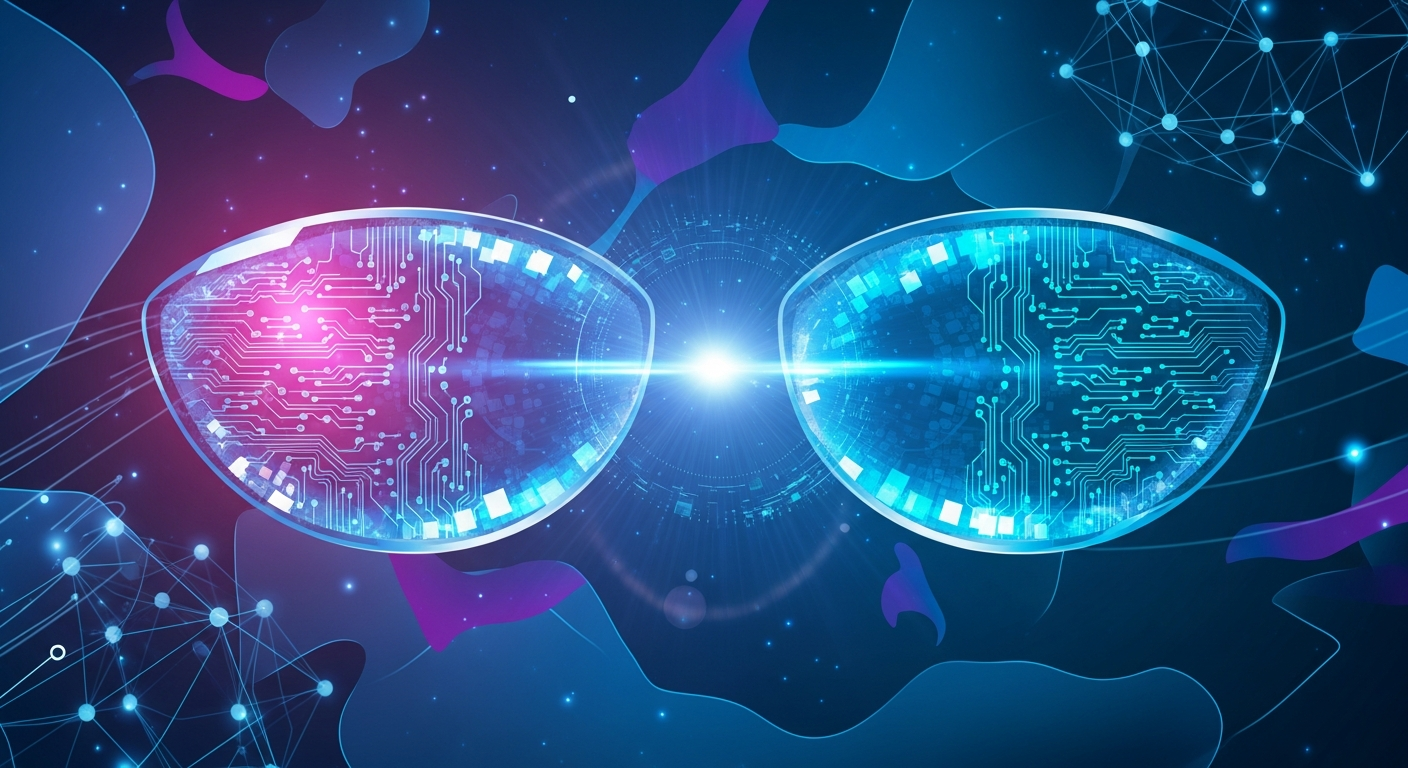
Beyond the Screen: How Smart Contact Lenses are Redefining Future Vision Enhancement
For decades, the concept of “augmented reality” was tethered to bulky headsets, cumbersome glasses, and the glowing screens of handheld devices. We accepted these as necessary intermediaries between our eyes and the digital world. However, we are currently witnessing a seismic shift in human-computer interaction. The next frontier of technology isn’t something we hold or wear over our ears; it is something we place directly onto our corneas. Smart contact lenses—once the exclusive domain of science fiction like *Mission Impossible* or *Black Mirror*—have transitioned from experimental lab prototypes to the verge of commercial reality.
By 2026, the convergence of nanotechnology, micro-LED displays, and biometric sensors will have transformed the humble contact lens into the world’s most discreet and powerful computing platform. This technology represents the ultimate realization of “invisible computing,” where the interface between the user and their data becomes seamless. Whether it is a surgeon receiving real-time vitals during a procedure or a commuter navigating a new city through a digital overlay, smart contact lenses are poised to redefine how we perceive, interact with, and enhance our natural vision. This is not just a peripheral upgrade; it is the birth of biocentric technology.
What are Smart Contact Lenses? Defining the Biocentric Interface
At its core, a smart contact lens is a wearable device that looks and feels like a traditional corrective lens but contains integrated micro-electronics. Unlike standard lenses designed solely to refract light and correct myopia or hyperopia, these “intelligent” lenses are embedded with a suite of components: transparent sensors, micro-batteries, wireless communication antennae, and, in many models, a display system.
The primary goal of this technology is twofold: vision enhancement and data contextualization. Vision enhancement involves using the lens to autofocus on objects at different distances (addressing presbyopia) or enhancing low-light environments. Data contextualization, on the other hand, involves Augmented Reality (AR)—projecting digital information directly into the wearer’s field of vision.
By 2026, these devices will have evolved into two distinct categories. The first is the **Medical Smart Lens**, focused on monitoring ocular health and systemic biomarkers like glucose levels in tears. The second is the **Augmented Reality (AR) Smart Lens**, which serves as a heads-up display (HUD) for information, navigation, and social connectivity. Both categories rely on the same fundamental breakthrough: the ability to manufacture electronics on a flexible, oxygen-permeable substrate that the human eye can tolerate for hours on end.
The Engineering Marvel: How the Technology Works Under the Hood
To understand how a computer can fit on a sliver of hydrogel, we must look at the miniaturization of several key technological pillars. The engineering required to make a smart contact lens functional is arguably more complex than that of a modern smartphone, primarily due to the spatial constraints and the biological sensitivity of the eye.
1. The Femtoprojector and Micro-LEDs
The “screen” of a smart contact lens isn’t a screen in the traditional sense. Most advanced prototypes use a “femtoprojector”—a tiny projector no larger than a grain of sand. This device projects images directly onto the retina. Because the image is projected onto the center of the macula, the brain perceives it as a high-resolution digital overlay floating in the air, perfectly in focus regardless of where the eye is looking.
2. Biocompatible Power Sources
One of the greatest hurdles has been power. Traditional lithium-ion batteries are too bulky and toxic for ocular use. By 2026, researchers have perfected two solutions: micro-batteries that charge via radio frequency (RF) induction (similar to wireless phone charging) and bio-batteries that can actually generate small amounts of electricity from the enzymes found in human tears.
3. Integrated Sensors and Eye Tracking
To interact with the digital interface without a mouse or keyboard, smart lenses utilize internal eye-tracking sensors. These sensors detect the movement of the pupil, allowing users to “click” on icons or scroll through text simply by looking at specific points or performing a series of intentional blinks. Furthermore, outward-facing micro-sensors can detect ambient light levels to adjust display brightness instantaneously.
4. Wireless Connectivity
Smart lenses do not operate in a vacuum. They function as a “satellite” to a primary processing hub, usually the user’s smartphone or a dedicated wearable neckband. Using ultra-low-power Bluetooth or proprietary near-field communication protocols, the lens receives data and sends sensor feedback in real-time.
The 2026 Reality: Real-World Applications in Daily Life
As we look at the landscape of 2026, the applications for smart contact lenses have branched out into professional, medical, and consumer sectors. The “killer app” for this technology isn’t just one feature, but the cumulative convenience of having information where you need it, when you need it.
Invisible Navigation and Urban Mobility
Imagine walking through a crowded terminal in a foreign airport. Instead of looking down at your phone, a subtle green line appears on the floor in your field of vision, guiding you to your gate. Real-time translation overlays appear over foreign-language signs. This “eyes-up” navigation significantly increases safety and situational awareness in urban environments.
The Professional “Teleprompter”
For public speakers, lawyers, and executives, smart lenses serve as an invisible teleprompter. Notes, key statistics, or speech outlines can be displayed discreetly. In the medical field, surgeons in 2026 use smart lenses to overlay MRI data directly onto a patient’s body during surgery, allowing for unprecedented precision without the need to look away at a monitor.
Athletic Edge and Real-Time Biometrics
For cyclists and runners, smart lenses provide a continuous stream of data: heart rate, pace, power output, and even the distance of the competitor behind them. By 2026, this has become a standard tool for elite athletes who require performance data without the aerodynamic drag or distraction of a wrist-worn device or bike computer.
Revolutionizing Healthcare: The Lens as a Diagnostic Tool
While the AR features capture the headlines, the medical impact of smart contact lenses is perhaps more profound. The eye is often called a “window to the soul,” but for doctors, it is a window to the body’s internal chemistry.
Continuous Glucose Monitoring (CGM)
For the millions living with diabetes, the 2026 generation of smart lenses offers a non-invasive alternative to finger-prick blood tests. By analyzing the glucose concentration in the basal tears, the lens can send a notification to the wearer’s phone if their sugar levels drop or spike. This constant monitoring allows for much tighter glycemic control and a significantly higher quality of life.
Glaucoma Management
Glaucoma is characterized by increased intraocular pressure (IOP) that can lead to blindness. Traditional tests only provide a snapshot of pressure during a doctor’s visit. Smart lenses equipped with micro-manometers monitor IOP 24/7, providing a comprehensive data map that allows ophthalmologists to tailor treatments more effectively and catch spikes that occur during sleep.
Vision Correction for the Aging Eye
Presbyopia—the age-related loss of near-vision focus—affects nearly everyone over the age of 45. Smart lenses in 2026 utilize liquid crystal layers that change their refractive index based on where the user is looking. When the user looks down at a book, the lens instantly adjusts its focus to “reading mode,” and when they look up at the horizon, it switches back to “distance mode,” effectively eliminating the need for bifocals or reading glasses.
The Impact on Daily Life: Privacy, Ethics, and the “Cyborg” Identity
The transition to smart contact lenses isn’t purely a matter of technical triumph; it brings significant societal and ethical questions. As we integrate technology closer to our biology, the line between the “self” and the “device” begins to blur.
The Privacy Paradigm
One of the most contentious issues in 2026 is the “always-on” nature of smart lenses. If a lens is equipped with a camera—even a low-resolution one for gesture recognition—how do we protect the privacy of those around the wearer? Unlike a smartphone, which must be held up to record, a lens is passive. Regulations in 2026 are likely to focus on “conspicuous recording” indicators or software-level blocks in private zones (like locker rooms or high-security facilities).
Data Security of the Retina
Because smart lenses track exactly where a person is looking, they generate “gaze data.” This data is incredibly valuable to advertisers; knowing exactly which products you looked at on a grocery shelf and for how long is the holy grail of market research. The challenge for 2026 is ensuring that gaze data remains the property of the user and is not harvested by the corporations providing the hardware.
Digital Fatigue and Ocular Health
The eye was not evolved to have a micro-display inches away for 16 hours a day. While the tech is designed to be “non-obstructive,” there are ongoing discussions about “digital dry eye” and the potential for neurological fatigue. Users in 2026 are learning to balance the benefits of an augmented reality with the need for “analog time” to allow the visual cortex to rest.
The Market Landscape: Who is Building the Future?
In 2026, the market for smart contact lenses is no longer dominated by a single player. It has become a collaborative—and competitive—ecosystem of tech giants and medical veterans.
* **Silicon Valley Entrants:** Companies that previously dominated the smartphone and VR/AR headset markets have pivoted toward “invisible wearables.” Their focus is on the software ecosystem, app stores for the eye, and integration with AI assistants.
* **Ophthalmology Leaders:** Established contact lens manufacturers have partnered with tech firms to ensure the devices meet strict FDA and EMA medical standards. Their priority is biocompatibility, oxygen permeability, and comfort.
* **Specialized Startups:** A new wave of “Deep Tech” startups has emerged, focusing specifically on the micro-optics and bio-energy harvesting components that make these lenses possible.
The competition has driven down the price point. While the first-generation lenses were as expensive as a high-end laptop, by 2026, entry-level smart lenses are available through subscription models, often bundled with vision insurance or specialized health monitoring plans.
FAQ: Common Questions About Smart Contact Lenses
1. Are smart contact lenses safe for the eye?
Yes, by 2026, smart lenses have passed rigorous clinical trials. They are made from highly oxygen-permeable materials (like silicone hydrogels) that allow the cornea to “breathe.” The electronic components are sealed in medical-grade biocompatible polymers to prevent any leakage or irritation.
2. How long does the battery last?
Most 2026 models are designed to last a full waking day (12–16 hours). They are charged overnight in a specialized cleaning case that uses induction to replenish the battery while the lenses are being disinfected.
3. Can I still see “normally” if the battery dies?
Absolutely. The display is a transparent overlay. If the battery dies or the electronics fail, the lens continues to function as a standard corrective contact lens. Your natural vision is never “blocked.”
4. Do they feel different from regular contact lenses?
Because they house electronics, smart lenses are slightly thicker than standard daily disposables. They are often “scleral lenses,” which are larger and rest on the white part of the eye (the sclera). While there is a brief adjustment period, most users find them comfortable for all-day wear.
5. Can they be hacked?
As with any IoT device, security is a concern. In 2026, smart lenses use encrypted point-to-point communication with the host device (phone). Biometric “retinal signatures” are often used to ensure that only the owner can activate the AR features of the lens.
Conclusion: A New Era of Human Perception
The rise of smart contact lenses marks the end of the “screen era” and the beginning of the “ambient information era.” By 2026, we have moved past the novelty phase and into a period where vision enhancement is a functional necessity for many. This technology does more than just fix poor eyesight; it empowers the human eye to do things it was never biologically intended to do—see in the dark, monitor internal health, and overlay the vast knowledge of the internet onto the physical world.
As we look beyond 2026, the trajectory is clear: our digital and physical realities are merging. The smart contact lens is the bridge that allows us to walk in both worlds simultaneously. While challenges regarding privacy and data ownership remain, the potential to eradicate certain forms of blindness, manage chronic diseases, and enhance human productivity is too great to ignore. The future of vision is no longer a distant speck on the horizon; it is right in front of our eyes, contained within a tiny, intelligent circle of glass and silicone.