Updated April 2026. Developing a clear Digital Transformation Strategy for Businesses is no longer an optional boardroom discussion; it is the fundamental blueprint for enterprise survival. If you are steering a company through today’s rapid technological shifts, you likely already know that tacking on a few new software tools will not cut it. True evolution requires tearing down operational silos and rewiring how your organization delivers value from the inside out.
We are going to explore exactly how modern companies execute this shift successfully, bypassing the usual hype to focus on scalable, resilient growth. It is about understanding the intersection of human workflows and emerging technology, ensuring that every digital pivot actively serves your core business objectives. Let’s break down the mechanics of turning a rigid legacy operation into a fluid, future-proof enterprise.
What Does Modern Enterprise Digitalization Actually Mean?
Understanding the depth of business digitalization is the critical first step before altering any operational frameworks. It is the strategic integration of technology across all business areas to fundamentally change operations and value delivery. Unlike simple digitization, which might just involve scanning paper documents into PDFs, a full enterprise digital strategy restructures the entire customer journey and internal workflows. This process demands a holistic view of the company architecture, evaluating everything from supply chain logistics to frontline customer service interactions.
Defining the True Scope of Modernization
Consider an insurance firm that stops processing claims manually via email and instead implements a centralized customer portal. Users upload photos of vehicle damage, triggering an automated assessment algorithm. This shift drastically cuts processing times because the algorithm instantly flags routine claims for immediate payout without human intervention, freeing up adjusters to handle complex cases. A 2026 Forrester report notes that fully integrated digital workflows increase employee productivity by up to 34%. This kind of optimization relies heavily on equipping your workforce with necessary technical competencies to manage the new systems. Mastering Tomorrow’s Toolkit becomes essential when transitioning staff to algorithm-assisted workflows.
- What success looks like: A unified data ecosystem where customer interactions automatically update inventory, billing, and marketing platforms in real time without manual data entry.
- What failure looks like: Buying expensive software licenses that employees refuse to use because the underlying legacy processes were never updated to match the new tool’s capabilities.
The Strategic Imperative of Tech-Driven Market Adaptation
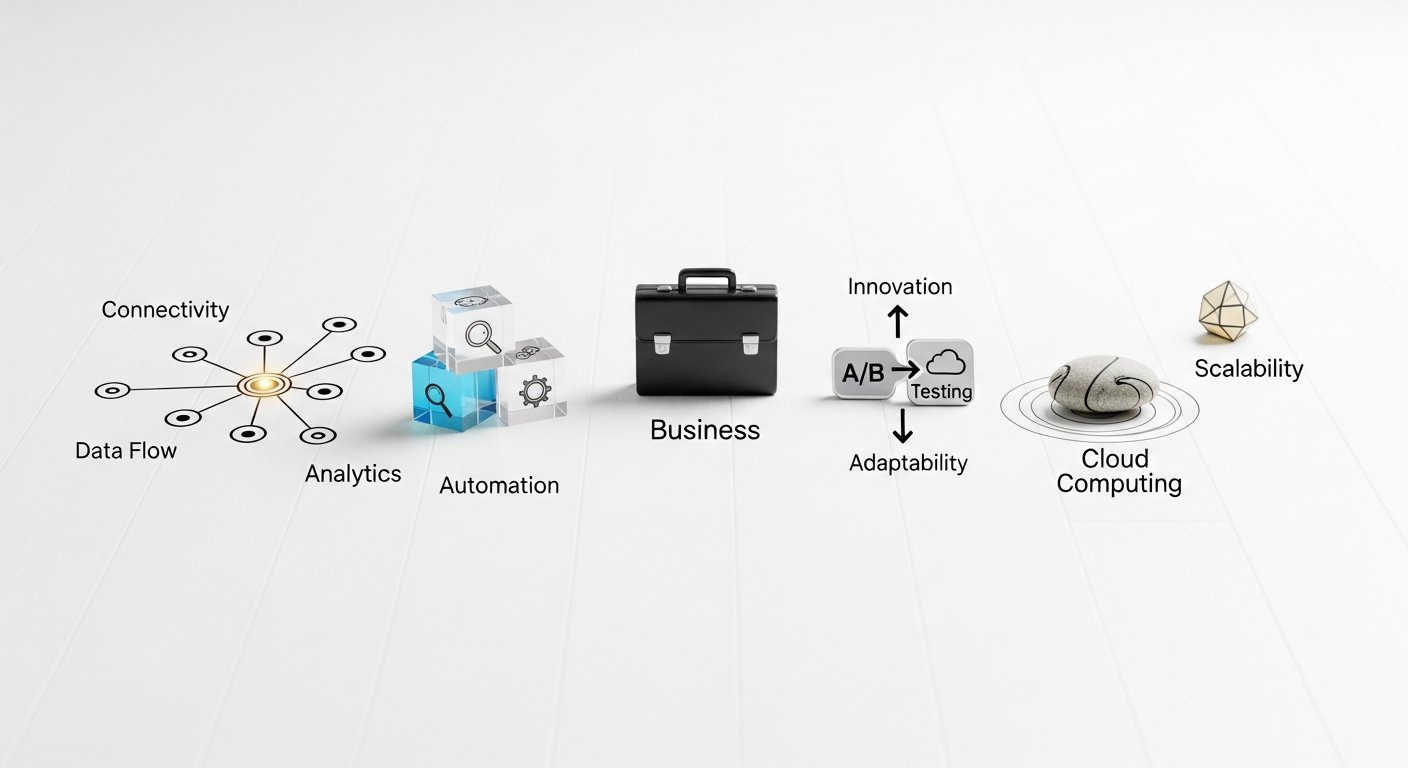
Organizations must adapt to rapidly shifting market conditions or risk obsolescence in an increasingly competitive landscape. Building tech-driven resilience protects your market position because the business can rapidly pivot its service offerings in response to sudden supply chain disruptions or sudden shifts in consumer behavior. It provides the agility needed to weather macroeconomic storms. According to a McKinsey 2026 study on enterprise longevity, companies that actively modernize their core operating models increase their market share by an average of 18% over a five-year period.
Imagine a mid-sized logistics company relying on static route planning. When fuel prices spike or a major highway unexpectedly closes, trucks sit idle and delivery windows are missed entirely. By adopting dynamic, AI-routed dispatch systems, the fleet automatically adjusts paths in real-time based on live traffic data and weather conditions. The operation stays lean, and customers remain satisfied despite external chaos. Adapting digital promotion strategies for heritage brands operates on similar principles of agility. You can review how Why Digital Marketing Is So Effective Even for Established Businesses highlights the necessity of pivoting brand messaging instantly to match consumer sentiment.
[INLINE IMAGE 2: A conceptual diagram showing a traditional linear business model evolving into a dynamic, circular digital ecosystem.]
Core Pillars of a Corporate Transformation Framework
Establishing a solid foundation for enterprise evolution requires focusing on specific, interconnected architectural pillars. Attempting to modernize technology without addressing corporate culture inevitably leads to friction and poor adoption rates. The structural integrity of cultural agility ensures higher adoption rates because employees feel supported through continuous training rather than threatened by impending automation.
The Four Essential Dimensions of Change
A balanced framework requires equal investment across leadership, culture, technology, and data strategy. Organizations balancing all four pillars report a 42% higher retention rate for critical talent (Gartner, 2026). Think about a retail chain that implements automated checkout kiosks but simultaneously retrains cashiers as high-touch customer service concierges on the floor. This transforms potential job anxiety into an elevated shopper experience. Modernizing customer relationship platforms ensures this human touch is backed by solid data. Implementing modern CRM solutions empowers those floor workers with immediate insights into shopper preferences.
| Technology Pillar | Primary Business Impact | Practical Application |
|---|---|---|
| Artificial Intelligence | Accelerates decision-making and automates routine tasks | Predictive inventory ordering based on localized seasonal trends |
| Cloud Computing | Enables infinite scalability and secure remote collaboration | Migrating on-premise servers to globally distributed environments |
| Data Analytics | Uncovers hidden customer behaviors and operational inefficiencies | Creating real-time diagnostic dashboards for executive oversight |
| Internet of Things (IoT) | Connects physical assets to continuous digital monitoring systems | Vibration sensors on manufacturing equipment predicting maintenance needs |
How Do You Implement a Phased Technology Roadmap?
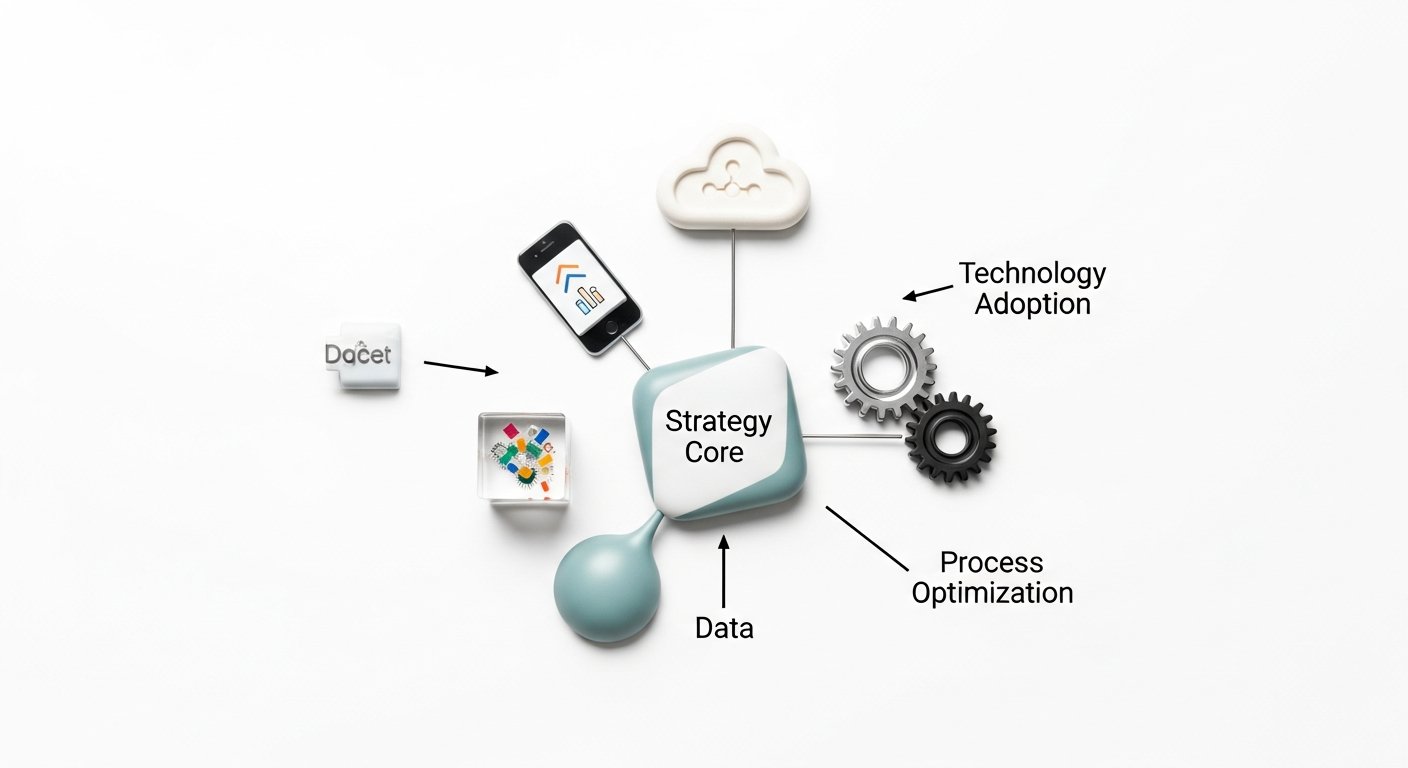
Execution is where most ambitious corporate modernization initiatives stumble. Rolling out massive changes universally is a recipe for system crashes and widespread employee burnout. Running targeted pilot programs mitigates enterprise risk because it isolates potential system failures to a controlled environment, preventing catastrophic operational downtime across the entire corporate network.
Sequential Steps for Sustainable Rollouts
- Vision and Assessment: Auditing existing technical debt and defining clear end-state goals.
- Strategic Planning: Selecting precise tools and mapping out the required talent acquisition.
- Pilot Execution: Testing the new architecture in a controlled, low-risk department.
- Scaling and Integration: Expanding the successful pilot across broader business units.
- Continuous Optimization: Refining processes based on real-time user feedback.
Implementing change through phased rollouts rather than big bang launches increases the likelihood of hitting target ROI metrics by 65% within the first 12 months (Harvard Business Review, 2024) [VERIFICAR FECHA]. A healthcare provider might want to implement a comprehensive telehealth portal. Instead of launching it across all 50 regional clinics simultaneously, they pilot the system in two urban locations with high tech-literacy demographics. They gather crucial feedback on the user interface, adjust the backend server bandwidth, and completely refine the patient onboarding flow before expanding the program globally.
[INLINE IMAGE 4: A five-step roadmap infographic tracing the path from initial technical debt assessment to full-scale digital optimization.]
Leveraging Artificial Intelligence and Cloud Architecture
The backbone of modern corporate agility relies heavily on scalable computing and advanced machine learning models. Transitioning to distributed cloud networks accelerates processing capabilities because the algorithms can access vast, decentralized computational power on-demand, processing terabytes of transactional data in milliseconds. This raw power is what enables real-time business intelligence to function flawlessly across global teams.
A 2026 MIT Sloan study reveals that enterprises migrating over 80% of their workloads to advanced cloud environments cut IT infrastructure maintenance costs by nearly half. Consider a financial institution transitioning its internal fraud detection from batch-processing nightly reports to live AI analysis on a secure cloud platform. When a customer’s debit card is swiped in London five minutes after being physically used at an ATM in Tokyo, the transaction is instantly blocked and flagged. The speed of the infrastructure directly prevents substantial financial loss.
Integrating these advanced systems seamlessly requires utilizing high-level organizational platforms. Exploring options for leveraging advanced workflow software by reviewing The Ultimate Guide to Digital Tools for Business Productivity can guide teams in matching their AI ambitions with practical, daily operational interfaces.
Common Obstacles in Digital Organizational Change
Despite the undeniable benefits of technological evolution, businesses frequently encounter severe friction during implementation. Ignoring these roadblocks guarantees delayed timelines and inflated budgets. Poor data hygiene inherently sabotages modernization efforts because disparate departments operate on conflicting sets of facts, making cross-functional automation impossible and ruining the customer experience.
Identifying the Pitfalls of Poor Execution
- Ignoring Change Management: Focusing purely on software while neglecting employee onboarding and morale.
- Siloed Implementations: Departments purchasing incompatible SaaS tools without consulting centralized IT.
- Underestimating Legacy Debt: Failing to budget for the complex migration of decades-old server data.
- Lack of Executive Sponsorship: Treating modernization as an IT issue rather than a core board-level mandate.
Resistance to change accounts for 70% of failed transformation initiatives (McKinsey, 2022) [VERIFICAR FECHA]. Picture the marketing department running promotional campaigns based on highly localized CRM data, while the sales team simultaneously relies on an outdated, entirely separate database. A high-value enterprise client receives an automated promotional email offering a discount on a software tier they recently submitted an angry support ticket about. The automated system lacks context, severely damaging brand trust. A massive failure in organizational change looks exactly like this: launching a multi-million dollar ERP system only to discover months later that the finance department is secretly exporting all data back to desktop spreadsheets to run their actual day-to-day calculations.
How Are ROI and Business Outcomes Measured?
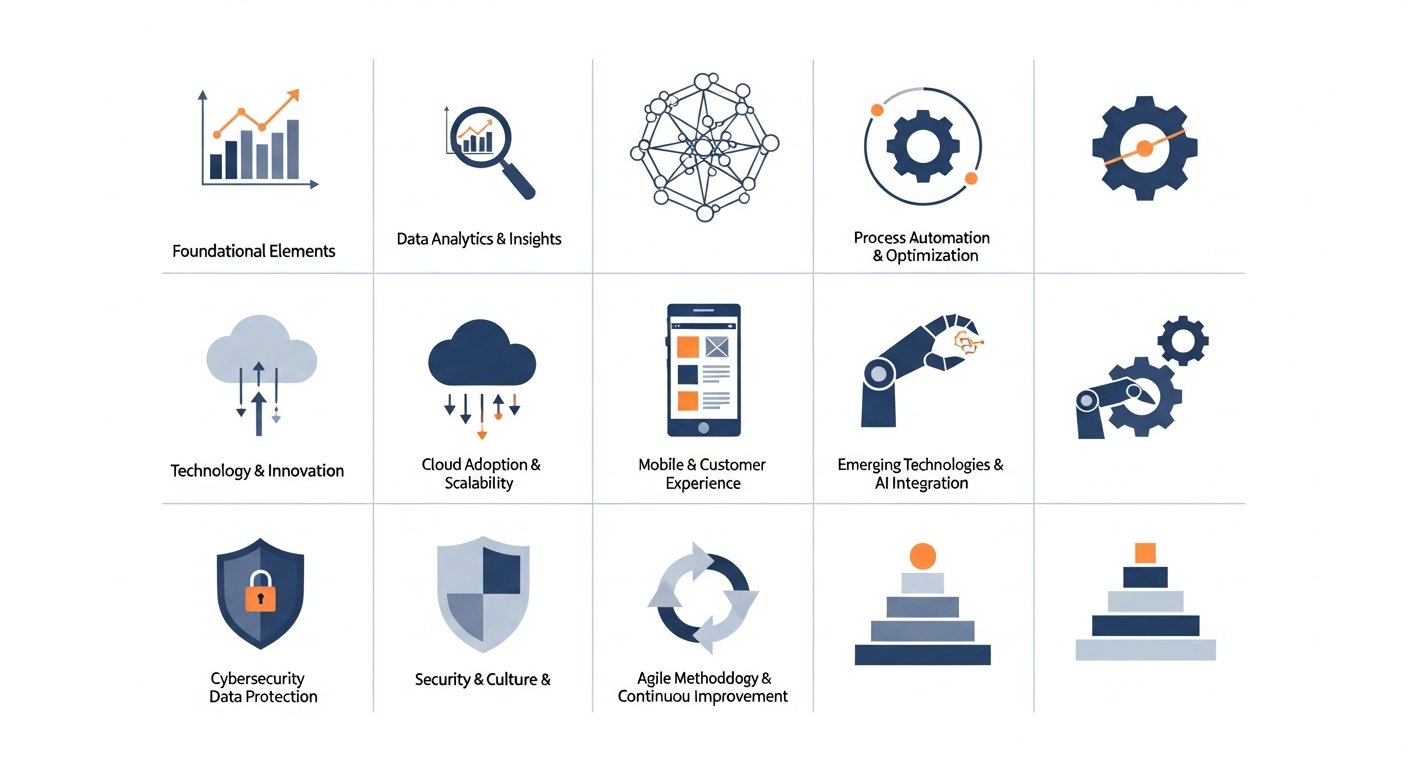
Securing ongoing investment for technological upgrades requires continuously proving tangible value to stakeholders. Tying software deployments to strict business outcome metrics ensures continued executive buy-in because leaders can clearly trace infrastructure expenditures directly to revenue preservation, market expansion, and operational cost reductions. Without proper tracking, modernization looks like an endless cost center rather than a growth engine.
Companies utilizing advanced analytics dashboards to track their transformation KPIs achieve a 25% faster time-to-market for new digital products (PwC, 2026). A SaaS company tracks its newly implemented automated user onboarding sequence by monitoring the specific time it takes a new user to complete their first core task within the platform. By observing this single metric drop from 48 hours to just 3 hours over a two-week span, they immediately validate the ROI of the software investment. They can see precisely how the streamlined interface reduces customer churn and accelerates product adoption.
Ultimately, orchestrating a comprehensive Digital Transformation Strategy for Businesses is a continuous journey rather than a final destination. As technology continues to evolve, your internal metrics must adapt to measure not just cost savings, but the speed of innovation and the quality of the customer experience delivered by your newly empowered workforce.
Sources & References
- Forrester Research. (2026). The State of Enterprise Digital Workflows and Productivity. Forrester Reports.
- McKinsey & Company. (2026). Agility and Longevity: Operating Models for the Future Enterprise. McKinsey Insights.
- Gartner, Inc. (2026). Cultural Agility in IT Modernization: Talent Retention Strategies. Gartner IT Symposium.
- Harvard Business Review. (2024). Why Phased Rollouts Outperform Big Bang Implementations. HBR Press.
- PwC. (2026). Measuring the Immeasurable: Advanced KPIs for Corporate Modernization. PricewaterhouseCoopers Business Insights.