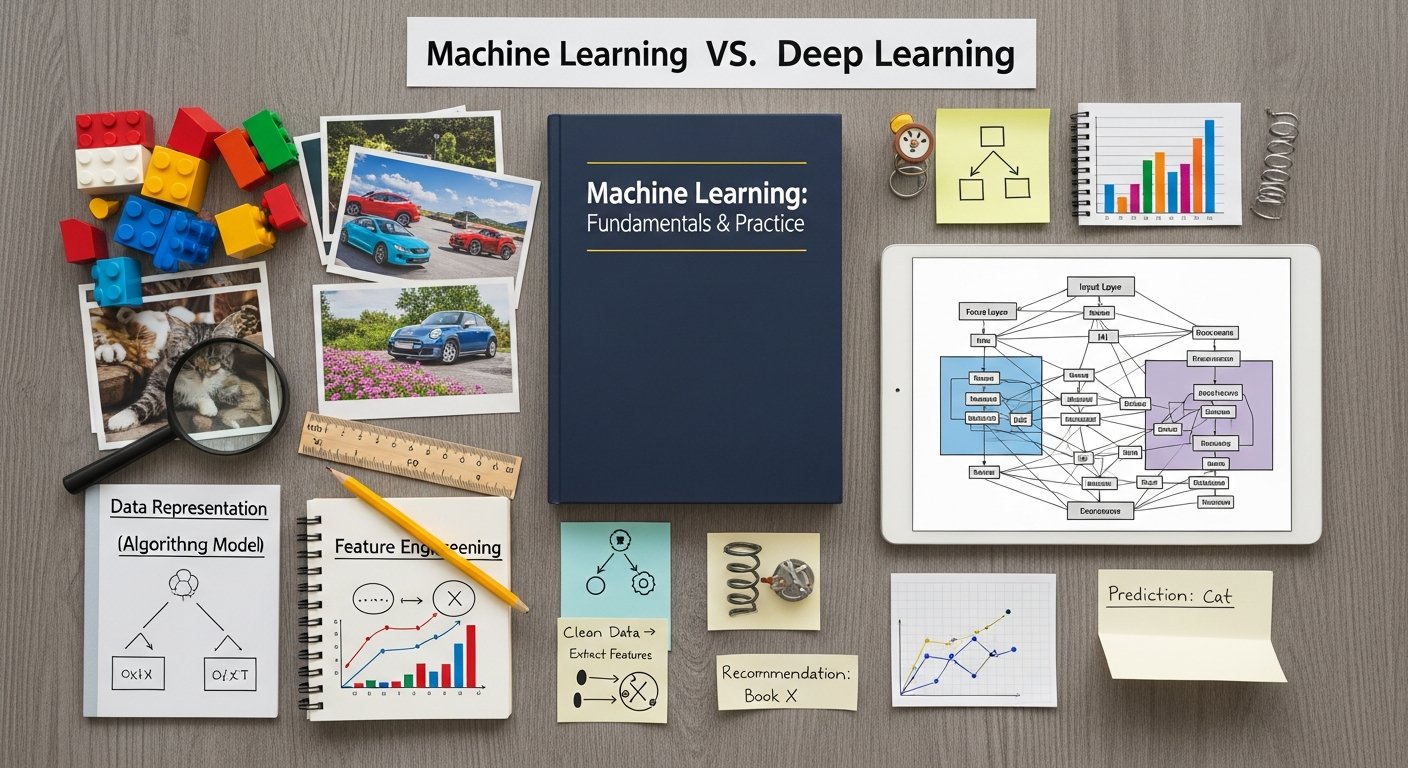
Deep Learning vs Machine Learning — 2026 Comparison Guide: Understanding the Core Differences
Affiliate disclosure: This article may contain affiliate links. Recommendations are independent and editorially driven.
In the rapidly evolving landscape of artificial intelligence, two terms frequently dominate discussions: machine learning and deep learning. While often used interchangeably, understanding the precise distinctions between deep learning vs machine learning is crucial for anyone navigating the complexities of AI development, strategic implementation, and future forecasting. As we progress into 2026, the capabilities of both paradigms continue to expand, powering everything from predictive analytics in business to revolutionary advancements in healthcare and autonomous systems.
At its core, machine learning is a broad field of AI that enables systems to learn from data, identify patterns, and make decisions with minimal human intervention. Deep learning, on the other hand, is a specialized subset of machine learning, inspired by the structure and function of the human brain, employing artificial neural networks with multiple layers to process vast amounts of data and discover intricate patterns. This guide will meticulously unpack the nuances, applications, and strategic implications of deep learning vs machine learning, providing a comprehensive overview to help you discern which approach is best suited for your specific challenges and ambitions in 2026 and beyond.
For those looking for a quick grasp of the fundamental distinctions between deep learning and machine learning, the table below provides a concise summary of their core characteristics before we dive into a more detailed exploration.
| Feature | Machine Learning (Traditional ML) | Deep Learning |
|---|---|---|
| Relationship | Broader field of AI | Subset of Machine Learning |
| Data Requirements | Often performs well with smaller to medium datasets; primarily structured data. | Requires very large datasets for optimal performance; excels with unstructured data (images, text, audio). |
| Feature Engineering | Manual and often complex; human experts define relevant features. | Automatic; neural networks learn to extract features directly from raw data. |
| Computational Power | Less intensive; often runs on CPUs. | Highly intensive; typically requires GPUs/TPUs for training. |
| Performance Scale | Performance plateaus after a certain data volume. | Performance continues to improve significantly with more data. |
| Interpretability | Generally higher (e.g., decision trees, linear models); easier to explain decisions. | Lower (often “black box”); more challenging to understand decision-making process (though Explainable AI is evolving). |
| Training Time | Relatively faster. | Significantly longer for complex models and large datasets. |
| Complexity | Simpler algorithms, easier to implement for many tasks. | More complex architectures, demanding specialized expertise. |
| Common Use Cases | Predictive analytics, spam filtering, recommendation systems (with structured data), anomaly detection. | Image recognition, natural language processing, speech recognition, autonomous driving, generative AI. |
Table of Contents
- The Foundational Layer: What is Machine Learning?
- Diving Deeper: Understanding Deep Learning
- Deep Learning vs Machine Learning: A Head-to-Head Comparison
- When to Choose Which in 2026: Practical Scenarios
- The Evolution & Convergence: Trends in 2026
- Implementing ML & DL Projects: A Strategic Overview
- Conclusion: Charting Your AI Course in 2026
- Frequently Asked Questions
The Foundational Layer: What is Machine Learning?
Machine learning (ML) stands as a cornerstone of modern artificial intelligence, representing a paradigm shift in how computers are programmed. Instead of explicit instructions for every task, ML empowers systems to learn from data, identify patterns, and make predictions or decisions without being explicitly programmed for each specific outcome. This ability to adapt and improve through experience is what defines machine learning.
Core Principles and Historical Context
The concept of machine learning dates back to the mid-20th century, with pioneers like Arthur Samuel coining the term in 1959. His checkers-playing program, which improved its performance over time, illustrated the core idea: machines could learn from their mistakes and experiences. Fundamentally, ML algorithms are statistical methods that enable computers to find hidden insights in data. These insights are then used to build models that can generalize to new, unseen data.
The process typically involves feeding an algorithm a vast amount of data, allowing it to discern relationships and structures. Once trained, the resulting model can then be deployed to perform tasks such as classification, regression, clustering, or anomaly detection on new data. This iterative learning process is what makes ML so powerful and versatile across various industries.
Types of Machine Learning
Machine learning can broadly be categorized into several types, each suited for different kinds of problems:
- Supervised Learning: This is the most common type, where the algorithm learns from labeled data. This means that for each input example, the desired output is already known. Tasks include:
- Classification: Predicting a categorical output (e.g., spam or not spam, disease or no disease). Algorithms like Decision Trees, Support Vector Machines (SVMs), Logistic Regression, and K-Nearest Neighbors (K-NN) are popular here.
- Regression: Predicting a continuous numerical output (e.g., house prices, stock values). Linear Regression, Polynomial Regression, and Ridge Regression are common examples.
- Unsupervised Learning: Here, the algorithm works with unlabeled data, aiming to find hidden patterns or structures within it. There’s no predefined output for the model to learn. Tasks include:
- Clustering: Grouping similar data points together (e.g., customer segmentation). K-Means, DBSCAN, and Hierarchical Clustering are widely used.
- Dimensionality Reduction: Reducing the number of variables while preserving important information (e.g., for data visualization or to combat the curse of dimensionality). Principal Component Analysis (PCA) is a prime example.
- Reinforcement Learning: This type of ML involves an agent learning to make decisions by performing actions in an environment to maximize a cumulative reward. It learns through trial and error, often seen in game AI, robotics, and autonomous systems.
- Semi-Supervised Learning: A hybrid approach that uses a small amount of labeled data with a large amount of unlabeled data. It’s particularly useful when labeling data is expensive or time-consuming.
Key Concepts in Traditional Machine Learning
- Algorithms: The computational procedures that enable learning, such as those mentioned above.
- Data: The fuel for ML models. Its quality, quantity, and relevance directly impact model performance. Traditional ML often relies on structured data, organized in tables with clearly defined features.
- Model: The output of the learning process, a representation of the patterns and relationships discovered in the data.
- Training: The process of feeding data to the algorithm for it to learn.
- Feature Engineering: A critical and often manual step in traditional ML. It involves transforming raw data into features that represent the underlying problem more effectively for the learning algorithm. For instance, in predicting house prices, instead of just the number of bedrooms, a feature engineer might create ‘bedrooms per square foot’ as a more informative feature.
- Evaluation Metrics: Methods to assess a model’s performance (e.g., accuracy, precision, recall, F1-score for classification; Mean Squared Error for regression).
Limitations and Challenges
While powerful, traditional machine learning faces certain limitations, especially when dealing with complex, unstructured data or extremely large datasets. Manual feature engineering can be time-consuming, requires significant domain expertise, and may not always capture the most subtle or intricate patterns. Furthermore, the performance of many traditional ML algorithms tends to plateau after a certain volume of data, meaning simply adding more data doesn’t necessarily lead to proportional improvements in accuracy. These challenges paved the way for the emergence of deep learning, a more advanced subset designed to tackle these very issues.
Diving Deeper: Understanding Deep Learning
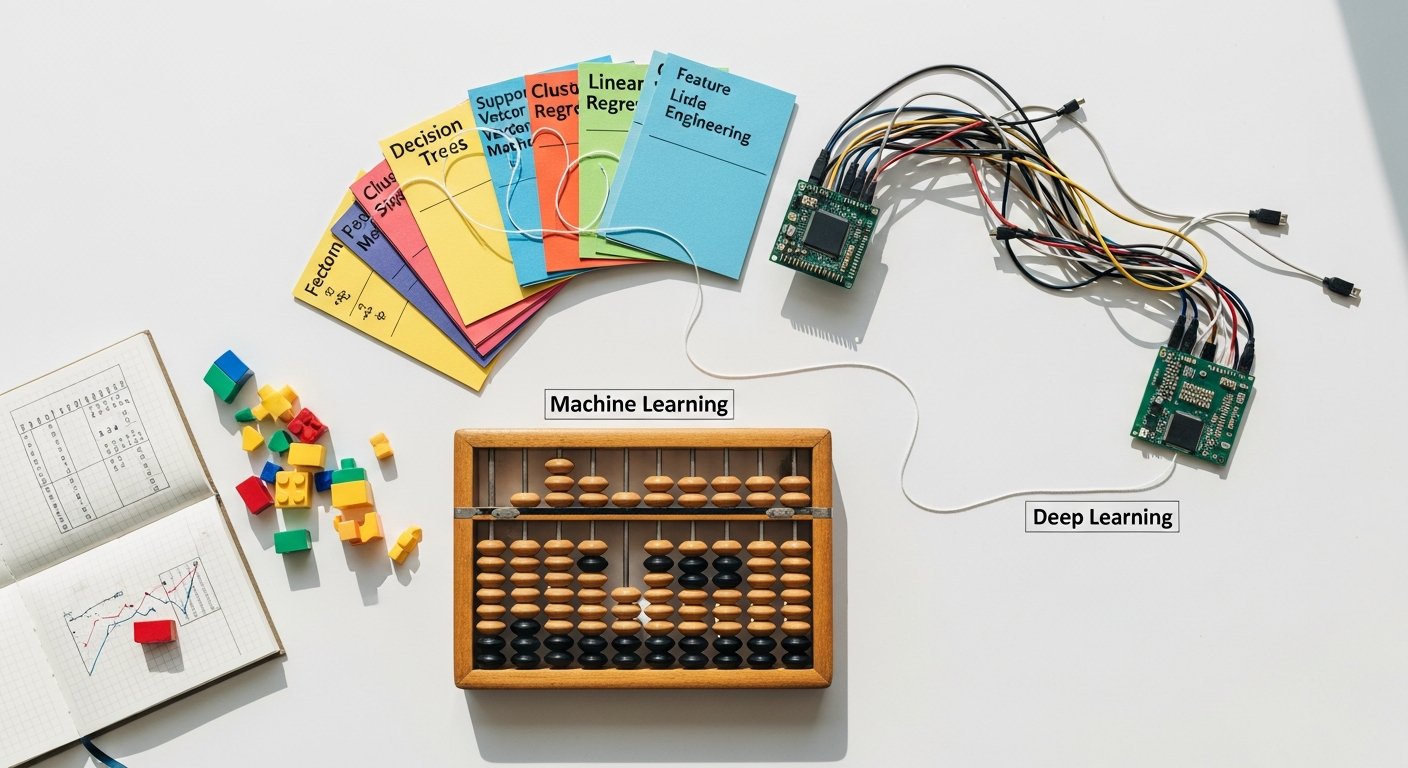
Deep learning (DL) is a sophisticated branch of machine learning that has revolutionized artificial intelligence in recent years. What sets deep learning apart is its reliance on artificial neural networks (ANNs) with multiple layers, hence the term “deep.” These networks are inspired by the structure and function of the human brain, designed to automatically learn hierarchical representations of data.
The Architecture of Deep Neural Networks
At the heart of deep learning are artificial neural networks, composed of interconnected “neurons” organized into layers. A typical deep neural network consists of:
- Input Layer: Receives the raw data (e.g., pixels of an image, words in a sentence).
- Hidden Layers: These are the “deep” part of the network. A deep network has two or more hidden layers, each performing complex computations and transformations on the data from the previous layer. Each hidden layer learns increasingly abstract features from the input.
- Output Layer: Produces the final prediction or classification.
Each connection between neurons has a weight, and each neuron has an activation function. During training, the network adjusts these weights and biases to minimize the difference between its predictions and the actual target values. This adjustment process is primarily driven by an algorithm called backpropagation, which propagates the error backward through the network, allowing weights to be updated efficiently.
Automatic Feature Extraction: A Game Changer
One of the most significant advantages of deep learning over traditional machine learning is its ability to perform automatic feature extraction. Unlike traditional ML, where human experts painstakingly design and extract features from raw data, deep neural networks learn to identify and represent relevant features themselves. For instance, in an image recognition task, the first few layers might learn to detect edges and corners, subsequent layers might combine these to detect shapes or textures, and even deeper layers might recognize complex objects like faces or vehicles. This eliminates the bottleneck of manual feature engineering, making deep learning particularly powerful for unstructured data.
Types of Deep Learning Architectures
The field of deep learning has given rise to a variety of specialized architectures, each optimized for different types of data and tasks:
- Convolutional Neural Networks (CNNs): Primarily used for image and video processing. CNNs employ convolutional layers to automatically detect spatial hierarchies of features, making them highly effective for computer vision tasks like object detection, facial recognition, and medical image analysis.
- Recurrent Neural Networks (RNNs): Designed to process sequential data, such as natural language or time series. RNNs have internal memory that allows them to remember information from previous steps, though they struggle with long-term dependencies.
- Long Short-Term Memory (LSTM) Networks: A special type of RNN that addresses the vanishing gradient problem, enabling them to learn long-term dependencies in sequential data more effectively. Widely used in speech recognition and machine translation.
- Generative Adversarial Networks (GANs): Consist of two neural networks, a generator and a discriminator, that compete against each other. GANs are used for generating realistic new data, such as images, videos, or audio.
- Transformers: A groundbreaking architecture introduced in 2017, which has become the backbone for state-of-the-art models in Natural Language Processing (NLP) like BERT, GPT-3, and GPT-4. Transformers leverage self-attention mechanisms to weigh the importance of different parts of the input sequence, overcoming the sequential processing limitations of RNNs and LSTMs.
The Enablers: Big Data and Compute Power
The resurgence and explosive growth of deep learning in recent years can be attributed to two main factors:
- Big Data: The exponential increase in data generation provides the massive datasets necessary for deep neural networks to learn complex patterns and generalize effectively. Without vast quantities of labeled data, deep learning models often struggle to outperform simpler ML algorithms.
- Computational Power: The advent of powerful Graphics Processing Units (GPUs) and specialized hardware like Tensor Processing Units (TPUs) has made it feasible to train these computationally intensive models within reasonable timeframes. GPUs, originally designed for parallel processing in gaming, proved to be perfectly suited for the matrix operations inherent in neural network training.
[INLINE IMAGE 1: place after second H2 | alt=”deep learning vs machine learning concept illustration”]
The combination of these factors has propelled deep learning to the forefront of AI, enabling breakthroughs in areas previously thought intractable. However, this power comes with its own set of trade-offs, which we will explore in the direct comparison of deep learning vs machine learning.
Deep Learning vs Machine Learning: A Head-to-Head Comparison
Understanding the fundamental differences between deep learning vs machine learning is key to selecting the right tool for the job. While deep learning is a subset of machine learning, their distinct characteristics lead to different strengths, weaknesses, and optimal use cases.
Data Requirements: Volume and Type
- Traditional Machine Learning: Generally performs well with smaller to medium-sized datasets. Many algorithms like Linear Regression, Decision Trees, or Support Vector Machines can achieve good results with thousands or tens of thousands of data points. They typically thrive on structured data, where features are clearly defined and organized in tabular formats.
- Deep Learning: Requires extremely large datasets for optimal performance. The “deep” nature of these networks means they have millions or even billions of parameters to learn, which necessitates vast amounts of data to avoid overfitting and ensure good generalization. Deep learning excels particularly with unstructured data, such as images, audio, raw text, and video, where traditional methods struggle to extract meaningful features effectively. The more data, the better deep learning typically performs, a trend often referred to as “scaling laws” for large language models.
Feature Engineering: Manual vs. Automatic
- Traditional Machine Learning: Feature engineering is a crucial, often labor-intensive, and highly skill-dependent step. Data scientists and domain experts spend significant time selecting, transforming, and creating features from raw data that are most predictive for the algorithm. The quality of these handcrafted features directly impacts model performance.
- Deep Learning: One of its most compelling advantages is automatic feature extraction. The multiple layers of a neural network are designed to learn hierarchical representations of features directly from the raw input data. For example, a CNN processing an image automatically learns to identify edges, textures, and object parts without explicit human intervention. This significantly reduces the need for manual feature engineering, automating a complex part of the data science workflow.
Computational Power: CPU vs. GPU/TPU
- Traditional Machine Learning: Most traditional ML algorithms are less computationally intensive and can be efficiently trained and run on standard CPUs (Central Processing Units). While some complex ensemble methods like XGBoost can benefit from parallelization, they generally don’t demand the specialized hardware of deep learning.
- Deep Learning: Training deep neural networks, especially large-scale models, is incredibly computationally intensive. The massive number of parameters and the parallel nature of matrix multiplications required for forward and backward propagation necessitate specialized hardware. Graphics Processing Units (GPUs), originally designed for graphics rendering, and increasingly, custom-designed Tensor Processing Units (TPUs) from Google, provide the parallel processing capabilities essential for deep learning training.
Performance and Accuracy Scaling
- Traditional Machine Learning: As the amount of data increases, the performance of traditional ML algorithms tends to improve initially, but then often plateaus. There’s a limit to how much more information these models can extract from additional data beyond a certain point, especially if the features are fixed.
- Deep Learning: Deep learning models exhibit a remarkable ability to continue improving their performance and accuracy as the volume of training data increases. This “scaling property” means that with more data and sufficient computational resources, deep learning models can often achieve superior results on complex tasks compared to traditional ML, particularly when dealing with the intricacies of unstructured data.
Interpretability and Explainability (XAI)
- Traditional Machine Learning: Many traditional ML models, especially simpler ones like Linear Regression, Decision Trees, or rule-based systems, are considered highly interpretable. It’s often relatively straightforward to understand how they arrive at a particular decision or prediction (e.g., “Feature A being high contributes positively to the outcome”). This “white-box” nature is crucial in domains like finance, medicine, and law where transparency and justification are paramount.
- Deep Learning: Deep neural networks are often referred to as “black boxes” due to their complex, multi-layered structure and billions of parameters. It’s challenging for humans to understand exactly why a deep learning model made a specific prediction, as the decision-making process is distributed across numerous hidden layers. However, the field of Explainable AI (XAI) is making significant strides in developing techniques (e.g., LIME, SHAP, attention visualization) to shed light on deep learning model decisions, enhancing trust and auditability in critical applications.
Time to Train and Develop
- Traditional Machine Learning: Generally, traditional ML models train much faster, often within minutes or hours, even on large datasets, using standard CPU hardware. The development cycle can also be quicker for well-defined problems with good features.
- Deep Learning: Training deep learning models, especially large ones like Transformers, can take days, weeks, or even months, requiring substantial GPU/TPU clusters. The iterative process of architecture design, hyperparameter tuning, and training can also extend the development timeline significantly. However, once trained, inference (making predictions) can be very fast.
Cost Implications
- Traditional Machine Learning: Typically lower cost, both in terms of hardware (standard CPUs are sufficient) and often in data labeling (as smaller, cleaner datasets are used). Development and deployment can also be less expensive.
- Deep Learning: Can incur substantial costs. This includes expensive specialized hardware (GPUs/TPUs), high cloud computing expenses for training, and the significant cost of acquiring and labeling massive datasets (which often requires human annotators). The expertise required to develop and maintain complex deep learning systems is also generally higher, leading to increased personnel costs.
[INLINE IMAGE 2: place after fourth H2 | alt=”deep learning vs machine learning comparison illustration”]
The table below summarizes these critical distinctions between deep learning vs machine learning, providing a detailed overview for comparison.
| Characteristic | Machine Learning (Traditional ML) | Deep Learning | Impact/Consideration |
|---|---|---|---|
| Relationship to AI | Broad field within AI | Subset of Machine Learning | DL is a specific approach within the ML family. |
| Data Volume Needed | Small to Medium | Very Large (Big Data) | Determines feasibility based on available data. |
| Data Type Proficiency | Structured (tabular, numerical, categorical) | Unstructured (images, audio, text, video) | Crucial for task suitability (e.g., image recognition). |
| Feature Engineering | Manual, human-intensive, domain-specific | Automatic, learned by the network | Impacts development time, expert reliance, and model performance ceiling. |
| Computational Requirements | Lower (CPU-centric) | Higher (GPU/TPU-centric) | Directly affects hardware costs, cloud usage, and training time. |
| Performance with Data Scale | Performance plateaus | Performance scales with more data | Indicates potential for improvement with data acquisition. |
| Interpretability | Generally High (“White-box”) | Generally Low (“Black-box”) | Critical for regulatory compliance, trust, and debugging. (XAI is evolving for DL) |
| Training Time | Minutes to Hours | Hours to Weeks/Months | Influences project timelines and iteration speed. |
| Development Expertise | Data science, statistics, domain knowledge | Advanced AI/ML engineering, neural network architecture, significant coding proficiency | Affects team recruitment and resource allocation. |
| Energy Consumption | Lower | Significantly Higher | Environmental and operational cost consideration. |
| Typical Algorithms | Linear Regression, Decision Trees, SVM, Random Forest, XGBoost, K-Means | CNNs, RNNs/LSTMs, Transformers, GANs, Autoencoders | Dictates the specific models considered for a problem. |
When to Choose Which in 2026: Practical Scenarios
The decision to employ deep learning vs machine learning hinges on several factors, including the nature of your data, the complexity of the problem, available computational resources, and the need for interpretability. In 2026, both paradigms continue to hold immense value, often complementing each other rather than being mutually exclusive.
Scenarios Favoring Traditional Machine Learning
- Structured and Tabular Data: For datasets organized in rows and columns, such as customer databases, financial records, or sensor readings, traditional ML algorithms often perform exceptionally well. Algorithms like Gradient Boosting Machines (e.g., XGBoost, LightGBM) or Random Forests are highly effective for classification and regression tasks on structured data.
- Small to Medium Datasets: If you have limited data (hundreds to tens of thousands of examples), deep learning models may overfit or fail to generalize effectively due to their high parameter count. Traditional ML models are often more robust with smaller data volumes.
- Need for High Interpretability: In sectors like finance, healthcare, or legal, where understanding the ‘why’ behind a prediction is critical for compliance, auditing, or trust, simpler ML models offer greater transparency. A decision tree or logistic regression model can provide clear insights into feature importance and decision paths.
- Limited Computational Resources: If you’re working with standard CPUs or have budget constraints for cloud GPUs, traditional ML is usually the more practical choice. Its lower computational footprint makes it suitable for deployments on less powerful hardware or edge devices.
- Quick Prototyping and Deployment: For projects requiring rapid iteration and deployment, traditional ML models often have shorter training times and simpler architectures, allowing for quicker development cycles.
- Example Use Cases:
- Predictive Maintenance: Predicting equipment failure based on sensor data.
- Fraud Detection: Identifying fraudulent transactions from structured financial data.
- Customer Churn Prediction: Forecasting which customers are likely to leave based on their interaction history.
- Recommendation Systems (Hybrid): Often uses collaborative filtering or matrix factorization (traditional ML) but can be enhanced by deep learning for complex user patterns.
- Spam Filtering: Classifying emails as spam or not based on text features.
Scenarios Favoring Deep Learning
Deep learning shines where traditional ML struggles, particularly with complexity and scale:
- Large, Unstructured Datasets: For tasks involving massive amounts of images, video, audio, or raw text, deep learning’s automatic feature extraction capabilities are unparalleled. It can uncover intricate patterns that would be impossible for
Deep Learning vs Machine Learning — 2026 Comparison Guide: Understanding the Core Differences
Affiliate disclosure: This article may contain affiliate links. Recommendations are independent and editorially driven.
In the rapidly evolving landscape of artificial intelligence, two terms frequently dominate discussions: machine learning and deep learning. While often used interchangeably, understanding the precise distinctions between deep learning vs machine learning is crucial for anyone navigating the complexities of AI development, strategic implementation, and future forecasting. As we progress into 2026, the capabilities of both paradigms continue to expand, powering everything from predictive analytics in business to revolutionary advancements in healthcare and autonomous systems.
At its core, machine learning is a broad field of AI that enables systems to learn from data, identify patterns, and make decisions with minimal human intervention. Deep learning, on the other hand, is a specialized subset of machine learning, inspired by the structure and function of the human brain, employing artificial neural networks with multiple layers to process vast amounts of data and discover intricate patterns. This guide will meticulously unpack the nuances, applications, and strategic implications of deep learning vs machine learning, providing a comprehensive overview to help you discern which approach is best suited for your specific challenges and ambitions in 2026 and beyond.
For those looking for a quick grasp of the fundamental distinctions between deep learning and machine learning, the table below provides a concise summary of their core characteristics before we dive into a more detailed exploration.
Feature Machine Learning (Traditional ML) Deep Learning Relationship Broader field of AI Subset of Machine Learning Data Requirements Often performs well with smaller to medium datasets; primarily structured data. Requires very large datasets for optimal performance; excels with unstructured data (images, text, audio). Feature Engineering Manual and often complex; human experts define relevant features. Automatic; neural networks learn to extract features directly from raw data. Computational Power Less intensive; often runs on CPUs. Highly intensive; typically requires GPUs/TPUs for training. Performance Scale Performance plateaus after a certain data volume. Performance continues to improve significantly with more data. Interpretability Generally higher (e.g., decision trees, linear models); easier to explain decisions. Lower (often “black box”); more challenging to understand decision-making process (though Explainable AI is evolving). Training Time Relatively faster. Significantly longer for complex models and large datasets. Complexity Simpler algorithms, easier to implement for many tasks. More complex architectures, demanding specialized expertise. Common Use Cases Predictive analytics, spam filtering, recommendation systems (with structured data), anomaly detection. Image recognition, natural language processing, speech recognition, autonomous driving, generative AI. Table of Contents
- The Foundational Layer: What is Machine Learning?
- Diving Deeper: Understanding Deep Learning
- Deep Learning vs Machine Learning: A Head-to-Head Comparison
- When to Choose Which in 2026: Practical Scenarios
- The Evolution & Convergence: Trends in 2026
- Implementing ML & DL Projects: A Strategic Overview
- Conclusion: Charting Your AI Course in 2026
- Frequently Asked Questions
The Foundational Layer: What is Machine Learning?
Machine learning (ML) stands as a cornerstone of modern artificial intelligence, representing a paradigm shift in how computers are programmed. Instead of explicit instructions for every task, ML empowers systems to learn from data, identify patterns, and make predictions or decisions without being explicitly programmed for each specific outcome. This ability to adapt and improve through experience is what defines machine learning.
Core Principles and Historical Context
The concept of machine learning dates back to the mid-20th century, with pioneers like Arthur Samuel coining the term in 1959. His checkers-playing program, which improved its performance over time, illustrated the core idea: machines could learn from their mistakes and experiences. Fundamentally, ML algorithms are statistical methods that enable computers to find hidden insights in data. These insights are then used to build models that can generalize to new, unseen data.
The process typically involves feeding an algorithm a vast amount of data, allowing it to discern relationships and structures. Once trained, the resulting model can then be deployed to perform tasks such as classification, regression, clustering, or anomaly detection on new data. This iterative learning process is what makes ML so powerful and versatile across various industries.
Types of Machine Learning
Machine learning can broadly be categorized into several types, each suited for different kinds of problems:
- Supervised Learning: This is the most common type, where the algorithm learns from labeled data. This means that for each input example, the desired output is already known. Tasks include:
- Classification: Predicting a categorical output (e.g., spam or not spam, disease or no disease). Algorithms like Decision Trees, Support Vector Machines (SVMs), Logistic Regression, and K-Nearest Neighbors (K-NN) are popular here.
- Regression: Predicting a continuous numerical output (e.g., house prices, stock values). Linear Regression, Polynomial Regression, and Ridge Regression are common examples.
- Unsupervised Learning: Here, the algorithm works with unlabeled data, aiming to find hidden patterns or structures within it. There’s no predefined output for the model to learn. Tasks include:
- Clustering: Grouping similar data points together (e.g., customer segmentation). K-Means, DBSCAN, and Hierarchical Clustering are widely used.
- Dimensionality Reduction: Reducing the number of variables while preserving important information (e.g., for data visualization or to combat the curse of dimensionality). Principal Component Analysis (PCA) is a prime example.
- Reinforcement Learning: This type of ML involves an agent learning to make decisions by performing actions in an environment to maximize a cumulative reward. It learns through trial and error, often seen in game AI, robotics, and autonomous systems.
- Semi-Supervised Learning: A hybrid approach that uses a small amount of labeled data with a large amount of unlabeled data. It’s particularly useful when labeling data is expensive or time-consuming.
Key Concepts in Traditional Machine Learning
- Algorithms: The computational procedures that enable learning, such as those mentioned above.
- Data: The fuel for ML models. Its quality, quantity, and relevance directly impact model performance. Traditional ML often relies on structured data, organized in tables with clearly defined features.
- Model: The output of the learning process, a representation of the patterns and relationships discovered in the data.
- Training: The process of feeding data to the algorithm for it to learn.
- Feature Engineering: A critical and often manual step in traditional ML. It involves transforming raw data into features that represent the underlying problem more effectively for the learning algorithm. For instance, in predicting house prices, instead of just the number of bedrooms, a feature engineer might create ‘bedrooms per square foot’ as a more informative feature.
- Evaluation Metrics: Methods to assess a model’s performance (e.g., accuracy, precision, recall, F1-score for classification; Mean Squared Error for regression).
Limitations and Challenges
While powerful, traditional machine learning faces certain limitations, especially when dealing with complex, unstructured data or extremely large datasets. Manual feature engineering can be time-consuming, requires significant domain expertise, and may not always capture the most subtle or intricate patterns. Furthermore, the performance of many traditional ML algorithms tends to plateau after a certain volume of data, meaning simply adding more data doesn’t necessarily lead to proportional improvements in accuracy. These challenges paved the way for the emergence of deep learning, a more advanced subset designed to tackle these very issues.
Diving Deeper: Understanding Deep Learning
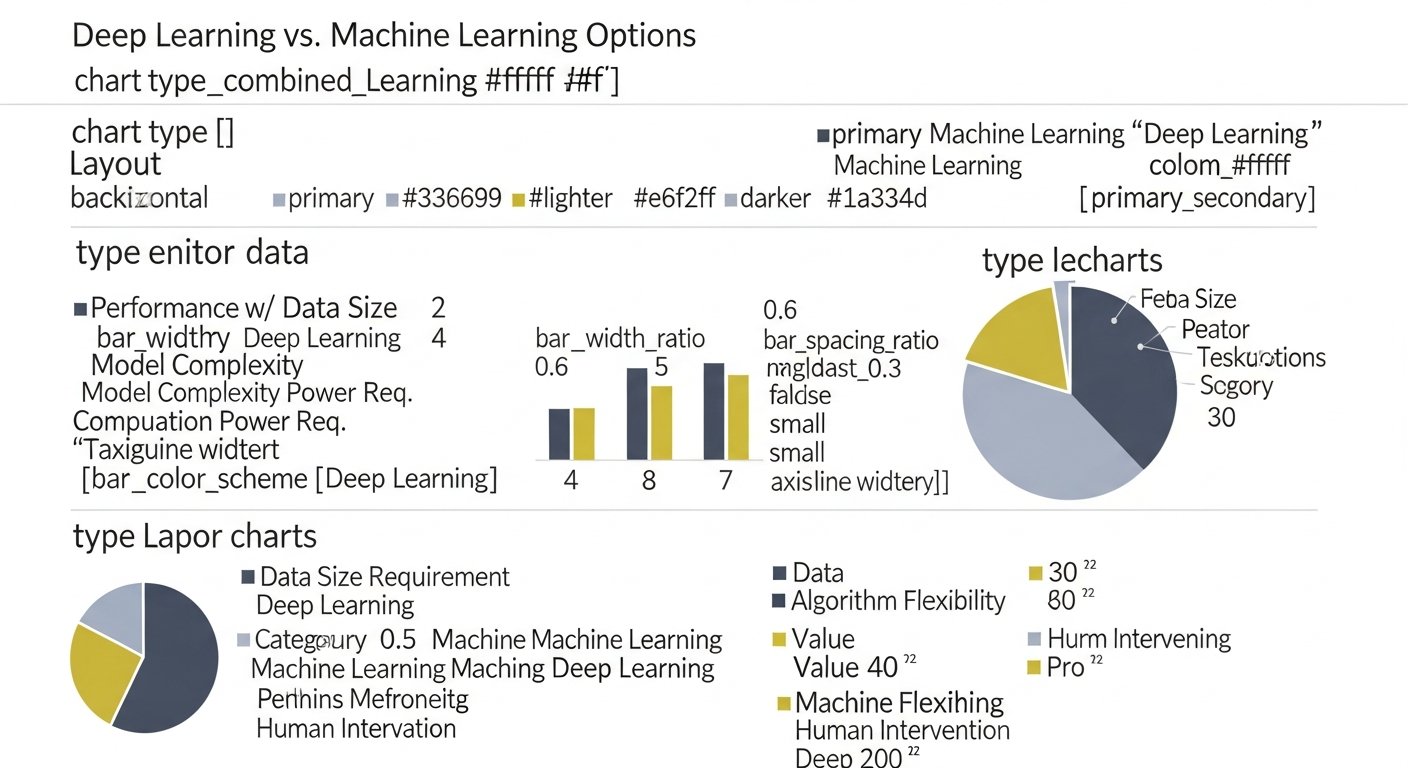
Deep learning (DL) is a sophisticated branch of machine learning that has revolutionized artificial intelligence in recent years. What sets deep learning apart is its reliance on artificial neural networks (ANNs) with multiple layers, hence the term “deep.” These networks are inspired by the structure and function of the human brain, designed to automatically learn hierarchical representations of data.
The Architecture of Deep Neural Networks
At the heart of deep learning are artificial neural networks, composed of interconnected “neurons” organized into layers. A typical deep neural network consists of:
- Input Layer: Receives the raw data (e.g., pixels of an image, words in a sentence).
- Hidden Layers: These are the “deep” part of the network. A deep network has two or more hidden layers, each performing complex computations and transformations on the data from the previous layer. Each hidden layer learns increasingly abstract features from the input.
- Output Layer: Produces the final prediction or classification.
Each connection between neurons has a weight, and each neuron has an activation function. During training, the network adjusts these weights and biases to minimize the difference between its predictions and the actual target values. This adjustment process is primarily driven by an algorithm called backpropagation, which propagates the error backward through the network, allowing weights to be updated efficiently.
Automatic Feature Extraction: A Game Changer
One of the most significant advantages of deep learning over traditional machine learning is its ability to perform automatic feature extraction. Unlike traditional ML, where human experts painstakingly design and extract features from raw data, deep neural networks learn to identify and represent relevant features themselves. For instance, in an image recognition task, the first few layers might learn to detect edges and corners, subsequent layers might combine these to detect shapes or textures, and even deeper layers might recognize complex objects like faces or vehicles. This eliminates the bottleneck of manual feature engineering, making deep learning particularly powerful for unstructured data.
Types of Deep Learning Architectures
The field of deep learning has given rise to a variety of specialized architectures, each optimized for different types of data and tasks:
- Convolutional Neural Networks (CNNs): Primarily used for image and video processing. CNNs employ convolutional layers to automatically detect spatial hierarchies of features, making them highly effective for computer vision tasks like object detection, facial recognition, and medical image analysis.
- Recurrent Neural Networks (RNNs): Designed to process sequential data, such as natural language or time series. RNNs have internal memory that allows them to remember information from previous steps, though they struggle with long-term dependencies.
- Long Short-Term Memory (LSTM) Networks: A special type of RNN that addresses the vanishing gradient problem, enabling them to learn long-term dependencies in sequential data more effectively. Widely used in speech recognition and machine translation.
- Generative Adversarial Networks (GANs): Consist of two neural networks, a generator and a discriminator, that compete against each other. GANs are used for generating realistic new data, such as images, videos, or audio.
- Transformers: A groundbreaking architecture introduced in 2017, which has become the backbone for state-of-the-art models in Natural Language Processing (NLP) like BERT, GPT-3, and GPT-4. Transformers leverage self-attention mechanisms to weigh the importance of different parts of the input sequence, overcoming the sequential processing limitations of RNNs and LSTMs.
The Enablers: Big Data and Compute Power
The resurgence and explosive growth of deep learning in recent years can be attributed to two main factors:
- Big Data: The exponential increase in data generation provides the massive datasets necessary for deep neural networks to learn complex patterns and generalize effectively. Without vast quantities of labeled data, deep learning models often struggle to outperform simpler ML algorithms.
- Computational Power: The advent of powerful Graphics Processing Units (GPUs) and specialized hardware like Tensor Processing Units (TPUs) has made it feasible to train these computationally intensive models within reasonable timeframes. GPUs, originally designed for parallel processing in gaming, proved to be perfectly suited for the matrix operations inherent in neural network training.
[INLINE IMAGE 1: place after second H2 | alt=”deep learning vs machine learning concept illustration”]
The combination of these factors has propelled deep learning to the forefront of AI, enabling breakthroughs in areas previously thought intractable. However, this power comes with its own set of trade-offs, which we will explore in the direct comparison of deep learning vs machine learning.
Deep Learning vs Machine Learning: A Head-to-Head Comparison
Understanding the fundamental differences between deep learning vs machine learning is key to selecting the right tool for the job. While deep learning is a subset of machine learning, their distinct characteristics lead to different strengths, weaknesses, and optimal use cases.
Data Requirements: Volume and Type
- Traditional Machine Learning: Generally performs well with smaller to medium-sized datasets. Many algorithms like Linear Regression, Decision Trees, or Support Vector Machines can achieve good results with thousands or tens of thousands of data points. They typically thrive on structured data, where features are clearly defined and organized in tabular formats.
- Deep Learning: Requires extremely large datasets for optimal performance. The “deep” nature of these networks means they have millions or even billions of parameters to learn, which necessitates vast amounts of data to avoid overfitting and ensure good generalization. Deep learning excels particularly with unstructured data, such as images, audio, raw text, and video, where traditional methods struggle to extract meaningful features effectively. The more data, the better deep learning typically performs, a trend often referred to as “scaling laws” for large language models.
Feature Engineering: Manual vs. Automatic
- Traditional Machine Learning: Feature engineering is a crucial, often labor-intensive, and highly skill-dependent step. Data scientists and domain experts spend significant time selecting, transforming, and creating features from raw data that are most predictive for the algorithm. The quality of these handcrafted features directly impacts model performance.
- Deep Learning: One of its most compelling advantages is automatic feature extraction. The multiple layers of a neural network are designed to learn hierarchical representations of features directly from the raw input data. For example, a CNN processing an image automatically learns to identify edges, textures, and object parts without explicit human intervention. This significantly reduces the need for manual feature engineering, automating a complex part of the data science workflow.
Computational Power: CPU vs. GPU/TPU
- Traditional Machine Learning: Most traditional ML algorithms are less computationally intensive and can be efficiently trained and run on standard CPUs (Central Processing Units). While some complex ensemble methods like XGBoost can benefit from parallelization, they generally don’t demand the specialized hardware of deep learning.
- Deep Learning: Training deep neural networks, especially large-scale models, is incredibly computationally intensive. The massive number of parameters and the parallel nature of matrix multiplications required for forward and backward propagation necessitate specialized hardware. Graphics Processing Units (GPUs), originally designed for graphics rendering, and increasingly, custom-designed Tensor Processing Units (TPUs) from Google, provide the parallel processing capabilities essential for deep learning training.
Performance and Accuracy Scaling
- Traditional Machine Learning: As the amount of data increases, the performance of traditional ML algorithms tends to improve initially, but then often plateaus. There’s a limit to how much more information these models can extract from additional data beyond a certain point, especially if the features are fixed.
- Deep Learning: Deep learning models exhibit a remarkable ability to continue improving their performance and accuracy as the volume of training data increases. This “scaling property” means that with more data and sufficient computational resources, deep learning models can often achieve superior results on complex tasks compared to traditional ML, particularly when dealing with the intricacies of unstructured data.
Interpretability and Explainability (XAI)
- Traditional Machine Learning: Many traditional ML models, especially simpler ones like Linear Regression, Decision Trees, or rule-based systems, are considered highly interpretable. It’s often relatively straightforward to understand how they arrive at a particular decision or prediction (e.g., “Feature A being high contributes positively to the outcome”). This “white-box” nature is crucial in domains like finance, medicine, and law where transparency and justification are paramount.
- Deep Learning: Deep neural networks are often referred to as “black boxes” due to their complex, multi-layered structure and billions of parameters. It’s challenging for humans to understand exactly why a deep learning model made a specific prediction, as the decision-making process is distributed across numerous hidden layers. However, the field of Explainable AI (XAI) is making significant strides in developing techniques (e.g., LIME, SHAP, attention visualization) to shed light on deep learning model decisions, enhancing trust and auditability in critical applications.
Time to Train and Develop
- Traditional Machine Learning: Generally, traditional ML models train much faster, often within minutes or hours, even on large datasets, using standard CPU hardware. The development cycle can also be quicker for well-defined problems with good features.
- Deep Learning: Training deep learning models, especially large ones like Transformers, can take days, weeks, or even months, requiring substantial GPU/TPU clusters. The iterative process of architecture design, hyperparameter tuning, and training can also extend the development timeline significantly. However, once trained, inference (making predictions) can be very fast.
Cost Implications
- Traditional Machine Learning: Typically lower cost, both in terms of hardware (standard CPUs are sufficient) and often in data labeling (as smaller, cleaner datasets are used). Development and deployment can also be less expensive.
- Deep Learning: Can incur substantial costs. This includes expensive specialized hardware (GPUs/TPUs), high cloud computing expenses for training, and the significant cost of acquiring and labeling massive datasets (which often requires human annotators). The expertise required to develop and maintain complex deep learning systems is also generally higher, leading to increased personnel costs.
[INLINE IMAGE 2: place after fourth H2 | alt=”deep learning vs machine learning comparison illustration”]
The table below summarizes these critical distinctions between deep learning vs machine learning, providing a detailed overview for comparison.
Characteristic Machine Learning (Traditional ML) Deep Learning Impact/Consideration Relationship to AI Broad field within AI Subset of Machine Learning DL is a specific approach within the ML family. Data Volume Needed Small to Medium Very Large (Big Data) Determines feasibility based on available data. Data Type Proficiency Structured (tabular, numerical, categorical) Unstructured (images, audio, text, video) Crucial for task suitability (e.g., image recognition). Feature Engineering Manual, human-intensive, domain-specific Automatic, learned by the network Impacts development time, expert reliance, and model performance ceiling. Computational Requirements Lower (CPU-centric) Higher (GPU/TPU-centric) Directly affects hardware costs, cloud usage, and training time. Performance with Data Scale Performance plateaus Performance scales with more data Indicates potential for improvement with data acquisition. Interpretability Generally High (“White-box”) Generally Low (“Black-box”) Critical for regulatory compliance, trust, and debugging. (XAI is evolving for DL) Training Time Minutes to Hours Hours to Weeks/Months Influences project timelines and iteration speed. Development Expertise Data science, statistics, domain knowledge Advanced AI/ML engineering, neural network architecture, significant coding proficiency Affects team recruitment and resource allocation. Energy Consumption Lower Significantly Higher Environmental and operational cost consideration. Typical Algorithms Linear Regression, Decision Trees, SVM, Random Forest, XGBoost, K-Means CNNs, RNNs/LSTMs, Transformers, GANs, Autoencoders Dictates the specific models considered for a problem. When to Choose Which in 2026: Practical Scenarios
The decision to employ deep learning vs machine learning hinges on several factors, including the nature of your data, the complexity of the problem, available computational resources, and the need for interpretability. In 2026, both paradigms continue to hold immense value, often complementing each other rather than being mutually exclusive.
Scenarios Favoring Traditional Machine Learning
- Structured and Tabular Data: For datasets organized in rows and columns, such as customer databases, financial records, or sensor readings, traditional ML algorithms often perform exceptionally well. Algorithms like Gradient Boosting Machines (e.g., XGBoost, LightGBM) or Random Forests are highly effective for classification and regression tasks on structured data.
- Small to Medium Datasets: If you have limited data (hundreds to tens of thousands of examples), deep learning models may overfit or fail to generalize effectively due to their high parameter count. Traditional ML models are often more robust with smaller data volumes.
- Need for High Interpretability: In sectors like finance, healthcare, or legal, where understanding the ‘why’ behind a prediction is critical for compliance, auditing, or trust, simpler ML models offer greater transparency. A decision tree or logistic regression model can provide clear insights into feature importance and decision paths.
- Limited Computational Resources: If you’re working with standard CPUs or have budget constraints for cloud GPUs, traditional ML is usually the more practical choice. Its lower computational footprint makes it suitable for deployments on less powerful hardware or edge devices.
- Quick Prototyping and Deployment: For projects requiring rapid iteration and deployment, traditional ML models often have shorter training times and simpler architectures, allowing for quicker development cycles.
- Example Use Cases:
- Predictive Maintenance: Predicting equipment failure based on sensor data.
- Fraud Detection: Identifying fraudulent transactions from structured financial data.
- Customer Churn Prediction: Forecasting which customers are likely to leave based on their interaction history.
- Recommendation Systems (Hybrid): Often uses collaborative filtering or matrix factorization (traditional ML) but can be enhanced by deep learning for complex user patterns.
- Spam Filtering: Classifying emails as spam or not based on text features.
Scenarios Favoring Deep Learning
Deep learning shines where traditional ML struggles, particularly with complexity and scale:
- Large, Unstructured Datasets: For tasks involving massive amounts of images, video, audio, or raw text, deep learning’s automatic feature extraction capabilities are unparalleled. It can uncover intricate patterns that would be impossible for