
Navigating the Shift: Career Pivots for Mid-Career Professionals in AI-Disrupted Fields
This technological evolution matters because it challenges the traditional definition of “seniority.” In the past, seniority was equated with the mastery of specific technical tasks or the accumulation of institutional knowledge. Today, AI can replicate those tasks in seconds. However, this disruption is not a dead end; it is a pivot point. For the tech-savvy professional, the challenge lies in moving from being an “executor” of tasks to an “orchestrator” of AI systems. Understanding the mechanics of this shift is the key to remaining indispensable in an era where cognitive labor is being radically redefined. The goal is not to compete with the machine, but to leverage a decade of domain expertise to lead it.
Understanding the Engine of Change: What Is Agentic AI?
To navigate a career pivot, one must first understand the specific nature of the technology causing the disruption. We have moved past the era of “Generative AI” as a mere novelty—where users were impressed by a chatbot’s ability to write a poem or a marketing email. The current frontier is defined by Agentic AI and Large Action Models (LAMs).
Unlike standard Large Language Models (LLMs) that simply predict the next word in a sequence, Agentic AI is designed to achieve goals. These systems possess “reasoning loops” that allow them to break down a complex prompt—such as “optimize the supply chain for a mid-sized electronics firm”—into a series of sub-tasks. The AI can then browse the web, interact with software APIs, analyze data in real-time, and correct its own errors.
For a mid-career professional, this means the technology is no longer just a digital assistant; it is a digital colleague. It functions through a combination of transformer architectures, which allow it to understand context across vast amounts of data, and reinforcement learning from human feedback (RLHF), which aligns its outputs with human values and business objectives. In the near future, the most valuable professionals will be those who understand the “latent space” of these models—how they categorize information—and can steer them toward high-value business outcomes.
From Execution to Orchestration: How the Technology Works
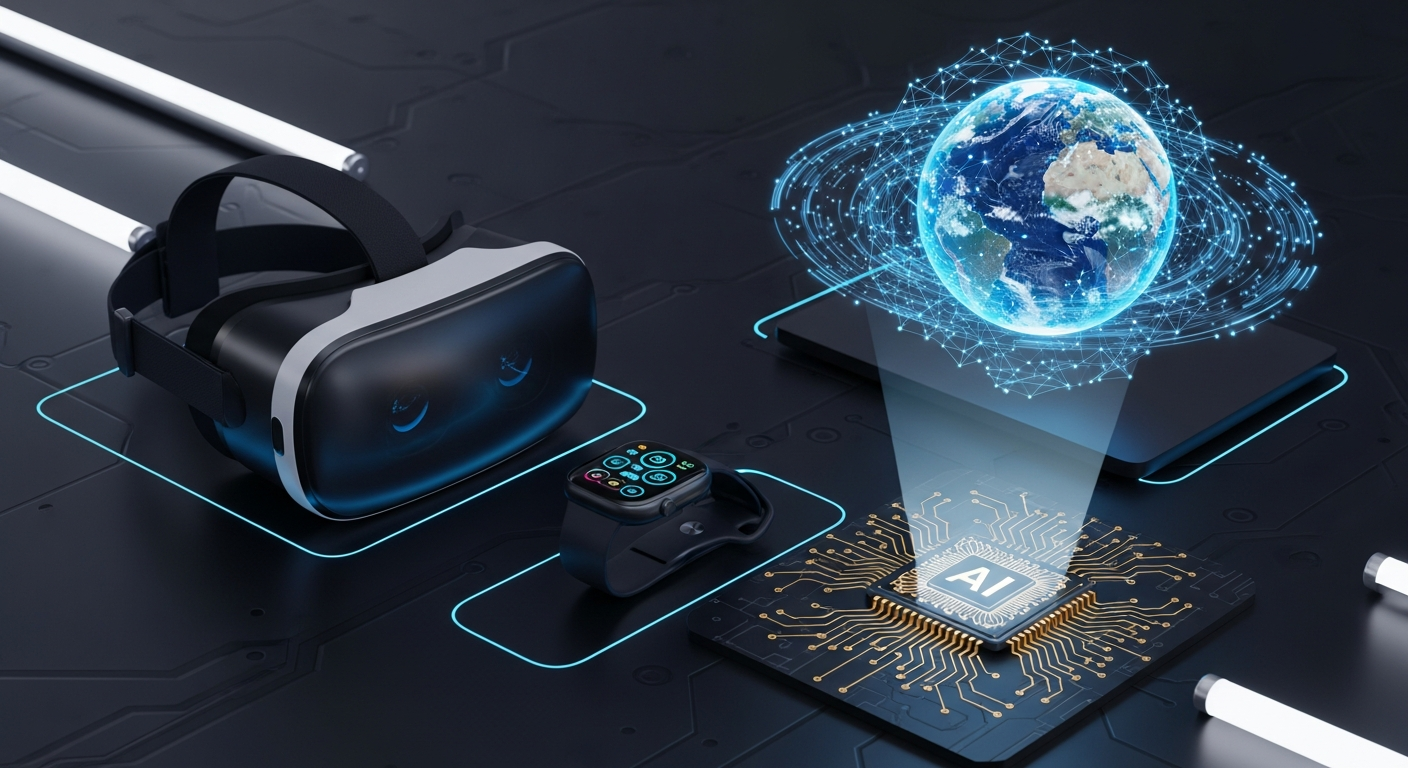
The mechanics of AI disruption are centered on the concept of “semantic reasoning” replacing “syntactic processing.” In traditional computing, software followed strict, pre-defined rules (if-this-then-that). If a business process changed, the code had to be rewritten. AI disrupts this by utilizing neural networks that understand the *meaning* behind instructions rather than just the literal text.
Mid-career pivots are successful when professionals understand the three pillars of modern AI integration:
1. **Retrieval-Augmented Generation (RAG):** This is the process of connecting an AI to a specific, private database (like a company’s legal archives or financial records). Instead of the AI relying on its general training, it “retrieves” relevant documents first and then “generates” an answer based on those facts. Professionals who can design and oversee RAG pipelines are in high demand because they bridge the gap between “hallucinating” AI and reliable business intelligence.
2. **Context Window Management:** Modern models can “remember” and process thousands of pages of text at once. The skill for a pivoting professional lies in “Context Engineering”—knowing exactly what data, constraints, and historical precedents to feed the model to ensure a perfect output.
3. **The Feedback Loop:** AI is probabilistic, not deterministic. It gives the *most likely* answer, not necessarily the *right* one. The “Human-in-the-Loop” (HITL) mechanic is where mid-career experience is vital. A junior employee might not recognize a subtle error in a legal brief or a structural flaw in a codebase, but a veteran professional will.
By mastering these mechanics, a professional transitions from “doing the work” to “designing the system that does the work.”
High-Growth Roles for the AI-Augmented Era
As traditional roles in data entry, basic accounting, and junior-level coding begin to shrink, several “new-collar” roles are emerging. These positions require a blend of deep industry experience and technical AI fluency.
* **AI Implementation Strategist:** Companies are currently drowning in AI tools but lack a coherent strategy. This role involves auditing existing business workflows, identifying where AI can provide the highest ROI, and overseeing the deployment of custom models. It requires the high-level business acumen that only a mid-career professional possesses.
* **Prompt Architect and Knowledge Engineer:** This goes beyond simple “prompting.” It involves building the structural frameworks that allow an organization’s AI to function consistently across departments. It requires a deep understanding of linguistics, logic, and the specific domain (e.g., medical, legal, or engineering).
* **Algorithm Auditor and Ethics Officer:** As AI takes over decision-making in hiring, lending, and parole, the need for human oversight is critical. Mid-career professionals with backgrounds in law, compliance, or social sciences are pivoting into roles where they “interrogate” AI models for bias, transparency, and regulatory compliance.
* **Synthetic Data Manager:** AI models need high-quality data to learn. When real-world data is scarce or sensitive (like in healthcare), professionals are needed to oversee the creation of “synthetic data”—artificially generated information that mimics real-world patterns without violating privacy.
The Daily Reality: How AI Redefines the Mid-Career Workday
In the near future, the “daily grind” for a mid-career professional will look vastly different from the cubicle culture of the past decade. The 40-hour work week is being challenged by “hyper-productivity.”
Imagine a Tuesday morning for a Marketing Director who has successfully pivoted. Instead of spending four hours reviewing campaign analytics and drafting reports, they open their AI dashboard. Their “agents” have already analyzed the overnight data from three continents, flagged a drop in engagement in the Southeast Asian market, and drafted three potential pivot strategies based on successful campaigns from five years ago.
The professional’s job is no longer to *find* the problem or *draft* the solution, but to *evaluate* the options. This shift moves the focus of daily life from “processing” to “decision-making.” Collaboration becomes asynchronous; instead of meetings to share information, meetings are held only to make high-stakes judgments that the AI isn’t authorized to make.
However, this also introduces a new kind of fatigue: “Decision Fatigue.” When a professional can do a week’s worth of work in a single morning through AI orchestration, the mental load of making constant, high-level choices increases. The daily life of the future professional will require better boundaries and a higher level of “metacognition”—thinking about how they think.
The Strategic Pivot: Mapping Your Transition
For those looking to transition, the path forward is not necessarily back to university for a computer science degree. Instead, the pivot should be tactical and incremental.
First, identify your **”Durable Skills.”** These are human-centric abilities that AI cannot currently replicate: empathy, high-stakes negotiation, complex ethical judgment, and creative vision. Second, identify your **”Technical Debt.”** Do you understand how a vector database works? Do you know the difference between a closed-source model (like GPT-4) and an open-source model (like Llama)?
The transition involves “Stacking” these skills. A financial analyst doesn’t become a prompt engineer; they become an **”AI-Enabled Financial Architect.”** They learn to use Python not to write software, but to manipulate data sets within an AI environment. They learn to use “low-code” or “no-code” platforms to build their own internal AI agents.
The most successful pivots happen when a professional takes their 15 years of “subject matter expertise” and uses it as the “System Prompt” for their career. You are the context that the AI lacks. By positioning yourself as the bridge between the boardroom and the server room, you become the most valuable person in the organization.
Future-Proofing Through Durable Skills and Technical Literacy
The final stage of the pivot is realizing that “future-proofing” is a continuous process, not a one-time event. The velocity of AI development means that the tools you learn today may be obsolete in eighteen months. Therefore, the most important skill is **”Adaptive Fluency.”**
Adaptive fluency is the ability to quickly grasp the logic of a new technological system and integrate it into your existing workflow. It requires a shift in mindset from “fixed expertise” to “fluid competence.” Mid-career professionals often struggle with this because they feel they have “earned” their status and shouldn’t have to become “students” again. However, the AI era levels the playing field; the veteran and the intern are both learning the new interface at the same time.
The advantage for the mid-career professional is the ability to see the “Big Picture.” AI is excellent at microscopic tasks but struggles with macroscopic strategy. While the AI is busy optimizing a single line of code or a single paragraph of text, the human professional is looking at how that piece fits into the company’s five-year roadmap. Technical literacy provides the “how,” but durable human skills provide the “why.”