AI in Customer Support: What Works in 2026 vs What Doesn’t
The distinction between “good” and “bad” AI has never been sharper. In 2026, consumers no longer tolerate “first-generation” conversational bots. They expect autonomous agents that possess memory, cross-platform awareness, and the authority to solve problems without human intervention. This evolution isn’t just about better language models; it’s about a fundamental reimagining of the tech stack—moving from simple Retrieval-Augmented Generation (RAG) to sophisticated Agentic Workflows. For businesses, the stakes are binary: either adopt the proactive, multimodal, and deeply integrated AI of 2026 or face obsolescence. Understanding the nuances of what actually works today is the difference between a thriving customer base and a collapsing brand reputation.
The Evolution of the Tech Stack: From Chatbots to Agentic AI
In 2026, the technology behind customer support has moved far beyond the simple Large Language Model (LLM) wrappers. The “gold standard” now is Agentic AI. While traditional chatbots were essentially sophisticated text predictors, agentic systems are “action-oriented.” They use Large Action Models (LAMs) to interact with a company’s entire software ecosystem—accessing CRM data, processing refunds in the billing system, and updating shipping manifests in real-time.
How it works is a masterclass in distributed computing. When a customer asks, “Where is my order, and can I change the delivery address?” the AI doesn’t just search a knowledge base. It triggers a series of internal “reasoning loops.” It queries the logistics API, checks the user’s loyalty status to see if they qualify for a free reroute, and identifies the exact GPS coordinates of the delivery truck.
The architecture relies on “Stateful Memory.” Unlike the stateless interactions of the past, AI in 2026 maintains a continuous “thread of truth” across every touchpoint—email, voice, and social media. This means the AI remembers that you were frustrated about a late delivery three months ago and adjusts its tone and offering accordingly. Systems that rely on “stateless” or “memory-less” prompts are what fail in 2026; they feel disconnected and force the customer to repeat themselves, which is now considered a cardinal sin in CX.
Hyper-Personalization: The End of the “Ticket Number”
One of the most significant shifts in 2026 is the death of the “support ticket.” In the old model, every problem was a number in a queue. In the modern AI-driven landscape, every problem is a personalized session. What works now is “Identity-First Support.”
Hyper-personalization in 2026 leverages real-time sentiment synthesis. As a customer types or speaks, the AI performs a millisecond-by-millisecond analysis of their emotional state, past purchase behavior, and even the technical environment they are calling from. If a high-value customer is experiencing a technical glitch on a flagship device, the AI doesn’t offer a generic troubleshooting guide. It recognizes the specific hardware configuration and provides a tailored solution, often preemptively acknowledging the user’s likely frustration.
What doesn’t work is “Pseudo-Personalization.” We’ve all seen it: a bot saying “Hello [First_Name], how can I help you today?” only to follow up with a generic menu. In 2026, users see right through this. If the AI doesn’t have the context of the user’s specific journey—knowing they just spent ten minutes on the FAQ page before clicking “Chat”—it has failed. True personalization means the AI starts the conversation halfway through the problem-solving process because it has already analyzed the user’s digital footprint leading up to the contact.
Predictive Support: Solving Problems Before the User Notices
The most impressive application of AI in 2026 is the move from reactive to proactive service. The old world waited for a customer to complain. The 2026 world prevents the complaint from ever existing. This is achieved through the integration of AI with the Internet of Things (IoT) and telemetry data.
For example, a smart appliance manufacturer in 2026 uses AI to monitor the “health” of its products. If a washing machine’s motor begins to show a vibration pattern indicative of a future failure, the AI initiates a support sequence. The customer receives a notification: “We’ve detected a potential issue with your appliance. A replacement part has been shipped, and an AI-guided AR repair session is ready for you, or we can schedule a technician for Tuesday.”
This “Invisible Support” is the hallmark of a leading 2026 brand. On the flip side, brands that still wait for the “red light” to blink before offering help are seen as antiquated. Predictive support also applies to logistics. If a storm is brewing that will delay a package, the AI autonomously calculates the delay, re-routes the package if possible, and issues a credit to the customer’s account before the customer even checks the tracking number. This level of autonomy turns a negative experience into a loyalty-building moment.
Multimodal Interfaces: Beyond the Text Box
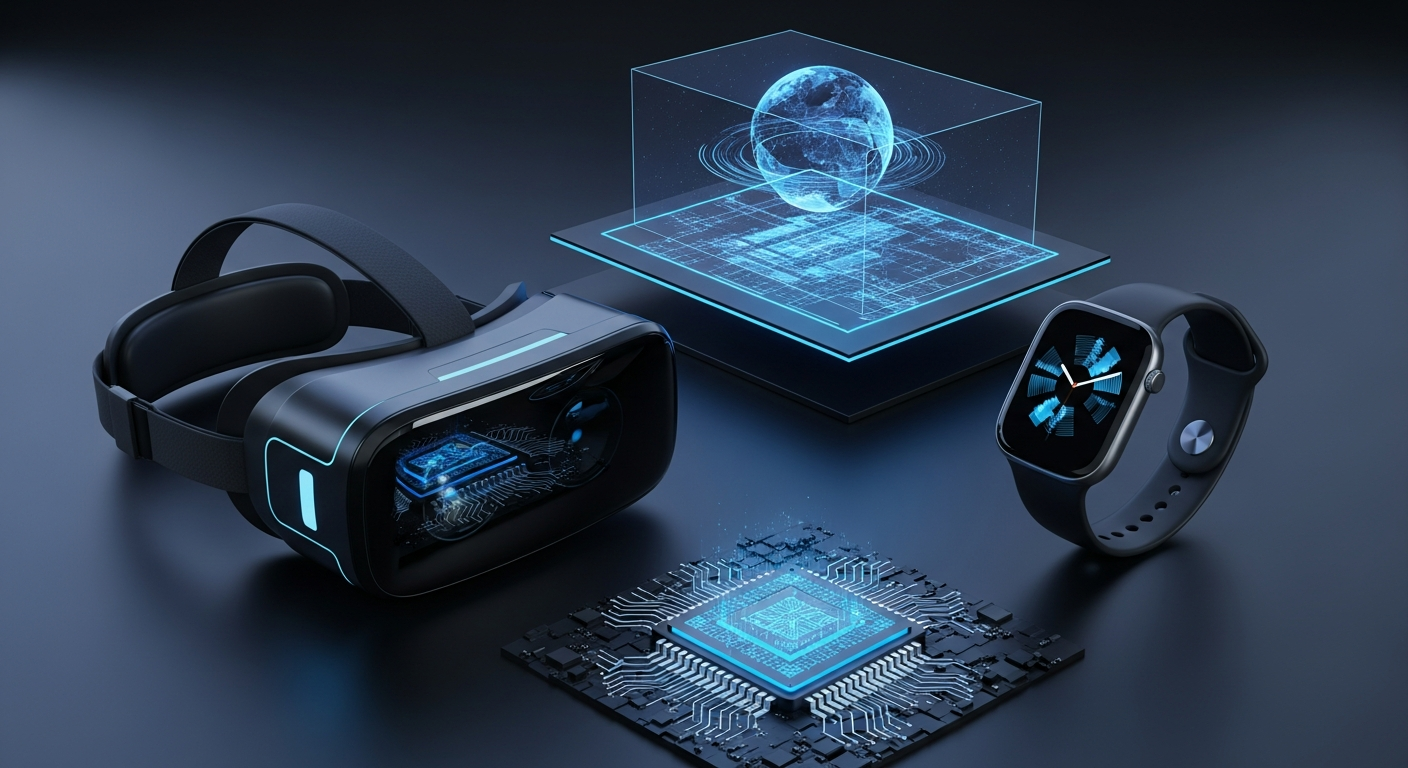
In 2026, “Customer Support” is no longer synonymous with a chat bubble in the bottom right corner of a website. What works is multimodality. AI agents now seamlessly transition between text, voice, and vision.
If a customer is struggling to set up a new router, they can point their phone camera at the device. The AI, using advanced Computer Vision, identifies the wires, overlays augmented reality (AR) instructions on the screen, and speaks to the user in a natural, empathetic voice. This “Vision-to-Action” pipeline has reduced resolution times for technical support by over 70% compared to previous years.
What doesn’t work is “Siloed Channels.” In 2026, if a customer starts a conversation on a smart speaker and then moves to their phone, the AI must continue the conversation exactly where it left off. A failure to synchronize voice and visual data is a primary reason for customer churn. Furthermore, generic “robotic” voices are a thing of the past. Today’s AI uses neural speech synthesis that can mimic human-like intonation and empathy, making the interaction feel less like a transaction and more like a consultation.
The Great Filter: Why “Legacy AI” is Failing in 2026
The market in 2026 has undergone a “Great Filter.” Companies that rushed to implement basic LLMs without proper guardrails or deep integration are now seeing those systems fail. These “Legacy AI” systems suffer from three main issues: hallucination, lack of agency, and data silos.
Hallucinations—where the AI confidently states a false policy or price—are now legally and financially catastrophic. In 2026, what works is “Verifiable Reasoning.” Modern systems use a “dual-model” approach: one model generates the response, while a second, more constrained model verifies it against the company’s official documentation in real-time.
Additionally, the “Prompt Engineering” craze of the past has died out. In 2026, we use “DSPy” (Declarative Self-Improving Language Programs) and other automated optimization frameworks. Systems that rely on manual, static prompts are too brittle for the dynamic nature of 2026 commerce. They fail to adapt to new products, changing seasonal trends, or evolving customer slang. If your AI doesn’t learn and optimize its own logic daily, it is already behind.
The Human-in-the-Loop 2.0: Managing the Machine
Perhaps the most surprising trend in 2026 is how the role of the human agent has changed. Humans haven’t been replaced; they have been promoted. What works today is the “AI-Orchestrator” model.
When a situation is too complex or emotionally charged for an AI—such as a complicated insurance claim involving a bereavement—the AI doesn’t just “transfer” the call. It “handshakes” the human agent. The agent receives a comprehensive summary of the interaction, a suggested resolution path, and a real-time “co-pilot” that assists with documentation.
The impact on daily life is profound. Support jobs are now high-skill roles focused on empathy, complex problem-solving, and AI management. What doesn’t work is “Hard Handoffs.” If a human agent has to ask, “How can I help you?” after a customer has already spent five minutes explaining the situation to an AI, the system is broken. In 2026, the machine and the human are a unified team, not two separate tiers of service.