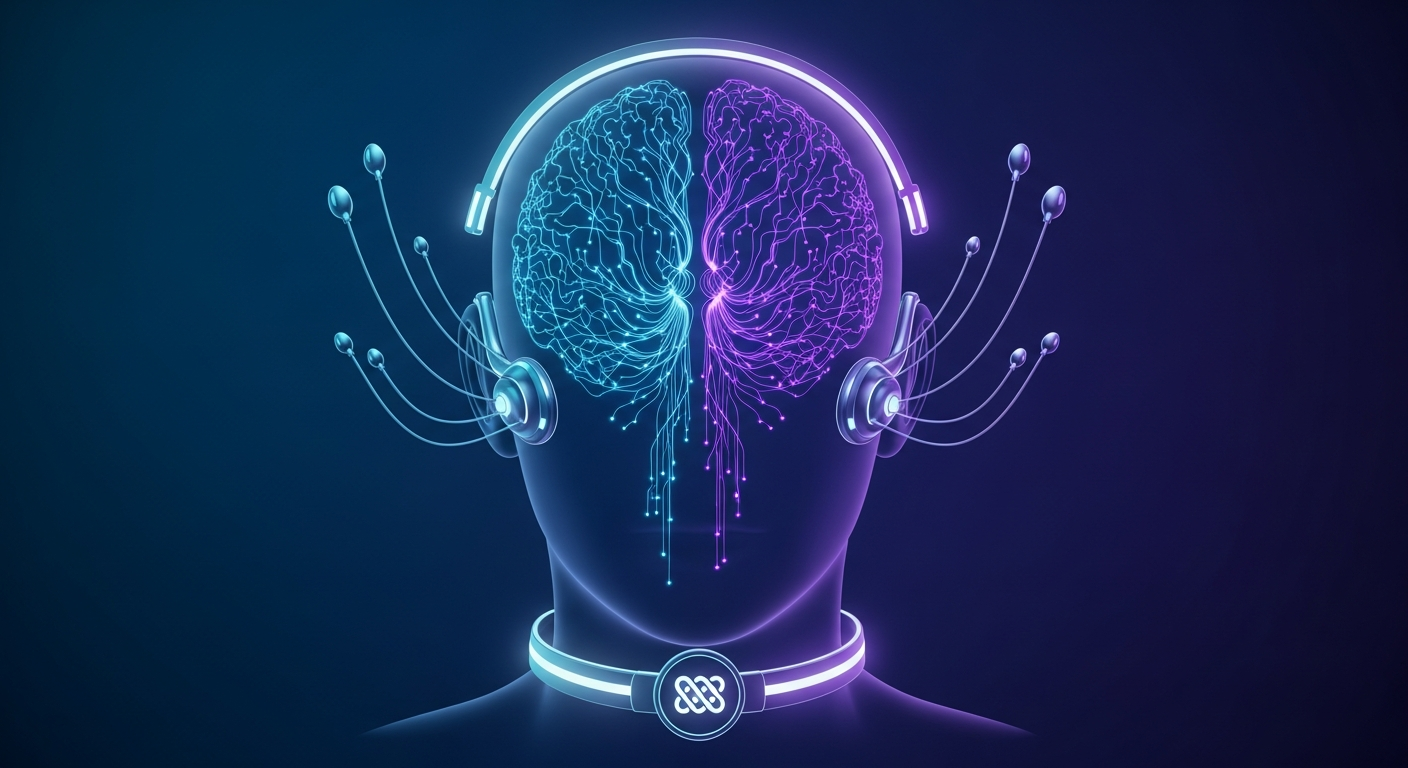
The Mind-Machine Revolution: How Brain-Sensing Wearables are Redefining Focus and Sleep in 2026
For the past decade, the “Quantified Self” movement has focused largely on the neck down. We have tracked our steps, monitored our heart rates, and logged our caloric intake with religious fervor. However, as we move through 2026, the frontier of personal optimization has migrated upward. The most sophisticated piece of technology you own is no longer your smartphone; it is the interface sitting discreetly against your temple or tucked inside your earbuds. Brain-sensing wearables have officially transitioned from niche clinical tools to essential lifestyle companions, offering a direct window into the most complex structure in the known universe: the human brain.
This shift represents a fundamental change in how we interact with ourselves and our environment. We are no longer guessing why we feel sluggish or struggling to understand why our focus remains elusive during critical work hours. By leveraging non-invasive Neurotechnology, specifically advanced Electroencephalography (EEG), these devices allow us to visualize, quantify, and ultimately master our cognitive states. Whether it is engineering a “flow state” on demand or hacking the architecture of our sleep for maximum recovery, brain-sensing wearables are the catalyst for a new era of human agency. In this article, we will explore the mechanics of this technology, its real-world impact in 2026, and the ethical landscape of a world where our thoughts are data points.
Understanding the Tech: How Wearable EEG Decodes Your Mind
At the heart of the brain-sensing revolution is Electroencephalography (EEG). In simple terms, your brain communicates through electrical impulses. Whenever neurons fire, they create small electromagnetic fields. While traditional clinical EEG required a conductive gel and a cap full of wires, the 2026 generation of wearables utilizes “dry electrode” technology. These sensors are capable of picking up micro-voltages through hair and skin, translating neural oscillations—commonly known as brainwaves—into digital data.
These brainwaves are categorized by frequency, each associated with a specific mental state. Delta waves (0.5–4 Hz) dominate deep sleep; Theta waves (4–8 Hz) are linked to creativity and light sleep; Alpha waves (8–12 Hz) signify a state of relaxed alertness; Beta waves (12–30 Hz) are the hallmark of active thinking and focus; and Gamma waves (above 30 Hz) represent high-level information processing.
The true breakthrough in 2026 lies in the Signal Processing. In previous years, consumer EEG was plagued by “noise”—interference from jaw movements, eye blinks, or even nearby electronic devices. Today’s wearables utilize on-device AI and edge computing to filter this noise in real-time. By applying machine learning algorithms to the raw EEG data, these devices can identify personal neural signatures, allowing the software to “learn” what your specific brain looks like when it is distracted versus when it is deeply focused.
Engineering Flow State: Focus and Productivity in the 2026 Workplace
In 2026, the traditional “eight-hour workday” is being replaced by “Cognitive Load Management.” Modern brain-sensing wearables, integrated into sleek headbands or professional-grade earbuds, act as a digital coach for your productivity. Instead of forcing yourself to focus through sheer willpower, the technology helps you navigate your natural circadian and ultradian rhythms.
One of the most impactful applications is real-time neurofeedback. For example, when you are working on a high-stakes project, your wearable monitors your Beta and Gamma wave activity. If the device detects a spike in Alpha waves—indicating that your mind is beginning to wander—it can trigger a subtle intervention. This might be a haptic pulse on your wrist, a change in the frequency of your background “focus music,” or even a notification on your screen suggesting a five-minute cognitive reset.
Furthermore, the integration with the “Smart Office” has reached a new level of sophistication. In many 2026 corporate environments, focus data is anonymized and used to optimize office acoustics and lighting. If a department’s collective “focus score” drops, smart glass partitions may tint to reduce visual distractions, and noise-canceling systems may adjust to mask ambient chatter. This isn’t about surveillance; it’s about creating an environment that respects the biological limits of human attention, preventing burnout before it begins.
The Sleep Revolution: From Passive Tracking to Active Intervention
For years, sleep trackers were passive observers; they told you that you slept poorly, but they did little to fix it. In 2026, brain-sensing wearables have moved into the realm of “Closed-Loop Stimulation.” This is a game-changer for recovery. By monitoring your brainwaves in real-time as you sleep, these devices can identify exactly when you enter different sleep stages, particularly the elusive Deep Sleep (Slow Wave Sleep).
When the wearable detects the onset of Delta waves, it can deploy “Acoustic Stimulation”—precise, low-frequency tones timed to the up-phases of your brain’s natural oscillations. Research has shown that this “brain-timing” can actually amplify the power of deep sleep, leading to better memory consolidation and more efficient clearing of metabolic waste (like beta-amyloid) from the brain.
Moreover, these devices are tackling the problem of insomnia and sleep-onset latency. Through “Bio-guided Meditation,” the wearable monitors your transition from Beta to Alpha and finally to Theta waves. If your brain is stuck in a “high-beta” loop (ruminating or worrying), the device’s companion app adjusts its auditory guidance or thermal cooling pulses in the headband to physically nudge the brain toward a state of relaxation. We are no longer just tracking sleep; we are actively engineering it.
Invisible Tech: The Shift to Hearables and Smart Glasses
One of the primary reasons brain-sensing tech has exploded in 2026 is the disappearance of the hardware. The “cyborg” look of 2020-era headbands is gone. Today, the most popular neuro-sensors are integrated into “Hearables”—earbuds that look identical to standard consumer models but contain gold-plated EEG sensors within the ear tip. Because the ear canal is a prime location for capturing clear neural signals, these devices provide high-fidelity data without the social stigma of wearing a device on your forehead.
Additionally, “Neuro-Smart Glasses” have become a staple for students and researchers. By placing sensors in the tips of the glasses’ arms (behind the ears) and the nose bridge, these devices monitor cognitive load during reading or learning. They can automatically highlight text that you didn’t quite mentally “register” or adjust the brightness and blue-light filtration based on your brain’s fatigue levels.
This democratization of form factors means that neurotechnology is now a background process. Much like how we stopped thinking about the GPS in our phones, we are beginning to treat brain-sensing as an ambient utility. It is an invisible layer of the “Internet of Bodies” that ensures our digital tools are responsive to our internal mental states.
The Ethics of the Mind: Privacy and Neuro-Rights
As brain-sensing wearables become ubiquitous, the conversation around “Neuro-Privacy” has moved to the forefront of global policy. If a device can track when you are focused, it can also track when you are tired, stressed, or emotionally compromised. In 2026, the question of who owns this neural data is a central point of contention.
Tech-savvy users are increasingly demanding “On-Device Processing,” where raw brainwave data never leaves the wearable. Only the high-level insights (e.g., “Focus Score: 85%”) are shared with apps, and even then, only with explicit consent. We have seen the rise of “Neuro-Rights” legislation in several jurisdictions, establishing that a person’s mental privacy is an extension of their bodily autonomy.
The risk of “Cognitive Surveillance” in the workplace is the most significant ethical hurdle. While some companies offer incentives for employees who use focus-tracking to improve their well-being, critics argue that this could lead to a new form of discrimination—where “low-focus” individuals are penalized for their biological variability. As we navigate 2026, the balance between using this tech for self-improvement versus allowing it to become a tool for external control remains a delicate tightrope walk.
FAQ: Navigating the World of Brain-Sensing Wearables
1. Are brain-sensing wearables safe for long-term use?
Yes. Modern wearables use passive EEG technology, meaning they only “read” the electrical signals your brain is already producing. They do not send electrical currents into the brain (unlike TMS or tDCS devices). In 2026, these devices are regulated similarly to high-end fitness trackers and are considered safe for daily, long-term wear.
2. Can these devices actually read my thoughts or see my dreams?
No. EEG technology measures the *state* of the brain, not the *content* of the mind. It can tell that you are focused, stressed, or in a dream state (REM sleep), but it cannot see the specific images, words, or secrets you are thinking about. It is like looking at a stadium from the outside; you can hear the roar of the crowd and know if a goal was scored, but you can’t hear individual conversations in the stands.
3. How do these devices differ from a medical-grade EEG?
While 2026 consumer devices are incredibly advanced, medical-grade EEGs used in hospitals typically use 19 to 256 sensors and “wet” electrodes for clinical diagnosis (like epilepsy). Consumer wearables use 2 to 8 “dry” sensors. They are highly accurate for tracking general trends in focus and sleep but are not intended to replace diagnostic medical equipment.
4. Do I need to be a “tech expert” to use one?
Not at all. The 2026 generation of neuro-wearables is designed for the mainstream. The complexity is hidden behind intuitive apps that provide “Focus Scores,” “Recovery Grades,” and “Stress Minutes.” If you can use a smartwatch, you can use a brain-sensing wearable.
5. What happens to my data? Is it sold to advertisers?
This depends on the manufacturer. However, the industry standard in 2026 has shifted toward decentralized storage and end-to-end encryption. Many leading brands now use “Neural Privacy Vaults” where the user holds the encryption key. Always check the “Neuro-Privacy Policy” before purchasing.
Conclusion: Toward an Augmented Humanity
As we look toward the remainder of 2026 and beyond, the impact of brain-sensing wearables on our daily lives cannot be overstated. We are moving away from a world where we are victims of our own biology—struggling with distraction, fighting against poor sleep, and feeling disconnected from our cognitive health. Instead, we are entering an era of radical self-transparency.
These devices are more than just gadgets; they are the first generation of tools that allow for a true partnership between human intuition and machine intelligence. By providing a real-time feedback loop for the mind, they empower us to make better decisions about how we work, how we rest, and how we live. The “black box” of the human brain has finally been opened, and the insights pouring out are helping us build a more focused, well-rested, and cognitively aware society. The mind-machine revolution is no longer a futuristic concept—it is a daily reality, and it is fundamentally changing what it means to be human in the digital age.