AWS vs Google Cloud vs Azure AI — The Definitive 2026 Enterprise Guide
Affiliate disclosure: This article may contain affiliate links. Recommendations are independent and editorially driven.
In the rapidly evolving landscape of artificial intelligence, choosing the right cloud provider is paramount for enterprises aiming to innovate, scale, and maintain a competitive edge. As of 2026, the battle for AI supremacy intensifies, with Amazon Web Services (AWS), Google Cloud Platform (GCP), and Microsoft Azure leading the charge. This comprehensive guide delves into a critical comparison: AWS vs Google Cloud vs Azure AI, examining their distinct approaches to machine learning operations (MLOps), generative AI, specialized infrastructure, pricing models, and security. Understanding the nuances of each platform is no longer just a technical exercise but a strategic imperative that dictates an organization’s ability to harness the full potential of AI.
As businesses globally accelerate their digital transformation initiatives, AI has moved from a nascent technology to a foundational layer across all industries. From automating complex workflows to generating new content and insights, the capabilities offered by these three cloud giants are transforming how companies operate. This article will provide a detailed, side-by-side analysis, equipping decision-makers with the insights needed to navigate this complex ecosystem and make informed choices for their enterprise AI strategies. We will explore everything from core AI services to cutting-edge generative models, hybrid cloud capabilities, and critical considerations like cost and compliance, offering a definitive guide to cloud AI in 2026.
The Evolving Landscape of Cloud AI in 2026
The year 2026 marks a pivotal period in cloud AI development. The foundational investments made over the past decade are now yielding mature, enterprise-ready solutions across all three major providers. What was once a fragmented collection of services has consolidated into integrated platforms designed to support the entire AI lifecycle, from data ingestion and model training to deployment and monitoring. The emphasis has clearly shifted towards democratizing AI, making sophisticated tools accessible to a broader range of developers and business users, not just specialized data scientists.
Core AI Service Offerings: A High-Level View
Each cloud provider boasts an extensive portfolio of AI services, ranging from pre-trained APIs for common tasks like vision, speech, and natural language processing (NLP) to highly customizable platforms for building, training, and deploying custom machine learning models. AWS offers Amazon Rekognition, Polly, Transcribe, and Comprehend, alongside the powerful SageMaker ecosystem. Google Cloud counters with its comprehensive suite, including Cloud Vision AI, Speech-to-Text, Text-to-Speech, Natural Language API, and the unified Vertex AI platform. Azure provides Azure Cognitive Services (Vision, Speech, Language, Decision), and the robust Azure Machine Learning service. While their functionalities often overlap, each platform distinguishes itself through integration with its broader cloud ecosystem, specific feature sets, and pricing structures.
Market Trends and Adoption Drivers
Several key trends are driving the rapid adoption of cloud AI in 2026. Firstly, the increasing availability of powerful and flexible compute infrastructure, including GPUs and custom AI accelerators, has made complex model training more feasible and cost-effective. Secondly, the growth of managed MLOps platforms has significantly reduced the operational overhead associated with deploying and maintaining AI models at scale. Thirdly, the surge in demand for generative AI capabilities, fueled by advancements in large language models (LLMs) and diffusion models, has spurred significant investment and innovation. Enterprises are increasingly looking to AI to solve challenges related to customer experience, content creation, operational efficiency, and predictive analytics.
The Shift Towards Generative AI and Foundation Models
Perhaps the most transformative shift in 2026 is the widespread adoption of generative AI and foundation models (FMs). These massive, pre-trained models can perform a wide range of tasks, from generating human-quality text and code to creating realistic images and videos. All three cloud providers are heavily invested in offering managed services that provide access to these FMs, along with tools for fine-tuning them with proprietary data and integrating them into enterprise applications. This shift empowers companies to develop highly intelligent applications with less effort, unlocking new possibilities for automation, personalization, and creativity. For a deeper dive into this area, you might want to explore our dedicated AI cluster.
[INLINE IMAGE 1: place after second H2 | alt=”aws vs google cloud vs azure ai concept illustration”]
Comparing MLOps Platforms: SageMaker, Vertex AI, and Azure ML
For organizations serious about operationalizing AI, robust MLOps capabilities are non-negotiable. MLOps (Machine Learning Operations) encompasses the entire lifecycle of machine learning models, from experimentation and development to deployment, monitoring, and governance. AWS, Google Cloud, and Azure each offer sophisticated platforms designed to streamline these processes, but with distinct philosophies and feature sets.
AWS SageMaker: The Comprehensive Toolkit
Amazon SageMaker is a fully managed service that provides a vast array of tools for every step of the machine learning workflow. It offers integrated Jupyter notebooks for development, hundreds of built-in algorithms, and support for popular frameworks like TensorFlow, PyTorch, and MXNet. SageMaker Studio provides a unified web-based IDE for MLOps, including features for data labeling, feature store, model training, tuning, debugging, and monitoring. Its strength lies in its modularity and breadth, allowing users to pick and choose specific tools as needed. AWS also offers specialized services like Amazon SageMaker Ground Truth for data labeling, SageMaker Feature Store for managing and sharing ML features, and SageMaker Clarify for bias detection and explainability. The sheer number of options can be overwhelming for newcomers but offers unparalleled flexibility for experienced teams. More details can be found on the AWS SageMaker product page.
Google Cloud Vertex AI: The Unified Workflow
Google Cloud’s Vertex AI aims to simplify and unify the MLOps experience. Launched with the explicit goal of bringing all of Google Cloud’s ML services under one roof, Vertex AI provides a single platform for data scientists and engineers to build, deploy, and scale ML models. It offers powerful tools for data labeling, feature engineering, model training (including custom and AutoML options), model evaluation, and monitoring. Vertex AI Workbench integrates Jupyter notebooks, while Vertex AI Pipelines orchestrates end-to-end ML workflows. Google’s strength lies in its deep research into AI and its emphasis on a data-centric approach. Vertex AI is designed for seamless integration with Google’s broader data analytics ecosystem, including BigQuery and Cloud Storage. Its Auto ML capabilities are particularly strong, allowing users to train high-quality models with minimal code. For an in-depth guide to Google Cloud’s Vertex AI, check our dedicated article.
Azure Machine Learning: Enterprise-Grade Integration
Azure Machine Learning is Microsoft’s comprehensive MLOps platform, designed with enterprise integration and security at its core. It provides a collaborative environment for building, training, and deploying models using familiar tools like Jupyter notebooks, VS Code, and MLOps CLI/SDKs. Azure ML supports open-source frameworks, offers AutoML capabilities, and includes features for data preparation, experiment tracking, model registry, and endpoint deployment. Its deep integration with other Microsoft services, such as Azure DevOps, Power BI, and Microsoft Teams, makes it an attractive choice for organizations already heavily invested in the Microsoft ecosystem. Azure also emphasizes responsible AI, providing tools for model interpretability, fairness assessment, and data privacy. Teams often appreciate its robust access control and compliance features, crucial for regulated industries. Learn more on the Azure Machine Learning documentation.
Key Differentiators in MLOps Capabilities
While all three platforms offer robust MLOps capabilities, their primary differentiators often come down to philosophy and ecosystem integration. AWS SageMaker provides the most extensive and modular set of tools, ideal for organizations that prefer granular control and a highly customized workflow. Google Cloud Vertex AI focuses on a unified, data-centric experience, aiming to simplify MLOps for teams that prioritize ease of use and strong AutoML capabilities. Azure Machine Learning excels in enterprise integration, offering a familiar environment for Microsoft-centric organizations with a strong emphasis on security, compliance, and responsible AI. The choice often depends on existing cloud investments, team expertise, and specific MLOps requirements.
MLOps Platform Comparison: AWS vs Google Cloud vs Azure AI (2026)
| Feature/Category | AWS SageMaker | Google Cloud Vertex AI | Azure Machine Learning |
|---|---|---|---|
| Primary Focus | Comprehensive, modular toolkit for end-to-end ML lifecycle. | Unified, data-centric platform for streamlined MLOps. | Enterprise-grade MLOps with deep Microsoft ecosystem integration. |
| Development Environment | SageMaker Studio (JupyterLab), Code Editor (VS Code), Notebook Instances. | Vertex AI Workbench (JupyterLab), Google Colab integration. | Azure Machine Learning Studio (Jupyter), VS Code integration. |
| AutoML Capabilities | SageMaker Autopilot (tabular data), HPO. | Strongest AutoML for tabular, image, text, video. | Automated ML (tabular, vision, NLP), Hyperdrive HPO. |
| Feature Store | SageMaker Feature Store (managed). | Vertex AI Feature Store (managed). | Azure Machine Learning feature store (managed). |
| Data Labeling | SageMaker Ground Truth (human and machine labeling). | Vertex AI Data Labeling (human labeling). | Azure Machine Learning Data Labeling. |
| Model Monitoring | SageMaker Model Monitor (drift, bias, explainability). | Vertex AI Model Monitoring (drift, explainability, alerts). | Azure Machine Learning Model Monitor (drift, performance). |
| Integration with Data Services | S3, Redshift, Glue, Athena. | BigQuery, Cloud Storage, Dataflow, Dataproc. | Azure Data Lake Storage, Azure SQL Database, Synapse Analytics. |
| Compliance & Security | Extensive certifications, granular IAM. | Strong data governance, private endpoints. | Built-in compliance, VNet integration, Azure AD. |
| Target Audience | Teams needing maximum flexibility, custom workflows, and deep integration with AWS. | Teams prioritizing ease of use, strong AutoML, and Google’s data analytics stack. | Enterprises already in the Microsoft ecosystem, requiring strong governance and security. |
Generative AI and Foundation Models: Bedrock vs. Gemini/PaLM vs. Azure OpenAI Service
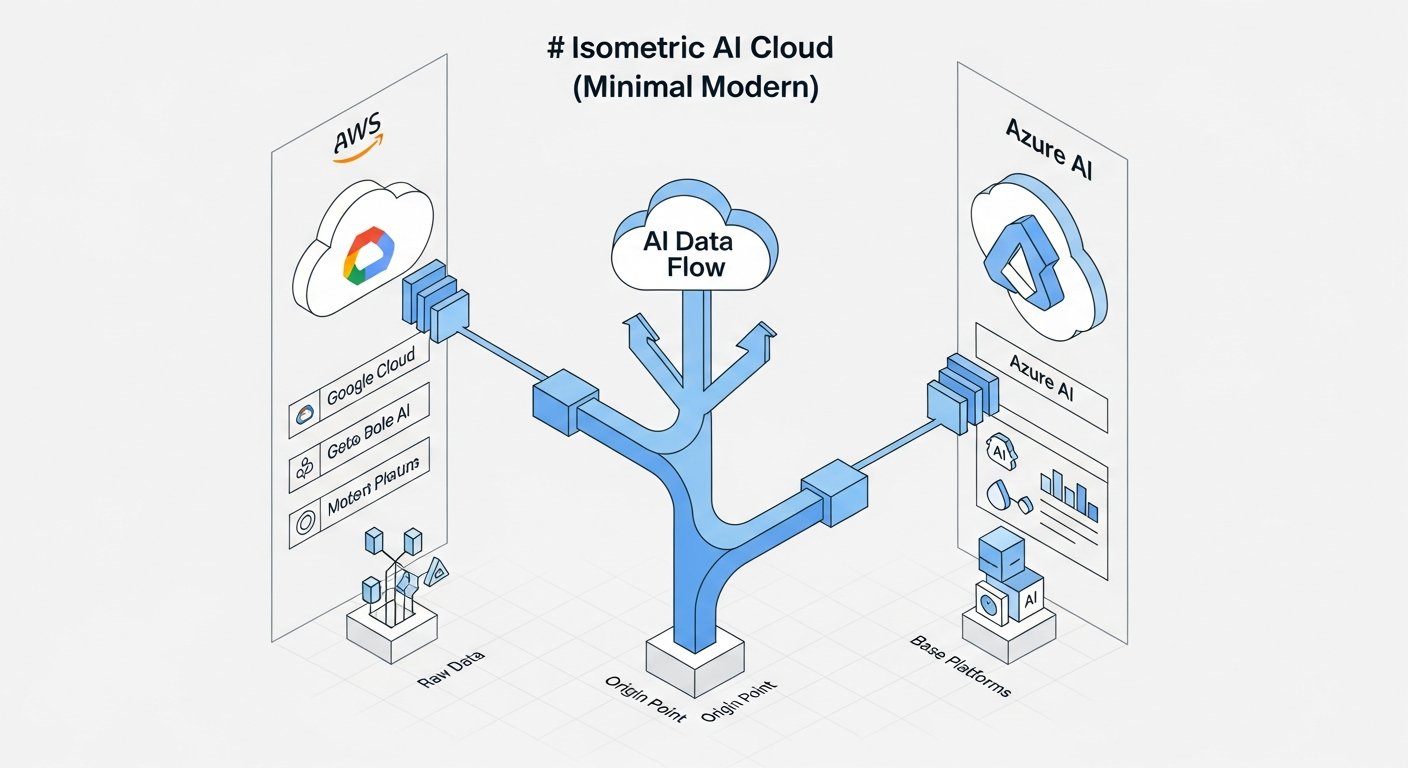
The advent of generative AI has fundamentally reshaped the cloud AI landscape in 2026. All three major providers are fiercely competing to offer the best access, tools, and infrastructure for these transformative models. The core offerings revolve around providing managed access to various foundation models (FMs), along with capabilities for fine-tuning, customization, and deployment.
AWS Bedrock: Managed Access to FMs
AWS Bedrock is Amazon’s fully managed service that provides access to a choice of high-performing FMs from Amazon and leading AI startups like AI21 Labs, Anthropic, Cohere, and Stability AI through a single API. This includes Amazon’s own Titan FMs (Text and Embeddings), Anthropic’s Claude, and Stable Diffusion. Bedrock simplifies the process of building and scaling generative AI applications by handling the underlying infrastructure. It allows enterprises to easily experiment with different models, fine-tune them with their own data using techniques like LoRA (Low-Rank Adaptation), and build agents to complete complex tasks using prompt engineering and orchestration. AWS’s approach emphasizes choice and integration with its vast ecosystem of data services, enabling customers to quickly incorporate generative AI into existing workflows. For a comprehensive overview of Amazon SageMaker‘s role in the broader AI ecosystem, including its support for generative models, see our analysis.
Google Cloud’s AI Platform: Gemini, PaLM, and Beyond
Google Cloud leverages its decade-long leadership in AI research to offer a cutting-edge suite of generative AI capabilities. Central to this is Gemini, Google’s most advanced and capable family of multimodal models, designed to understand and operate across text, code, audio, image, and video. Google Cloud provides access to Gemini through Vertex AI, allowing developers to integrate these powerful models into their applications. Prior to Gemini, models like PaLM (Pathways Language Model) and Imagen were widely available for text generation and image creation, respectively. Google’s platform emphasizes responsible AI development, offering tools to understand, evaluate, and mitigate potential risks associated with generative models. Their strengths lie in their innovative research, multimodal capabilities, and deep integration within the Vertex AI platform for streamlined MLOps around FMs. Read more about Google’s approach on the Vertex AI Generative AI documentation.
Azure OpenAI Service: Enterprise Access to Leading Models
Microsoft Azure has strategically partnered with OpenAI to offer the Azure OpenAI Service, providing enterprises with access to OpenAI’s powerful language models, including GPT-4, GPT-3.5 Turbo, DALL-E 2, and upcoming models like GPT-4 Turbo with enhanced context windows. This service allows organizations to deploy these models within their Azure environments, benefiting from Azure’s enterprise-grade security, compliance, and scalability. Crucially, it offers capabilities for fine-tuning these models with private data, ensuring data privacy and sovereignty. The Azure OpenAI Service also integrates seamlessly with other Azure services, such as Azure Machine Learning, Azure Cognitive Search, and Azure AI Content Safety, enabling developers to build sophisticated generative AI applications with robust guardrails. This offering is particularly appealing to companies seeking the power of OpenAI’s models combined with Microsoft’s trusted enterprise infrastructure. An in-depth analysis of Azure OpenAI Service highlights its enterprise advantages.
Customization, Fine-tuning, and Model Development
Beyond offering managed access, all three providers offer critical tools for customizing and extending these foundation models. Fine-tuning allows organizations to adapt FMs to specific tasks or datasets, improving performance and relevance for proprietary use cases. This typically involves using a smaller, task-specific dataset to further train a pre-trained FM. Each platform provides SDKs and APIs for this process, often with support for techniques like transfer learning and parameter-efficient fine-tuning (PEFT) methods like LoRA. Furthermore, for organizations with unique requirements, the ability to train custom foundation models from scratch on their respective cloud infrastructure, utilizing specialized hardware and massive datasets, remains a high-end option for deep innovation.
[INLINE IMAGE 2: place after fourth H2 | alt=”aws vs google cloud vs azure ai comparison illustration”]
Cloud AI Infrastructure: Compute, Data, and Specialized Hardware
The backbone of any robust AI strategy is the underlying infrastructure that powers it. This includes not just the raw compute power but also efficient data management systems and specialized hardware accelerators. AWS, Google Cloud, and Azure each offer a distinct flavor of this foundational layer, catering to varying needs in scalability, performance, and cost-effectiveness.
Compute Power: GPUs, TPUs, and Custom Accelerators
High-performance compute is non-negotiable for AI workloads, especially for training large models and real-time inference.
- AWS offers a wide range of GPU instances, primarily utilizing NVIDIA’s latest generation GPUs (e.g., A100, H100) through its EC2 P and G instances. These are highly versatile and broadly supported by ML frameworks. AWS also continues to innovate with its custom-designed chips like AWS Inferentia for inference and AWS Trainium for training, aiming to provide cost-effective and high-performance alternatives for specific AI tasks.
- Google Cloud is renowned for its Tensor Processing Units (TPUs), custom-designed ASICs optimized specifically for machine learning workloads, particularly those built with TensorFlow and JAX. TPUs are highly efficient for certain types of model training, especially for large-scale language models and vision tasks. Google also offers a comprehensive selection of NVIDIA GPUs on its Compute Engine for broader compatibility.
- Azure provides a robust selection of NVIDIA GPU-enabled VMs (e.g., NC, ND, NV series), including the latest A100 and H100 GPUs, suitable for diverse deep learning applications. Microsoft has also invested in custom hardware for its internal AI initiatives and offers specialized AI accelerators for certain services, ensuring competitive performance and cost for its users.
The choice of compute often depends on the specific ML frameworks used, the scale of the models, and the optimization goals (speed vs. cost).
Data Management for AI: Lakes, Warehouses, and Streaming
AI models are only as good as the data they are trained on. Effective data management is crucial for the entire AI lifecycle.
- AWS offers Amazon S3 for scalable object storage, Amazon Redshift for data warehousing, Amazon Kinesis for real-time data streaming, and AWS Lake Formation for building secure data lakes. These services integrate seamlessly with SageMaker and other AI tools, providing a comprehensive data foundation.
- Google Cloud excels with BigQuery, a serverless, highly scalable data warehouse, and Cloud Storage for object storage. Its Pub/Sub service handles real-time messaging, and Dataflow provides serverless data processing for both batch and streaming data. These services are particularly well-suited for Google’s data-centric AI approach.
- Azure provides Azure Data Lake Storage for massive, scalable data lakes, Azure Synapse Analytics for unified data warehousing and big data analytics, and Azure Event Hubs for real-time data ingestion. These offerings are deeply integrated into the Azure ecosystem, catering to enterprise needs for data governance and compliance.
Each platform offers robust data services, but the choice often comes down to existing data architecture, familiarity with the ecosystem, and specific requirements for data processing and analytics.
Edge AI and Hybrid Cloud Deployments
As AI applications move closer to the data source for lower latency and improved privacy, edge AI and hybrid cloud strategies are gaining prominence.
- AWS offers AWS IoT Greengrass for deploying ML models to edge devices, and AWS Outposts for extending AWS infrastructure and services to on-premises data centers, facilitating hybrid cloud AI deployments.
- Google Cloud provides Anthos for managing workloads across hybrid and multi-cloud environments, and Vertex AI Edge for deploying and managing models on edge devices, complementing its strong cloud AI offerings.
- Azure leads in hybrid cloud with Azure Arc, which extends Azure management and services to any infrastructure (on-premises, multi-cloud, edge). Azure IoT Edge allows for deploying cloud workloads, including AI models, to edge devices. This makes Azure a strong contender for organizations with significant on-premises investments.
For enterprises requiring flexible deployment options, evaluating these hybrid and edge AI capabilities is critical. This is a rapidly growing area, and for more insights into this, you might want to review the latest cloud AI comparison reports focusing on hybrid capabilities.
Security, Compliance, and Governance in Cloud AI
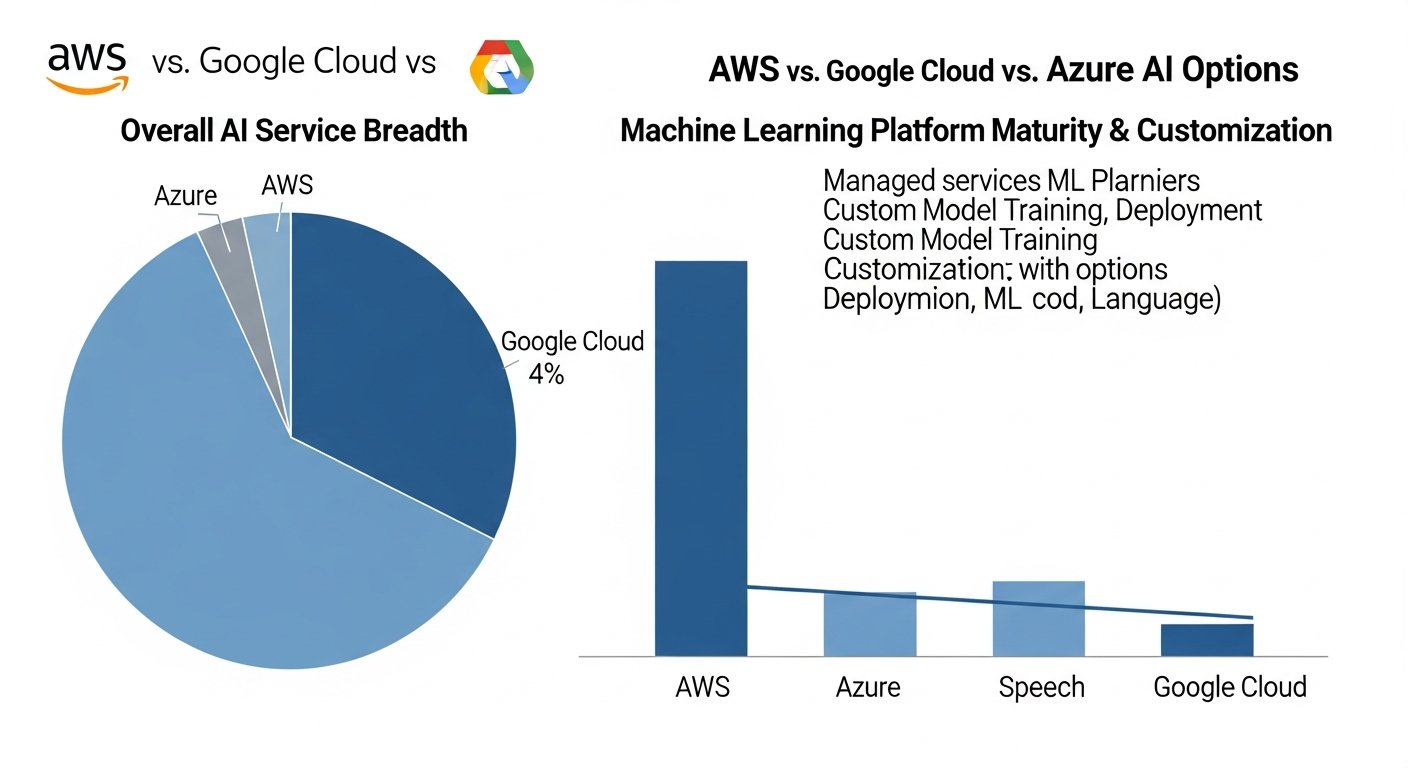
Security, compliance, and governance are paramount concerns for any enterprise adopting cloud AI, especially when dealing with sensitive data, regulated industries, and global operations. Each cloud provider offers robust frameworks and tools to address these critical aspects, though with slightly different emphasis and integration points.
Data Privacy and Encryption Standards
All three cloud providers adhere to high standards of data privacy and offer comprehensive encryption capabilities.
- AWS provides multiple layers of encryption for data at rest (e.g., S3, EBS, RDS with KMS integration) and in transit (TLS). It also offers services like AWS PrivateLink for secure, private connectivity between VPCs and on-premises networks, ensuring data never traverses the public internet.
- Google Cloud encrypts all data at rest and in transit by default, providing customer-managed encryption keys (CMEK) for greater control. Google Cloud also offers Confidential Computing, which encrypts data in use, providing an additional layer of protection, particularly valuable for sensitive AI workloads.
- Azure enforces encryption for data at rest (Azure Storage, Azure SQL Database with transparent data encryption) and in transit. Azure Key Vault provides centralized key management, and Azure Private Link offers secure, private access to Azure services from virtual networks, bolstering data privacy and network isolation.
The commitment to data encryption and privacy is universal, but specific features like Confidential Computing or PrivateLink implementations can influence choice based on an organization’s security posture.
Regulatory Compliance (HIPAA, GDPR, etc.)
Meeting industry-specific and regional regulatory compliance requirements is a major undertaking for many enterprises.
- AWS maintains a vast array of compliance certifications, including HIPAA, GDPR, PCI DSS, SOC 1, 2, 3, ISO 27001, and many region-specific accreditations. AWS Artifact provides on-demand access to AWS’s compliance reports. Its services are designed to allow customers to build compliant applications.
- Google Cloud also offers extensive compliance certifications, including HIPAA, GDPR, PCI DSS, ISO 27001, and numerous government-specific authorizations (e.g., FedRAMP). Its Shared Responsibility Model helps customers understand their role in maintaining compliance within the cloud.
- Azure often touts its deep enterprise focus, holding over 90 compliance certifications, including HIPAA, GDPR, PCI DSS, ISO, and many industry-specific and national certifications. Azure provides robust tools like Azure Policy and Azure Security Center to help customers monitor and enforce compliance across their cloud resources, making it a strong choice for highly regulated industries.
While all three are highly compliant, Azure’s emphasis on enterprise-grade governance and a wealth of regulatory certifications can be a deciding factor for organizations in sectors like finance, healthcare, and government.
Ethical AI and Responsible Development
Beyond traditional security and compliance, the ethical implications of AI are increasingly important. Responsible AI development focuses on fairness, accountability, transparency, and safety.
- AWS offers services like Amazon SageMaker Clarify to detect bias in datasets and models and provide explainability for model predictions. It also publishes best practices and frameworks for responsible AI development.
- Google Cloud is a pioneer in responsible AI research and offers tools within Vertex AI (e.g., Explainable AI, What-If Tool) to help developers understand, evaluate, and mitigate potential biases and ethical risks in their models. Its principles for AI development guide its product strategy.
- Azure provides a dedicated Responsible AI toolkit and comprehensive documentation on its approach to responsible AI. Azure Machine Learning includes features for model interpretability, fairness, and privacy, helping developers build AI systems that are fair, transparent, and trustworthy.
As AI models become more autonomous and impactful, a provider’s commitment to and tools for responsible AI development are crucial considerations for long-term ethical deployment.
Pricing Models and Cost Optimization for Cloud AI
Understanding the pricing models for cloud AI services is critical for budget planning and avoiding unexpected costs. While each provider aims for competitive pricing, their structures and optimization strategies can vary significantly, impacting total cost of ownership (TCO).
Understanding Cloud AI Cost Structures
All three clouds generally employ a pay-as-you-go model, where you only pay for the resources you consume. However, the granularity and specific pricing metrics differ:
- AWS‘s pricing is highly granular, with costs often broken down by compute instance type and duration, data storage (per GB), data transfer, API calls, and specific service features (e.g., SageMaker Studio uptime, training hours, inference endpoints). This offers flexibility but can also be complex to forecast.
- Google Cloud typically offers competitive pricing, especially for its specialized services like TPUs, which can be more cost-effective for specific deep learning workloads. Pricing is also based on resource consumption (CPU, RAM, storage, network, API calls), with strong emphasis on usage-based billing and commitment discounts.
- Azure‘s pricing is structured similarly, based on compute (VMs, containers), storage, data transfer, and AI service usage (per transaction, per second, per allocated unit). Azure is often competitive for enterprises already heavily invested in the Microsoft ecosystem due to potential licensing benefits and bundled services.
Key cost drivers across all platforms include compute (especially GPUs/TPUs), data storage and transfer, and API calls to pre-trained or foundation models.
Strategies for Cost Management and Predictability
Effective cost management requires proactive strategies regardless of the chosen provider:
- Reserved Instances/Commitment Contracts: All three offer significant discounts (up to 70% or more) for committing to a certain level of resource usage over a 1-year or 3-year period. This is ideal for stable, long-term AI workloads.
- Spot Instances/Preemptible VMs: For fault-tolerant or non-critical workloads (e.g., batch training jobs), using spot instances (AWS), preemptible VMs (Google Cloud), or Low-priority VMs (Azure) can dramatically reduce compute costs by utilizing unused cloud capacity at a discount.
- Rightsizing and Auto-scaling: Continuously monitor resource utilization and rightsize instances to avoid over-provisioning. Implementing auto-scaling for inference endpoints ensures resources only scale up during peak demand, optimizing costs.
- Data Lifecycle Management: Optimize storage costs by tiering data from expensive hot storage to cheaper cold storage as it ages or becomes less frequently accessed.
- Monitoring and Alerts: Utilize cloud cost management tools (AWS Cost Explorer, Google Cloud Billing Reports, Azure Cost Management) to track spending, set budgets, and receive alerts for anomalies.
Enterprises must carefully model their AI workload requirements and choose a pricing strategy that balances performance, availability, and cost efficiency. For specific pricing details, always refer to the AWS SageMaker pricing page, Google Cloud Vertex AI pricing, and Azure Machine Learning pricing.
Free Tiers and Developer Programs
Each provider offers a free tier or developer program to help new users get started without immediate cost. These typically include limited usage of popular services for a specific period (e.g., 12 months for AWS/Azure) or a lifetime allowance (Google Cloud). While great for experimentation and learning, these free tiers are generally insufficient for production workloads and serve mainly as an introductory offer.
Use Cases and Industry-Specific Solutions
The practical application of cloud AI services spans nearly every industry, offering transformative potential. While the underlying technologies are general-purpose, each cloud provider has developed specific solutions and partnerships to cater to distinct industry needs. Understanding these industry-specific capabilities can greatly influence the choice of platform.
Financial Services and Healthcare AI
- Financial Services: AI in finance focuses on fraud detection, algorithmic trading, personalized banking, risk assessment, and regulatory compliance.
- AWS: Offers services like Amazon Fraud Detector, Amazon Personalize, and highly secure compute environments for financial data.
- Google Cloud: Leverages its analytics prowess with BigQuery ML for fraud and risk, and AI solutions for customer service and personalized recommendations.
- Azure: Strong focus on compliance and security makes it attractive for financial institutions, with solutions for anti-money laundering (AML), risk management, and chatbots.
- Healthcare: AI applications include drug discovery, diagnostics, personalized medicine, clinical trial optimization, and operational efficiency.
- AWS: Provides HIPAA-eligible services and specialized AI tools like Amazon HealthLake for health data storage and analysis, and Amazon Comprehend Medical for extracting insights from clinical text.
- Google Cloud: Offers expertise in genomics and medical imaging with solutions like Healthcare API and powerful vision AI for diagnostics. Its AI research contributes significantly to biomedical advancements.
- Azure: With a strong emphasis on compliance (HIPAA, HITRUST), Azure offers dedicated healthcare AI solutions for patient management, virtual health assistants, and medical image analysis, integrating with existing healthcare IT systems.
Retail, E-commerce, and Customer Experience
In retail and e-commerce, AI drives personalization, demand
AWS vs Google Cloud vs Azure AI — The Definitive 2026 Enterprise Guide
Affiliate disclosure: This article may contain affiliate links. Recommendations are independent and editorially driven.
In the rapidly evolving landscape of artificial intelligence, choosing the right cloud provider is paramount for enterprises aiming to innovate, scale, and maintain a competitive edge. As of 2026, the battle for AI supremacy intensifies, with Amazon Web Services (AWS), Google Cloud Platform (GCP), and Microsoft Azure leading the charge. This comprehensive guide delves into a critical comparison: AWS vs Google Cloud vs Azure AI, examining their distinct approaches to machine learning operations (MLOps), generative AI, specialized infrastructure, pricing models, and security. Understanding the nuances of each platform is no longer just a technical exercise but a strategic imperative that dictates an organization’s ability to harness the full potential of AI.
As businesses globally accelerate their digital transformation initiatives, AI has moved from a nascent technology to a foundational layer across all industries. From automating complex workflows to generating new content and insights, the capabilities offered by these three cloud giants are transforming how companies operate. This article will provide a detailed, side-by-side analysis, equipping decision-makers with the insights needed to navigate this complex ecosystem and make informed choices for their enterprise AI strategies. We will explore everything from core AI services to cutting-edge generative models, hybrid cloud capabilities, and critical considerations like cost and compliance, offering a definitive guide to cloud AI in 2026.
The Evolving Landscape of Cloud AI in 2026
The year 2026 marks a pivotal period in cloud AI development. The foundational investments made over the past decade are now yielding mature, enterprise-ready solutions across all three major providers. What was once a fragmented collection of services has consolidated into integrated platforms designed to support the entire AI lifecycle, from data ingestion and model training to deployment and monitoring. The emphasis has clearly shifted towards democratizing AI, making sophisticated tools accessible to a broader range of developers and business users, not just specialized data scientists.
Core AI Service Offerings: A High-Level View
Each cloud provider boasts an extensive portfolio of AI services, ranging from pre-trained APIs for common tasks like vision, speech, and natural language processing (NLP) to highly customizable platforms for building, training, and deploying custom machine learning models. AWS offers Amazon Rekognition, Polly, Transcribe, and Comprehend, alongside the powerful SageMaker ecosystem. Google Cloud counters with its comprehensive suite, including Cloud Vision AI, Speech-to-Text, Text-to-Speech, Natural Language API, and the unified Vertex AI platform. Azure provides Azure Cognitive Services (Vision, Speech, Language, Decision), and the robust Azure Machine Learning service. While their functionalities often overlap, each platform distinguishes itself through integration with its broader cloud ecosystem, specific feature sets, and pricing structures.
Market Trends and Adoption Drivers
Several key trends are driving the rapid adoption of cloud AI in 2026. Firstly, the increasing availability of powerful and flexible compute infrastructure, including GPUs and custom AI accelerators, has made complex model training more feasible and cost-effective. Secondly, the growth of managed MLOps platforms has significantly reduced the operational overhead associated with deploying and maintaining AI models at scale. Thirdly, the surge in demand for generative AI capabilities, fueled by advancements in large language models (LLMs) and diffusion models, has spurred significant investment and innovation. Enterprises are increasingly looking to AI to solve challenges related to customer experience, content creation, operational efficiency, and predictive analytics.
The Shift Towards Generative AI and Foundation Models
Perhaps the most transformative shift in 2026 is the widespread adoption of generative AI and foundation models (FMs). These massive, pre-trained models can perform a wide range of tasks, from generating human-quality text and code to creating realistic images and videos. All three cloud providers are heavily invested in offering managed services that provide access to these FMs, along with tools for fine-tuning them with proprietary data and integrating them into enterprise applications. This shift empowers companies to develop highly intelligent applications with less effort, unlocking new possibilities for automation, personalization, and creativity. For a deeper dive into this area, you might want to explore our dedicated AI cluster.
[INLINE IMAGE 1: place after second H2 | alt=”aws vs google cloud vs azure ai concept illustration”]
Comparing MLOps Platforms: SageMaker, Vertex AI, and Azure ML
For organizations serious about operationalizing AI, robust MLOps capabilities are non-negotiable. MLOps (Machine Learning Operations) encompasses the entire lifecycle of machine learning models, from experimentation and development to deployment, monitoring, and governance. AWS, Google Cloud, and Azure each offer sophisticated platforms designed to streamline these processes, but with distinct philosophies and feature sets.
AWS SageMaker: The Comprehensive Toolkit
Amazon SageMaker is a fully managed service that provides a vast array of tools for every step of the machine learning workflow. It offers integrated Jupyter notebooks for development, hundreds of built-in algorithms, and support for popular frameworks like TensorFlow, PyTorch, and MXNet. SageMaker Studio provides a unified web-based IDE for MLOps, including features for data labeling, feature store, model training, tuning, debugging, and monitoring. Its strength lies in its modularity and breadth, allowing users to pick and choose specific tools as needed. AWS also offers specialized services like Amazon SageMaker Ground Truth for data labeling, SageMaker Feature Store for managing and sharing ML features, and SageMaker Clarify for bias detection and explainability. The sheer number of options can be overwhelming for newcomers but offers unparalleled flexibility for experienced teams. More details can be found on the AWS SageMaker product page.
Google Cloud Vertex AI: The Unified Workflow
Google Cloud’s Vertex AI aims to simplify and unify the MLOps experience. Launched with the explicit goal of bringing all of Google Cloud’s ML services under one roof, Vertex AI provides a single platform for data scientists and engineers to build, deploy, and scale ML models. It offers powerful tools for data labeling, feature engineering, model training (including custom and AutoML options), model evaluation, and monitoring. Vertex AI Workbench integrates Jupyter notebooks, while Vertex AI Pipelines orchestrates end-to-end ML workflows. Google’s strength lies in its deep research into AI and its emphasis on a data-centric approach. Vertex AI is designed for seamless integration with Google’s broader data analytics ecosystem, including BigQuery and Cloud Storage. Its Auto ML capabilities are particularly strong, allowing users to train high-quality models with minimal code. For an in-depth guide to Google Cloud’s Vertex AI, check our dedicated article.
Azure Machine Learning: Enterprise-Grade Integration
Azure Machine Learning is Microsoft’s comprehensive MLOps platform, designed with enterprise integration and security at its core. It provides a collaborative environment for building, training, and deploying models using familiar tools like Jupyter notebooks, VS Code, and MLOps CLI/SDKs. Azure ML supports open-source frameworks, offers AutoML capabilities, and includes features for data preparation, experiment tracking, model registry, and endpoint deployment. Its deep integration with other Microsoft services, such as Azure DevOps, Power BI, and Microsoft Teams, makes it an attractive choice for organizations already heavily invested in the Microsoft ecosystem. Azure also emphasizes responsible AI, providing tools for model interpretability, fairness assessment, and data privacy. Teams often appreciate its robust access control and compliance features, crucial for regulated industries. Learn more on the Azure Machine Learning documentation.
Key Differentiators in MLOps Capabilities
While all three platforms offer robust MLOps capabilities, their primary differentiators often come down to philosophy and ecosystem integration. AWS SageMaker provides the most extensive and modular set of tools, ideal for organizations that prefer granular control and a highly customized workflow. Google Cloud Vertex AI focuses on a unified, data-centric experience, aiming to simplify MLOps for teams that prioritize ease of use and strong AutoML capabilities. Azure Machine Learning excels in enterprise integration, offering a familiar environment for Microsoft-centric organizations with a strong emphasis on security, compliance, and responsible AI. The choice often depends on existing cloud investments, team expertise, and specific MLOps requirements.
MLOps Platform Comparison: AWS vs Google Cloud vs Azure AI (2026)
| Feature/Category | AWS SageMaker | Google Cloud Vertex AI | Azure Machine Learning |
|---|---|---|---|
| Primary Focus | Comprehensive, modular toolkit for end-to-end ML lifecycle. | Unified, data-centric platform for streamlined MLOps. | Enterprise-grade MLOps with deep Microsoft ecosystem integration. |
| Development Environment | SageMaker Studio (JupyterLab), Code Editor (VS Code), Notebook Instances. | Vertex AI Workbench (JupyterLab), Google Colab integration. | Azure Machine Learning Studio (Jupyter), VS Code integration. |
| AutoML Capabilities | SageMaker Autopilot (tabular data), HPO. | Strongest AutoML for tabular, image, text, video. | Automated ML (tabular, vision, NLP), Hyperdrive HPO. |
| Feature Store | SageMaker Feature Store (managed). | Vertex AI Feature Store (managed). | Azure Machine Learning feature store (managed). |
| Data Labeling | SageMaker Ground Truth (human and machine labeling). | Vertex AI Data Labeling (human labeling). | Azure Machine Learning Data Labeling. |
| Model Monitoring | SageMaker Model Monitor (drift, bias, explainability). | Vertex AI Model Monitoring (drift, explainability, alerts). | Azure Machine Learning Model Monitor (drift, performance). |
| Integration with Data Services | S3, Redshift, Glue, Athena. | BigQuery, Cloud Storage, Dataflow, Dataproc. | Azure Data Lake Storage, Azure SQL Database, Synapse Analytics. |
| Compliance & Security | Extensive certifications, granular IAM. | Strong data governance, private endpoints. | Built-in compliance, VNet integration, Azure AD. |
| Target Audience | Teams needing maximum flexibility, custom workflows, and deep integration with AWS. | Teams prioritizing ease of use, strong AutoML, and Google’s data analytics stack. | Enterprises already in the Microsoft ecosystem, requiring strong governance and security. |
Generative AI and Foundation Models: Bedrock vs. Gemini/PaLM vs. Azure OpenAI Service
The advent of generative AI has fundamentally reshaped the cloud AI landscape in 2026. All three major providers are fiercely competing to offer the best access, tools, and infrastructure for these transformative models. The core offerings revolve around providing managed access to various foundation models (FMs), along with capabilities for fine-tuning, customization, and deployment.
AWS Bedrock: Managed Access to FMs
AWS Bedrock is Amazon’s fully managed service that provides access to a choice of high-performing FMs from Amazon and leading AI startups like AI21 Labs, Anthropic, Cohere, and Stability AI through a single API. This includes Amazon’s own Titan FMs (Text and Embeddings), Anthropic’s Claude, and Stable Diffusion. Bedrock simplifies the process of building and scaling generative AI applications by handling the underlying infrastructure. It allows enterprises to easily experiment with different models, fine-tune them with their own data using techniques like LoRA (Low-Rank Adaptation), and build agents to complete complex tasks using prompt engineering and orchestration. AWS’s approach emphasizes choice and integration with its vast ecosystem of data services, enabling customers to quickly incorporate generative AI into existing workflows. For a comprehensive overview of Amazon SageMaker‘s role in the broader AI ecosystem, including its support for generative models, see our analysis.
Google Cloud’s AI Platform: Gemini, PaLM, and Beyond
Google Cloud leverages its decade-long leadership in AI research to offer a cutting-edge suite of generative AI capabilities. Central to this is Gemini, Google’s most advanced and capable family of multimodal models, designed to understand and operate across text, code, audio, image, and video. Google Cloud provides access to Gemini through Vertex AI, allowing developers to integrate these powerful models into their applications. Prior to Gemini, models like PaLM (Pathways Language Model) and Imagen were widely available for text generation and image creation, respectively. Google’s platform emphasizes responsible AI development, offering tools to understand, evaluate, and mitigate potential risks associated with generative models. Their strengths lie in their innovative research, multimodal capabilities, and deep integration within the Vertex AI platform for streamlined MLOps around FMs. Read more about Google’s approach on the Vertex AI Generative AI documentation.
Azure OpenAI Service: Enterprise Access to Leading Models
Microsoft Azure has strategically partnered with OpenAI to offer the Azure OpenAI Service, providing enterprises with access to OpenAI’s powerful language models, including GPT-4, GPT-3.5 Turbo, DALL-E 2, and upcoming models like GPT-4 Turbo with enhanced context windows. This service allows organizations to deploy these models within their Azure environments, benefiting from Azure’s enterprise-grade security, compliance, and scalability. Crucially, it offers capabilities for fine-tuning these models with private data, ensuring data privacy and sovereignty. The Azure OpenAI Service also integrates seamlessly with other Azure services, such as Azure Machine Learning, Azure Cognitive Search, and Azure AI Content Safety, enabling developers to build sophisticated generative AI applications with robust guardrails. This offering is particularly appealing to companies seeking the power of OpenAI’s models combined with Microsoft’s trusted enterprise infrastructure. An in-depth analysis of Azure OpenAI Service highlights its enterprise advantages.
Customization, Fine-tuning, and Model Development
Beyond offering managed access, all three providers offer critical tools for customizing and extending these foundation models. Fine-tuning allows organizations to adapt FMs to specific tasks or datasets, improving performance and relevance for proprietary use cases. This typically involves using a smaller, task-specific dataset to further train a pre-trained FM. Each platform provides SDKs and APIs for this process, often with support for techniques like transfer learning and parameter-efficient fine-tuning (PEFT) methods like LoRA. Furthermore, for organizations with unique requirements, the ability to train custom foundation models from scratch on their respective cloud infrastructure, utilizing specialized hardware and massive datasets, remains a high-end option for deep innovation.
[INLINE IMAGE 2: place after fourth H2 | alt=”aws vs google cloud vs azure ai comparison illustration”]
Cloud AI Infrastructure: Compute, Data, and Specialized Hardware
The backbone of any robust AI strategy is the underlying infrastructure that powers it. This includes not just the raw compute power but also efficient data management systems and specialized hardware accelerators. AWS, Google Cloud, and Azure each offer a distinct flavor of this foundational layer, catering to varying needs in scalability, performance, and cost-effectiveness.
Compute Power: GPUs, TPUs, and Custom Accelerators
High-performance compute is non-negotiable for AI workloads, especially for training large models and real-time inference.
- AWS offers a wide range of GPU instances, primarily utilizing NVIDIA’s latest generation GPUs (e.g., A100, H100) through its EC2 P and G instances. These are highly versatile and broadly supported by ML frameworks. AWS also continues to innovate with its custom-designed chips like AWS Inferentia for inference and AWS Trainium for training, aiming to provide cost-effective and high-performance alternatives for specific AI tasks.
- Google Cloud is renowned for its Tensor Processing Units (TPUs), custom-designed ASICs optimized specifically for machine learning workloads, particularly those built with TensorFlow and JAX. TPUs are highly efficient for certain types of model training, especially for large-scale language models and vision tasks. Google also offers a comprehensive selection of NVIDIA GPUs on its Compute Engine for broader compatibility.
- Azure provides a robust selection of NVIDIA GPU-enabled VMs (e.g., NC, ND, NV series), including the latest A100 and H100 GPUs, suitable for diverse deep learning applications. Microsoft has also invested in custom hardware for its internal AI initiatives and offers specialized AI accelerators for certain services, ensuring competitive performance and cost for its users.
The choice of compute often depends on the specific ML frameworks used, the scale of the models, and the optimization goals (speed vs. cost).
Data Management for AI: Lakes, Warehouses, and Streaming
AI models are only as good as the data they are trained on. Effective data management is crucial for the entire AI lifecycle.
- AWS offers Amazon S3 for scalable object storage, Amazon Redshift for data warehousing, Amazon Kinesis for real-time data streaming, and AWS Lake Formation for building secure data lakes. These services integrate seamlessly with SageMaker and other AI tools, providing a comprehensive data foundation.
- Google Cloud excels with BigQuery, a serverless, highly scalable data warehouse, and Cloud Storage for object storage. Its Pub/Sub service handles real-time messaging, and Dataflow provides serverless data processing for both batch and streaming data. These services are particularly well-suited for Google’s data-centric AI approach.
- Azure provides Azure Data Lake Storage for massive, scalable data lakes, Azure Synapse Analytics for unified data warehousing and big data analytics, and Azure Event Hubs for real-time data ingestion. These offerings are deeply integrated into the Azure ecosystem, catering to enterprise needs for data governance and compliance.
Each platform offers robust data services, but the choice often comes down to existing data architecture, familiarity with the ecosystem, and specific requirements for data processing and analytics.
Edge AI and Hybrid Cloud Deployments
As AI applications move closer to the data source for lower latency and improved privacy, edge AI and hybrid cloud strategies are gaining prominence.
- AWS offers AWS IoT Greengrass for deploying ML models to edge devices, and AWS Outposts for extending AWS infrastructure and services to on-premises data centers, facilitating hybrid cloud AI deployments.
- Google Cloud provides Anthos for managing workloads across hybrid and multi-cloud environments, and Vertex AI Edge for deploying and managing models on edge devices, complementing its strong cloud AI offerings.
- Azure leads in hybrid cloud with Azure Arc, which extends Azure management and services to any infrastructure (on-premises, multi-cloud, edge). Azure IoT Edge allows for deploying cloud workloads, including AI models, to edge devices. This makes Azure a strong contender for organizations with significant on-premises investments.
For enterprises requiring flexible deployment options, evaluating these hybrid and edge AI capabilities is critical. This is a rapidly growing area, and for more insights into this, you might want to review the latest cloud AI comparison reports focusing on hybrid capabilities.
Security, Compliance, and Governance in Cloud AI
Security, compliance, and governance are paramount concerns for any enterprise adopting cloud AI, especially when dealing with sensitive data, regulated industries, and global operations. Each cloud provider offers robust frameworks and tools to address these critical aspects, though with slightly different emphasis and integration points.
Data Privacy and Encryption Standards
All three cloud providers adhere to high standards of data privacy and offer comprehensive encryption capabilities.
- AWS provides multiple layers of encryption for data at rest (e.g., S3, EBS, RDS with KMS integration) and in transit (TLS). It also offers services like AWS PrivateLink for secure, private connectivity between VPCs and on-premises networks, ensuring data never traverses the public internet.
- Google Cloud encrypts all data at rest and in transit by default, providing customer-managed encryption keys (CMEK) for greater control. Google Cloud also offers Confidential Computing, which encrypts data in use, providing an additional layer of protection, particularly valuable for sensitive AI workloads.
- Azure enforces encryption for data at rest (Azure Storage, Azure SQL Database with transparent data encryption) and in transit. Azure Key Vault provides centralized key management, and Azure Private Link offers secure, private access to Azure services from virtual networks, bolstering data privacy and network isolation.
The commitment to data encryption and privacy is universal, but specific features like Confidential Computing or PrivateLink implementations can influence choice based on an organization’s security posture.
Regulatory Compliance (HIPAA, GDPR, etc.)
Meeting industry-specific and regional regulatory compliance requirements is a major undertaking for many enterprises.
- AWS maintains a vast array of compliance certifications, including HIPAA, GDPR, PCI DSS, SOC 1, 2, 3, ISO 27001, and many region-specific accreditations. AWS Artifact provides on-demand access to AWS’s compliance reports. Its services are designed to allow customers to build compliant applications.
- Google Cloud also offers extensive compliance certifications, including HIPAA, GDPR, PCI DSS, ISO 27001, and numerous government-specific authorizations (e.g., FedRAMP). Its Shared Responsibility Model helps customers understand their role in maintaining compliance within the cloud.
- Azure often touts its deep enterprise focus, holding over 90 compliance certifications, including HIPAA, GDPR, PCI DSS, ISO, and many industry-specific and national certifications. Azure provides robust tools like Azure Policy and Azure Security Center to help customers monitor and enforce compliance across their cloud resources, making it a strong choice for highly regulated industries.
While all three are highly compliant, Azure’s emphasis on enterprise-grade governance and a wealth of regulatory certifications can be a deciding factor for organizations in sectors like finance, healthcare, and government.
Ethical AI and Responsible Development
Beyond traditional security and compliance, the ethical implications of AI are increasingly important. Responsible AI development focuses on fairness, accountability, transparency, and safety.
- AWS offers services like Amazon SageMaker Clarify to detect bias in datasets and models and provide explainability for model predictions. It also publishes best practices and frameworks for responsible AI development.
- Google Cloud is a pioneer in responsible AI research and offers tools within Vertex AI (e.g., Explainable AI, What-If Tool) to help developers understand, evaluate, and mitigate potential biases and ethical risks in their models. Its principles for AI development guide its product strategy.
- Azure provides a dedicated Responsible AI toolkit and comprehensive documentation on its approach to responsible AI. Azure Machine Learning includes features for model interpretability, fairness, and privacy, helping developers build AI systems that are fair, transparent, and trustworthy.
As AI models become more autonomous and impactful, a provider’s commitment to and tools for responsible AI development are crucial considerations for long-term ethical deployment.
Pricing Models and Cost Optimization for Cloud AI
Understanding the pricing models for cloud AI services is critical for budget planning and avoiding unexpected costs. While each provider aims for competitive pricing, their structures and optimization strategies can vary significantly, impacting total cost of ownership (TCO).
Understanding Cloud AI Cost Structures
All three clouds generally employ a pay-as-you-go model, where you only pay for the resources you consume. However, the granularity and specific pricing metrics differ:
- AWS‘s pricing is highly granular, with costs often broken down by compute instance type and duration, data storage (per GB), data transfer, API calls, and specific service features (e.g., SageMaker Studio uptime, training hours, inference endpoints). This offers flexibility but can also be complex to forecast.
- Google Cloud typically offers competitive pricing, especially for its specialized services like TPUs, which can be more cost-effective for specific deep learning workloads. Pricing is also based on resource consumption (CPU, RAM, storage, network, API calls), with strong emphasis on usage-based billing and commitment discounts.
- Azure‘s pricing is structured similarly, based on compute (VMs, containers), storage, data transfer, and AI service usage (per transaction, per second, per allocated unit). Azure is often competitive for enterprises already heavily invested in the Microsoft ecosystem due to potential licensing benefits and bundled services.
Key cost drivers across all platforms include compute (especially GPUs/TPUs), data storage and transfer, and API calls to pre-trained or foundation models.
Strategies for Cost Management and Predictability
Effective cost management requires proactive strategies regardless of the chosen provider:
- Reserved Instances/Commitment Contracts: All three offer significant discounts (up to 70% or more) for committing to a certain level of resource usage over a 1-year or 3-year period. This is ideal for stable, long-term AI workloads.
- Spot Instances/Preemptible VMs: For fault-tolerant or non-critical workloads (e.g., batch training jobs), using spot instances (AWS), preemptible VMs (Google Cloud), or Low-priority VMs (Azure) can dramatically reduce compute costs by utilizing unused cloud capacity at a discount.
- Rightsizing and Auto-scaling: Continuously monitor resource utilization and rightsize instances to avoid over-provisioning. Implementing auto-scaling for inference endpoints ensures resources only scale up during peak demand, optimizing costs.
- Data Lifecycle Management: Optimize storage costs by tiering data from expensive hot storage to cheaper cold storage as it ages or becomes less frequently accessed.
- Monitoring and Alerts: Utilize cloud cost management tools (AWS Cost Explorer, Google Cloud Billing Reports, Azure Cost Management) to track spending, set budgets, and receive alerts for anomalies.
Enterprises must carefully model their AI workload requirements and choose a pricing strategy that balances performance, availability, and cost efficiency. For specific pricing details, always refer to the AWS SageMaker pricing page, Google Cloud Vertex AI pricing, and Azure Machine Learning pricing.
Free Tiers and Developer Programs
Each provider offers a free tier or developer program to help new users get started without immediate cost. These typically include limited usage of popular services for a specific period (e.g., 12 months for AWS/Azure) or a lifetime allowance (Google Cloud). While great for experimentation and learning, these free tiers are generally insufficient for production workloads and serve mainly as an introductory offer.
Use Cases and Industry-Specific Solutions
The practical application of cloud AI services spans nearly every industry, offering transformative potential. While the underlying technologies are general-purpose, each cloud provider has developed specific solutions and partnerships to cater to distinct industry needs. Understanding these industry-specific capabilities can greatly influence the choice of platform.
Financial Services and Healthcare AI
- Financial Services: AI in finance focuses on fraud detection, algorithmic trading, personalized banking, risk assessment, and regulatory compliance.
- AWS: Offers services like Amazon Fraud Detector, Amazon Personalize, and highly secure compute environments for financial data.
- Google Cloud: Leverages its analytics prowess with BigQuery ML for fraud and risk, and AI solutions for customer service and personalized recommendations.
- Azure: Strong focus on compliance and security makes it attractive for financial institutions, with solutions for anti-money laundering (AML), risk management, and chatbots.
- Healthcare: AI applications include drug discovery, diagnostics, personalized medicine, clinical trial optimization, and operational efficiency.
- AWS: Provides HIPAA-eligible services and specialized AI tools like Amazon HealthLake for health data storage and analysis, and Amazon Comprehend Medical for extracting insights from clinical text.
- Google Cloud: Offers expertise in genomics and medical imaging with solutions like Healthcare API and powerful vision AI for diagnostics. Its AI research contributes significantly to biomedical advancements.
- Azure: With a strong emphasis on compliance (HIPAA, HITRUST), Azure offers dedicated healthcare AI solutions for patient management, virtual health assistants, and medical image analysis, integrating with existing healthcare IT systems.
Retail, E-commerce, and Customer Experience
In retail and e-commerce, AI drives personalization, demand