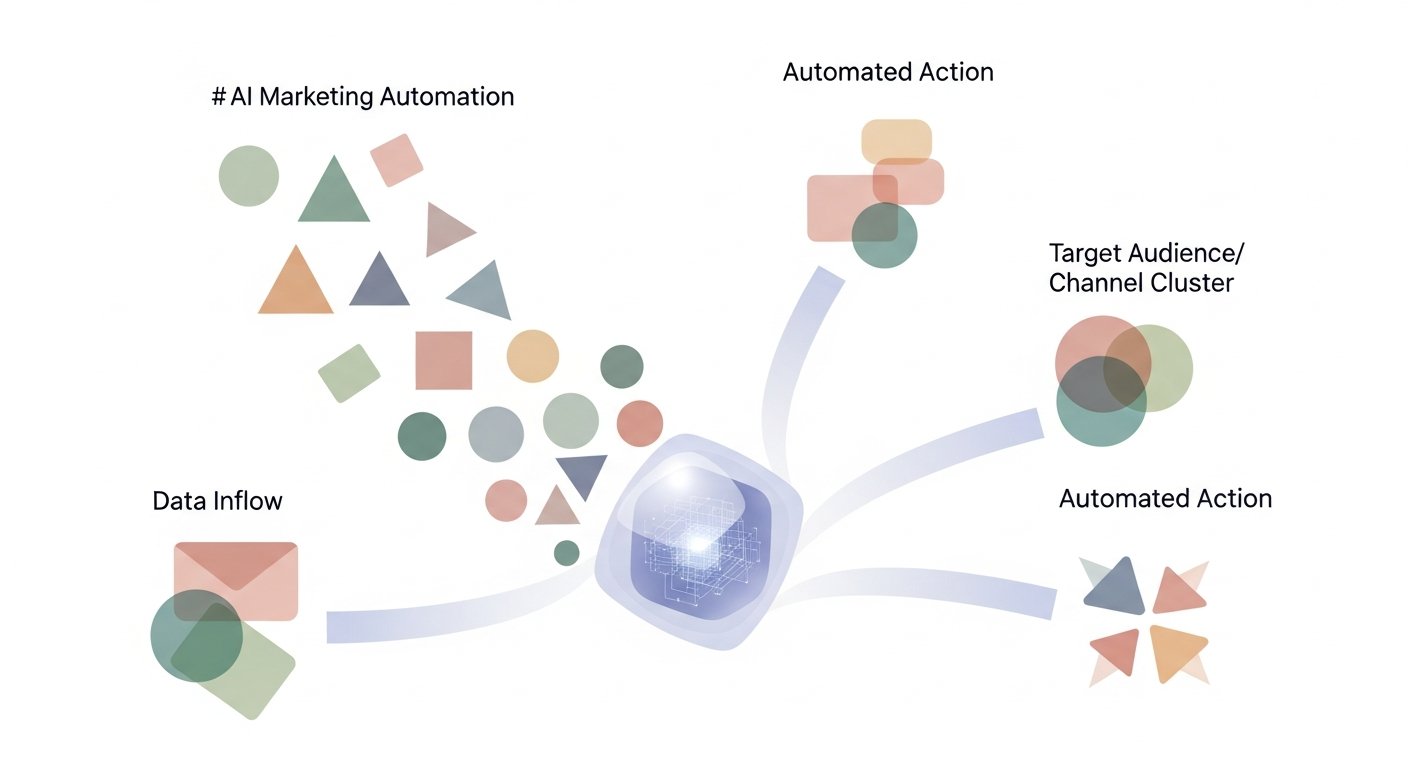
Updated May 2026. Navigating the modern digital landscape requires more than just scheduling emails; it demands robust AI marketing automation strategies. If you have felt that your customer engagement efforts are hitting a plateau despite increasing ad spend, you are not alone. As data volumes explode across multiple touchpoints, human capability alone simply cannot map personalized journeys for tens of thousands of users simultaneously. We are moving from a reactive posture—where marketers guess what audiences want based on broad demographics—to a proactive stance driven by intelligent algorithms.
This transition reshapes how businesses connect with consumers, shifting the focus from mass broadcasting to hyper-individualized conversations. Artificial intelligence enables platforms to digest massive datasets in real-time, anticipate user needs, and deliver the exact right message at the exact right moment. Whether a company is managing a complex B2B sales cycle or a high-volume direct-to-consumer storefront, the integration of algorithmic decision-making drastically alters the trajectory of growth. Understanding how to deploy these advanced systems is no longer a luxury for enterprise corporations; it is a fundamental survival skill for any digital-first business.
The Fundamental Shifts in Automated Marketing Systems
For over a decade, digital outreach relied heavily on linear, rule-based systems. Marketers would set up IF/THEN pathways: if a user clicks an email link, then send a follow-up three days later. Today, that deterministic approach has been entirely eclipsed by probabilistic models. The core of this evolution lies in Machine Learning (ML), a subset of artificial intelligence where algorithms improve their performance by exposing themselves to more data over time without being explicitly programmed for every scenario.
According to a 2026 Gartner benchmark report, organizations utilizing ML-driven segmentation see a 41% higher engagement rate compared to those using static demographic rules. The reason for this dramatic increase is rooted in behavioral clustering. Instead of treating all “women aged 25-34” as a monolith, ML algorithms identify micro-cohorts based on subtle browsing habits, purchase history, and even the time of day they open notifications. By analyzing thousands of distinct variables simultaneously, the system predicts which specific intervention will yield the highest probability of conversion.
Consider a scenario where evaluating enterprise automation software becomes necessary due to a bloated tech stack. A legacy system might trigger a “win-back” discount email precisely 30 days after a user’s last purchase. An intelligent system, however, detects that this specific user typically buys every 45 days, but recently spent five minutes reading a return policy page. Instead of a generic discount, the AI routes a personalized check-in from customer success, circumventing frustration and building actual brand loyalty.
This dynamic adaptability forms the bedrock of modern campaign architecture. The focus shifts entirely from executing predefined campaigns to setting overarching business constraints (like target acquisition cost) and allowing the algorithm to optimize the pathway to that goal autonomously.
How Do Intelligent Marketing Workflows Drive Business Growth?
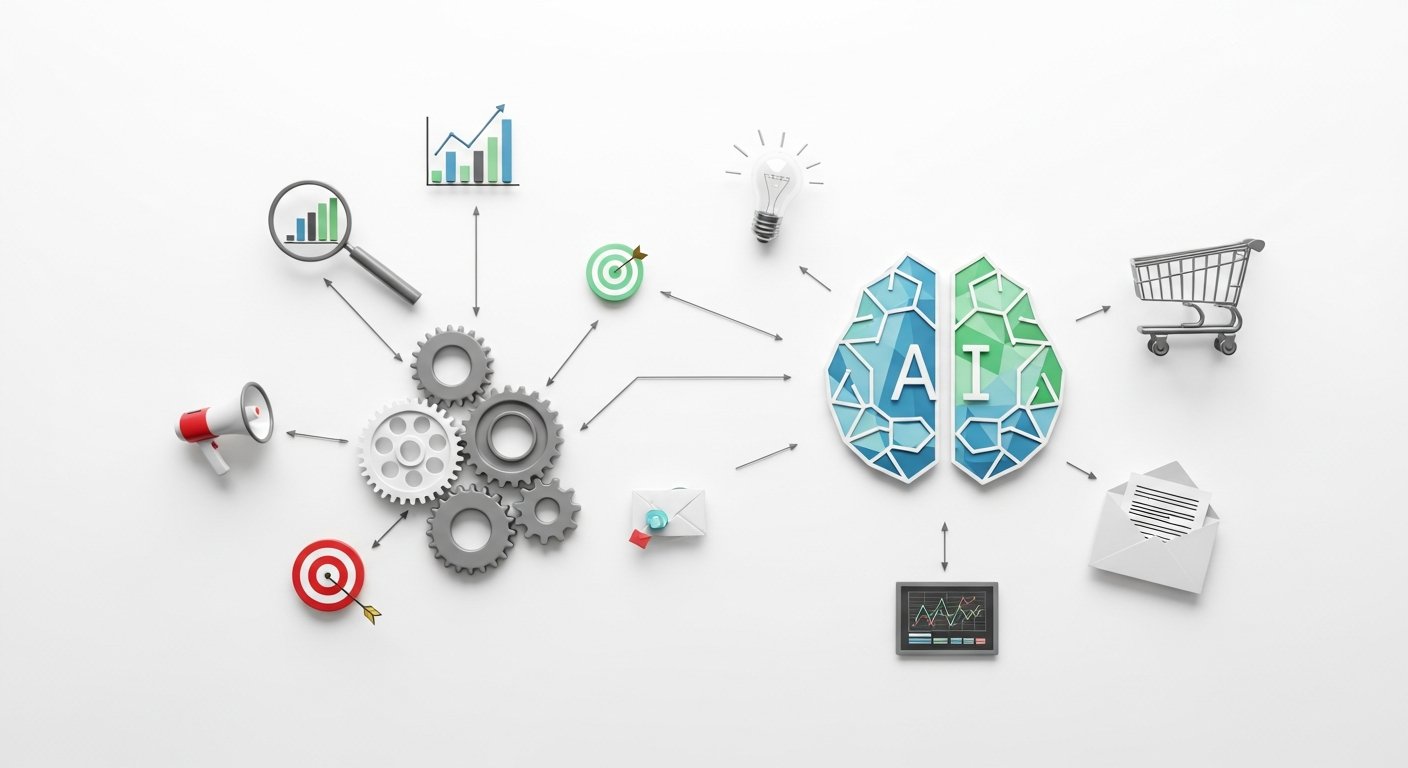
The adoption of intelligent workflows transcends simple time-saving metrics; it directly restructures unit economics. By offloading complex analytical tasks to algorithms, revenue teams drastically lower their Customer Acquisition Cost (CAC) while simultaneously pushing Customer Lifetime Value (CLTV) upward. This dual impact is achieved primarily through the elimination of friction in the buyer journey.
When a B2B software company offers a 14-day free trial, traditional workflows often bombard the prospect with daily feature highlights. Conversely, an intelligent workflow monitors feature usage telemetry. If a prospect actively integrates the software’s API but fails to invite team members, the system identifies a deployment bottleneck. It immediately halts the generic marketing emails and triggers a highly specific intervention—perhaps surfacing a targeted video tutorial on user permissions, or alerting an account executive to offer immediate technical support. This tailored response works because it aligns precisely with the user’s immediate cognitive hurdle, clearing the path to purchase rather than adding noise.
Data from Forrester’s 2025 B2B Revenue Study indicates that dynamically adapted trial journeys increase paid conversions by an average of 28.5%. This is largely driven by Predictive Analytics, the practice of using historical data patterns to forecast future outcomes. By predicting which users possess high purchase intent but are stuck on specific friction points, companies can allocate high-touch human resources exactly where they are needed most, rather than distributing them evenly across a cold pipeline.
Furthermore, automated workflows prevent revenue leakage. Churn prediction models analyze subtle shifts in user behavior—such as declining login frequency or increased customer support ticket volume—and preemptively launch retention campaigns long before the user actively decides to cancel their subscription.
[INLINE IMAGE 2: Diagram comparing a linear, rule-based email sequence with a dynamic, AI-driven customer journey branching based on real-time behavior.]
Core Categories of Algorithmic Campaign Optimization
Mastering AI marketing automation strategies requires breaking down the technology into distinct, actionable categories. Each functional area utilizes different algorithmic models to achieve specific optimization goals across the customer lifecycle.
Hyper-Personalized Customer Journeys
At the center of algorithmic optimization is journey mapping. Using behavioral data, systems dynamically alter website layouts, email content, and product recommendations. A global sportswear brand, for instance, utilizes real-time weather data combined with a user’s past purchase history to customize their homepage. A user logging in from a rainy Seattle sees waterproof running gear, while a user in sunny Miami sees lightweight apparel. This degree of relevance captures attention because it instantly context-matches the user’s physical environment.
AI-Driven Content Generation
The speed of campaign deployment has accelerated exponentially thanks to AI content generation. Marketing teams now utilize large language models to draft localized copy, spin up hundreds of ad variants, and even assist in creating visual assets at scale. This allows brands to run multivariate tests continuously without exhausting creative teams.
Intelligent Ad Targeting and Bid Management
Programmatic advertising relies on deep learning algorithms to analyze auction dynamics in milliseconds. These systems adjust bids based on the predicted likelihood of a specific user converting at that exact moment. By analyzing historical conversion data alongside contextual signals (time of day, device type, publisher site), the algorithm minimizes wasted spend on low-intent impressions.
| Optimization Category | Primary Algorithmic Function | Target Business Outcome | Real-World Application |
|---|---|---|---|
| Hyper-Personalized Journeys | Behavioral Clustering | Increased CLTV & Retention | Dynamic website restructuring based on user history |
| Predictive Lead Scoring | Pattern Recognition | Higher Sales Close Rates | Routing high-intent leads to senior account executives |
| Generative Content | Natural Language Processing | Accelerated Campaign Velocity | Automated localization of ad copy across 20 languages |
| Programmatic Bidding | Real-Time Statistical Modeling | Reduced Cost Per Acquisition | Adjusting ad spend dynamically based on auction volatility |
These categories do not operate in isolation. The most sophisticated marketing teams integrate them into a unified data ecosystem, where insights from programmatic ad performance directly inform the conversational prompts used by their customer-facing chatbots.
What Are the Essential Steps to Implement Smart Marketing Tech?

Deploying advanced algorithms into an existing marketing technology stack is rarely a plug-and-play endeavor. It requires rigorous preparation, deep data hygiene, and a phased rollout to prevent catastrophic disruptions to ongoing revenue operations. Rushing implementation often leads to amplified inefficiencies, where algorithms automate and scale poor business logic.
A 2026 McKinsey survey found that 62% of failed AI initiatives in marketing were directly linked to disorganized data architectures rather than flawed algorithms. Algorithms require clean, unified datasets to recognize accurate patterns. If CRM data is siloed from email engagement data, the AI will make decisions based on an incomplete picture of the customer.
Implementation Checklist
- Data Infrastructure Audit: Before selecting a vendor, teams must unify their data streams. This involves creating a single source of truth—often a Customer Data Platform (CDP)—that ingests data from sales, support, and marketing channels. Data Sanitization, the process of removing corrupted, duplicate, or incomplete records, is a mandatory prerequisite here.
- Strategic Goal Definition: Define exactly what the algorithm should optimize. “Increasing revenue” is too broad. A specific goal, such as “reducing shopping cart abandonment rates by 15% in Q3 without increasing discount volume,” provides a measurable parameter for training the models.
- Technology Selection and Piloting: Choose a platform that integrates natively with your existing ecosystem. Begin with a tightly scoped pilot project—for example, automating the welcome sequence for one specific geographic region—rather than a global rollout.
- Human-in-the-Loop Training: Algorithms require oversight. Marketing personnel must be trained not just on how to use the software interface, but on how to interpret algorithmic confidence scores and intervene when the system outputs anomalous recommendations.
- Continuous Optimization: AI models experience “drift” as market conditions and consumer behaviors evolve. Establish a quarterly review process to retrain models on the freshest data available.
Successful deployment hinges on change management. Teams must transition from a mindset of manual task execution to one of systems management, focusing on orchestrating the parameters that guide the artificial intelligence.
[INLINE IMAGE 4: Flowchart detailing the implementation phases of machine learning marketing tools, moving sequentially from data audit and sanitization to continuous optimization.]
Common Deficits in Deploying Predictive Customer Engagement
Despite the immense potential of algorithmic marketing, organizations frequently encounter severe pitfalls that degrade customer trust and damage brand equity. The most pervasive deficit is the over-reliance on historical data without accounting for sudden contextual shifts in the market. Algorithms are inherently backward-looking; they predict the future based on the past.
During a localized crisis—such as a natural disaster or a major supply chain collapse—historical data becomes instantly obsolete. A travel brand relying heavily on automated engagement might accidentally blast out cheerful “Time for a getaway!” promotional emails to users located in the epicenter of an unfolding crisis. This occurs because the system lacks broad contextual awareness. It sees a user who usually books flights in October, ignores external news feeds, and executes its protocol. The mechanism causing this tone-deafness is a lack of real-time sentiment analysis integrated into the final deployment checkpoint.
Another common mistake is the deployment of “black box” models where the marketing team cannot explain why the AI made a certain decision. If an algorithm suddenly stops serving ads to a specific demographic, the team must be able to audit the logic. Without transparency, biases hidden within the training data can quickly scale into discriminatory practices.
Furthermore, businesses often fail when integrating automated agent support with marketing campaigns. If a user receives a highly personalized marketing email, but the resulting chatbot interaction on the website is rigid and unhelpful, the resulting cognitive dissonance shatters the user experience. The sophistication of the marketing must be matched by the sophistication of the customer service infrastructure.
- Ignoring Data Decay: B2B contact data decays at roughly 22% per year. Feeding an algorithm stale data guarantees inaccurate predictions.
- Over-Segmentation: Creating cohorts so small that the algorithm lacks statistical significance to draw valid conclusions, leading to erratic campaign performance.
- Metrics Fixation: Optimizing heavily for proxy metrics (like open rates) rather than terminal business goals (like finalized pipeline revenue).
Mitigating these deficits requires establishing strict governance protocols, ensuring human oversight is mandatory for any campaign scaling beyond a defined budget threshold.
Shaping the Future of Technology and Work in Marketing
The widespread adoption of intelligent systems is fundamentally rewriting the job descriptions of modern marketing professionals. We are moving away from an era where tactical execution—pulling lists, setting up A/B tests, and formatting localized copy—dominated a marketer’s day. As algorithms absorb these routine tasks, the value of human capital shifts rapidly toward strategic oversight, prompt engineering, and behavioral psychology.
According to the World Economic Forum’s Future of Jobs Report (2023) [VERIFICAR FECHA], while AI will displace 85 million routine jobs globally, it will simultaneously create 97 million new roles focused on managing these complex human-machine interactions. In the marketing sector specifically, we are seeing the rise of the “Marketing AI Operations Manager”—a role dedicated entirely to ensuring various algorithmic tools communicate effectively and remain aligned with brand ethics.
This evolution demands a profound reskilling effort. Marketers must develop strong data literacy to interrogate algorithmic outputs. They need to understand the core competencies required as algorithms handle routine tasks, focusing heavily on empathy, complex problem-solving, and cross-disciplinary strategy. The CMO of the future will function less like a chief copywriter and more like an orchestra conductor, directing diverse technological instruments to create a unified customer symphony.
Ultimately, navigating these AI marketing automation strategies dictates the competitive baseline for the next decade. Companies that successfully balance algorithmic efficiency with human creativity will not only dominate their market segments but will also establish sustainable, ethical frameworks for customer engagement. [PILLAR LINK: Artificial Intelligence and the Future of Technology & Work]
Sources & References
- Gartner, Inc. (2025). “The State of Marketing Technology Automation: Shift to Predictive.” Gartner Research.
- Forrester Research. (2025). “B2B Revenue Operations and the Impact of Algorithmic Interventions.” Forrester Analytical Report.
- McKinsey & Company. (2026). “Overcoming the Data Bottleneck in AI Deployments.” McKinsey Digital Practice.
- World Economic Forum. (2023). “The Future of Jobs Report 2023.” WEF Global Insight Reports.