The 2026 Blueprint: How AI Has Permanently Accelerated Vaccine Development

For decades, the narrative of vaccine development was one of agonizing patience. Bringing a new vaccine from the laboratory to the pharmacy shelf was a process defined by high failure rates, astronomical costs, and timelines that stretched over ten to fifteen years. However, as we move through 2026, that narrative has been fundamentally rewritten. We have entered the era of “Biotech 2.0,” where the fusion of generative artificial intelligence, high-performance computing, and synthetic biology has turned a decade-long marathon into a high-speed sprint.

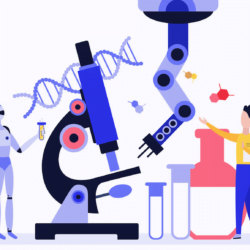
The catalyst for this shift isn’t just faster hardware; it is a fundamental change in how we perceive biological data. In 2026, we no longer view pathogens as mysterious biological puzzles to be solved through trial and error. Instead, we see them as code—complex, evolving datasets that can be modeled, predicted, and countered using sophisticated AI architectures. This technological leap matters because it represents the difference between reacting to a pandemic and preventing one before it begins. It means that “orphan diseases” that were once ignored by big pharma are finally receiving attention, and personalized cancer vaccines are transitioning from science fiction to clinical reality. This is the story of how AI has become the world’s most powerful microscope and its most efficient architect.

The Architecture of Acceleration: How AI Designs Immunity

To understand how AI accelerates vaccine development in 2026, we must look at the transition from empirical science to predictive modeling. Historically, scientists had to physically synthesize thousands of protein variants to see which ones would trigger an immune response without causing harm. Today, the “In Silico” (on silicon) approach dominates.

At the heart of this revolution are Large Language Models (LLMs) adapted for biological sequences. Just as an AI can predict the next word in a sentence, biological AI models can predict the next mutation in a viral spike protein. By training on billions of known protein structures and genomic sequences, AI systems like the descendants of AlphaFold have mastered the art of “protein folding.” They can predict with near-atomic precision how a protein will shape itself in three-dimensional space based solely on its amino acid sequence.

In 2026, researchers use generative design to create entirely new, non-natural proteins—”de novo” antigens—that are optimized to be more stable and more recognizable by the human immune system than the actual virus. AI simulators test these designs against millions of virtual immune systems in seconds. This allows scientists to bypass the traditional “wet lab” phase where thousands of candidates are discarded, moving straight to the most promising handful of designs with a high confidence of success.

Digital Twins and the Transformation of Clinical Trials

One of the most significant bottlenecks in traditional vaccine development was the human clinical trial phase. Enrolling thousands of participants and waiting months for data was a slow, albeit necessary, process. In 2026, the integration of “Digital Twins” has revolutionized this stage.

A Digital Twin is a comprehensive, AI-driven physiological model of a human being. By using data from electronic health records, genomic sequencing, and wearable biometric devices, researchers can create a virtual cohort that mirrors the diversity of the real-world population. In 2026, regulatory bodies have begun accepting “Synthetic Control Arms.” Instead of giving half of the real-world participants a placebo, researchers use AI to simulate how a control group would respond based on historical data and biological modeling.

This doesn’t replace human testing entirely, but it drastically reduces the number of people needed for early-phase trials and allows for “In Silico” stress-testing. AI can predict potential adverse reactions in specific subpopulations—such as people with certain genetic markers or pre-existing conditions—before a single needle touches skin. This predictive safety layering has made the clinical trials of 2026 faster, safer, and far more representative of global genetic diversity.

Real-World Applications in 2026: Beyond the Common Cold

The impact of AI-accelerated vaccine development is being felt across multiple medical frontiers in 2026. We are no longer just fighting respiratory viruses; we are taking the fight to chronic and complex diseases.

1. **Universal Flu and Pan-Coronavirus Vaccines:** In 2026, AI has mapped the “conserved regions” of rapidly mutating viruses—parts of the virus that do not change across different strains. This has led to the rollout of universal vaccines that offer multi-year protection against all variants of influenza or coronaviruses, ending the need for annual reformulations.
2. **Personalized Neoantigen Cancer Vaccines:** This is perhaps the most profound application in 2026. When a patient is diagnosed with a tumor, AI sequences the tumor’s DNA, identifies unique mutations (neoantigens), and designs a custom mRNA vaccine within days. This vaccine teaches the patient’s own immune system to recognize and destroy only the cancerous cells, leaving healthy tissue untouched.
3. **The 100-Day Mission for Emerging Pathogens:** Under global initiatives, AI-driven bio-foundries in 2026 are now capable of moving from the identification of a new “Pathogen X” to a scalable vaccine candidate in under 100 days. This rapid response capability is our new “biological firewall.”
4. **Combatting Antimicrobial Resistance (AMR):** AI is being used to design “vaccine-like” immunotherapies that bolster the body’s ability to fight antibiotic-resistant bacteria, providing a crucial alternative to traditional antibiotics that are losing their effectiveness.

Impact on Daily Life: A Shift to Proactive Health

For the average person in 2026, the AI revolution in vaccine tech has subtly but significantly altered daily existence. The most visible change is the move from reactive medicine to proactive health maintenance.

The “seasonal surge” of illnesses that once disrupted schools and workplaces is becoming a thing of the past. With AI-optimized vaccines that provide broader and longer-lasting immunity, the societal burden of sick days and hospitalizations has plummeted. Furthermore, the cost of vaccine production has dropped. Because AI allows for “just-in-time” manufacturing and more stable formulations (some of which no longer require the expensive “cold chain” of ultra-low temperature freezers), life-saving immunizations are more accessible in rural and developing regions than ever before.

There is also a newfound peace of mind. In 2026, the fear of a sudden, society-shuttering pandemic has been replaced by confidence in our technological “radar.” We have global surveillance systems that use AI to monitor viral shifts in real-time, coupled with a manufacturing infrastructure that can pivot to a new vaccine in weeks. For the tech-savvy citizen, health has become a data-driven journey where “updates” to the immune system are as seamless as a software patch on a smartphone.

The Ethical Frontier: Security, Privacy, and the Black Box

Despite the incredible progress of 2026, the acceleration of vaccine development via AI has introduced complex ethical challenges. The most prominent is the “Black Box” problem. If an AI designs a protein structure that works perfectly, but human scientists don’t fully understand *why* or *how* the AI arrived at that specific configuration, can we truly trust it? Regulatory agencies have had to develop new “Explainable AI” (XAI) frameworks to ensure that every AI-generated medical intervention is auditable and transparent.

Data privacy is another battlefield. To create the Digital Twins used in clinical trials, vast amounts of highly personal genetic and health data are required. In 2026, the use of “Federated Learning”—where AI models are trained on decentralized data without the data ever leaving the original hospital or device—has become the standard for protecting patient anonymity.

Finally, there is the risk of “dual-use” technology. The same AI that can design a life-saving vaccine could, in the wrong hands, design a more potent pathogen. This has led to the establishment of international “Digital Biosecurity” protocols in 2026, which monitor the use of high-end biological AI models and ensure that “DNA synthesis” machines have built-in guardrails to prevent the printing of restricted sequences.

FAQ: Understanding the 2026 Vaccine Landscape

Q: Are AI-developed vaccines as safe as traditional ones?

A: Yes, and in many ways, they are safer. AI allows us to simulate millions of interactions and identify potential side effects long before human trials begin. In 2026, the regulatory standards remain just as high, but the “pre-filtering” done by AI means only the safest candidates ever make it to the trial stage.

Q: How much faster is the process in 2026 compared to five years ago?

A: The timeline has been reduced by approximately 70-80%. What used to take 10 years can now be accomplished in 18 to 24 months, and in emergency “Pathogen X” scenarios, a prototype can be ready in under 100 days.

Q: Will these AI-driven vaccines be more expensive?

A: Surprisingly, no. While the initial AI infrastructure is expensive, the reduction in failed trials and the optimization of manufacturing processes significantly lower the overall cost of development. This is leading to lower prices for the end-user.

Q: Can AI help with diseases like HIV or Malaria that have evaded vaccines for decades?

A: Yes. In 2026, we are seeing the first highly effective AI-designed vaccines for Malaria. These diseases were difficult because their proteins are complex and they “hide” from the immune system. AI’s ability to model these complex interactions has finally cracked codes that human researchers couldn’t solve alone.

Q: Does this mean we don’t need human scientists anymore?

A: Absolutely not. AI is a tool, not a replacement. Human biologists and clinicians are more important than ever to set the parameters, interpret the results, and make the final ethical and medical decisions. AI handles the “big data” heavy lifting, allowing humans to focus on the creative and strategic aspects of science.

Conclusion: The Horizon of Autonomous Medicine

As we look toward the end of the decade, the progress made in 2026 feels like the beginning of a broader biological renaissance. We are moving toward a world where “disease” is an increasingly manageable variable rather than an inevitable fate. The convergence of AI and biotechnology has not just accelerated vaccine development; it has fundamentally changed our relationship with our own biology.

The lessons learned in 2026 are already being applied to other fields, from regenerative medicine to aging. The “Biological AI” that designs our vaccines today will likely be designing the cellular repairs of tomorrow. We are standing at the threshold of a future where medical breakthroughs are limited only by our imagination and the data we provide to our silicon partners. In this 2026 reality, the sprint toward health has no finish line—only new milestones in our quest to understand and protect life.