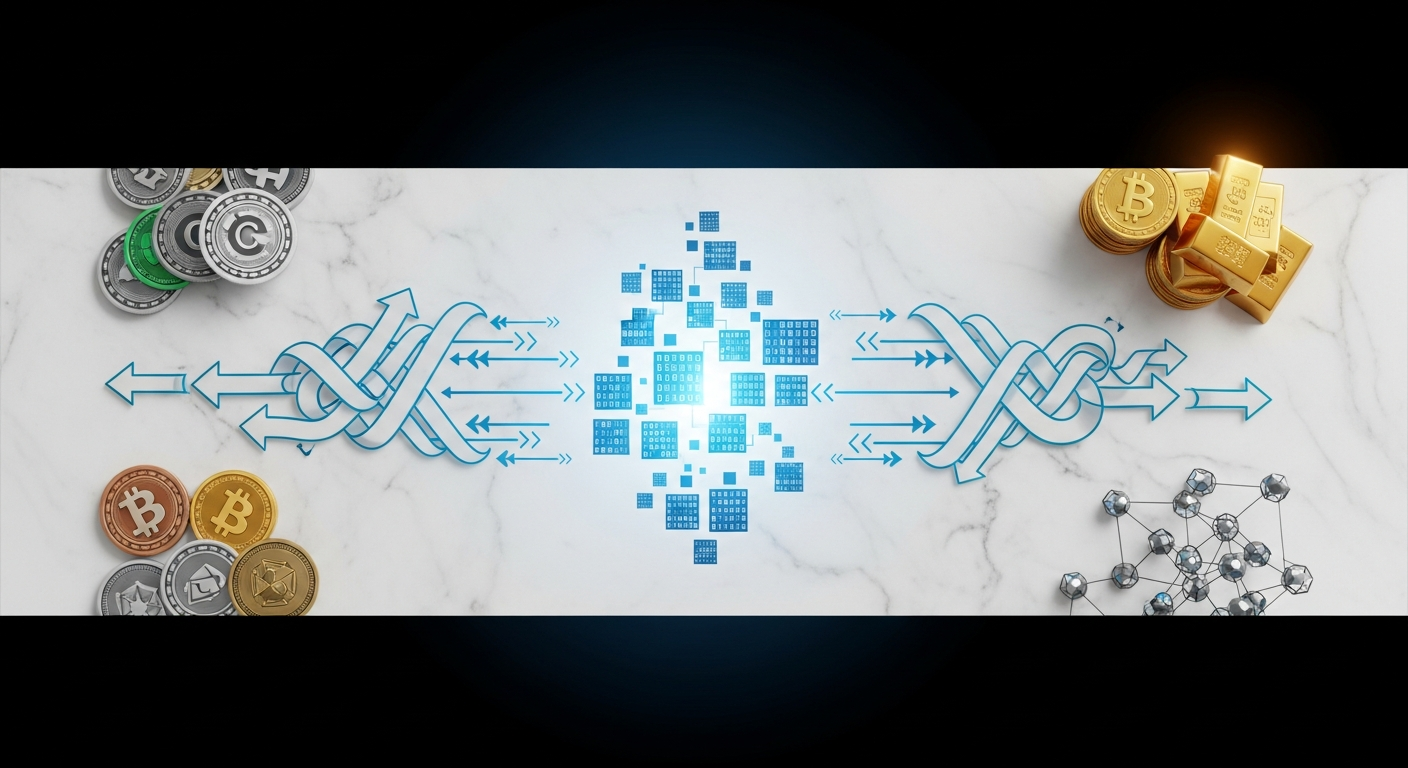
What is DeFi? A Beginner’s Guide to Decentralized Finance
The financial world as we know it has been largely centralized for centuries, controlled by banks, governments, and large institutions. These intermediaries facilitate everything from savings and loans to investments and insurance, often with fees, geographical limitations, and varying levels of accessibility. But what if there was an alternative? A system where you, not an institution, have direct control over your assets? This is the promise of Decentralized Finance, or DeFi. If you’ve heard the buzz around blockchain and cryptocurrencies but are wondering how they apply to real-world financial services, understanding what is DeFi is your crucial first step. This comprehensive guide will demystify this revolutionary movement, explaining its core principles, how it works, its diverse applications, and what it means for the future of money, empowering you to navigate this new financial frontier with confidence.
Understanding What is DeFi: The Foundation of a New Financial System
Decentralized Finance, commonly known as DeFi, represents a paradigm shift in how financial services are delivered and consumed. At its core, DeFi is an umbrella term for financial applications built on blockchain technology, primarily Ethereum, that aim to recreate traditional financial systems in a decentralized, permissionless, and transparent manner. Instead of relying on central authorities like banks, brokerages, or clearinghouses, DeFi protocols leverage smart contracts to automate and execute financial transactions and agreements. This eliminates the need for intermediaries, fostering a peer-to-peer (P2P) environment where users can interact directly with each other and with financial applications.
The birth of DeFi can be traced back to the early days of Bitcoin, which introduced the concept of decentralized digital currency. However, it was the advent of Ethereum and its smart contract capabilities that truly paved the way for complex financial applications to be built on a blockchain. Ethereum’s programmable blockchain allows developers to write self-executing code – smart contracts – that automatically enforce the terms of an agreement without human intervention. This innovation transformed a simple digital currency into a platform for a full-fledged financial ecosystem.
The philosophy behind DeFi is rooted in several key principles:
- Decentralization: No single entity controls the network or the applications. Decisions are often made by the community through decentralized autonomous organizations (DAOs).
- Permissionless: Anyone, anywhere, with an internet connection can access and use DeFi services without needing approval, identity verification (KYC), or a minimum balance. This significantly increases financial inclusivity.
- Transparency: All transactions on a public blockchain are recorded and verifiable by anyone. While user identities are typically pseudonymous, the ledger itself is open for inspection, promoting trust through verifiable accountability.
- Interoperability: Many DeFi protocols are designed to be composable, meaning they can interact and build upon each other like “money legos.” This allows for innovative combinations of services and products.
- Immutability: Once a transaction or smart contract is executed and recorded on the blockchain, it cannot be altered or deleted, providing a high level of security and finality.
Consider the global reach and impact of DeFi. As of late 2023, the total value locked (TVL) in DeFi protocols, a metric representing the total capital deposited in DeFi applications, often fluctuates in the tens of billions of dollars, sometimes exceeding $100 billion during peak market conditions. This substantial capital underscores the growing confidence and participation in this nascent financial system. This growth highlights the global demand for alternatives to traditional finance, particularly in regions with limited access to banking services or where existing systems are inefficient or costly. For users, understanding what is DeFi means grasping its potential to offer greater control, lower fees, and unprecedented accessibility to a suite of financial tools previously reserved for the privileged few.
How Does DeFi Work? The Technology Underpinning Decentralized Finance
To truly grasp what is DeFi, it’s essential to understand the technological backbone that powers it. The vast majority of DeFi applications operate on public blockchains, with Ethereum being the dominant platform, though other chains like Binance Smart Chain, Solana, Avalanche, and Polygon are also gaining traction. The core components enabling DeFi’s functionality are blockchain technology, smart contracts, and cryptocurrencies.
Blockchain Technology: The Distributed Ledger
At its foundation, DeFi relies on blockchain technology – a distributed, immutable ledger that records all transactions across a network of computers. Each “block” contains a batch of transactions and, once validated, is added to the chain, creating a permanent and tamper-proof record. This decentralized network means there’s no central server that can be shut down or manipulated, enhancing security and resilience. Ethereum, as the leading smart contract platform, allows for complex logic to be executed directly on the blockchain, moving beyond simple value transfers.
Smart Contracts: The Automated Agreements
Smart contracts are the heart of DeFi. These are self-executing contracts with the terms of the agreement directly written into lines of code. They automatically execute predefined actions when specific conditions are met, without the need for intermediaries. For example, a lending smart contract might automatically release funds to a borrower once sufficient collateral is deposited and then automatically transfer interest payments back to the lender on a set schedule. If a borrower defaults, the smart contract can automatically liquidate the collateral to repay the lender.
Key characteristics of smart contracts:
- Automation: They run exactly as programmed, eliminating human error and bias.
- Transparency: Their code is typically open-source and auditable by anyone.
- Trustless: Parties don’t need to trust each other; they only need to trust the code.
- Immutability: Once deployed, smart contracts generally cannot be changed, ensuring consistent execution.
Cryptocurrencies and Stablecoins: The Digital Currency
DeFi transactions primarily use cryptocurrencies. Ethereum’s native token, Ether (ETH), is often used to pay for transaction fees (gas) on the Ethereum network. However, most DeFi applications involve other cryptocurrencies, particularly stablecoins. Stablecoins are cryptocurrencies designed to minimize price volatility, typically by pegging their value to a stable asset like the US dollar (e.g., USDT, USDC, DAI). They are crucial for DeFi because they provide a stable medium of exchange and a reliable store of value for financial operations, making them suitable for lending, borrowing, and trading without exposure to the extreme volatility often associated with unpegged cryptocurrencies.
Connecting to DeFi: Wallets and DApps
To interact with DeFi protocols, users typically need a non-custodial cryptocurrency wallet (e.g., MetaMask, Ledger, Trust Wallet). A non-custodial wallet means you, and only you, hold the private keys to your funds, giving you full control. These wallets then connect to decentralized applications (dApps), which are user interfaces for interacting with the underlying smart contracts. For instance, a dApp for a lending protocol like Aave would allow you to deposit assets, view interest rates, and borrow funds directly through your wallet.
The Role of Oracles
Many DeFi applications require access to real-world data that isn’t natively available on the blockchain (e.g., current prices of cryptocurrencies, stock market data). This is where oracles come in. Oracles are third-party services that provide external information to smart contracts. They act as a bridge between the blockchain and the outside world, feeding data into smart contracts to enable more complex and dynamic financial applications. Chainlink is a prominent example of a decentralized oracle network.
In summary, DeFi functions as a sophisticated ecosystem of interconnected smart contracts running on a decentralized blockchain. This infrastructure enables a wide array of financial services to operate without central intermediaries, offering users unprecedented control and access to their financial assets. The modular nature of these components allows for continuous innovation, making the DeFi landscape dynamic and constantly evolving.
Key Pillars and Applications of Decentralized Finance
The innovation within DeFi has led to a proliferation of applications that mirror, and often improve upon, traditional financial services. Exploring these “money legos” helps illustrate the diverse ways in which what is DeFi is redefining financial interactions.
1. Decentralized Exchanges (DEXs)
DEXs are platforms that allow users to trade cryptocurrencies peer-to-peer without the need for a centralized intermediary like Coinbase or Binance. Instead of order books managed by a central entity, most modern DEXs use Automated Market Makers (AMMs). AMMs utilize liquidity pools – funds locked in smart contracts by liquidity providers – to facilitate trades. When you trade on a DEX like Uniswap or SushiSwap, you are essentially trading against this pool of liquidity, with the price determined by an algorithm.
- Example: Uniswap, a leading DEX on Ethereum, processed over $1.7 trillion in trading volume by early 2023, showcasing the significant demand for decentralized trading. Users can swap ETH for DAI directly from their wallet, contributing to or withdrawing from liquidity pools, and earning trading fees.
- Practical Tip: When using a DEX, always check the liquidity pool size and slippage tolerance. Small pools can lead to significant price impact on larger trades.
2. Lending and Borrowing Protocols
These protocols allow users to lend their crypto assets to earn interest or borrow assets by providing collateral. Unlike traditional banks, these services are permissionless and transparent. Interest rates are typically determined algorithmically based on supply and demand within the protocol.
- Example: Aave and Compound are two of the largest decentralized lending protocols. Users can deposit stablecoins like USDC to earn interest (e.g., 3-8% APY depending on market conditions) or use their ETH as collateral to borrow other assets. Aave alone has seen its total value locked (TVL) frequently exceed $5-10 billion.
- Practical Tip: Understand the collateralization ratio and liquidation threshold. If the value of your collateral drops too much, your position can be automatically liquidated to repay the loan. Maintain a healthy collateralization ratio.
3. Stablecoins
While discussed earlier, stablecoins are a foundational pillar. They bridge the gap between volatile cryptocurrencies and stable fiat currencies. They are crucial for facilitating transactions, lending, and borrowing without exposing users to extreme price fluctuations.
- Example: MakerDAO’s DAI is a decentralized stablecoin collateralized by other cryptocurrencies. USDC and USDT are centralized stablecoins backed by fiat reserves. DAI’s market cap frequently sits in the billions, demonstrating its widespread use in DeFi.
- Practical Tip: Always research the collateralization mechanism of a stablecoin. Decentralized stablecoins like DAI offer more transparency in their backing but can carry different risks than fiat-backed ones.
4. Yield Farming and Liquidity Mining
Yield farming involves strategically moving crypto assets between different DeFi protocols to maximize returns. Users often provide liquidity to DEXs or lending protocols to earn a combination of trading fees and governance tokens. Liquidity mining specifically refers to the distribution of a protocol’s native tokens to users who provide liquidity.
- Example: A user might deposit ETH and DAI into a Uniswap liquidity pool, then stake the resulting “liquidity provider” (LP) tokens into a yield farming protocol like Yearn.finance to earn additional yield on those LP tokens. Annual Percentage Yields (APYs) in yield farming can range from single digits to hundreds or even thousands of percent in volatile markets, albeit with higher risk.
- Practical Tip: Yield farming is complex and carries significant risks, including impermanent loss and smart contract vulnerabilities. Start with small amounts, thoroughly research protocols, and understand the mechanics before diving in.
5. Decentralized Autonomous Organizations (DAOs)
DAOs are organizations represented by rules encoded as a transparent computer program, controlled by the organization’s members, and not influenced by a central government. In DeFi, many protocols are governed by DAOs, where holders of the protocol’s native governance token can vote on proposals concerning future development, fee structures, and protocol upgrades.
- Example: Uniswap, Aave, and Compound all have active DAOs where token holders can submit and vote on proposals. This gives users a direct say in the future of the platforms they use.
- Practical Tip: Participate in DAO governance if you hold governance tokens. This helps shape the future of the protocols you use and can also be a learning experience about decentralized decision-making.
6. Insurance
While nascent, decentralized insurance protocols aim to provide coverage against smart contract bugs, stablecoin de-pegging, or other risks specific to the DeFi ecosystem. Users pool funds to underwrite policies, earning fees in return.
- Example: Nexus Mutual is a prominent decentralized insurance protocol where members can buy cover for smart contract risks or stake capital to provide coverage, earning a share of the premiums.
- Practical Tip: Consider decentralized insurance if you plan to hold significant funds in a particular protocol for an extended period, especially with newer or less battle-tested projects.
These diverse applications demonstrate the breadth of possibilities within DeFi. They are constantly evolving, with new protocols and services emerging regularly, all built on the same core principles of decentralization, transparency, and permissionless access.
Benefits of DeFi: Why Decentralized Finance Matters
The growing adoption of DeFi is driven by several compelling advantages it offers over traditional financial systems. These benefits speak directly to the promise of a more equitable, efficient, and accessible financial future, further illuminating what is DeFi‘s appeal.
1. Accessibility and Inclusivity
Perhaps the most significant benefit of DeFi is its permissionless nature. Anyone with an internet connection and a crypto wallet can access DeFi services, regardless of their geographical location, credit score, or wealth. This is transformative for the estimated 1.7 billion unbanked adults globally, offering them access to financial tools like savings, loans, and investment opportunities that were previously out of reach. There are no account minimums, no lengthy approval processes, and no discrimination based on nationality or background.
2. Transparency and Auditability
Every transaction on a public blockchain is recorded and verifiable by anyone. While user identities remain pseudonymous, the movement of assets and the logic of smart contracts are completely transparent. This radical transparency stands in stark contrast to opaque traditional financial institutions, where internal operations are often hidden from public scrutiny. Users can audit the smart contract code, monitor reserves, and verify transaction histories, fostering a trustless environment where trust is placed in code, not in intermediaries.
3. Efficiency and Speed
DeFi transactions are typically processed much faster than traditional banking transactions, which can take days to clear, especially across international borders. Smart contracts execute instantaneously once conditions are met. Automated processes reduce overhead, eliminating the need for extensive human intervention, paperwork, and back-office operations, which translates to quicker settlements and potentially lower costs.
4. Lower Fees (Potentially)
By removing intermediaries, DeFi can significantly reduce transaction costs. While blockchain network fees (gas fees) can sometimes be high, especially on congested networks like Ethereum, the underlying cost structure often bypasses the multiple layers of fees found in traditional finance, such as wire transfer fees, bank charges, and brokerage commissions. For large transactions or long-term holdings, the savings can be substantial.
5. User Control and Ownership
In DeFi, users maintain full custody of their assets through non-custodial wallets. This means you, and only you, control your private keys and thus your funds. Unlike traditional banks where your money is technically the bank’s liability, in DeFi, your assets are truly yours. This level of self-sovereignty is a fundamental shift, empowering individuals to manage their own financial destinies.
6. Composability and Innovation
DeFi protocols are often described as “money legos” because they are designed to be composable and interoperable. One protocol can be built on top of another, or different protocols can be combined to create new and innovative financial products. This modularity fosters rapid innovation, allowing developers to experiment with new financial instruments and services at an unprecedented pace, leading to a dynamic and evolving ecosystem.
7. Immutability and Censorship Resistance
Once a transaction is recorded on the blockchain, it cannot be altered or reversed. This immutability ensures finality and prevents fraudulent changes. Furthermore, because DeFi protocols run on decentralized networks, they are highly resistant to censorship. No single government or entity can arbitrarily shut down a protocol or freeze users’ funds, provided the underlying blockchain remains operational and sufficiently decentralized. This offers a critical safeguard against political or economic interference.
These benefits highlight why DeFi is not just a niche technological development but a foundational movement challenging the status quo of global finance. It presents a viable path towards a more open, fair, and efficient financial system for everyone.
Risks and Challenges in the DeFi Landscape
While the promise of DeFi is compelling, it’s crucial for users to understand that this nascent industry is not without significant risks and challenges. Navigating what is DeFi requires a strong awareness of these potential pitfalls.
1. Smart Contract Vulnerabilities and Bugs
DeFi protocols are built on smart contracts, which are lines of code. Like any software, smart contracts can contain bugs, vulnerabilities, or even logical flaws. A single flaw can be exploited by malicious actors, leading to the loss of millions or even billions of dollars in user funds.
- Example: In 2020, the Eminence Finance protocol, created by Yearn.finance founder Andre Cronje, suffered a hack before its official launch, resulting in the loss of $15 million due to users interacting with unaudited smart contracts. While most funds were later returned, it highlighted the risk of engaging with new or unproven code.
- Practical Tip: Always prioritize protocols that have undergone multiple, independent security audits by reputable firms. Check if the audit reports are publicly available. Never invest in projects that are not transparent about their code or audits.
2. Impermanent Loss
This risk is specific to liquidity providers on Automated Market Maker (AMM) DEXs. Impermanent loss occurs when the price of your deposited assets changes compared to when you deposited them. The larger the price change, the greater the impermanent loss. This means that if you had simply held your assets in your wallet, you might have ended up with more value than by providing liquidity.
- Example: If you provide liquidity to an ETH/USDC pool and ETH’s price surges significantly, the AMM mechanism will rebalance your holdings, selling some of your ETH for USDC to maintain the pool’s ratio. When you withdraw, you might have more USDC but less ETH than if you had just held the ETH.
- Practical Tip: Understand impermanent loss before providing liquidity. It’s often mitigated by earning significant trading fees or liquidity mining rewards, but it’s a critical factor to consider, especially with volatile asset pairs.
3. Price Volatility and Market Risk
Many assets used in DeFi, especially cryptocurrencies like ETH or governance tokens, are highly volatile. This volatility can lead to rapid and significant fluctuations in the value of your investments, collateral, or even stablecoin pegs. Flash crashes can lead to liquidations of leveraged positions.
- Example: During a significant market downturn, a user borrowing against their ETH collateral on a lending platform might see their collateral value drop below the liquidation threshold, leading to the automatic sale of their assets to cover the loan.
- Practical Tip: Use stablecoins for borrowing and lending if you want to avoid price volatility risk. If using volatile assets as collateral, maintain a very conservative collateralization ratio and be prepared for potential liquidations.
4. Regulatory Uncertainty
The regulatory landscape for DeFi is still evolving and largely undefined across many jurisdictions. Governments and financial regulators worldwide are grappling with how to classify and oversee decentralized protocols, leading to uncertainty about future legal frameworks. This could potentially lead to restrictions, bans, or unfavorable tax treatments.
- Example: The SEC has taken action against some centralized crypto platforms offering services similar to DeFi, and there is ongoing debate about whether certain DeFi tokens constitute unregistered securities.
- Practical Tip: Stay informed about regulatory developments in your region. Consult with tax professionals regarding your DeFi activities, as tax laws can be complex and are often subject to change.
5. User Error and Scams
DeFi empowers users with full control over their funds, but this also places a significant burden of responsibility on them. Losing your private keys, sending funds to the wrong address, or falling victim to phishing scams means your funds are likely gone forever, with no central authority to recover them. “Rug pulls,” where developers abandon a project and abscond with user funds, are also a prevalent scam in new or unaudited projects.
- Example: A user might accidentally approve a malicious smart contract to spend their tokens, or click a phishing link that drains their wallet. Countless users have lost funds to sophisticated scam projects posing as legitimate DeFi opportunities.
- Practical Tip: Practice extreme caution. Double-check all addresses, use hardware wallets for significant holdings, and be wary of incredibly high, unsustainable APYs that often signal a rug pull. If an offer seems too good to be true, it likely is.
6. Network Congestion and High Gas Fees
During periods of high demand, blockchain networks (especially Ethereum) can become congested, leading to slower transaction times and significantly higher “gas fees” (transaction costs). This can make small transactions uneconomical and impact the profitability of certain DeFi strategies.
- Practical Tip: Consider using DeFi protocols on Layer 2 solutions (e.g., Arbitrum, Optimism, Polygon) or alternative blockchains with lower transaction fees if gas costs on the mainnet are prohibitive for your use case.
While DeFi offers revolutionary opportunities, an informed approach, starting with a thorough understanding of these risks, is paramount. Always “do your own research” (DYOR) and consider starting with small amounts you can afford to lose.
Getting Started with DeFi: Your First Steps into Decentralized Finance
Diving into Decentralized Finance might seem daunting at first, but with a structured approach, you can begin to explore its potential responsibly. Understanding what is DeFi from a practical standpoint is key to a smooth entry. Here’s a step-by-step guide to get you started:
1. Educate Yourself Thoroughly (DYOR)
Before doing anything else, commit to continuous learning. Read articles, watch tutorials, join reputable communities (e.g., Discord, Telegram groups of established protocols), and understand the underlying technology and specific risks. Familiarize yourself with terms like gas fees, impermanent loss, collateralization ratios, and smart contract audits.
- Actionable Tip: Start with educational resources from trusted sources like Future Insights, reputable crypto news sites, and the official documentation of major DeFi protocols (e.g., Aave docs, Uniswap docs).
2. Acquire a Cryptocurrency Wallet
A non-custodial cryptocurrency wallet is your gateway to DeFi. This wallet allows you to store your cryptocurrencies and interact with dApps. You have full control over your private keys.
- Actionable Tip:
- For beginners, a browser extension wallet like MetaMask is a popular choice for interacting with Ethereum and EVM-compatible networks (like Polygon, Avalanche).
- For larger amounts, consider a hardware wallet (e.g., Ledger, Trezor) for enhanced security. You can often connect these to MetaMask for seamless dApp interaction while keeping your private keys offline.
3. Fund Your Wallet
To participate in DeFi, you’ll need cryptocurrencies, typically Ether (ETH) for gas fees and other tokens like stablecoins (USDC, DAI) or other popular assets (e.g., Wrapped Bitcoin, LINK).
- Actionable Tip: Purchase cryptocurrencies from a reputable centralized exchange (e.g., Coinbase, Binance, Kraken) using fiat currency (USD, EUR, etc.). Once purchased, withdraw these funds to your non-custodial wallet (e.g., MetaMask). Always double-check the address when sending funds.
4. Choose a Blockchain Network
While Ethereum is the largest DeFi ecosystem, its gas fees can be high. Many protocols have deployed on or bridged to other networks and Layer 2 solutions that offer lower fees and faster transactions.
- Actionable Tip: Start with a network like Polygon, Avalanche, or Arbitrum, which are generally more cost-effective for smaller transactions while still hosting many popular DeFi protocols. Ensure your wallet is configured for these networks.
5. Explore Basic DeFi Protocols (Start Small)
Begin with simpler, more established protocols to get a feel for how DeFi works.
- Actionable Tip:
- Lending/Borrowing: Deposit a small amount of a stablecoin (e.g., USDC) into a reputable lending protocol like Aave or Compound to earn interest. Observe how interest accrues and how to withdraw.
- Decentralized Exchanges (DEXs): Try a small swap on Uniswap or SushiSwap. Familiarize yourself with how liquidity pools work.
6. Understand and Manage Risk
Never invest more than you can afford to lose. DeFi is high-risk, high-reward.
- Actionable Tip:
- Diversify: Don’t put all your funds into a single protocol or asset.
- Start small: Use minimal amounts when first experimenting.
- Set alerts: For lending positions, monitor your collateralization ratio to avoid liquidation.
- Security: Always confirm you are on the correct website URL. Beware of phishing scams. Never share your seed phrase.
7. Stay Updated and Engage with Communities
The DeFi space evolves rapidly. Staying current with news, updates, and community discussions is crucial.
- Actionable Tip: Follow key DeFi thought leaders and protocols on Twitter, join relevant Discord servers or Telegram groups, and read industry news from reliable sources. Participate in DAO governance if you hold tokens and understand the proposals.
By following these steps, you can begin to responsibly participate in the DeFi ecosystem, gaining hands-on experience and a deeper understanding of its potential to revolutionize finance.
The Future of DeFi and its Impact on Work and Society
The journey to understand what is DeFi leads inevitably to questions about its future and the profound impact it is poised to have on our economy, the future of work, and society at large. Decentralized Finance is still in its infancy, yet its trajectory suggests a transformative potential far beyond just peer-to-peer lending and trading.
Mass Adoption and User Experience
For DeFi to achieve widespread adoption, it needs to overcome its current complexities. The user experience (UX) for most DeFi protocols is still geared towards technically savvy users. Future developments will focus on creating more intuitive interfaces, simpler onboarding processes, and abstracting away the underlying blockchain complexities, making DeFi as easy to use as traditional banking apps. Layer 2 scaling solutions and other high-throughput blockchains will also play a crucial role in reducing transaction costs and increasing speed, making micro-transactions and everyday financial activities viable.
Interoperability Across Blockchains
Currently, many DeFi ecosystems are somewhat siloed on their respective blockchains. The future will likely see increased interoperability, allowing assets and liquidity to flow seamlessly between different chains. Bridges and cross-chain protocols are actively being developed to connect networks like Ethereum, Solana, Polkadot, and others, creating a truly unified global financial landscape where users can leverage the best features of each blockchain without friction.
Regulatory Clarity and Integration
While regulatory uncertainty is a current challenge, future clarity is inevitable. As governments and international bodies develop frameworks for digital assets, DeFi will likely find paths to integrate with traditional finance (TradFi). This could involve licensed DeFi products, institutional adoption of stablecoins, or even central bank digital currencies (CBDCs) leveraging DeFi infrastructure for efficiency. This integration could bring massive liquidity and legitimacy to the space, accelerating its growth.
Real-World Asset (RWA) Tokenization
One of the most exciting frontiers for DeFi is the tokenization of real-world assets. Imagine being able to lend against tokenized real estate, trade shares of private companies, or fractionalize ownership of fine art on a blockchain. This would unlock vast amounts of illiquid capital, bringing traditional assets onto the blockchain where they can be traded and leveraged within DeFi protocols, vastly expanding the scope and liquidity of the ecosystem. This could open up new investment opportunities for retail investors who were previously excluded from these markets due to high entry barriers.
Impact on the Future of Work
DeFi’s principles of decentralization and permissionless access will profoundly impact the future of work:
- New Financial Professions: The rise of DeFi creates new roles for smart contract auditors, blockchain developers, DAO contributors, community managers, and DeFi strategists.
- Global Talent Pool: Remote work and global participation are inherent to DeFi. Individuals from anywhere in the world can contribute to DAOs and protocols, earning crypto-based compensation, fostering a truly globalized workforce.
- Decentralized Organizations: DAOs could become a dominant organizational structure, replacing traditional corporate hierarchies with transparent, community-governed entities. This empowers individuals with direct voting rights on decisions affecting their work environment and compensation.
- Financial Empowerment for Freelancers: DeFi provides tools for freelancers and gig workers to manage their finances, access loans, and invest their earnings globally without relying on traditional banks, often with lower fees and faster settlement times.
Challenges Remain
Despite its promising future, DeFi faces hurdles. Scalability, security against sophisticated attacks, and the ongoing need for user education will require continuous innovation and vigilance. The environmental impact of certain proof-of-work blockchains also remains a concern, pushing the industry towards more sustainable consensus mechanisms.
In conclusion, DeFi is not just a technological fad; it’s a fundamental reimagining of finance. By stripping away intermediaries and empowering individuals with control over their assets through code, it lays the groundwork for a more open, efficient, and inclusive global financial system. Its evolution will undoubtedly reshape not only how we manage our money but also how we work, interact, and organize ourselves in the digital age.
Conclusion: Charting Your Course in Decentralized Finance
We’ve embarked on a comprehensive journey to understand what is DeFi, delving into its foundational principles, the technological marvels that power it, its diverse applications, and the compelling benefits it offers. We’ve also candidly examined the significant risks and challenges that accompany this nascent financial revolution, along with practical steps for getting started and a glimpse into its transformative future.
DeFi represents a powerful shift from centralized, opaque financial systems to decentralized, transparent, and permissionless alternatives. It offers the promise of greater financial inclusion for the unbanked, enhanced control for individuals over their assets, and a fertile ground for rapid innovation in financial services. From decentralized exchanges and lending platforms to yield farming and DAOs, DeFi is actively rebuilding the financial stack, brick by digital brick.
However, it is crucial to reiterate that the DeFi landscape is dynamic, complex, and carries inherent risks. Smart contract vulnerabilities, impermanent loss, market volatility, and regulatory uncertainties are ever-present factors that demand caution and diligence from every participant. The power of self-sovereignty in DeFi comes with the responsibility of self-custody and meticulous research.
As you consider your next steps in this exciting domain, remember:
- Educate Continuously: The DeFi space evolves rapidly. Stay informed, read reliable sources, and understand the protocols you engage with.
- Start Small, Learn Gradually: Don’t commit significant capital until you fully understand the mechanics and risks involved.
- Prioritize Security: Use reputable wallets, enable two-factor authentication, safeguard your seed phrase, and be vigilant against scams.
- Manage Risk: Diversify your exposure, understand liquidation thresholds, and never invest more than you can afford to lose.
The future insights into technology and finance undoubtedly point towards an increasingly decentralized world. By understanding DeFi today, you’re not just learning about a niche financial product; you’re gaining insight into a fundamental shift that will reshape global economics, labor markets, and individual empowerment for decades to come.
Your Next Step: Begin by setting up a reputable non-custodial wallet like MetaMask, and then allocate a small, negligible amount of funds to experiment with a well-established lending protocol or decentralized exchange on a low-fee network. Hands-on experience, coupled with continuous learning, is the most effective way to truly master the potential of Decentralized Finance.
Frequently Asked Questions About DeFi
Q: Is DeFi safe?
A: DeFi can be safe if users understand and mitigate the inherent risks, but it is not without significant dangers. Risks include smart contract bugs, impermanent loss, price volatility, and potential scams. There are no central authorities to recover lost funds. It’s crucial to use audited protocols, start with small amounts, and thoroughly research any project.
Q: How is DeFi different from traditional finance?
A: DeFi is fundamentally different because it operates without intermediaries like banks or brokers. It’s permissionless, meaning anyone can access it, and transparent, as all transactions are recorded on a public blockchain. Traditional finance is centralized, often requires identity verification, and is less transparent, with institutions controlling funds and processes.
Q: What are the main uses of DeFi?
A: The main uses of DeFi include decentralized exchanges (DEXs) for trading cryptocurrencies, lending and borrowing platforms, yield farming for earning passive income, stablecoins for price stability, and decentralized insurance against specific crypto risks. New applications are constantly emerging, such as tokenization of real-world assets and decentralized derivatives.
Q: Do I need a bank account to use DeFi?
A: No, you do not need a traditional bank account to use DeFi. All you need is an internet connection and a compatible cryptocurrency wallet. However, you will likely need a bank account initially to buy cryptocurrencies from a centralized exchange if you are converting fiat money into crypto for the first time.
Q: What is “gas” in DeFi?
A: “Gas” refers to the fee required to perform transactions or execute smart contract operations on a blockchain, particularly Ethereum. It’s paid in the blockchain’s native cryptocurrency (e.g., ETH on Ethereum) and compensates the network’s validators for processing and securing the transaction. Gas fees fluctuate based on network congestion and the complexity of the operation.