Beyond Earth: Exploring the Latest Trends in Space Technology and Innovation
From the bustling launchpads of private enterprises to the silent, intelligent probes charting distant worlds, innovation is accelerating at an unprecedented pace. This comprehensive guide from Future Insights will dive deep into the most significant developments, providing an authoritative overview of the technologies pushing the boundaries of what’s possible. Whether you’re an industry professional, an aspiring aerospace engineer, or simply captivated by the cosmos, understanding these pivotal trends is essential to grasp the future of human endeavor, economic opportunity, and scientific discovery.
The Commercialization of Space: Driving the New Space Economy
Perhaps the most transformative shift in the space sector over the past decade has been the rise of commercial entities. What was once the exclusive domain of government agencies like NASA, ESA, and Roscosmos is now a vibrant marketplace, often referred to as the “New Space Economy.” This paradigm shift is characterized by private companies taking leading roles in launching rockets, manufacturing satellites, developing space infrastructure, and even planning future human missions.
The core of this trend is a dramatic reduction in the cost of accessing space. Reusable rocket technology, pioneered by companies like SpaceX with its Falcon 9 and soon its Starship, has slashed launch expenses, making space more accessible to a wider array of players. For instance, the cost to launch a kilogram of payload to low Earth orbit (LEO) has plummeted from tens of thousands of dollars in the Shuttle era to a few thousand today, with projections for even lower costs with fully reusable systems.
This commercialization has democratized space, fostering fierce competition and rapid innovation. We’re seeing a proliferation of private ventures: from satellite manufacturers like Maxar Technologies and Planet Labs, which provide Earth observation data for a multitude of applications, to aspiring space tourism companies like Virgin Galactic and Blue Origin, which are actively developing suborbital and orbital flight capabilities for private citizens. The ecosystem also includes a growing number of startups specializing in niche areas such as in-orbit servicing, space debris removal, asteroid mining prospecting, and even space-based manufacturing.
The economic implications are profound. Projections for the global space economy vary, but many analysts predict it will exceed $1 trillion within the next two decades, up from roughly $400 billion today. (Source: Space Report 2023 Market Analysis) This growth is not just about launches; it encompasses the entire value chain, including ground equipment, satellite services, manufacturing, and downstream applications that leverage space data.
Practical Tip: For businesses looking to capitalize on these space technology trends, consider exploring opportunities in data analytics derived from Earth observation satellites, developing specialized payloads for small satellites, or investing in the robust ground infrastructure required to support expanding space operations. Governments, meanwhile, should foster a regulatory environment that encourages innovation while ensuring responsible commercial practices and fair competition.
Mega-Constellations and Miniaturization: Ubiquitous Connectivity and Earth Observation

Another major trend reshaping the space landscape is the deployment of vast networks of small, interconnected satellites, known as mega-constellations. Enabled by advances in miniaturization, these constellations are designed to provide services on a global scale, most notably high-speed internet access and continuous Earth observation.
The most prominent example is SpaceX’s Starlink, which aims to deploy tens of thousands of satellites into low Earth orbit (LEO). As of early 2024, Starlink has already launched over 5,000 satellites, providing broadband internet to millions of users in remote and underserved areas worldwide. Competitors like OneWeb and Amazon’s Project Kuiper are also actively building out their own constellations, promising a future where high-speed, low-latency internet is accessible from virtually anywhere on Earth.
Beyond internet connectivity, miniaturized satellites (CubeSats, SmallSats) are revolutionizing Earth observation. Companies like Planet Labs operate constellations of hundreds of shoebox-sized satellites that image the entire landmass of Earth daily, providing unprecedented data for environmental monitoring, disaster response, urban planning, agriculture, and intelligence gathering. These insights allow for granular tracking of everything from deforestation and glacier melt to crop health and supply chain logistics.
However, the proliferation of these constellations also brings challenges. The sheer number of satellites raises concerns about space debris, orbital traffic management, and light pollution for ground-based astronomy. While satellite operators are implementing strategies like active de-orbiting at the end of a satellite’s life, the long-term sustainability of LEO remains a critical point of discussion among space agencies and international bodies.
Practical Tip: For telecommunications providers and remote businesses, evaluating the integration of satellite internet into their service offerings can open new markets. For environmental agencies and data-driven companies, leveraging the granular, high-frequency data from Earth observation constellations can provide unparalleled insights for decision-making and sustainable practices. Policymakers must proactively engage in international discussions to establish clear guidelines for sustainable orbital operations and spectrum management to mitigate congestion and collision risks.
Advanced Propulsion Systems: Faster, Further, More Efficient Journeys
The dream of rapid interplanetary travel and deep-space exploration hinges critically on developing propulsion systems far more advanced than traditional chemical rockets. While chemical rockets are powerful for initial ascent, their fuel efficiency (specific impulse) limits mission duration and payload capacity for long-distance journeys. Current space technology trends are heavily focused on overcoming these limitations.
One key area of development is electric propulsion, such as ion thrusters and Hall-effect thrusters. These systems use electrical energy to accelerate a propellant (typically xenon) to extremely high velocities, generating small but continuous thrust over long periods. While low-thrust, they are incredibly fuel-efficient. NASA’s Psyche mission, launched in 2023, is one notable example utilizing solar electric propulsion to reach a metal-rich asteroid. Such systems are ideal for long-duration cargo missions, satellite maneuvering, and deep-space probes where speed of transit is less critical than fuel efficiency.
Another area gaining renewed interest is nuclear propulsion. This category includes Nuclear Thermal Propulsion (NTP) and Nuclear Electric Propulsion (NEP). NTP systems heat a propellant (like hydrogen) to extreme temperatures using a nuclear reactor, expelling it through a nozzle for thrust. Such technology could drastically cut travel times to Mars – potentially reducing a nine-month journey to just 45 days. NASA and DARPA are actively collaborating on the Demonstration Rocket for Agile Cislunar Operations (DRACO) program, aiming for a flight demonstration of an NTP engine by 2027. NEP, on the other hand, uses a nuclear reactor to generate electricity, which then powers electric thrusters, offering a potent combination of high power and high efficiency.
Beyond these, concepts like solar sails (which use the pressure of sunlight for propulsion) and even more speculative ideas like fusion propulsion or warp drives remain subjects of advanced research. While still largely theoretical or nascent, the investment in these diverse propulsion technologies underscores a clear trajectory towards opening up the solar system and potentially beyond.
Practical Tip: Governments and international space agencies should continue to prioritize long-term, high-risk, high-reward R&D in advanced propulsion. For private companies, identifying niche applications for improved in-space maneuvering capabilities or specializing in components for these complex systems could prove lucrative in the coming decades. Academia plays a crucial role in fundamental research and developing new materials capable of withstanding the extreme conditions these engines entail.
In-Situ Resource Utilization (ISRU) and Space Manufacturing: Living Off the Land
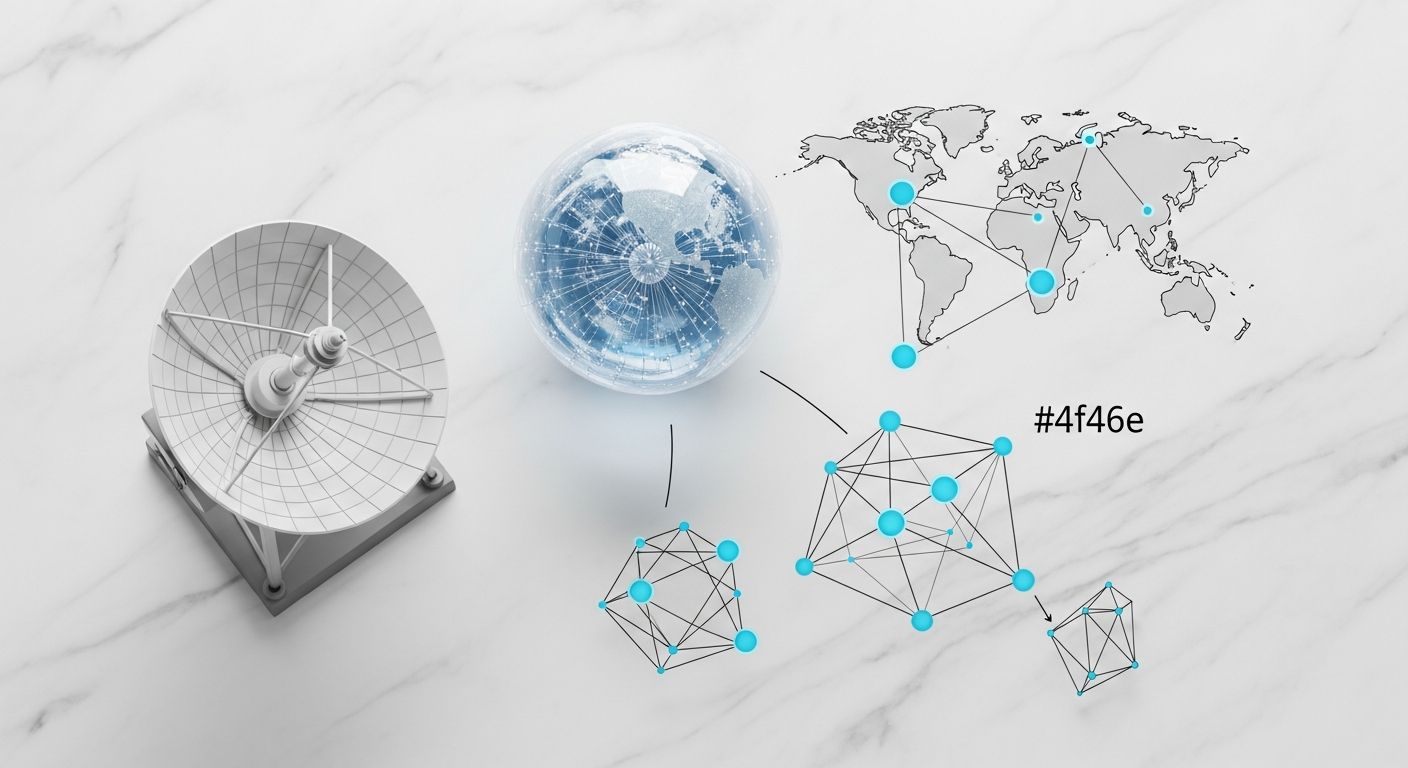
As humanity sets its sights on sustained presence on the Moon and Mars, the concept of In-Situ Resource Utilization (ISRU) becomes paramount. ISRU involves using local resources found on celestial bodies to support human missions and outposts, rather than solely relying on supplies ferried from Earth. This trend is a cornerstone for true space independence and cost-effective exploration.
The primary target for ISRU on the Moon and Mars is water ice, which can be found in permanently shadowed craters. Water is not only essential for drinking and sanitation but can also be split into hydrogen and oxygen – the components of rocket fuel (LOX/LH2). This means future lunar bases could become “gas stations” for missions heading deeper into the solar system, dramatically reducing the mass that needs to be launched from Earth (the “tyranny of the rocket equation”). NASA’s Artemis program explicitly includes ISRU demonstrations as a critical step towards establishing a sustainable lunar presence.
Beyond water, regolith (moon dust or Martian soil) can be used as a construction material. Technologies like 3D printing are being developed to use regolith to build habitats, landing pads, and radiation shields, offering protection from the harsh space environment. Companies like ICON are already collaborating with NASA to develop large-scale 3D printing systems for lunar construction using simulated regolith.
Space manufacturing also extends to in-orbit assembly and repair, where structures too large to launch in one piece can be constructed in space. This reduces the constraints of launch vehicle fairing sizes and enables the creation of massive telescopes or solar power arrays. The ability to repair and refuel satellites in orbit also extends their operational lifespan, offering significant cost savings.
Practical Tip: Innovators in materials science, robotics, and additive manufacturing should focus on developing technologies resilient to extreme temperatures, radiation, and vacuum environments. Companies could explore specialized resource extraction techniques for lunar and Martian environments, such as microwave heating for water ice or advanced drilling capabilities. Governments should incentivize prospecting missions and the development of pilot ISRU facilities on celestial bodies.
Artificial Intelligence and Autonomy in Space Operations
The growing complexity and sheer volume of data generated by space missions necessitate a greater reliance on Artificial Intelligence (AI) and autonomous systems. AI is no longer a futuristic concept but an integral part of modern space operations, revolutionizing everything from mission planning and data analysis to robotic exploration and spacecraft control.
In data processing, AI algorithms can sift through vast quantities of telemetry from satellites and probes, identifying anomalies, predicting potential failures, and optimizing system performance with far greater speed and accuracy than human operators alone. For Earth observation satellites, AI is crucial for classifying imagery, detecting changes (e.g., deforestation, urban expansion), and extracting meaningful insights from petabytes of data.
For robotic exploration, AI-powered autonomy is a game-changer. Mars rovers, for example, use AI to navigate treacherous terrain, identify scientific targets, and even make decisions about where to drill or sample without constant human intervention. This is particularly vital given the significant communication delays when operating spacecraft millions of miles from Earth. Future lunar and Martian bases will likely rely heavily on autonomous robots for maintenance, construction, and resource extraction, reducing the need for human presence in hazardous environments.
AI also plays a critical role in optimizing mission trajectories, managing satellite constellations, and developing sophisticated collision avoidance systems for the increasingly crowded orbital environment. The ability of AI to learn and adapt makes it invaluable for long-duration missions where unexpected challenges may arise far from Earth.
Practical Tip: Space agencies and private firms must invest heavily in developing robust, explainable, and resilient AI systems tailored for the unique challenges of space. This includes focusing on edge computing capabilities for spacecraft, enhancing machine learning algorithms for anomaly detection, and fostering collaboration between AI researchers and aerospace engineers. Educational institutions should prioritize interdisciplinary programs that blend AI, robotics, and aerospace engineering to train the next generation of space innovators.
Sustainable Space and Debris Mitigation: Protecting the Orbital Environment
As the number of active satellites and defunct spacecraft in orbit continues to grow exponentially, the issue of space debris has emerged as a critical threat to the long-term sustainability of space activities. Collisions between objects in orbit create even more debris, potentially leading to a cascading effect known as the Kessler Syndrome, which could render certain orbital altitudes unusable for generations. Addressing this challenge is one of the most pressing space technology trends.
Current efforts focus on several fronts:
- Active Debris Removal (ADR): This involves developing technologies to actively de-orbit or capture existing large pieces of space junk. Projects like ESA’s ClearSpace-1 mission, planned for 2026, aim to demonstrate the capability to rendezvous with and remove a specific piece of debris from orbit. Other concepts include using nets, harpoons, or even lasers to push debris into lower orbits where it will burn up.
- Design for Demise: New satellites are increasingly being designed with end-of-life considerations, incorporating features that facilitate their de-orbiting at the end of their operational lives. This includes propulsive systems to lower orbit or materials that fully burn up upon re-entry, minimizing the creation of new debris.
- Space Traffic Management (STM): With thousands of satellites currently in orbit and tens of thousands more planned, sophisticated STM systems are crucial. These systems track objects, predict potential collisions, and provide warnings and maneuver recommendations to satellite operators, helping to prevent catastrophic events. Agencies like the U.S. Space Force and various commercial entities are developing advanced STM capabilities.
- International Cooperation and Regulation: Establishing common standards and regulations for responsible space behavior is paramount. International bodies are working to develop guidelines for sustainable orbital operations, including limits on orbital lifetimes for satellites and mandatory de-orbiting plans.
The investment in these technologies and policies is not merely about environmental stewardship; it’s about protecting trillions of dollars worth of space infrastructure that underpins global communication, navigation, weather forecasting, and scientific research. Ensuring continued access to space is fundamental to economic prosperity and national security.
Practical Tip: Satellite operators and manufacturers should prioritize “design for demise” principles and allocate resources for robust de-orbiting capabilities. Governments should collaborate internationally to establish and enforce clear regulations for sustainable space use and invest in R&D for effective active debris removal technologies. Insurance providers might also consider offering incentives for operators demonstrating responsible orbital practices.
The Future of Human Spaceflight: Lunar Gateways and Martian Ambitions
After decades focused primarily on low Earth orbit with the International Space Station, human spaceflight is once again setting its sights further afield, with ambitious plans for returning to the Moon and eventually sending humans to Mars. This renewed focus represents a significant leap in our capacity and commitment to deep-space exploration.
The most prominent initiative is NASA’s Artemis program, a collaborative effort with international partners like ESA, JAXA, and CSA, and private companies. Artemis aims to land humans on the Moon, including the first woman and first person of color, by the mid-2020s, and to establish a long-term human presence there. Key components of Artemis include:
- Orion Spacecraft: NASA’s crew vehicle designed for deep-space missions.
- Space Launch System (SLS): A heavy-lift rocket, currently the world’s most powerful, designed to launch Orion and other critical infrastructure.
- Lunar Gateway: A small space station that will orbit the Moon, serving as a staging point for lunar surface missions and a science outpost.
- Human Landing System (HLS): Private companies like SpaceX (with Starship) and Blue Origin are developing landers to transport astronauts from the Gateway to the lunar surface.
The Moon is seen as a crucial stepping stone to Mars. Learning to live and work sustainably on another celestial body, mastering ISRU, developing advanced life support systems, and mitigating the effects of radiation in deep space are all vital preparations for the far more challenging journey to the Red Planet. Concepts for Martian missions involve long-duration transits (6-9 months one way), complex autonomous systems, and advanced habitation modules.
The role of private industry in human spaceflight is also growing. Beyond providing launch services and lunar landers, companies are exploring private space stations (e.g., Axiom Space’s modules for ISS, eventually its own station), commercial resupply missions, and even the development of infrastructure for lunar tourism or resource extraction.
Practical Tip: Educational institutions should continue to inspire and train the next generation of engineers, scientists, and astronauts, focusing on interdisciplinary skills needed for complex deep-space missions. Private sector companies can find opportunities in developing life support systems, radiation shielding, advanced robotics, and communication technologies tailored for lunar and Martian environments. Governments should foster international partnerships to share the immense costs and risks associated with such ambitious endeavors, ensuring a broad base of support and expertise.
Conclusion: Charting a Course Through the Cosmic Frontier
The exploration of space, once a distant dream, is rapidly becoming an everyday reality, fueled by remarkable advancements in space technology trends. From the economic dynamism of the New Space Economy and the ubiquitous connectivity enabled by mega-constellations to the audacious visions of lunar outposts and Martian colonization, humanity’s reach is extending further than ever before.
These transformative trends are not merely about rockets and satellites; they represent a fundamental shift in our capabilities, offering unprecedented opportunities for scientific discovery, economic growth, and ultimately, the expansion of human presence beyond Earth. While challenges remain – from space debris to the immense engineering hurdles of interplanetary travel – the collective ingenuity and collaborative spirit of innovators worldwide are relentlessly pushing the boundaries.
As we look to the future, the integration of AI, the pursuit of sustainable space practices, and the development of advanced propulsion and resource utilization technologies will continue to define this exciting era. The journey beyond Earth is just beginning, and its trajectory will undoubtedly reshape life as we know it, driving innovation across every sector. Stay tuned to Future Insights for continued analysis of these groundbreaking developments and their profound impact on our world.
Frequently Asked Questions