
Beyond the Horizon: The Best Laptops of 2026 for Every Budget, Powering the AI-First Future
The AI Imperative: What Defines a 2026 Laptop?
In 2026, the question won’t be “Does this laptop have AI?” but rather “How deeply integrated is its AI?” The defining characteristic of nearly every laptop on the market will be its Neural Processing Unit (NPU) – a specialized silicon block designed to accelerate artificial intelligence and machine learning tasks directly on the device. This shift from cloud-dependent AI to on-device AI is monumental. It means lower latency for AI applications, enhanced privacy as sensitive data doesn’t leave your machine, and significantly improved power efficiency for tasks like real-time language translation, advanced video conferencing effects, predictive text, and generative AI content creation.
The NPU’s performance will be measured in Trillions of Operations Per Second (TOPS), and while today’s NPUs might hover around 10-20 TOPS, by 2026, even entry-level laptops will likely boast NPUs exceeding 40-50 TOPS, with premium models pushing well past 100 TOPS. This raw processing power will unlock a new era of intelligent features: seamless background noise suppression in calls, AI-powered photo and video editing that suggests improvements or generates content on command, personalized operating system experiences that anticipate your needs, and robust on-device security measures that learn and adapt to threats.
The Rise of AI PCs and AI Workstations
The industry has already embraced the “AI PC” moniker, and by 2026, this will be the default. These aren’t just laptops that run AI software; they are fundamentally designed from the ground up to leverage AI at every layer, from hardware acceleration to operating system integration. Imagine a laptop that can intelligently manage its power based on your workload, predict application crashes, or even optimize its cooling system using machine learning models. AI workstations, on the other hand, will be beasts designed for data scientists, AI developers, and 3D artists, featuring multiple, high-TOPS NPUs, dedicated GPUs with massive VRAM, and sophisticated software stacks optimized for training complex AI models locally. These machines will shrink the data center to your desk, enabling rapid iteration and development of AI applications without constant reliance on cloud services.
Connectivity as a Core AI Enabler (Wi-Fi 7, 5G/6G)
While on-device AI reduces cloud dependency for certain tasks, robust connectivity remains crucial for accessing vast datasets, cloud-based AI models, and collaborative workflows. By 2026, Wi-Fi 7 (802.11be) will be standard, offering multi-gigabit speeds, ultra-low latency, and enhanced capacity, crucial for streaming high-fidelity AI models or real-time collaborative applications. Furthermore, 5G will be ubiquitous, and early iterations of 6G technology will begin appearing in premium devices, promising even higher bandwidth and near-instantaneous communication. This convergence of powerful on-device AI and advanced connectivity means a truly seamless, always-connected, and intelligent computing experience, whether you’re working offline in a remote location or collaborating in a bustling smart city.
Budget-Friendly Brilliance: The Sub-$800 Powerhouses of 2026

The “budget” laptop of 2026 will be anything but basic. Thanks to advancements in ARM-based processors and optimized operating systems, these machines will deliver impressive performance, exceptional battery life, and essential AI capabilities at price points that were previously unimaginable for such features. The target audience for these laptops includes students, entry-level remote workers, and users who prioritize portability, efficiency, and core productivity tasks.
We predict a strong emphasis on fanless designs, leading to incredibly thin and light devices. Battery life, a perennial concern, will routinely exceed 15-18 hours on a single charge, making them true all-day companions. Storage will typically start at 256GB to 512GB NVMe SSDs, providing snappy boot times and application loading. While screens might not be OLED at this price point, expect consistently good Full HD (1920×1080) IPS panels with decent brightness and color accuracy.
ChromeOS Reimagined: AI at the Edge
Chromebooks will continue their evolution, shedding their “just a browser” reputation. By 2026, ChromeOS will be deeply integrated with on-device AI, leveraging powerful NPUs from chips like the successors to Qualcomm’s Snapdragon X series or even specialized Google Tensor-like chips. This means advanced local generative AI features for document creation, smart search capabilities that understand context across your files and web history, and enhanced video conferencing with AI-powered background effects and transcription, all running smoothly without draining the battery. Expect Chromebooks with 8-16GB of RAM as standard, making them more capable for multitasking and local AI processing. These will be ideal for students and knowledge workers who operate heavily within Google’s ecosystem but now demand sophisticated AI assistance.
Windows on ARM: The Efficiency Revolution Continues
Microsoft’s commitment to Windows on ARM will bear significant fruit by 2026. Processors from Qualcomm, such as the successors to the Snapdragon X Elite, will offer compelling performance and industry-leading power efficiency, making Windows laptops powered by ARM a formidable competitor in the budget segment. These devices will deliver a full Windows experience with excellent app compatibility (thanks to improved emulation and native ARM versions of key software) combined with robust NPU capabilities. This means AI-accelerated Windows Studio Effects, Copilot integration that runs more locally, and a responsive user experience that sips power. For users who need specific Windows applications but value long battery life and a compact form factor, these laptops will be an excellent choice, often featuring 8-16GB RAM and 256-512GB SSDs.
Mid-Range Marvels: Balancing Performance and Value ($800 – $1500)
The $800 to $1500 segment will continue to be the sweet spot for the majority of users, offering a compelling blend of performance, features, and design without breaking the bank. Laptops in this category in 2026 will be true workhorses, capable of handling demanding productivity, light creative tasks, and even some entry-level gaming, all while integrating advanced AI capabilities.
You can expect to find powerful multi-core processors from Intel (successors to Lunar Lake/Arrow Lake), AMD (next-gen Ryzen AI series), and Apple (M3/M4 successors) with significantly enhanced NPUs. RAM will commonly be 16GB, with 32GB becoming more frequent, paired with 512GB to 1TB NVMe SSDs. Displays will see a major upgrade, with vibrant OLED or high-quality Mini-LED panels becoming standard, offering superior contrast and color accuracy. Faster refresh rates (90-120Hz) will also be more common, enhancing the user experience for scrolling and light gaming.
The Hybrid Workhorse: Versatility and Power
This segment will be dominated by versatile ultrabooks and 2-in-1 convertibles. Expect thinner, lighter designs crafted from premium materials like aluminum, often featuring advanced cooling systems to manage the powerful new chips. Key features will include Thunderbolt 5/USB4 ports for high-speed data transfer and external display support, advanced haptic touchpads, and excellent webcams (1080p minimum) with AI-powered enhancements for video calls. These laptops will cater to professionals who split their time between office, home, and travel, requiring a machine that can adapt to various workflows, from complex spreadsheets and coding to video conferencing and occasional graphic design. The enhanced NPUs will accelerate tasks within Adobe Creative Suite, Microsoft Office, and specialized industry software, making complex operations feel instantaneous.
Gaming Goes AI: Smart Upscaling and Frame Generation
Even in the mid-range, laptops will embrace AI for gaming. While dedicated high-end GPUs will still be reserved for premium machines, integrated graphics will become surprisingly capable, especially when paired with AI-powered upscaling technologies like NVIDIA’s DLSS or AMD’s FSR (and their 2026 successors). These technologies leverage the NPU and GPU to intelligently render games at lower resolutions and upscale them to native display resolution with minimal quality loss, effectively boosting frame rates. This means that many popular esports titles and even some AAA games will be playable at respectable frame rates on mid-range laptops, extending their utility beyond pure productivity. Expect mid-range gaming laptops to feature dedicated, albeit entry-level to mid-range, GPUs (e.g., NVIDIA RTX 5050/5060 equivalents or AMD Radeon RX 8000 series).
Premium Performers: The Cutting Edge for Discerning Users ($1500 – $2500)
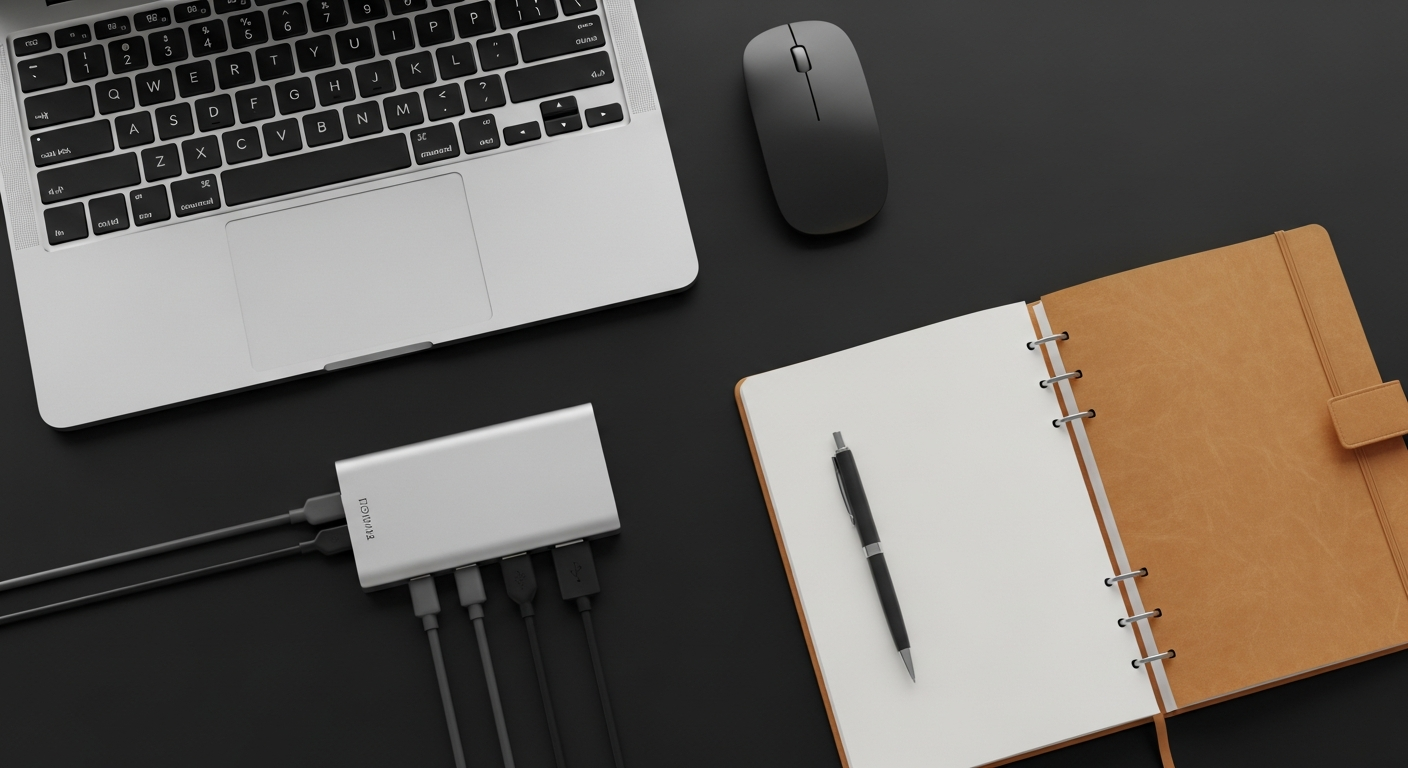
For those who demand uncompromising performance, innovative features, and exquisite design, the premium segment ($1500-$2500) in 2026 will offer an array of truly advanced machines. These laptops will push the boundaries of current technology, integrating the most powerful NPUs, fastest memory, and most stunning displays, all wrapped in meticulously engineered chassis.
Here, you’ll find the pinnacle of mobile processing power, with top-tier Intel, AMD, and Apple silicon, boasting NPUs with significantly higher TOPS for complex on-device AI model inferencing and real-time generative AI tasks. RAM will typically start at 32GB, with 64GB becoming common, paired with 1TB to 2TB NVMe SSDs that offer blistering read/write speeds. Displays will almost exclusively be high-resolution 4K or 5K OLED/Mini-LED panels with high refresh rates (120Hz+) and exceptional color gamut coverage, making them ideal for professional content creation and immersive entertainment.
Beyond the Screen: Haptics, Biometrics, and Spatial Computing
Premium laptops will differentiate themselves not just with raw power but with innovative user experiences. Advanced haptic feedback systems, similar to those found in high-end smartphones, will be integrated into touchpads and even keyboards, providing tactile responses that enhance interaction and immersion. Next-generation biometric security, combining highly accurate facial recognition (with depth sensing) and improved fingerprint readers, will offer seamless and robust authentication. Furthermore, expect to see early integration of spatial computing concepts – perhaps through enhanced external display support for VR/AR headsets, or even subtle forms of gesture control and eye-tracking built into the laptop itself, preparing for a more interactive future. Connectivity will include next-gen Wi-Fi 7 and advanced 5G modems, with some models potentially trialing early 6G capabilities in specific markets.
Professional Content Creation: Local AI for Workflow Acceleration
For professional photographers, videographers, graphic designers, and musicians, these laptops will be game-changers. The highly capable NPUs will accelerate complex tasks within applications like Adobe Photoshop, Premiere Pro, DaVinci Resolve, and Logic Pro. Imagine real-time AI masking in Photoshop, intelligent scene detection and auto-editing suggestions in Premiere, or AI-powered noise reduction and mastering in audio software, all processed locally without lag. Dedicated GPUs (e.g., NVIDIA RTX 5070/5080 equivalents or AMD Radeon RX 8900 series) will be standard, providing ample power for rendering, 3D work, and high-fidelity gaming, further complemented by AI upscaling and frame generation techniques. This segment will represent the ultimate mobile workstation for creative professionals who demand desktop-class performance in a portable form factor.
Workstation Wonders & Niche Innovators: Unrestricted Power ($2500+)
At the pinnacle of laptop innovation in 2026 are the workstation wonders and niche innovators – machines designed for those with virtually no budget constraints, requiring absolute maximum performance and specialized capabilities. These laptops are not just powerful; they are purpose-built for the most demanding tasks imaginable, from AI research and data science to complex engineering simulations and cinematic video editing.
These machines will feature the most advanced processors available, often with multiple high-TOPS NPUs, paired with top-tier professional-grade GPUs (e.g., NVIDIA Quadro RTX or AMD Radeon Pro successors) offering massive amounts of VRAM (64GB+). RAM will start at 64GB and extend to 128GB or even 256GB, ensuring no bottleneck for large datasets or complex simulations. Storage will be multi-terabyte NVMe SSD arrays, configured for maximum speed and redundancy. Displays will be factory-calibrated 4K/8K Mini-LED or OLED panels with extreme brightness and color accuracy, often with touch and stylus support. Thermal management systems will be highly sophisticated, utilizing advanced vapor chambers and multi-fan designs to sustain peak performance under heavy loads.
The AI Development Lab in Your Backpack
For AI researchers and data scientists, these laptops will effectively serve as mobile AI development labs. The combined power of high-TOPS NPUs and professional GPUs will allow for local training of moderately sized AI models, rapid inferencing, and complex data analysis without constant reliance on cloud infrastructure. This significantly reduces iteration cycles and improves data privacy for sensitive projects. Expect specialized software optimizations from hardware vendors to fully leverage these capabilities, along with support for frameworks like TensorFlow and PyTorch directly on the device. Features like ECC RAM (Error-Correcting Code memory) might also become more prevalent in this segment, ensuring data integrity for critical computations.
Sustainability and Circularity: A Premium Expectation
While sustainability is a growing concern across all budget tiers, in the premium and workstation segments, it will become a non-negotiable expectation. Brands will tout their use of recycled materials (e.g., aluminum, plastics, rare earth elements), energy-efficient components, and robust repairability scores. Modular designs, allowing users to easily upgrade RAM, storage, and even potentially GPUs in some cases, will gain traction. Furthermore, expect transparent reporting on carbon footprints and initiatives supporting circular economy principles. Premium pricing will implicitly include the cost of ethical sourcing and environmentally responsible manufacturing, appealing to institutions and discerning professionals who value corporate responsibility.
Beyond the Specs: Key Trends Shaping Your 2026 Laptop Choice
While raw specifications are important, the laptop experience in 2026 will be profoundly shaped by overarching technological and societal trends.
Sustainability and Circularity
Beyond the premium segment, sustainability will influence design and purchasing decisions across the board. Laptops will feature higher percentages of post-consumer recycled plastics and metals. Repairability will improve, with modular designs becoming more common, allowing users to replace components like batteries, keyboards, and even displays more easily, extending product lifespans and reducing e-waste. Energy efficiency will be a key selling point, driven by ARM-based architectures and intelligent power management, contributing to lower operating costs and a smaller environmental footprint.
Evolving Form Factors
While the traditional clamshell laptop will remain dominant, 2026 will see a greater proliferation of innovative form factors. Dual-screen laptops, like the successors to Lenovo’s Yoga Book series or HP’s Spectre Fold, will become more refined and practical, offering expanded screen real estate for multitasking. Foldable displays will mature, allowing for larger screen sizes in compact packages, though these might remain in the premium segment due to manufacturing complexity. We might also see thinner, lighter designs achieved through component miniaturization and advanced battery technologies.
Advanced Connectivity
As discussed, Wi-Fi 7 will be standard, delivering unprecedented wireless speeds and reliability. Integrated 5G will be widespread, offering always-on internet access wherever cellular networks exist, crucial for remote work and mobile professionals. Early implementations of 6G, with its promise of terabit-per-second speeds and ultra-low latency, might begin appearing in concept devices or specialized workstations, hinting at future capabilities like holographic communication and real-time digital twins.
Security & Privacy Enhancements
With AI becoming pervasive, hardware-level security will be paramount. Laptops will feature more sophisticated Secure Enclaves or Trusted Platform Modules (TPMs) that are resistant to physical tampering. AI-powered threat detection will move closer to the hardware, offering real-time monitoring for anomalies and suspicious activities without impacting performance. Biometric authentication will become faster and more secure, with multi-factor options like facial recognition combined with fingerprint scanning. User privacy will be enhanced through on-device AI processing, minimizing the need to send sensitive data to the cloud.
Operating Systems and Software Ecosystems
Windows, macOS, and ChromeOS will continue to evolve with AI at their core. Microsoft’s Copilot will be deeply integrated into the OS, offering proactive assistance and intelligent automation. Apple’s macOS will leverage its powerful M-series NPUs for enhanced creativity and productivity. ChromeOS will transform into a powerful, AI-accelerated cloud-first platform with robust local capabilities. Linux distributions will also see advancements, with better hardware support for NPUs and AI development tools. The emphasis across all platforms will be on creating a seamless, intuitive, and intelligently personalized user experience.