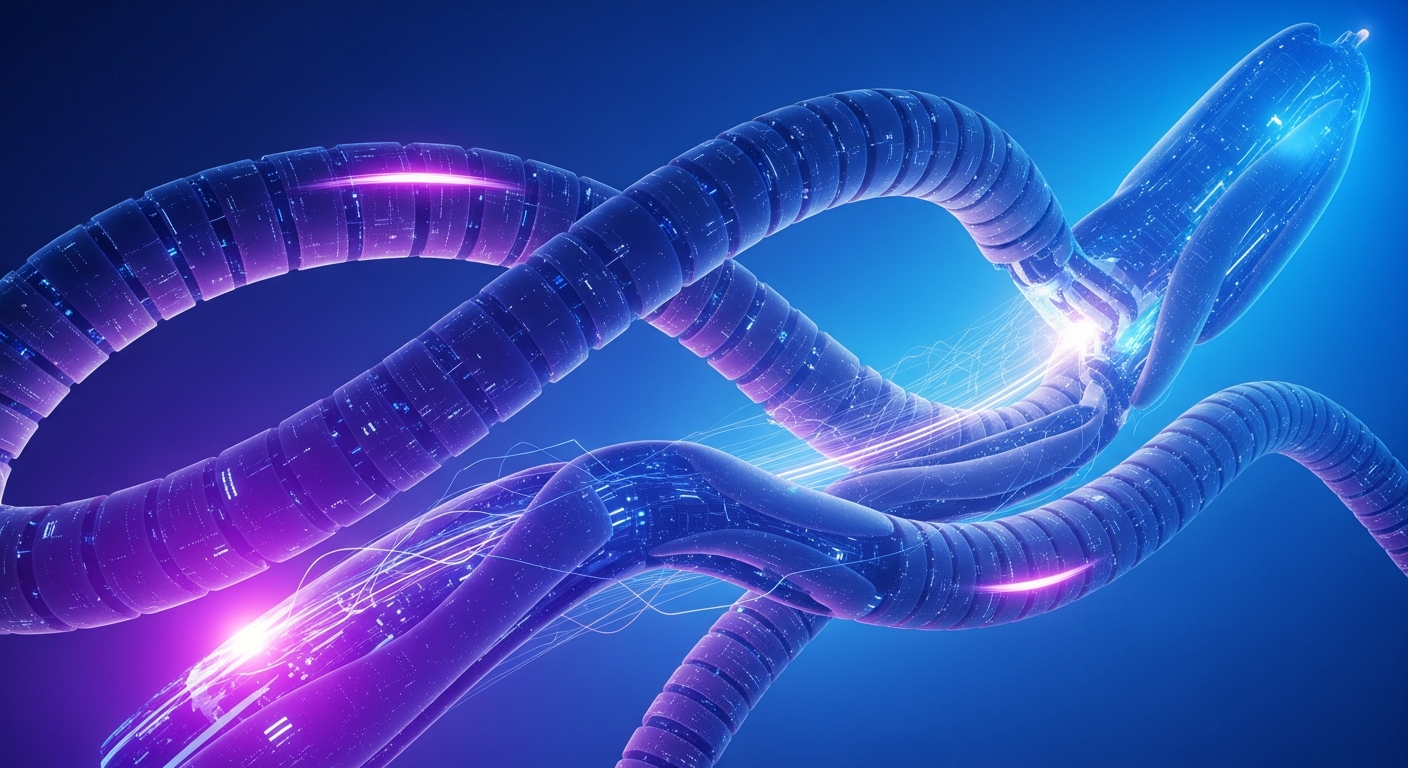
The Fluid Frontier: Advances in Soft Robotics and Flexible Machines in 2026
The era of the clunky, rigid industrial robot is rapidly being eclipsed by a new generation of machines that move with the grace of a cephalopod and the precision of a surgeon. For decades, robotics was defined by gears, motors, and metallic skeletons—machines built for power and repetition but lacking the “compliance” necessary to navigate the unpredictable human world safely. In 2026, the breakthrough of soft robotics has fundamentally shifted this paradigm. These flexible machines, constructed from elastomers, smart fabrics, and biological polymers, represent a convergence of material science and mechanical engineering that allows technology to interact with life in ways once relegated to science fiction.
Why does this matter? Because the world is not made of right angles and hard surfaces. From the delicate tissues inside a human body to the cluttered environment of a modern warehouse, the future demands machines that can squeeze, stretch, and adapt. Soft robotics is no longer a laboratory curiosity; it has become the backbone of 2026’s most transformative technologies. By mimicking the biological mechanisms of muscles and skin, these machines are bridging the gap between digital intelligence and physical fluidity, promising a future where technology is as gentle as it is powerful.
Understanding Soft Robotics: The Shift from Rigidity to Compliance
At its core, soft robotics is the study and design of robots manufactured from highly compliant materials, similar to those found in living organisms. Unlike traditional “hard” robots, which rely on rigid skeletons and discrete joints, soft robots use continuous deformation to achieve movement. This property is known as “bio-inspiration” or “biomimicry.” By looking at how an octopus uses its tentacles or how an elephant maneuvers its trunk, engineers have developed systems that don’t just move *against* their environment, but *with* it.
In 2026, the defining characteristic of these machines is “mechanical intelligence.” Because the materials themselves are flexible, the robot can solve complex physical problems—like grabbing an oddly shaped fruit or navigating a narrow pipe—without needing massive amounts of computational power. The “brain” is partially embedded in the “body.” If a soft gripper encounters an object, it naturally deforms around it, providing a secure hold without the risk of crushing it. This inherent safety and adaptability are what separate soft machines from the hydraulic giants of the past century.
The Mechanics of Flex: How Soft Robots Move
To understand how these machines function, we must look at the “muscles” driving them. In 2026, several key actuation technologies have matured to power flexible machines:
1. **Pneumatic and Hydraulic Actuators:** These involve pumping air or liquid into soft, expandable chambers. By carefully designing the internal geometry of these chambers, engineers can make the robot bend, twist, or extend when pressure is applied.
2. **Dielectric Elastomers (EAPs):** Often called “artificial muscles,” these are polymers that change shape when an electric field is applied. They offer high strain and rapid response times, allowing for lifelike movements in small-scale robots.
3. **Shape-Memory Alloys (SMAs) and Polymers:** These materials “remember” a specific shape. When heated or cooled, they transition between states, allowing for powerful movements in very compact forms.
4. **Tensegrity Structures:** Using a combination of rigid struts and flexible cables, these machines maintain their integrity through tension. They are incredibly lightweight and can survive high-impact landings, making them ideal for planetary exploration or search-and-rescue.
The integration of 3D and 4D printing has been the catalyst for these developments. We can now print functional robots with embedded sensors and fluidic channels in a single pass, eliminating the need for complex assembly and reducing points of failure.
Bio-Integration: The Revolution in 2026 Healthcare
The most immediate and profound impact of soft robotics in 2026 is felt in the medical sector. Traditional surgical tools are rigid, which limits their ability to reach deep into the body without causing secondary trauma. Soft robotic endoscopes and catheters have changed this. These “slithering” devices can navigate the winding paths of the vascular system or the intestines with minimal friction, performing biopsies or clearing blockages with unprecedented delicacy.
Furthermore, soft robotics has revolutionized the field of prosthetics and orthotics. Modern “active” prosthetics are no longer just carbon-fiber stilts; they are soft, wearable sleeves that use artificial muscles to mimic the gait of a natural leg. For patients recovering from strokes, soft robotic exosuits provide “power steering” for the human body. These lightweight, fabric-based suits detect the user’s intent via electromyography (EMG) sensors and provide a gentle mechanical assist to help them walk or lift objects. Because they are soft, they can be worn under normal clothing, removing the stigma and bulk of traditional braces.
Soft Robotics in the Home and Workplace: The Rise of Cobots
In 2026, the concept of the “cobot” (collaborative robot) has moved beyond the factory floor and into our daily lives. In the past, industrial robots had to be kept in cages because a single accidental collision could be fatal to a human worker. Soft robots, by contrast, are “inherently safe.” Their bodies absorb impact, making them ideal partners for human-centric environments.
In logistics centers, soft robotic hands equipped with “fin-ray” grippers—designed after the structure of fish fins—can handle everything from a heavy box to a single egg without recalibration. In the home, we are seeing the first generation of soft domestic assistants. These aren’t the metallic maids of 1950s sci-fi; they are flexible, fabric-covered limbs integrated into smart furniture that can help the elderly stand up or assist with delicate household chores. The tactile nature of these machines makes them more approachable, lowering the psychological barrier between humans and autonomous systems.
The Environmental Edge: Biodegradability and Energy Efficiency
A critical but often overlooked advantage of soft robotics in 2026 is its contribution to sustainability. Traditional robots are difficult to recycle, filled with rare-earth metals, complex electronics, and toxic lubricants. Soft robotics is charting a different path. We are now seeing the rise of “transient” or biodegradable soft robots.
Engineers are utilizing gelatin-based polymers and organic electronics to create sensors and actuators that perform their task and then naturally decompose in the environment. This is particularly useful for environmental monitoring in sensitive ecosystems, such as coral reefs or deep forests. A soft, biodegradable “seed” robot can be dropped into a forest to monitor soil moisture for a season and then melt away, leaving no e-waste behind. Additionally, because soft robots often utilize “passive dynamics”—using their natural elasticity to move rather than fighting against it—they can be significantly more energy-efficient than their rigid counterparts, extending the battery life of mobile units.
The 2026 Outlook: From Laboratories to Living Rooms
As we look across the landscape of 2026, soft robotics is moving from a specialized niche into a foundational technology. We are seeing the emergence of “soft sensors” that can be woven into clothing, turning a standard gym shirt into a soft robotic monitor that corrects your posture or tracks your muscle fatigue in real-time. We are seeing soft robots used in disaster relief, where “vine-like” robots can grow and extend through the rubble of a collapsed building to deliver water and communication to trapped survivors.
The challenge that remains is one of control. Because soft materials have an infinite number of ways they can bend (infinite degrees of freedom), the mathematics required to control them is incredibly complex. However, the rise of specialized AI and machine learning models in 2026 has provided the solution. These AI systems “learn” the body of the soft robot through trial and error, much like a human infant learns to move its limbs. This synergy between soft hardware and “mushy” AI is what will define the next decade of innovation.
FAQ: Frequently Asked Questions
1. Are soft robots as strong as traditional metal robots?
Not in terms of raw lifting power. If you need to move a car chassis, a rigid industrial robot is still the tool of choice. However, soft robots possess a different kind of strength: “resilience.” They can survive being crushed, dropped, or stretched—actions that would shatter a traditional robot.
2. Is soft robotics expensive to implement?
Initially, the R&D costs were high. However, by 2026, the use of 3D printing and the move toward common polymers have made soft robotic components significantly cheaper to produce than high-precision metal gears and motors.
3. How are soft robots powered?
Most currently use small onboard pumps for air or liquid, or compact battery packs for electric-responsive polymers. A major trend in 2026 is “energy harvesting,” where the robot generates small amounts of power from its own deformation or movement.
4. Can soft robots be hacked?
Like any IoT-connected device, their control software can be targeted. However, because their “intelligence” is partially physical (mechanical compliance), they are less likely to perform dangerously erratic movements compared to a rigid robot if the software fails.
5. Will soft robots replace human caregivers?
No. In 2026, they are viewed as “force multipliers.” They handle the physical strain of lifting or steadying patients, allowing human caregivers to focus on the emotional and medical aspects of care without risking physical injury.
Conclusion: Embracing the Flexible Future
The rise of soft robotics represents more than just a change in how we build machines; it represents a change in how we perceive them. For over a century, the robot was a symbol of cold, unyielding industrialism. In 2026, the robot is becoming something else: an organic, adaptable, and integrated part of our biological and social world.
We are moving away from a world where humans must adapt to the limitations of machines and toward a world where machines are designed to adapt to the nuances of humans. Whether it is a soft sleeve that restores mobility to a paralyzed limb, a flexible probe that saves a life in a hospital, or a biodegradable sensor protecting our oceans, the advances in soft robotics are making technology more empathetic to the world it inhabits. As we look beyond 2026, the line between the mechanical and the biological will continue to blur, leading us toward a future where our machines are as resilient and versatile as life itself.