The Micro-Mobility Revolution: Redefining the Urban Commute in 2026
The traditional image of the urban commute—a gridlocked sea of internal combustion engines and the rhythmic hiss of air brakes—is rapidly fading into the archives of history. As we navigate the landscape of 2026, the “last-mile” problem that once plagued urban planners has found its solution not in massive infrastructure overhauls, but in the nimble, electrified world of micro-mobility. This shift represents more than just a change in how we move; it is a fundamental restructuring of the urban fabric. By leveraging advancements in energy density, edge computing, and modular design, micro-mobility has transitioned from a niche hobbyist trend into the backbone of metropolitan transportation. For the tech-savvy urbanite, the commute is no longer a period of wasted downtime, but a seamless, data-driven transition through a responsive city. The convergence of 5G connectivity, AI-optimized fleet management, and sustainable battery tech has created an ecosystem where the distance between a subway station and an office door is covered in minutes, silently and with zero local emissions. This is the era of the hyper-connected, hyper-mobile city, and the technology powering it is more sophisticated than ever before.
The Evolution of Micro-Mobility: Beyond the Electric Scooter
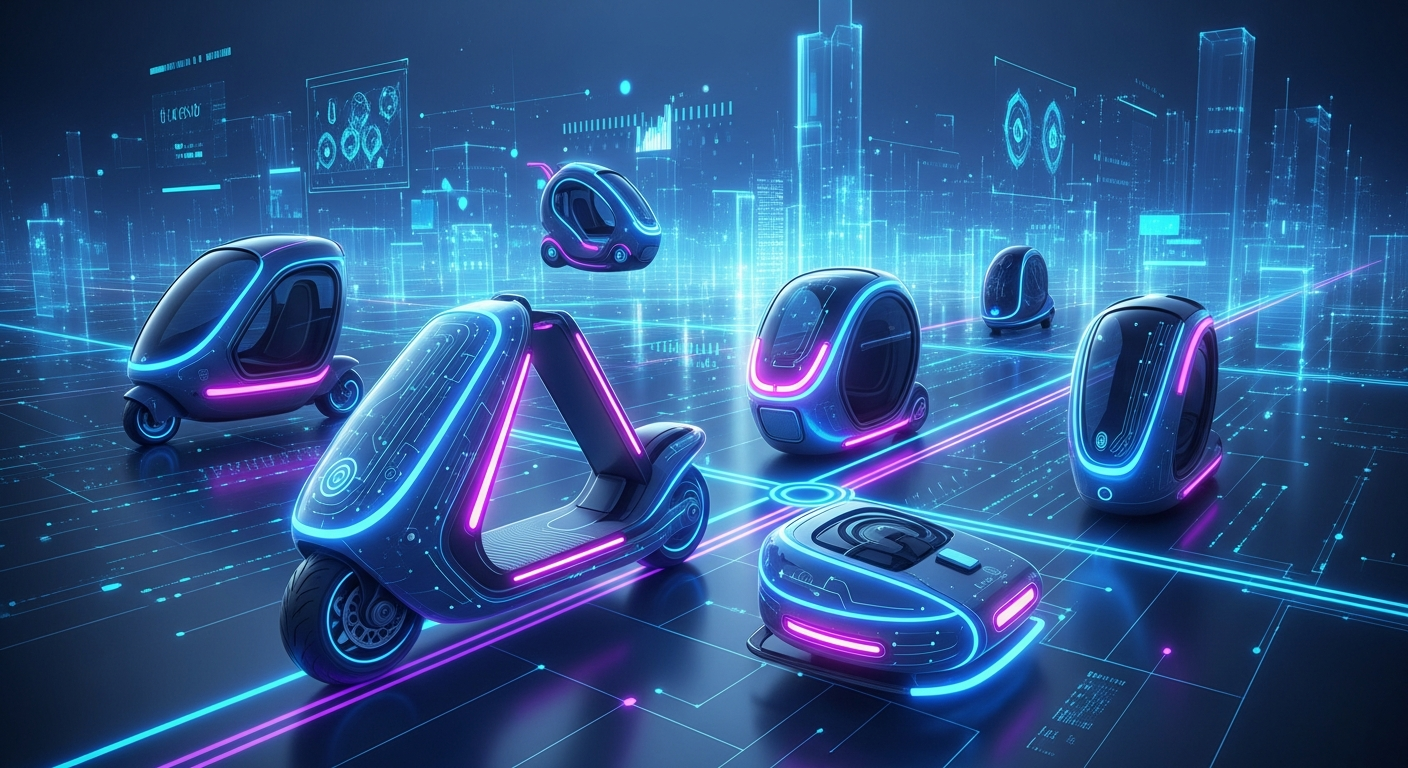
To understand the state of micro-mobility in 2026, one must look past the ubiquitous e-scooter. While scooters remain a staple, the category has diversified into a specialized fleet of “form-follows-function” vehicles. We are seeing the rise of “pod-cycles”—enclosed, three-wheeled electric vehicles that offer the footprint of a bicycle with the weather protection of a car. These vehicles utilize ultra-lightweight carbon composites and aerogels to maintain high efficiency while providing structural safety for the rider.
Furthermore, the “e-bike” has undergone a radical transformation. Mid-drive motors have become more compact and efficient, often integrated directly into the frame using 3D-printed titanium or recycled aluminum. The software controlling these motors has evolved as well; torque sensors now utilize machine learning to predict a rider’s pedaling cadence, providing a natural-feeling “bionic” boost that makes uphill climbs effortless. This diversification ensures that micro-mobility is inclusive, catering to different physical abilities, weather conditions, and cargo needs. Whether it is a heavy-duty e-cargo bike delivering groceries or a foldable e-unicycle for the minimalist commuter, the hardware of 2026 is designed for maximum utility and minimum friction.
The Tech Under the Hood: IoT, AI, and Solid-State Batteries
The true genius of 2026 micro-mobility lies in the invisible layers of technology that power the hardware. The most significant leap has been the transition toward solid-state battery technology. Unlike the lithium-ion cells of the past decade, solid-state batteries in high-end micro-mobility units offer double the energy density, significantly reduced fire risks, and charging times that are measured in minutes rather than hours. This allows for lighter vehicles with longer ranges, effectively eliminating “range anxiety” for the average commuter.
Beyond the battery, every vehicle is now a sophisticated IoT (Internet of Things) node. Integrated with V2X (Vehicle-to-Everything) communication protocols, a 2026 e-scooter “talks” to traffic lights, municipal buses, and even the smartphones of nearby pedestrians. This mesh network allows for real-time safety alerts. For instance, if a car door opens unexpectedly in a bike lane, the micro-mobility vehicle can detect the obstruction via ultrasonic sensors and apply regenerative braking before the rider even reacts. On the backend, AI-driven fleet management uses predictive analytics to ensure vehicles are where they are needed most. By analyzing historical transit data, weather patterns, and local events, operators can autonomously reposition “self-driving” scooters to high-demand zones during peak hours, ensuring that a ride is always within a thirty-second walk.
Infrastructure 2.0: Smart Lanes and Universal Charging Hubs
Technology is only as effective as the environment in which it operates. In 2026, the world’s leading “Smart Cities” have pivoted from car-centric layouts to micro-mobility-first infrastructure. This includes the implementation of “Smart Lanes”—dedicated corridors equipped with inductive charging pads. Much like a wireless phone charger, these lanes can trickle-charge a vehicle as it moves, theoretically providing infinite range within the city core.
The aesthetic and functional nightmare of “scooter clutter” has been solved through Universal Charging Hubs. These modular docking stations are integrated into the city’s power grid and provide a standardized interface for various brands and types of vehicles. Using blockchain-based smart contracts, a user can dock any certified vehicle and receive a small credit in their digital wallet for contributing to the “orderly city” initiative. Furthermore, these hubs often double as edge-computing nodes, processing local environmental data and providing high-speed 6G Wi-Fi to the surrounding area. The integration of the vehicle into the city’s physical and digital architecture has turned micro-mobility from a guest in the streets into a permanent resident.
Integration with Public Transit: The Multi-Modal Revolution
In 2026, the concept of a “commute” is rarely defined by a single mode of transport. Instead, we have entered the age of the multi-modal journey, powered by MaaS (Mobility as a Service) platforms. Through a single biometric scan or a secure token on a wearable device, a commuter might start their journey on a high-speed suburban rail line, transition to an autonomous ferry, and finish the last three kilometers on an e-moped.
The friction of switching between these modes has been eliminated through deep software integration. Public transit schedules are now dynamic, adjusting in real-time based on the flow of micro-mobility traffic. If a subway line is delayed, the MaaS app automatically reserves an e-bike for the commuter and suggests an optimized route that avoids the congestion. This synergy has significantly increased the “effective reach” of public transit. People who live five miles from a train station—previously considered a “transit desert”—are now within an easy 12-minute e-bike ride, making the need for a private automobile in the city almost entirely obsolete.
Socio-Economic Impact: Reclaiming Time and Environmental Health
The widespread adoption of micro-mobility in 2026 has had profound effects on the quality of urban life. The most immediate impact is the reduction of “noise pollution.” The cacophony of the 20th-century city has been replaced by the quiet hum of electric motors, leading to measurable improvements in the mental health of urban residents. Environmentally, the shift has been even more dramatic. By moving a significant percentage of short-distance trips from two-ton SUVs to sixty-pound e-bikes, cities have seen a sharp decline in particulate matter and CO2 emissions.
Economically, micro-mobility is a great equalizer. The cost of maintaining a private car—insurance, fuel, parking, and depreciation—can consume upwards of 20% of an average household income. In contrast, a subscription to a micro-mobility network in 2026 costs a fraction of that, democratizing access to the city’s economic opportunities. Furthermore, the time reclaimed from being stuck in traffic is being reinvested into local economies and personal well-being. When a thirty-minute drive becomes a fifteen-minute multi-modal journey, the “15-minute city” concept—where all essential services are within a short trip—becomes a reality for everyone, not just those in the wealthiest districts.
Safety and Regulation: The Era of Geofencing and AI Monitoring
With increased adoption comes the need for sophisticated governance. In 2026, the “wild west” era of micro-mobility is over, replaced by precise, code-based regulation. Geofencing is the primary tool for this. Using high-precision GNSS (Global Navigation Satellite System), city authorities can programmatically enforce speed limits in specific zones. For example, an e-scooter might be capable of 25 mph on a dedicated commuter highway but will automatically and smoothly throttle down to 5 mph when entering a pedestrian-heavy plaza or a school zone.
Furthermore, AI-powered “rider behavior” monitoring ensures safety without the need for constant human policing. Onboard inertial measurement units (IMUs) can detect erratic weaving or “sidewalk riding” in unauthorized areas. If the system detects unsafe behavior, it can issue a haptic warning through the handlebars or, in extreme cases, safely bring the vehicle to a halt. These systems are balanced with privacy-preserving technologies like “Differential Privacy,” ensuring that while the city can monitor traffic flow and safety trends, it cannot track the specific movements of individual citizens. This technological oversight has made micro-mobility statistically safer than traditional walking or driving in many urban centers.
FAQ
1. What exactly qualifies as “micro-mobility” in 2026?
Micro-mobility refers to a category of lightweight, low-speed, electric-powered vehicles designed for short-distance travel, typically under 10 miles. This includes e-scooters, e-bikes, electric unicycles, e-skateboards, and small “pod” vehicles that occupy significantly less space than a traditional car.
2. How have battery concerns like range and charging been solved?
In 2026, the shift to solid-state batteries has doubled the range of most devices while making them safer. Additionally, the proliferation of wireless inductive charging lanes and universal docking hubs means that vehicles are constantly being topped up during use or while parked, making manual charging a rarity for the average user.
3. Is it safe to use micro-mobility in heavy rain or snow?
Yes. The 2026 generation of micro-mobility vehicles, particularly pod-cycles and high-end e-bikes, feature IP68-rated waterproofing and advanced traction control systems. Many cities also utilize “weather-responsive” infrastructure, such as heated bike lanes that prevent ice buildup, ensuring year-round viability.
4. How does the “MaaS” (Mobility as a Service) system work?
MaaS is a digital platform that integrates all forms of transport into one interface. Instead of having five different apps for the bus, train, and various scooter brands, you have one subscription. The AI-driven app plans your entire trip, handles the payments via secure blockchain ledgers, and ensures that your transitions between vehicles are seamless.
5. Are these vehicles replacing cars, or just public transit?
Data from 2026 shows that micro-mobility primarily replaces short-distance car trips (the “grocery run” or the “last mile” to the office). Rather than replacing public transit, it acts as a “force multiplier” for trains and buses, making them accessible to a much larger portion of the population by solving the distance gap between home and the station.
Conclusion: The Horizon of Urban Motion
As we look toward the remainder of the decade, it is clear that micro-mobility is not merely a passing trend but the cornerstone of the modern urban experience. The technological milestones achieved by 2026—from solid-state energy storage to the seamless orchestration of multi-modal transit through AI—have proven that the complexity of urban movement can be solved through elegant, small-scale solutions. The city of the future is not one defined by massive highways and towering parking structures, but by quiet, green corridors where the flow of people is as fluid as the data powering their rides.
We are moving toward a reality where the “commute” is no longer a chore to be endured, but a frictionless, even enjoyable, part of the daily rhythm. As hardware continues to shrink and intelligence continues to grow, the boundary between the pedestrian and the vehicle will continue to blur. The lessons learned in the mid-2020s are now being applied to even more ambitious projects, including autonomous micro-freight delivery and air-based micro-mobility. For the tech-savvy urbanite, the message is clear: the future of the city is small, it is electric, and it is finally here. By reclaiming our streets from the hegemony of the automobile, we are not just moving faster—we are living better.