The Decentralized Intelligence Revolution: Understanding Federated Learning in 2026
For over a decade, the narrative of Artificial Intelligence was one of massive centralization. To build a “smart” system, companies had to harvest vast oceans of user data, funneling it into monolithic data centers where giant clusters of GPUs would crunch the numbers. This “collect-everything” approach created a fundamental tension between technological progress and personal privacy. However, by 2026, the paradigm has shifted. We have entered the era of Federated Learning (FL)—a decentralized approach to machine learning that allows AI systems to learn from data without ever actually “seeing” it.
Federated Learning represents a foundational rethink of how intelligence is manufactured. Instead of bringing the data to the code, we now bring the code to the data. This shift matters because it solves the ultimate dilemma of the digital age: how to provide hyper-personalized, predictive services while respecting the strict data sovereignty of individuals and institutions. As we navigate 2026, FL is no longer a niche research topic; it is the backbone of private healthcare, secure finance, and the “Invisible AI” that powers our daily lives. Understanding this technology is essential for anyone looking to grasp the current and future trajectory of the global digital economy.
Beyond the Cloud: What is Federated Learning?
At its core, Federated Learning is a machine learning setting where many clients (such as mobile devices or whole organizations) collaboratively train a model under the orchestration of a central server, while keeping the training data decentralized. In traditional machine learning, if a developer wants to train a predictive text model, they must upload billions of text messages to a central server. In a federated model, the data never leaves the user’s device.
This “data-at-the-edge” philosophy is built on the principle of data minimization. The central server sends a generic version of the AI model to thousands or millions of individual devices. These devices then perform “local training” using the data available on the device—such as your typing habits, your fitness metrics, or your photo labels. Once the local training is complete, the device sends back a small summary of what it learned (a “model update” or “gradient”) rather than the data itself. The central server aggregates these updates from across the network to improve the global model, which is then redistributed to everyone.
By 2026, this process has become incredibly efficient. It allows AI to benefit from the “wisdom of the crowd” without compromising the privacy of the individual. It transforms every smartphone and IoT sensor into a mini-laboratory, contributing to a collective intelligence that is greater than the sum of its parts.
The Technical Mechanics: How Training Without Sharing Works
To understand why Federated Learning is a breakthrough, we must look at the four-stage cycle that defines its operation. This cycle ensures that intelligence is extracted while raw data remains encrypted and local.
1. **Selection and Distribution:** The central server identifies a cohort of available devices (clients) that meet specific criteria (e.g., they are plugged into power and connected to Wi-Fi). The server sends the current global model to these devices.
2. **Local Computation:** Each device trains the model on its local data. This is where the actual “learning” happens. The device identifies patterns and adjusts the internal weights of the neural network to better fit the local information.
3. **Update Aggregation:** The devices send their updated model weights back to the server. Importantly, these updates are often protected by “Secure Aggregation” protocols. This means the server cannot see any individual update; it can only see the combined average of thousands of updates. This prevents the server from “reverse-engineering” a specific user’s data from their model update.
4. **Global Update:** The server incorporates the averaged updates into the master model. The master model is now slightly smarter, having “learned” from a massive variety of real-world scenarios without ever accessing a single raw data point.
In 2026, we also see the rise of “Peer-to-Peer Federated Learning,” where there is no central server at all. Devices communicate directly with one another to sync their models, creating a truly democratic and resilient AI ecosystem that is immune to single-point-of-failure risks.
The Privacy Shield: Secure Aggregation and Differential Privacy
The tech-savvy observer might ask: “If the model update is based on my data, couldn’t a sophisticated hacker still figure out what my data looks like?” This is where the dual-layer security of 2026-era Federated Learning comes into play.
The first layer is **Secure Aggregation**. This is a cryptographic multiparty computation (MPC) protocol. It ensures that the central aggregator only receives the sum of all updates. Imagine 1,000 people wanting to find their average salary without any one person revealing their actual income. They use a protocol to combine their numbers into a single sum, and only that sum is revealed. The aggregator sees the “average,” but the individual “inputs” remain a black box.
The second layer is **Differential Privacy**. This involves adding a calculated amount of “statistical noise” to the model updates. This noise is mathematically calibrated to be enough to mask any individual’s contribution, but not so much that it ruins the overall accuracy of the model. By 2026, differential privacy has become a standard requirement for any AI system handling sensitive information, providing a mathematical guarantee that an individual’s presence in a dataset cannot be confirmed by looking at the output.
Real-World Applications in 2026: From Hospitals to High-Finance
Federated Learning has moved out of the laboratory and into the infrastructure of our modern world. In 2026, the most significant impacts are seen in sectors where data sensitivity previously stalled AI progress.
Revolutionizing Healthcare:
In the past, training an AI to detect rare cancers required sharing sensitive patient records across hospitals, which was often blocked by privacy laws. Today, a “Federated Medical Network” allows dozens of hospitals across the globe to train a single diagnostic AI. Each hospital keeps its patient data on its own secure servers. The AI travels to the hospitals, learns from the local scans, and shares only the mathematical insights. This has led to a 40% increase in the accuracy of early-stage oncology detection compared to centralized models.
Next-Generation Fintech:
Banks are using FL for collaborative fraud detection. Traditionally, banks couldn’t share details of suspicious transactions due to competitive and privacy concerns. With Federated Learning, a network of banks can train a shared model that recognizes new patterns of money laundering or identity theft. Each bank benefits from the collective knowledge of the entire network without revealing their clients’ transaction histories or proprietary data.
Smart Cities and Autonomous Infrastructure:
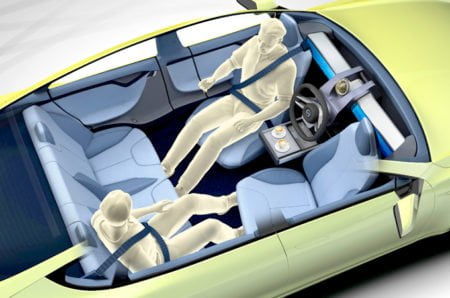
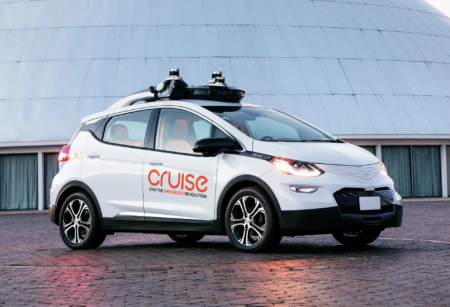
By 2026, autonomous vehicles use Federated Learning to “share” experiences of near-misses or difficult weather conditions. If a car in Tokyo encounters a unique road hazard, the learned “fix” is uploaded as a model update, processed, and shared with a car in London by the next morning. No video of the Tokyo street is ever uploaded to a central cloud, preserving the privacy of pedestrians while making every car on earth safer.
The Impact on Daily Life: Personalization Without Intrusion
For the average consumer in 2026, Federated Learning is the “ghost in the machine” that makes technology feel more intuitive and less creepy. We have moved away from the era where “personalization” meant being followed around the internet by ads for a pair of shoes you already bought.
The Proactive Personal Assistant:
Your smartphone assistant in 2026 is truly yours. Because it learns locally using Federated Learning, it can understand your unique vocal nuances, your household’s specific schedule, and your emotional state without sending your private conversations to a corporate server. Your “Personal AI” is refined on your device, making it faster and more responsive, while the global improvements—like better language processing—are pulled from the federated cloud.
Privacy-Preserving Health Wearables:
The fitness tracker you wear today doesn’t just count steps; it predicts potential health anomalies like arrhythmias or sleep apnea. Because of FL, these predictions are based on models trained on millions of users, yet your heart rate data never leaves your wrist. Users in 2026 have much higher trust in these devices because “privacy by design” is no longer a marketing slogan—it’s a technical reality.
Edge-Based Content Discovery:
Streaming services and news aggregators have replaced centralized “recommendation engines” with local ones. Your device learns what you like and doesn’t like. It then requests content based on that local profile. This prevents the creation of massive “user dossiers” by big tech companies, effectively breaking the cycle of surveillance capitalism.
Overcoming the Bottlenecks: Bandwidth, Hardware, and Adversaries
Despite its success, Federated Learning in 2026 faces ongoing challenges that the tech community continues to refine. The three primary hurdles are communication efficiency, device heterogeneity, and adversarial robustness.
Communication Efficiency:
Sending model updates back and forth requires significant bandwidth. To solve this, researchers have developed “sparse” updates—where only the most important parts of the neural network are transmitted—and advanced compression techniques. In 2026, many FL protocols are designed to run only when a device is on 6G or high-speed Wi-Fi to avoid draining data plans.
Device Heterogeneity:
Not every device is a high-end smartphone. A network might include a powerful workstation and a low-power smart thermostat. “Asynchronous Federated Learning” has become the standard in 2026, allowing the central server to integrate updates as they arrive, rather than waiting for every device to finish, which would slow the entire system to the speed of the slowest participant.
Adversarial Attacks:
The decentralized nature of FL introduces a new risk: “Model Poisoning.” A malicious actor could join the network with a fleet of devices and send “bad” updates designed to bias the model or create backdoors. The defense in 2026 involves robust aggregation algorithms that use statistical analysis to identify and “vote out” suspicious updates before they can influence the global model.
FAQ: Understanding the Nuances of Federated Learning
Q: Does Federated Learning make AI slower to train?
A: Generally, yes. Because it relies on edge devices and network connections, the initial training of a model takes longer than it would in a centralized data center. However, by 2026, we use “Pre-trained Foundation Models” that are fine-tuned via FL, making the process much faster and more practical for real-world use.
Q: Is my data 100% safe with Federated Learning?
A: While FL provides a massive leap in privacy, no system is perfectly “unhackable.” However, when combined with Secure Aggregation and Differential Privacy, the risk of data leakage is mathematically minimized to the point that it is far safer than any centralized storage model.
Q: Does FL use a lot of my phone’s battery?
A: In the early days, this was a concern. In 2026, most FL tasks are scheduled as background processes that only trigger when your device is charging and idle. Modern mobile chips also have dedicated “Neural Engines” designed specifically to handle these local training tasks with minimal power draw.
Q: Is Federated Learning the same as Blockchain?
A: No, they are different technologies, though they can work together. Blockchain is a decentralized ledger for recording data; Federated Learning is a decentralized method for training AI. Some systems in 2026 use blockchain to track and reward users for contributing their model updates, but the core AI training happens via FL.
Q: Which industries use Federated Learning the most?
A: As of 2026, the primary adopters are Healthcare (diagnostics), Finance (fraud detection), and Consumer Electronics (predictive text, voice assistants, and photo management).
Conclusion: The Future of Sovereign Intelligence
As we look toward the end of the decade, Federated Learning is clearly more than just a technical optimization; it is a social and ethical pivot. It represents a move toward “Sovereign Intelligence,” where the power of Artificial Intelligence is decoupled from the invasive collection of personal data.
The evolution of FL suggests a future where AI is pervasive but non-invasive. By 2026, we have proven that we do not need to sacrifice our privacy to live in a world of “smart” things. The success of this technology has forced a rethink of data ownership, shifting the power back to the individual while still allowing the collective to benefit from shared knowledge. As edge computing power continues to grow and our cryptographic methods become even more sophisticated, Federated Learning will remain the cornerstone of a more secure, private, and intelligent digital civilization. The era of the “all-seeing” central AI is ending; the era of the distributed, privacy-first mind has begun.