Securing the Invisible Backbone: The Future of Critical Infrastructure Protection in 2026
Imagine a morning in 2026. You wake up in a smart city where the rhythm of life is dictated by a seamless flow of energy, water, and data. Your electric vehicle is autonomously charging from a localized microgrid, the water filtration plant is self-adjusting to chemical fluctuations in real-time, and high-speed rail systems are synchronizing their speeds via satellite-linked nodes. This invisible backbone—our critical infrastructure—is the lifeblood of modern society. However, as these systems have become more interconnected and “intelligent,” they have also become more vulnerable.
The stakes of cybersecurity have shifted from the digital realm to the physical. We are no longer just protecting credit card numbers or email passwords; we are protecting the structural integrity of power plants, the safety of municipal water supplies, and the operational continuity of healthcare systems. In 2026, securing critical infrastructure is not just a technical requirement—it is a matter of national security and public safety. This article explores the emerging technologies and strategic frameworks that are currently being deployed to shield our most vital assets from sophisticated cyber-physical threats. We will examine how the convergence of Operational Technology (OT) and Information Technology (IT) has redefined the battlefield and what the defense of the future looks like.
The Convergence of IT and OT: Bridging the Air Gap
For decades, critical infrastructure relied on “air-gapping”—the practice of keeping industrial control systems (ICS) entirely disconnected from the public internet. By 2026, the air gap is effectively a relic of the past. To achieve the efficiencies required by modern green energy goals and smart city logistics, the physical machinery (Operational Technology) has been integrated with digital networks (Information Technology).
This convergence allows for real-time monitoring and remote management, but it also creates a massive attack surface. Legacy hardware, such as pumps and turbines designed in the late 20th century, was never built with cybersecurity in mind. These devices often communicate using unencrypted protocols like Modbus or DNP3.
The security solution in 2026 involves the deployment of “Industrial Internet of Things” (IIoT) gateways that act as a translation layer. These gateways wrap legacy traffic in modern encryption and use deep packet inspection (DPI) to ensure that a command sent to a valve is actually a legitimate operational request and not a malicious payload designed to cause a physical blowout. We are seeing a move toward hardware-rooted trust, where every sensor and actuator has a unique cryptographic identity, making it nearly impossible for an attacker to spoof a device within the network.
Autonomous Defense: AI and Machine Learning at the Edge
In the high-stakes environment of 2026, human reaction time is often too slow to prevent a catastrophic failure. A cyberattack on a power grid can propagate in milliseconds. To counter this, we have turned to autonomous defense systems powered by Machine Learning (ML).
These are not your standard antivirus programs. In critical infrastructure, AI is used for “Behavioral Baselines.” The system learns the “normal” electromagnetic signature of a generator or the standard flow rate of a pipeline. When an attacker attempts to manipulate the system—even if they are using stolen, legitimate credentials—the AI detects a microscopic deviation from the physical laws governing that machine.
The real innovation in 2026 is “Edge AI.” Instead of sending data to a central cloud for analysis (which introduces latency), the security logic lives on the devices themselves. If a substation detects an anomaly that suggests a ransomware strain is attempting to lock its controls, the Edge AI can autonomously isolate that specific node from the rest of the grid. This “self-healing” capability ensures that a localized breach does not turn into a regional blackout.
Zero Trust Architecture for Cyber-Physical Systems
The “Zero Trust” model, once a corporate IT buzzword, has been fully adapted for industrial environments by 2026. The core philosophy is simple: Never trust, always verify. In a traditional network, once you are “inside,” you have access to everything. In a Zero Trust ICS environment, every single request—whether from a human operator or an automated script—must be authenticated and authorized.
In 2026, this is achieved through micro-segmentation. The network is broken down into thousands of tiny zones. A technician’s tablet may have the authority to read data from a temperature sensor, but it is physically prevented by the network fabric from sending a “write” command to a cooling pump.
Identity and Access Management (IAM) has also evolved. We now use multi-factor authentication (MFA) that includes “Environmental Factors.” For a high-privilege command to be executed in a nuclear facility, the system might require a biometric scan, a cryptographic key, and confirmation that the user is physically located within the designated control room via ultra-wideband (UWB) geofencing. This prevents remote attackers from using compromised credentials to cause physical damage from the other side of the globe.
Quantum-Resistant Encryption: Future-Proofing the Grid
One of the most significant concerns in 2026 is “Store Now, Decrypt Later” (SNDL) attacks. State-sponsored actors have been harvesting encrypted data for years, waiting for the arrival of cryptographically relevant quantum computers (CRQCs) to break traditional RSA and ECC encryption. Critical infrastructure assets, like dams and bridges, are designed to last 50 to 100 years, meaning their security must be “quantum-proof” today.
By 2026, we have seen a massive transition to Post-Quantum Cryptography (PQC). Following the standards set by NIST, infrastructure providers are implementing lattice-based cryptography and hash-based signatures. This ensures that the long-term commands and sensitive blueprints of our national assets remain secure even as quantum computing power scales.
Furthermore, we are seeing the early adoption of Quantum Key Distribution (QKD). By using the principles of quantum mechanics, QKD allows two locations—such as a central command hub and a remote satellite uplink—to share a secret key. If an eavesdropper tries to intercept the key, the quantum state collapses, alerting the operators immediately. This provides a “physics-based” layer of security that complements our mathematical encryption.
Digital Twins and Predictive Simulation
One of the most effective ways we secure critical infrastructure in 2026 is by not testing security on the actual infrastructure. Instead, we use “Digital Twins.” A Digital Twin is a high-fidelity virtual replica of a physical asset, such as a wastewater treatment plant or an automated port terminal.
These twins are synchronized with the physical asset in real-time. Security researchers use them as a “Cyber Sandbox.” They can launch simulated “Red Team” attacks—such as a massive DDoS attack or a logic bomb—against the Digital Twin to see exactly how the physical machinery would react.
This allows engineers to identify “hidden dependencies.” For example, a simulation might reveal that if a specific communication switch in a rail yard is compromised, it could cause a failure in the cooling system of a nearby data center. By finding these “butterfly effect” vulnerabilities in a virtual environment, we can patch them in the real world before an adversary ever discovers them. This proactive stance marks a shift from reactive firefighting to predictive resilience.
The Human-Machine Interface and Regulatory Evolution
Despite the advanced tech, the human element remains the strongest or weakest link. In 2026, the role of the “Cyber-Physical Engineer” has emerged. These are professionals trained equally in mechanical engineering and cybersecurity. They understand both the torque of a motor and the structure of a TCP/IP packet.
Furthermore, the regulatory landscape has matured. In the early 2020s, many sectors had voluntary guidelines. In 2026, global standards like the NIS2 Directive and updated CISA regulations mandate “Security by Design.” Manufacturers of industrial equipment are now legally required to include security features out of the box, much like cars are required to have seatbelts and airbags.
Governments have also established “Sovereign Clouds” for critical data. This ensures that the telemetry data from a nation’s energy sector is stored and processed on domestic soil, protected by national laws and isolated from geopolitical tech-wars. This combination of specialized talent and rigorous policy creates a robust ecosystem that supports the high-tech defenses mentioned above.
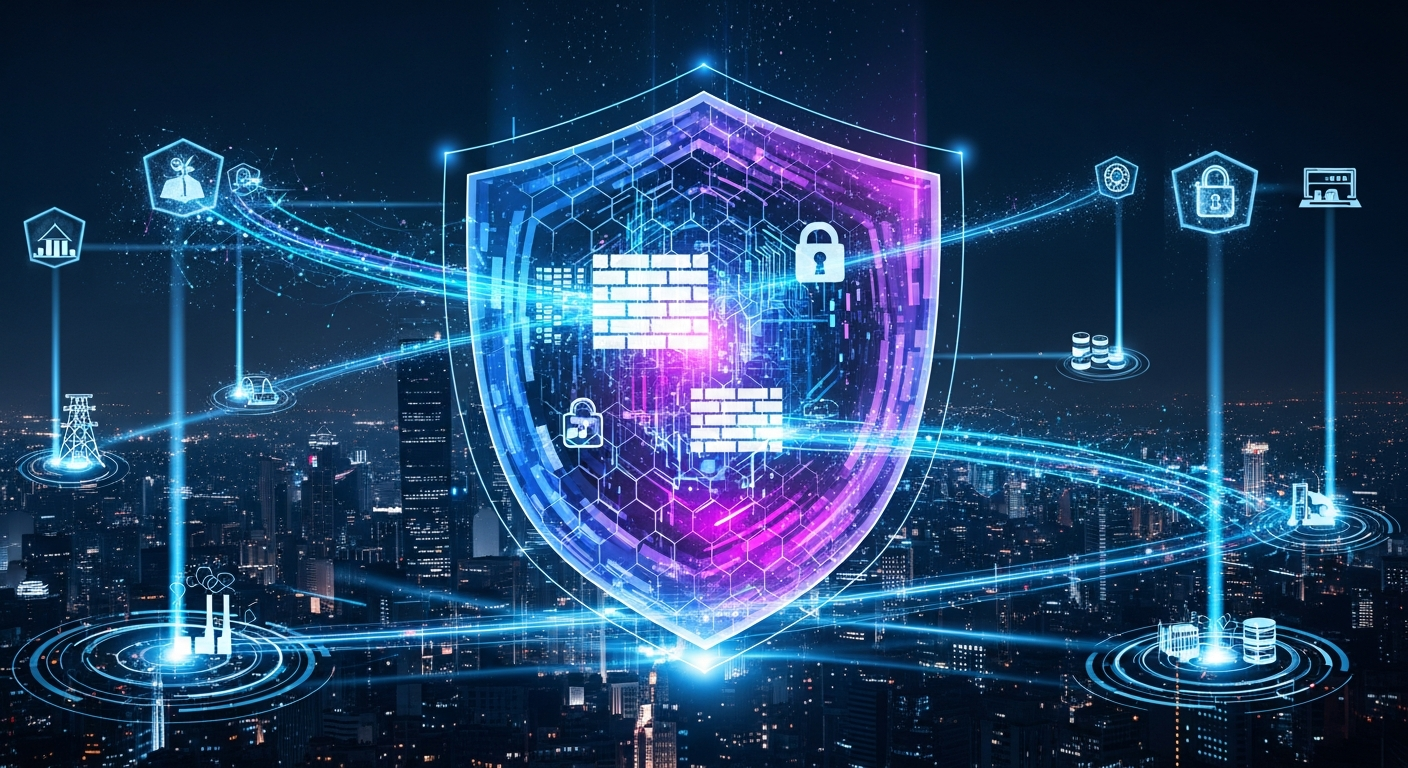
Impact on Daily Life: The Invisible Shield
How does all this complex technology impact your life in 2026? Most of the time, the impact is characterized by what *doesn’t* happen.
1. **Reliability of Services:** You don’t experience “brownouts” or water shortages caused by digital tampering. The price of utilities remains stable because companies aren’t passing the massive costs of ransomware recoveries on to the consumer.
2. **Safe Automation:** You can trust that the autonomous bus you are riding in hasn’t been hijacked by a remote actor. The “Safety-Critical” systems in transportation are isolated and verified through the Zero Trust protocols we’ve discussed.
3. **Privacy and Peace of Mind:** In a smart city, your movements and habits are tracked by sensors. Because these systems are secured with quantum-resistant encryption and micro-segmentation, you have a higher degree of assurance that your data isn’t being harvested by malicious actors or foreign intelligence services.
4. **Economic Stability:** Because the ports, rails, and logistics hubs are resilient, the global supply chain is less prone to the “shocks” that defined the early part of the decade. Items stay on shelves, and the digital economy continues to thrive.
In short, the technology securing our infrastructure allows the complexity of modern life to function without the constant threat of a digital-to-physical catastrophe.
FAQ
Q1: What exactly is “Operational Technology” (OT)?
Operational Technology refers to the hardware and software used to change the physical state of a device. Examples include a switch that opens a valve at a water plant, a sensor that monitors the heat of a nuclear reactor, or the robotic arms in a car factory. Unlike IT, which manages data, OT manages physical processes.
Q2: Why is 2026 such a critical year for this technology?
By 2026, the “Hyper-Connectivity” of the 5G and early 6G era has reached its peak. Almost every piece of infrastructure is now “smart” and connected. This creates an urgency for defense that didn’t exist when these systems were isolated.
Q3: Can an AI-driven security system be “tricked” by another AI?
Yes. This is known as “Adversarial AI.” Attackers use their own machine learning models to find blind spots in the defense. This has led to a “computational arms race” where defensive AIs are constantly being updated to recognize increasingly subtle and creative attack patterns.
Q4: Is “Air-Gapping” still useful at all?
While true air-gapping is rare for high-efficiency systems, it is still used for the “most critical” of the most critical systems—for example, the final manual override for a nuclear missile silo or a primary power grid “black start” generator. These remain physically disconnected as a final line of defense.
Q5: How can a regular person tell if their city’s infrastructure is secure?
Transparency is key in 2026. Most municipal governments now provide “Resilience Scores” or “Cyber-Safety Ratings” for their services, much like restaurant health grades. You can look for these certifications in your city’s annual infrastructure report.
Conclusion: The Era of Cyber-Physical Resilience
As we look toward the latter half of the decade, the concept of “perfect security” has been replaced by the concept of “resilience.” In 2026, we acknowledge that no system is 100% unhackable. Therefore, our focus has shifted to ensuring that when a system *is* attacked, it can fail gracefully, isolate the damage, and recover within minutes rather than weeks.
The integration of Zero Trust, Post-Quantum Cryptography, and Edge-based AI has created a multi-layered defense that is as dynamic as the threats it faces. We have moved from a world where our infrastructure was a “soft target” to one where it is a “hardened environment” capable of active self-defense.
Securing critical infrastructure is no longer just a task for the IT department; it is a fundamental pillar of how we build and maintain our civilization. As we continue to innovate, the “invisible shield” protecting our power, water, and transport will only become more sophisticated, ensuring that the digital age remains an era of progress rather than one of vulnerability. The future is connected, and in 2026, it is finally becoming secure.