Digital Nomad Visa Programs Worth Pursuing 2026: The Tech-Enabled Borderless Workforce
As we navigate 2026, the competition to attract remote workers has moved beyond simple sunshine and low costs. Governments are now deploying complex digital ecosystems to integrate nomads into their social fabrics seamlessly. These visa programs are more than just legal permissions; they are entry points into high-tech “smart jurisdictions” that offer everything from blockchain-based banking to AI-driven administrative support. For the tech-savvy professional, choosing a destination now involves evaluating a country’s digital “stack” as much as its culture. This article explores the most innovative visa programs and the technologies that make this hyper-mobile lifestyle possible in 2026.
The Technological Infrastructure of Modern Residency
In 2026, the application process for a digital nomad visa has been revolutionized by Decentralized Identity (DID) and Self-Sovereign Identity (SSI) frameworks. Gone are the days of mailing physical notarized documents or waiting months for consular appointments. Most top-tier visa programs now utilize Zero-Knowledge Proofs (ZKP), a cryptographic method that allows applicants to prove they meet income and security requirements without revealing sensitive underlying data.
When you apply for a visa in 2026, the host country’s portal interacts directly with your digital wallet. Through secure APIs, the system verifies your employment status, recurring income, and criminal record via encrypted “credentials” issued by your home country or employer. This technology reduces the approval time from months to minutes. Furthermore, the visa itself is often issued as a dynamic NFT or a verifiable credential stored in your smartphone’s secure enclave, which automatically updates with local tax IDs and healthcare access codes upon arrival. This seamless integration ensures that nomads are legally compliant and digitally integrated from the moment they cross the border.
Japan and the Asian Tech Corridor: The Gold Standard

Japan has emerged as a premier destination for the tech-focused nomad in 2026, thanks to the expansion of its specialized visa schemes aimed at “innovation professionals.” While the initial 2024 visa rollout was a success, the current framework is deeply integrated with Japan’s “Society 5.0” initiative. This program prioritizes individuals working in AI, robotics, and biotechnology, offering them a fast-track to long-term residency if they contribute to local tech ecosystems.
The real draw in Japan is the infrastructure. Major cities and even “satellite offices” in rural prefectures are now blanketed in 6G trials and ubiquitous high-density Wi-Fi. For the digital nomad in 2026, this means working from a traditional Ryokan in the Japanese Alps with lower latency than a Manhattan office. Japan also uses a proprietary “Nomad Concierge” AI that helps foreigners navigate local bureaucracy, translates legal documents in real-time, and even optimizes the nomad’s tax liabilities across multiple jurisdictions. This tech-first approach has turned Japan into a laboratory for the future of work, attracting a demographic that values precision, high-speed connectivity, and cultural depth.
European Innovation: The Rise of Universal EU Credentials
The European landscape in 2026 has been transformed by the “EU Digital Identity Wallet.” While countries like Spain, Portugal, and Estonia were early adopters of nomad visas, the entire Schengen area has now moved toward a more unified digital approach. The Spanish Digital Nomad Visa, for instance, has evolved to include an “Innovation Passport” that grants the holder access to co-working spaces and government-funded tech incubators across the country.
Estonia continues to lead the pack with its E-Residency 2.0. In 2026, e-residents can manage their European businesses through a fully immersive spatial computing interface. This allows a nomad living in Lisbon to “walk through” their virtual office in Tallinn, meeting with investors and managing logistics through high-fidelity AR. The integration of the MiCA (Markets in Crypto-Assets) regulation across Europe also means that nomads can receive payments in stablecoins and manage their taxes through automated, smart-contract-based systems that ensure compliance with both their host and home countries. This reduces the administrative overhead of being a nomad to almost zero, allowing professionals to focus entirely on their work.
The Caribbean and South American Tech Oases

The Caribbean has moved beyond its reputation as a vacation spot, branding itself in 2026 as the “Blue Tech Zone.” Countries like Barbados and Bermuda have invested heavily in subsea fiber-optic cables and satellite mesh networks to provide 100% uptime for remote workers. Their visa programs, such as the “Work From Bermuda” certificate, now come with “Tech Perks,” including subsidized hardware and access to local renewable energy grids for eco-conscious developers.
In South America, Brazil and Argentina have leveraged the rise of “nearshoring.” With time zones that align with North American markets, these countries have built digital nomad villages equipped with “Smart Infrastructure.” These villages utilize IoT (Internet of Things) to manage everything from community energy usage to automated grocery delivery via drones. For the tech nomad, these programs offer a high quality of life with a low cost of living, backed by a robust digital safety net that includes “Telehealth Roaming”—a technology that allows nomads to use their international insurance at local high-tech clinics via a unified digital health record.
Real-World Applications: Impact on Daily Life in 2026
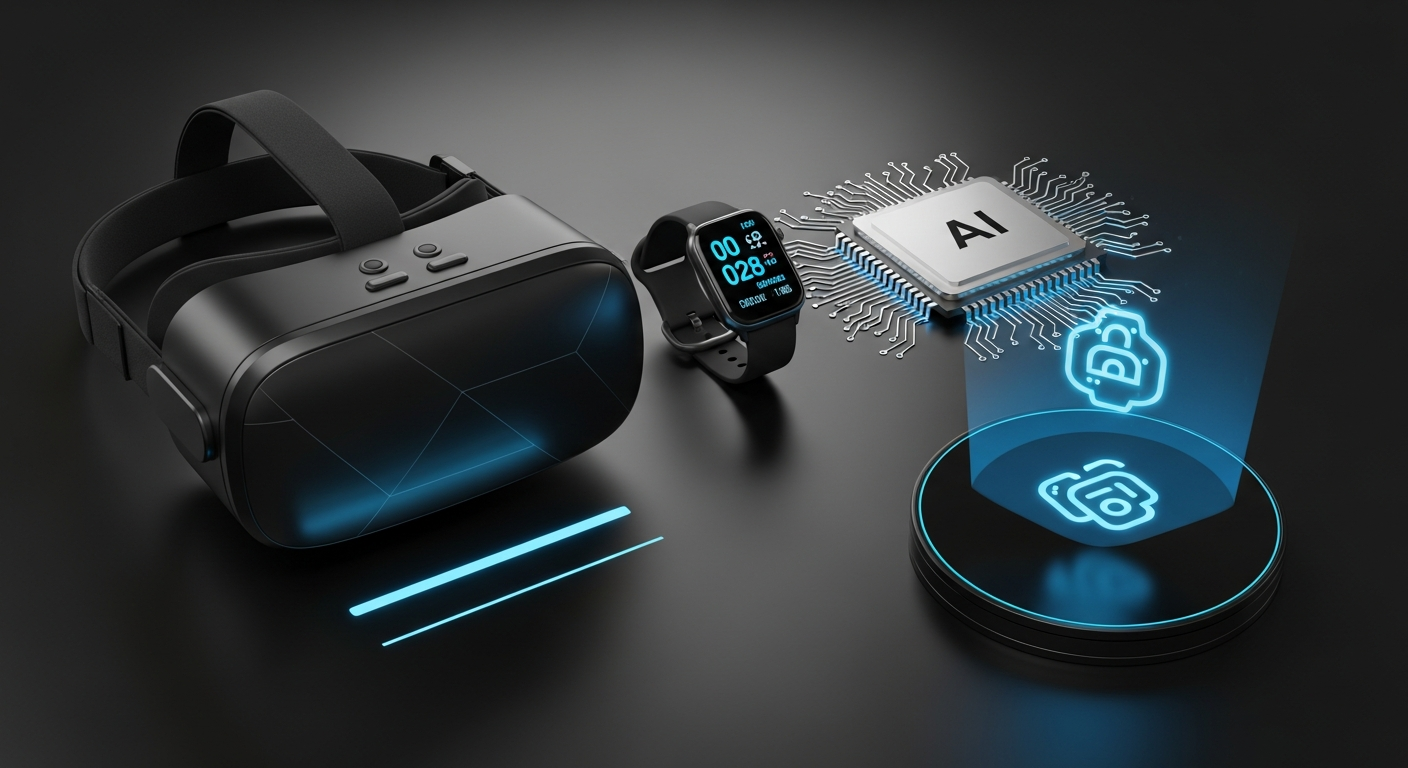
The impact of these visa programs on daily life is profound. In 2026, the “office” is no longer a place you go, but a state of mind facilitated by hardware. Most digital nomads now utilize advanced spatial computing headsets—the successors to the early Vision Pro and Quest models—which allow them to project multiple high-resolution monitors into any environment. Whether you are on a beach in Costa Rica or a café in Seoul, your workspace remains consistent, private, and hyper-efficient.
The technology also solves the “loneliness” problem often associated with remote work. In 2026, digital nomad visas often include access to “Global DAO (Decentralized Autonomous Organization) Memberships.” These are digital communities that organize real-world meetups, provide peer-to-peer insurance, and offer collective bargaining for group discounts on housing and travel. When you arrive in a new city, your digital wallet automatically connects you to the local nomad node, providing you with an instant social and professional network. This integration of the digital and physical worlds ensures that the 2026 nomad is never truly isolated, despite their constant movement.
Navigating Security and Privacy in a Borderless World
As the mobility of the global workforce increases, so do the challenges related to cybersecurity and data sovereignty. In 2026, “Cyber-Residency” is as important as physical residency. Top-tier visa programs now offer “Sovereign Data Vaults” as part of their residency package. These are encrypted, government-sanctioned storage solutions where nomads can keep their sensitive work and personal data, protected by the host nation’s privacy laws.
The security of these programs is underpinned by “Biometric Continuous Authentication.” Instead of a one-time passport check, the nomad’s identity is verified through subtle biometric markers (such as gait analysis or retinal scans) as they move through airports and shared workspaces. While this raises questions about privacy, the 2026 nomad typically opts for “Privacy-Preserving Computation,” where their data is used to provide services without ever being decrypted or stored by the government. This technological compromise allows for a high level of security and convenience while maintaining the individual’s digital autonomy—a crucial requirement for the tech-savvy professional of 2026.